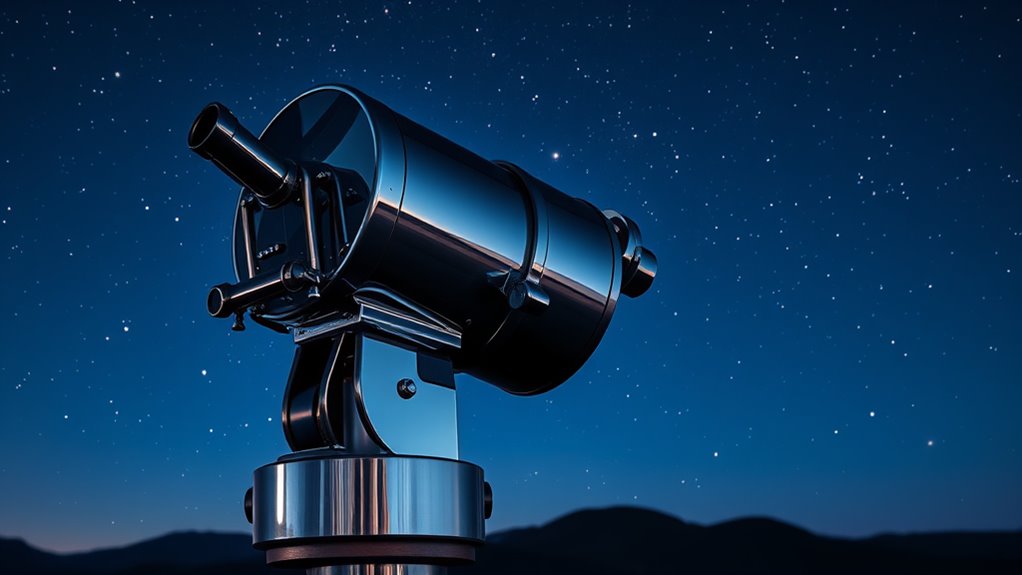

Luxury high-end telescopes trade simplicity and portability for greater light gathering, precise tracking, and specialized imaging capability. I rank the Celestron NexStar Evolution 8 as the best overall for its capable 8-inch optics, built-in battery, and Wi-Fi control in a more manageable setup than the largest instruments here. The CPC Deluxe HD 9.25 stands out for a sturdier, larger-aperture visual system, while the CGX-L 14-inch EdgeHD is aimed at buyers who want serious imaging potential and can accommodate a substantial mount. The main choice is whether you value easy setup, visual reach, or a platform built around astrophotography. Read on for the full comparison and recommendations by observing style.

Get business pricing on tech for your team
- Business-only prices and quantity discounts
- Tax-exempt purchasing
- Multiple users, one account, clear invoices
Key Takeaways
- The NexStar Evolution 8 is the most balanced pick: its integrated battery and wireless control reduce setup friction while retaining substantial aperture.
- Large aperture comes with a real handling cost: the CPC 1100 and CGX-L 14-inch models demand more storage, transport planning, and setup effort than the 8-inch systems.
- Mount choice shapes the experience as much as the optical tube: fork-mounted CPC models suit tracked visual observing, while equatorial CGEM II, Advanced VX, and CGX systems better match tracking and imaging workflows.
- Imaging-specific designs serve a narrower purpose: the CGX 11-inch RASA V2 prioritizes wide-field astrophotography, while EdgeHD systems offer a different balance of imaging flexibility and visual use.
- There is a useful entry point within this premium-heavy lineup: the NexStar 102SLT and StarSense Explorer DX 5-inch favor easier learning and access over the light gathering of the larger instruments.
| Celestron NexStar 8SE Computerized Schmidt-Cassegrain Telescope |  | Best Overall | Optical design: Schmidt-Cassegrain | Aperture: 8 inches | Mount: Computerized GoTo with automatic tracking | VIEW ON AMAZON | See Our Full Breakdown |
| Celestron CPC Deluxe HD 9.25-Inch Computerized Telescope |  | Best Premium Visual and Imaging System | Aperture: 9.25 inches | Optical system: EdgeHD with StarBright XLT coatings | Mount: Computerized altitude-azimuth dual fork arm | VIEW ON AMAZON | See Our Full Breakdown |
| Celestron NexStar 102SLT Computerized Refractor Telescope |  | Best Compact Computerized Pick | Optical design: Refractor | Aperture: 102 mm | Object database: More than 40,000 objects | VIEW ON AMAZON | See Our Full Breakdown |
| Celestron NexStar Evolution 8 WiFi Telescope |  | Best for App-Based Observing | Optical design: Schmidt-Cassegrain | Aperture: 8 inches | Connectivity: WiFi | VIEW ON AMAZON | See Our Full Breakdown |
| Celestron CGEM II 11-Inch Schmidt-Cassegrain Telescope with GoTo Equatorial Mount |  | Best for Maximum Aperture | Optical design: Schmidt-Cassegrain | Aperture: 11 inches | Maximum magnification: Up to 660x with compatible eyepieces | VIEW ON AMAZON | See Our Full Breakdown |
| ZWO Seestar S30 Pro Smart Telescope |  | Best Compact Smart Imaging Pick | Objective lens diameter: 30 mm | Focal length: 160 mm | Field of view: 4.6 degrees | VIEW ON AMAZON | See Our Full Breakdown |
| Celestron CGX-L 14-Inch EdgeHD Astrophotography Telescope |  | Best Premium EdgeHD Imaging System | Optics: 14-inch EdgeHD | Coatings: StarBright XLT | Mount: CGX-L computerized equatorial | VIEW ON AMAZON | See Our Full Breakdown |
| Celestron CGX-L 14-Inch Schmidt-Cassegrain Computerized Telescope |  | Best for Maximum Aperture and Visual Reach | Aperture: 14 inches | Optical design: Schmidt-Cassegrain | Focal length: 3910 mm (154 in) | VIEW ON AMAZON | See Our Full Breakdown |
| Celestron StarSense Explorer DX 5-Inch App-Enabled Schmidt-Cassegrain Telescope |  | Best Guided Entry to Premium Optics | Optical design: Schmidt-Cassegrain | Aperture: 5 inches (130 mm) | Coatings: StarBright XLT | VIEW ON AMAZON | See Our Full Breakdown |
| Celestron CGX 11-Inch Rowe-Ackermann Schmidt Astrograph V2 Telescope |  | Best for Fast Wide-Field Astrophotography | Optical design: Rowe-Ackermann Schmidt Astrograph V2 | Aperture: 11 inches | Focal length: 620 mm (24.4 in) | VIEW ON AMAZON | See Our Full Breakdown |
| Celestron CPC 1100 Schmidt-Cassegrain Computerized Telescope |  | Best for Maximum Visual Aperture | Aperture: 11 inches | Optical design: Schmidt-Cassegrain | Mount: Dual fork-arm alt-azimuth GoTo | VIEW ON AMAZON | See Our Full Breakdown |
| Celestron Advanced VX 8-Inch Schmidt-Cassegrain Computerized Telescope |  | Best Equatorial Starting Point | Optical design: Schmidt-Cassegrain | Aperture: 8 inches | Focal length: 2032 mm | VIEW ON AMAZON | See Our Full Breakdown |
| Celestron Advanced VX 9.25-Inch Schmidt-Cassegrain Computerized Telescope |  | Best Aperture and Equatorial Balance | Optical design: Schmidt-Cassegrain | Aperture: 235 mm (9.25 inches) | Highest useful magnification: 555x | VIEW ON AMAZON | See Our Full Breakdown |
| luxury high end telescope | Mount | Aperture | Optical design |
|---|---|---|---|
| Celestron NexStar 8SE Computer | Computerized GoTo with automatic tracking | 8 inches | Schmidt-Cassegrain |
| Celestron CPC Deluxe HD 9.25-I | Computerized altitude-azimuth dual fork arm | 9.25 inches | — |
| Celestron NexStar 102SLT Compu | — | 102 mm | Refractor |
| Celestron NexStar Evolution 8 | Computerized GoTo fork mount with brass worm gears | 8 inches | Schmidt-Cassegrain |
| Celestron CGEM II 11-Inch Schm | CGEM II computerized equatorial GoTo mount | 11 inches | Schmidt-Cassegrain |
| ZWO Seestar S30 Pro Smart Tele | Alt-azimuth; supports equatorial mode | — | — |
| Celestron CGX-L 14-Inch EdgeHD | CGX-L computerized equatorial | — | — |
| Celestron CGX-L 14-Inch Schmid | Computerized equatorial | 14 inches | Schmidt-Cassegrain |
| Celestron StarSense Explorer D | Manual altazimuth | 5 inches (130 mm) | Schmidt-Cassegrain |
| Celestron CGX 11-Inch Rowe-Ack | Equatorial CGX | 11 inches | Rowe-Ackermann Schmidt Astrograph V2 |
| Celestron CPC 1100 Schmidt-Cas | Dual fork-arm alt-azimuth GoTo | 11 inches | Schmidt-Cassegrain |
| Celestron Advanced VX 8-Inch S | Advanced VX computerized German equatorial | 8 inches | Schmidt-Cassegrain |
| Celestron Advanced VX 9.25-Inc | Advanced VX computerized German equatorial | 235 mm (9.25 inches) | Schmidt-Cassegrain |
More Details on Our Top Picks
Celestron NexStar 8SE Computerized Schmidt-Cassegrain Telescope
The NexStar 8SE makes the strongest all-around case in this group: its 8-inch Schmidt-Cassegrain optics offer substantial light gathering for planets and deep-sky targets, while computerized GoTo tracking helps you spend more time observing than searching. Its 40,000-plus-object database and SkyAlign setup put a broad observing program within reach without the bulk of the CPC Deluxe HD 9.25-inch, which weighs 117.8 pounds. Compared with the NexStar Evolution 8, the 8SE gives up app control and a built-in rechargeable battery, so you may need a separate power source and more hands-on operation. Alignment is still required before observing, and expanding its capabilities can mean buying additional accessories. I’d choose it for a capable, premium-feeling visual setup that balances aperture and manageable complexity.
Pros:- 8-inch aperture supports detailed lunar, planetary, and deep-sky observing
- GoTo mount locates and automatically tracks selected objects
- SkyAlign can use three bright stars or planets for alignment
- Includes NexStar+ hand control and a two-year warranty
Cons:- Requires alignment before observing
- Additional accessories may be needed to expand its capabilities
- Lacks the Evolution 8’s app connectivity and built-in rechargeable battery
Best for: Observers who want an 8-inch computerized telescope for planets and deep-sky viewing without moving up to a very heavy 9.25-inch system
Not ideal for: Buyers who want app-first control and an integrated battery, or anyone seeking a setup that works without alignment
- Optical design:Schmidt-Cassegrain
- Aperture:8 inches
- Mount:Computerized GoTo with automatic tracking
- Object database:40,000+ objects
- Alignment technology:SkyAlign
- Included hand control:NexStar+
- Warranty:2 years
Our verdict“Choose the NexStar 8SE for a balanced 8-inch computerized telescope with broad visual reach and less bulk than the CPC Deluxe HD 9.25-inch.”
Celestron CPC Deluxe HD 9.25-Inch Computerized Telescope
The CPC Deluxe HD 9.25-inch is the premium step up for buyers who value more aperture and an EdgeHD optical system designed for clear visual observing and astrophotography. Its 9.25-inch aperture gathers more light than the NexStar 8SE’s 8 inches, giving this system an advantage for faint targets, while its 2350 mm focal length suits close views of the Moon and planets. Built-in GPS and SkyAlign simplify locating and tracking from its large object database. The cost of that capability is substantial bulk: at 117.8 pounds, it is far less appealing for frequent transport than the portable NexStar 102SLT. Its battery-powered operation also calls for power planning. I’d reserve this pick for a permanent or semi-permanent observing spot and buyers prepared to handle a heavy dual-fork system.
Pros:- 9.25-inch aperture gathers more light than the 8-inch NexStar models
- EdgeHD optical system is designed for visual clarity and astrophotography
- Built-in GPS and SkyAlign simplify setup
- Computerized mount locates and tracks from a database of over 40,000 objects
Cons:- 117.8-pound weight makes transport and handling difficult
- Battery-powered operation requires power planning
- Large system is less convenient for casual trips than the NexStar 102SLT
Best for: Experienced observers with a fixed or semi-permanent site who want a larger aperture and EdgeHD optics for visual observing and astrophotography
Not ideal for: Observers who regularly travel with their telescope or need a lightweight, quick-to-carry setup
- Aperture:9.25 inches
- Optical system:EdgeHD with StarBright XLT coatings
- Mount:Computerized altitude-azimuth dual fork arm
- Focal length:2350 mm
- Field of view:0.05 degrees
- Object database:Over 40,000 entries
- Alignment and positioning:SkyAlign; built-in GPS
- Weight:117.8 pounds
Our verdict“Choose the CPC Deluxe HD 9.25-inch if you want a larger, imaging-capable system for a mostly stationary observing site and can manage its weight.”
Celestron NexStar 102SLT Computerized Refractor Telescope
Portability is the NexStar 102SLT’s clearest advantage in a roundup dominated by large, premium Schmidt-Cassegrain systems. Its 102 mm refractor and computerized database of more than 40,000 objects let it locate and track targets in a package described as portable, making it easier to take on trips than the 8-inch NexStar 8SE or 9.25-inch CPC Deluxe HD. That smaller aperture means it cannot gather as much light as those larger telescopes, so buyers should expect a narrower reach on faint deep-sky targets. SkyAlign keeps the locating system accessible, though setup still involves centering three bright objects. The included Starry Night software download adds an observing aid, but this model is a compact entry into computerized viewing rather than a substitute for the lineup’s larger premium optics.
Pros:- Portable format is easier to take on trips than the larger NexStar and CPC systems
- Computerized database locates and tracks more than 40,000 objects
- SkyAlign uses three bright objects for setup
- Includes Starry Night software download and a two-year warranty
Cons:- 102 mm aperture gathers less light than the 8-inch NexStar 8SE
- SkyAlign requires centering three bright objects
- Does not match the larger models’ deep-sky reach
Best for: Traveling beginners who want computerized target locating in a portable refractor and accept less light gathering than an 8-inch telescope
Not ideal for: Observers prioritizing faint deep-sky views or the aperture and imaging potential of the larger EdgeHD and Schmidt-Cassegrain systems
- Optical design:Refractor
- Aperture:102 mm
- Object database:More than 40,000 objects
- Alignment technology:SkyAlign
- Included software:Starry Night download
- Warranty:2 years
Our verdict“Choose the NexStar 102SLT if portability and computerized guidance matter more to you than the larger aperture of the NexStar 8SE.”
Celestron NexStar Evolution 8 WiFi Telescope
The NexStar Evolution 8 pairs the same 8-inch Schmidt-Cassegrain aperture as the NexStar 8SE with a more self-contained, app-oriented observing experience. WiFi connects it to the SkyPortal app for target selection, alignment, and tracking, while the built-in battery runs up to 10 hours without an external power supply. That combination makes field sessions simpler than with the 8SE, which does not list an integrated battery or WiFi control. Manual clutches, carry handles, auxiliary ports, and included eyepieces add practical flexibility. The tradeoff is that an 8-inch telescope remains less convenient to transport than the compact NexStar 102SLT, and beginner astrophotography requires a compatible DSLR camera. I’d pick this model for buyers who want premium visual capability with app control and fewer loose setup components.
Pros:- SkyPortal app supports object selection, alignment, and automatic tracking
- Built-in rechargeable battery provides up to 10 hours of operation
- Manual clutches and carry handles support field setup and handling
- Includes two Plossl eyepieces, a star diagonal, and a StarPointer red dot finderscope
Cons:- 8-inch telescope is less convenient to transport than the NexStar 102SLT
- Astrophotography requires a compatible DSLR camera
- App-based operation may not suit buyers who prefer a simpler hand-control workflow
Best for: Tech-comfortable observers who want 8-inch visual capability, app-based control, and a built-in battery for field sessions
Not ideal for: Travelers who prioritize a compact telescope, or buyers who expect astrophotography without adding a compatible DSLR camera
- Optical design:Schmidt-Cassegrain
- Aperture:8 inches
- Connectivity:WiFi
- Battery life:Up to 10 hours
- Battery type:Lithium iron phosphate (LiFePO4)
- Optical coatings:StarBright XLT
- Mount:Computerized GoTo fork mount with brass worm gears
- Included accessories:NexStar+ hand control, StarPointer red dot finderscope, two 1.25-inch Plossl eyepieces, star diagonal, AC adapter
Our verdict“Choose the Evolution 8 if you want the NexStar 8SE’s aperture with app control and an integrated battery for observing away from an outlet.”
Celestron CGEM II 11-Inch Schmidt-Cassegrain Telescope with GoTo Equatorial Mount
For buyers who put light gathering and a substantial observing platform first, the CGEM II 11-inch Schmidt-Cassegrain is the lineup’s aperture-led choice. Its 11-inch optics exceed the 8-inch NexStar 8SE and 9.25-inch CPC Deluxe HD, giving it a stronger basis for seeking faint targets. StarBright XLT coatings are designed to support transmission and contrast, while the CGEM II equatorial GoTo mount locates and tracks objects and offers an All-Star polar alignment procedure. A 2-inch steel tripod supports the system, but this larger setup asks for more space and setup effort than either 8-inch fork-mounted telescope. The listed 660x maximum magnification depends on compatible eyepieces; it is not a promise of useful viewing in every condition. Optional camera equipment is also needed for long-exposure astrophotography.
Pros:- 11-inch aperture gathers more light than the 8-inch NexStar 8SE and 9.25-inch CPC Deluxe HD
- StarBright XLT coatings are designed to support light transmission and contrast
- GoTo mount locates and tracks from a database of over 40,000 objects
- 2-inch steel tripod provides a stable platform
Cons:- Large equatorial setup takes more space and setup effort than the 8-inch fork-mounted models
- 660x maximum magnification requires compatible eyepieces
- Long-exposure astrophotography requires optional camera equipment
Best for: Experienced observers with space for a large equatorial setup who prioritize aperture and computerized tracking
Not ideal for: Beginners seeking a compact, low-setup telescope or astrophotographers expecting long exposures without optional camera equipment
- Optical design:Schmidt-Cassegrain
- Aperture:11 inches
- Maximum magnification:Up to 660x with compatible eyepieces
- Optical coatings:StarBright XLT
- Mount:CGEM II computerized equatorial GoTo mount
- Object database:Over 40,000 objects
- Tripod:2-inch steel
- Optical tube assembly weight:27.5 lbs
- Polar alignment:All-Star polar alignment procedure
Our verdict“Choose the CGEM II 11-inch if aperture and a stable equatorial GoTo platform matter more than compact transport or quick setup.”
ZWO Seestar S30 Pro Smart Telescope
The Seestar S30 Pro brings automated sky targeting and imaging into a travel-friendly package, making it the most approachable option here for capturing celestial objects with a phone or tablet. Its one-tap modes, automatic tracking, mosaic stitching, and image processing reduce the hands-on work required compared with the Celestron StarSense Explorer DX 5-Inch, which guides you to targets but leaves tracking and image capture to you. The tradeoff is aperture: at 30 mm, this smart scope is built around convenient imaging rather than the light gathering of the 14-inch CGX-L models. Deep-sky imaging also calls for a stationary setup, and more detailed software controls may take time to learn. I’d choose it for compact, guided imaging, not as a substitute for a large visual telescope.
Pros:- Automatic targeting and tracking make finding objects more accessible
- One-tap imaging modes and mosaic stitching support varied captures
- AI processing and light pollution filters assist image refinement
- Compact 3.6 lb body and anti-dew protection suit travel and longer sessions
Cons:- 30 mm objective gathers far less light than the 14-inch CGX-L telescopes
- Stable deep-sky imaging requires a stationary setup
- Detailed software settings may take extra time to learn
Best for: Traveling beginners and casual astrophotographers who want app-guided imaging in a compact, lightweight telescope.
Not ideal for: Visual observers seeking the light gathering and resolution of a large-aperture telescope, or buyers who want deep-sky imaging without leaving the device stationary.
- Objective lens diameter:30 mm
- Focal length:160 mm
- Field of view:4.6 degrees
- Mount:Alt-azimuth; supports equatorial mode
- Focus:Auto and manual
- Power:Battery powered; one included nonstandard battery
- Compatible devices:Smartphone, tablet
- Dimensions and weight:3.1 × 5.5 × 8.3 in; 3.6 lb
Our verdict“Choose the Seestar S30 Pro for portable, app-driven astrophotography; choose a large CGX-L model when aperture and visual observing matter more.”
Celestron CGX-L 14-Inch EdgeHD Astrophotography Telescope
For buyers who want a large, imaging-oriented optical system with a substantial computerized mount, the CGX-L 14-Inch EdgeHD is the premium choice in this group. Its 14-inch EdgeHD optics and StarBright XLT coatings favor light gathering, while the equatorial CGX-L mount is designed to track targets precisely for astrophotography. Compared with the 14-inch Schmidt-Cassegrain CGX-L, this model is specifically presented with EdgeHD optics, giving it a distinct imaging-focused position in the lineup. The scale brings serious practical demands: the heavy-duty mount and tripod need substantial space and careful setup, so this is a poor fit for quick observing sessions or frequent transport. I’d reserve it for an established observing site and an owner prepared to manage a large telescope system.
Pros:- 14-inch EdgeHD optics provide substantial aperture for observing and imaging
- StarBright XLT coatings support light transmission
- Computerized equatorial mount is designed for precise tracking
- Includes a 9×50 finderscope and 2-inch star diagonal
Cons:- Large optical tube and mount demand substantial storage and setup space
- Heavy-duty system is poorly suited to frequent transport
- The included description gives limited detail on imaging accessories beyond the diagonal and finderscope
Best for: Experienced astrophotographers with a permanent or semi-permanent observing site who want a large EdgeHD optical system and computerized equatorial tracking.
Not ideal for: Apartment dwellers, frequent travelers, or casual observers who need a telescope that is quick to carry and set up.
- Optics:14-inch EdgeHD
- Coatings:StarBright XLT
- Mount:CGX-L computerized equatorial
- Tripod:Adjustable stainless steel; 38–55 in
- Finderscope:9×50 with quick-release bracket
- Included diagonal:2-inch star diagonal
Our verdict“Pick this CGX-L when premium EdgeHD optics and tracked imaging justify a large, site-based system.”
Celestron CGX-L 14-Inch Schmidt-Cassegrain Computerized Telescope
The CGX-L 14-Inch Schmidt-Cassegrain makes the most sense for buyers who put large-aperture reach and a high-capacity computerized mount ahead of portability. Its 75 lb payload capacity and long 3910 mm focal length suit a stable, carefully assembled setup for visual observing and imaging. Against the EdgeHD CGX-L 14-Inch, this version is specified as a standard Schmidt-Cassegrain design and includes a clear manual-focusing system; the EdgeHD model is the more explicitly imaging-oriented choice in the product descriptions. At 250 lb, this system is a substantial commitment, and its DC power requirement adds another setup consideration. The narrow 0.14-degree field also favors focused views over sweeping wide-field scenes. I’d choose it for a permanent observatory or dedicated home setup, not casual transport.
Pros:- 14-inch aperture supports substantial light gathering for deep-sky observing
- Computerized equatorial mount provides navigation and tracking
- 75 lb payload capacity accommodates a heavy optical system
- StarBright XLT coatings and Fastar compatibility support imaging setups
Cons:- At 250 lb, transport and setup are challenging
- Requires a DC power supply
- 0.14-degree field of view is narrow compared with wide-field imaging systems such as the CGX 11-Inch RASA
Best for: Dedicated observers and imagers with a fixed observing location who want 14-inch aperture, equatorial tracking, and a high-capacity mount.
Not ideal for: Buyers who need portability, broad wide-field views, or a simple battery-powered setup.
- Aperture:14 inches
- Optical design:Schmidt-Cassegrain
- Focal length:3910 mm (154 in)
- Field of view:0.14 degrees
- Mount:Computerized equatorial
- Payload capacity:75 lb
- Focuser:Manual focus with dual ball bearings
- Power and weight:DC power supply; 250 lb
Our verdict“Choose this model for a fixed, powered setup where 14-inch aperture and mount capacity matter more than portability or wide-field views.”
Celestron StarSense Explorer DX 5-Inch App-Enabled Schmidt-Cassegrain Telescope
The StarSense Explorer DX 5-Inch pairs a 130 mm Schmidt-Cassegrain optical tube with app-guided target finding, giving new observers a more hands-on route into the sky than the automated Seestar S30 Pro. The app uses time and location to suggest targets and help locate them, while the manual altazimuth mount keeps the observer involved in aiming and tracking. That makes it a better fit for learning how objects move across the sky, though less convenient for unattended imaging than either CGX-L equatorial system. Its 5-inch aperture offers more visual reach than the S30 Pro’s 30 mm objective, but it cannot match the light gathering of the 14-inch telescopes. The smartphone is needed for app guidance, and manual tracking takes attention. I’d pick it for guided visual learning rather than automated astrophotography.
Pros:- StarSense app helps locate targets using sky recognition and location data
- Curated targets are based on observing time and location
- 5-inch aperture supports viewing the Moon, planets, and selected deep-sky objects
- Dual-axis slow-motion controls allow deliberate manual adjustments
Cons:- App-guided features require a compatible smartphone
- Manual mount requires ongoing target tracking
- Less suitable for imaging workflows than the equatorial CGX-L systems
Best for: New visual observers who want app-assisted target finding, a meaningful 5-inch aperture, and a manual telescope they can learn to operate.
Not ideal for: Buyers seeking automatic tracking, hands-free astrophotography, or the light gathering of a 14-inch telescope.
- Optical design:Schmidt-Cassegrain
- Aperture:5 inches (130 mm)
- Coatings:StarBright XLT
- Mount:Manual altazimuth
- Mount controls:Dual-axis slow-motion controls
- App:StarSense Explorer
- Warranty:2-year US warranty
Our verdict“Choose this telescope to learn visual observing with app guidance and manual control; choose the Seestar for automated imaging.”
Celestron CGX 11-Inch Rowe-Ackermann Schmidt Astrograph V2 Telescope
The CGX 11-Inch RASA V2 is the specialist imaging pick: its f/2.2 optics and 620 mm focal length are designed for fast, wide-field camera work, where shorter exposures can make faint targets more practical to capture. That gives it a very different job from the CGX-L 14-Inch EdgeHD, whose larger aperture and long-focal-length system point toward a more substantial, narrow-field setup. The RASA’s four-element rare-earth glass optics are designed to limit aberrations, while the Ultra-Stable Focus System helps manage focus shift and mirror flop. This is not an all-purpose beginner telescope; it is aimed at experienced imagers, and the listed 16-ounce weight and compact dimensions may not represent the complete telescope-and-mount assembly. I’d choose it for a camera-led imaging rig, not casual visual observing.
Pros:- f/2.2 focal ratio supports shorter exposure times
- 620 mm focal length and 1.15-degree field suit wide-field imaging
- Four-element rare-earth glass optics are designed to reduce aberrations
- Ultra-Stable Focus System helps limit focus shift and mirror flop
Cons:- Advanced imaging design is less suited to beginners and general visual use
- Manual focus requires deliberate adjustment
- Listed weight and dimensions may not represent the complete telescope and mount system
Best for: Experienced astrophotographers building a camera-led setup for fast, wide-field imaging with an equatorial mount.
Not ideal for: Beginners seeking an all-purpose visual telescope, or buyers relying on the listed 16-ounce weight to indicate the complete system’s portability.
- Optical design:Rowe-Ackermann Schmidt Astrograph V2
- Aperture:11 inches
- Focal length:620 mm (24.4 in)
- Focal ratio:f/2.2
- Field of view:1.15 degrees
- Mount:Equatorial CGX
- Focus:Manual
- Optics:4-element rare-earth glass
Our verdict“Choose the RASA V2 for fast, camera-based wide-field imaging; choose a 14-inch CGX-L when maximum aperture is the priority.”
Celestron CPC 1100 Schmidt-Cassegrain Computerized Telescope
The 11-inch Schmidt-Cassegrain optics make the CPC 1100 the visual aperture leader among these three picks: its larger mirror gathers more light than the Advanced VX 8-Inch and 9.25-Inch models, which can help reveal fainter deep-sky targets. The dual fork-arm GoTo mount, GPS, and SkyAlign reduce the work of finding objects across a database of more than 40,000. That convenience comes with a substantial setup tradeoff: at 65 lb, it is a harder choice for solo transport than either Advanced VX configuration. Its alt-azimuth mount also needs an optional wedge for long-exposure astrophotography, while the Advanced VX models use equatorial mounts. I’d choose this CPC for observatory-style visual sessions where aperture and automated tracking matter more than portability.
Pros:- 11-inch aperture gathers more light than the two Advanced VX models here.
- GoTo mount tracks objects from a database of more than 40,000.
- SkyAlign and internal GPS simplify alignment.
- Includes a 9×50 finderscope and Starry Night software.
Cons:- At 65 lb, the telescope can be difficult for one person to transport.
- Long-exposure astrophotography requires an optional wedge.
Best for: Experienced visual observers with a stable observing site who want an 11-inch aperture and automated object tracking.
Not ideal for: Solo observers who need to carry their telescope often, or astrophotographers seeking long exposures without buying an optional wedge.
- Aperture:11 inches
- Optical design:Schmidt-Cassegrain
- Mount:Dual fork-arm alt-azimuth GoTo
- Object database:40,000+ celestial objects
- Alignment:SkyAlign with internal GPS
- Finderscope:9×50
- Coatings:StarBright XLT
- Weight:65 lb
Our verdict“Choose the CPC 1100 for light-gathering aperture and automated visual observing if its 65 lb weight fits your setup.”
Celestron Advanced VX 8-Inch Schmidt-Cassegrain Computerized Telescope
The Advanced VX 8-Inch is the most approachable equatorial option of these three: it pairs an 8-inch Schmidt-Cassegrain tube with a computerized German equatorial mount and a 30 lb payload capacity. The equatorial design suits tracking across the sky and gives this model a more direct path toward entry-level astrophotography than the CPC 1100’s alt-azimuth mount, which needs an optional wedge for long exposures. In exchange, its 8-inch aperture collects less light than the 9.25-inch and 11-inch alternatives, so it gives up some reach on faint objects. The included 25 mm eyepiece provides 102x magnification; reaching the stated maximum of 480x calls for optional eyepieces, and actual useful magnification depends on viewing conditions. I’d pick it for buyers who value equatorial tracking and a more manageable aperture over maximum light gathering.
Pros:- 8-inch aperture with StarBright XLT coatings supports detailed observing.
- Computerized German equatorial mount provides GoTo pointing and tracking.
- 30 lb mount payload capacity accommodates supported telescope setups.
- Includes a 25 mm eyepiece, finderscope, diagonal, hand control, and tripod.
Cons:- The 8-inch aperture gathers less light than the 9.25-inch and 11-inch picks.
- Higher magnifications require optional eyepieces.
Best for: Astronomy learners who want computerized equatorial tracking for visual observing and a first step into astrophotography.
Not ideal for: Observers prioritizing the faintest deep-sky targets or ready-to-use high magnification without additional eyepieces.
- Optical design:Schmidt-Cassegrain
- Aperture:8 inches
- Focal length:2032 mm
- Included eyepiece:25 mm
- Magnification with included eyepiece:102x
- Mount:Advanced VX computerized German equatorial
- Object database:40,000+ objects
- Mount payload capacity:30 lb
Our verdict“Choose this model for computerized equatorial tracking and an entry point to astrophotography, accepting less aperture than the larger alternatives.”
Celestron Advanced VX 9.25-Inch Schmidt-Cassegrain Computerized Telescope
The Advanced VX 9.25-Inch takes a middle path between the 8-inch VX and the larger CPC 1100: its 235 mm aperture gives it more light-gathering capacity than the 8-inch, while its German equatorial mount supports automated tracking for visual sessions and entry-level astrophotography. A NexStar+ controller with more than 40,000 objects makes locating targets less dependent on manual star-hopping. Compared with the CPC 1100, this model trades a little aperture for an equatorial setup and avoids the stated need for an optional wedge for long exposures. Its tradeoffs are the learning curve of the computerized mount and the lack of an assembled weight in the supplied specifications, making transport planning less certain. I’d choose it for observers seeking substantial aperture with an equatorial platform and willing to learn its controls.
Pros:- 235 mm aperture gathers more light than the 8-inch Advanced VX.
- Computerized equatorial mount provides automated tracking and alignment.
- NexStar+ hand control includes a database of more than 40,000 objects.
- Includes a 25 mm eyepiece, 90-degree diagonal, 6×30 finderscope, and steel tripod.
Cons:- The computerized equatorial mount may take time for beginners to learn.
- The supplied product data does not give the assembled setup’s weight.
Best for: Visual observers who want more aperture than an 8-inch telescope and an equatorial mount for a first astrophotography setup.
Not ideal for: Beginners who want the simplest possible setup, or buyers who need confirmed total weight before planning transport.
- Optical design:Schmidt-Cassegrain
- Aperture:235 mm (9.25 inches)
- Highest useful magnification:555x
- Mount:Advanced VX computerized German equatorial
- Hand control database:40,000+ objects
- Included eyepiece:25 mm
- Included finderscope:6×30
- Included tripod:Steel
Our verdict“Choose the Advanced VX 9.25-Inch for a larger aperture and equatorial tracking if you can handle the setup learning curve.”

How We Picked
I compared each telescope through the demands implied by a high-end purchase: optical capability, mount stability and tracking, setup demands, portability, control options, and suitability for visual observing or astrophotography. Aperture matters because it gathers more light and can reveal fainter objects, but it only helps when the mount, observing conditions, and user workflow can support the instrument. I also considered whether a product’s design makes it approachable, self-contained, or specialized.
The ranking favors useful capability across more situations, then gives specialized models credit when their design clearly serves a particular buyer. That puts the Evolution 8 first for its combination of substantial optics and practical operation, with larger CPC and CGX-L systems placed according to their greater reach and greater demands. Compact app-assisted and smart telescopes rank as accessible alternatives, rather than direct substitutes for large-aperture visual or dedicated imaging rigs. A premium label alone did not determine placement; fit, usability, and tradeoffs did.
| luxury high end telescope | Optical design |
|---|---|
| Celestron NexStar 8SE Computer | Schmidt-Cassegrain |
| Celestron CPC Deluxe HD 9.25-I | — |
| Celestron NexStar 102SLT Compu | Refractor |
| Celestron NexStar Evolution 8 | Schmidt-Cassegrain |
| Celestron CGEM II 11-Inch Schm | Schmidt-Cassegrain |
| ZWO Seestar S30 Pro Smart Tele | — |
| Celestron CGX-L 14-Inch EdgeHD | — |
| Celestron CGX-L 14-Inch Schmid | Schmidt-Cassegrain |
| Celestron StarSense Explorer D | Schmidt-Cassegrain |
| Celestron CGX 11-Inch Rowe-Ack | Rowe-Ackermann Schmidt Astrograph V2 |
| Celestron CPC 1100 Schmidt-Cas | Schmidt-Cassegrain |
| Celestron Advanced VX 8-Inch S | Schmidt-Cassegrain |
| Celestron Advanced VX 9.25-Inc | Schmidt-Cassegrain |
Factors to Consider When Choosing Luxury High End Telescopes
Before choosing among luxury high-end telescopes, decide what the telescope needs to do at your observing site. The optical tube, mount, control system, and transport plan work as one setup, and a mismatch can turn impressive specifications into equipment you rarely use.
Choose Your Main Use Before Choosing Aperture
Visual observing and astrophotography place different demands on a telescope. For visual use, aperture is a direct advantage for gathering light, though sky darkness and atmospheric steadiness still limit what you can see. Imaging asks more of tracking accuracy, mount alignment, camera compatibility, and image scale, so a larger tube alone does not make a better imaging system. Buyers often overvalue aperture before deciding whether they want planets, deep-sky views, or wide-field photographs. Start with the objects you expect to observe most often, then select an optical design and mount that support that goal. If your interests span both visual observing and imaging, favor flexibility over a highly specialized instrument.
Treat the Mount as Part of the Telescope
A telescope’s mount affects stability, tracking, setup time, and how comfortably you can aim at targets. Fork mounts can make tracked visual observing feel direct, while equatorial mounts are useful when long-exposure imaging requires tracking the sky’s rotation. Equatorial systems also require polar alignment and can add learning steps that visual-first buyers may not want. A heavier optical tube needs a mount that can support it steadily, especially if cameras or accessories will be attached. Check the complete system weight and how the mount breaks down before assuming it will be easy to move. The mount is not an accessory to upgrade after the fact if it is already the main source of instability or frustration.
Plan Around Storage, Transport, and Setup
Large instruments need more than a clear patch of sky: they need a workable route from storage to observing location. Measure doorways, vehicle cargo space, and the distance you will carry components, then check the heaviest individual piece rather than the system weight alone. A permanent or semi-permanent observing site makes a large telescope more practical because setup can happen less often. If you travel to dark skies, a more compact system may deliver more observing time despite its smaller aperture. Also allow for accessory cases, power, and a stable observing surface. The best telescope is the one your routine can support repeatedly.
Match Smart Controls to Your Preferred Learning Style
Computerized GoTo systems can locate targets after alignment, while app-assisted systems may guide you toward objects without automating every step. Those approaches solve different problems: GoTo favors convenience once configured, and guided pointing can help beginners learn the sky while keeping more of the process manual. Wi-Fi control and phone-based operation reduce reliance on a hand controller, but add dependence on device compatibility, battery life, and wireless setup. A smart telescope can simplify capture and viewing workflows, though it serves a different purpose from a conventional eyepiece-centered instrument. Before buying, consider whether you want the telescope to find objects, teach you how to find them, or collect images with minimal manual operation.
Know What Maintenance and Power Your Setup Needs
Premium systems can depend on external power, careful alignment, and occasional optical adjustment, so check what is included and what the observing site can provide. A built-in battery reduces cables at the telescope, while a separate supply may be needed for longer sessions or accessories. Schmidt-Cassegrain systems are compact for their focal length, but their closed optical tubes and corrector plates still call for sensible storage and cleaning practices. Dew can end a session even when the optics and mount are otherwise ready, making a dew shield or heater relevant in humid or cool conditions. Ask how collimation is handled and whether you are comfortable learning the procedure. A realistic plan for power and care protects observing time better than adding features you may rarely use.
Pay for Capability You Will Use
Moving up to a larger aperture or more advanced mount makes sense when it addresses a specific limit in your current observing. More aperture can reveal fainter detail, but it also adds bulk and may require a more capable mount, stronger transport plan, and longer setup. Dedicated imaging designs can be excellent at their intended task while being less convenient for casual visual sessions. For a first serious telescope, paying for integrated power, easier control, or a manageable mount may improve actual use more than buying the largest tube available. Compare the entire system, including likely power, camera, and weather-control accessories, rather than focusing on the headline optical specification. Choose the least complicated system that still meets your planned observing goals.
Frequently Asked Questions
Is a 14-inch telescope a sensible first high-end telescope?
It can be, if you have a suitable storage area, a reliable way to transport its components, and a location where setup is manageable. The extra aperture can reveal more, but it cannot compensate for poor sky conditions or a mount that is difficult to operate. A large system can also take longer to cool and prepare for observing. If you are new to astronomy, compare the complete setup routine with an 8- or 9.25-inch system before committing. A telescope that gets used often can be a better fit than one whose size discourages regular sessions.
Should I choose a CPC fork mount or an equatorial mount?
A CPC-style fork mount is often a comfortable fit for visual observing and straightforward tracking, especially when you prefer a single integrated assembly. Equatorial mounts can be better suited to extended astrophotography because they follow the sky’s rotation in a way that supports long exposures. They also require polar alignment and can take more practice to set up. Consider whether imaging is a central goal or an occasional possibility. If it is central, evaluate the specific mount’s tracking capacity and imaging workflow rather than choosing by optical tube alone.
Can I use a luxury telescope for both visual astronomy and astrophotography?
Many conventional telescope systems can serve both purposes, but the best configuration depends on the targets and camera you plan to use. Visual observers often prioritize aperture and convenient eyepiece access; imaging calls for accurate tracking, a suitable focal ratio, and camera compatibility. A specialized astrograph may make imaging more efficient while being less convenient for ordinary eyepiece viewing. Some general-purpose systems offer a broader compromise, though you may need additional accessories for each activity. Decide which use will take most of your time, then treat the other as a secondary capability.
Do smart telescopes replace traditional high-end telescopes?
Smart telescopes simplify target selection and image capture, which can suit people who want an app-led observing session. They generally offer a different experience from a conventional telescope used with eyepieces, and should not be assumed to match a large-aperture instrument for visual observing. Their appeal lies in streamlined operation and digital results, not in being a universal replacement. If direct views through an eyepiece matter most, prioritize a conventional optical system. If guided imaging and easy sharing matter more, a smart model may fit your priorities better.
What should I budget for beyond the telescope itself?
Plan for the parts that make the system usable at your site: power, a suitable observing chair, protective and transport cases, and weather-related accessories such as dew control. Imaging adds its own costs in cameras, adapters, cables, and possibly guiding equipment or software. Some systems include useful controls or integrated power, while others need more additions to match your preferred workflow. Make a list based on your intended use and check compatibility before purchasing accessories. The complete setup cost and carrying load are more informative than the telescope alone.
Conclusion
I recommend the NexStar Evolution 8 as the best overall for buyers who want serious aperture with convenient power and wireless control. The Advanced VX 8-inch is the value pick for someone willing to learn an equatorial mount, while the StarSense Explorer DX 5-inch is the beginner choice for guided sky learning. For a best premium visual setup, consider the CPC Deluxe HD 9.25-inch; buyers with ambitious imaging plans should look closely at the CGX-L 14-inch EdgeHD or the specialized CGX 11-inch RASA V2. Choose the CPC 1100 when visual reach outweighs carrying convenience, and the Seestar S30 Pro when app-led imaging matters more than eyepiece observing. Match the telescope to your goals, site, and willingness to handle its setup, and the ranking points to a clear shortlist.
Fall Picks
fall essentials
As an affiliate, we earn on qualifying purchases.