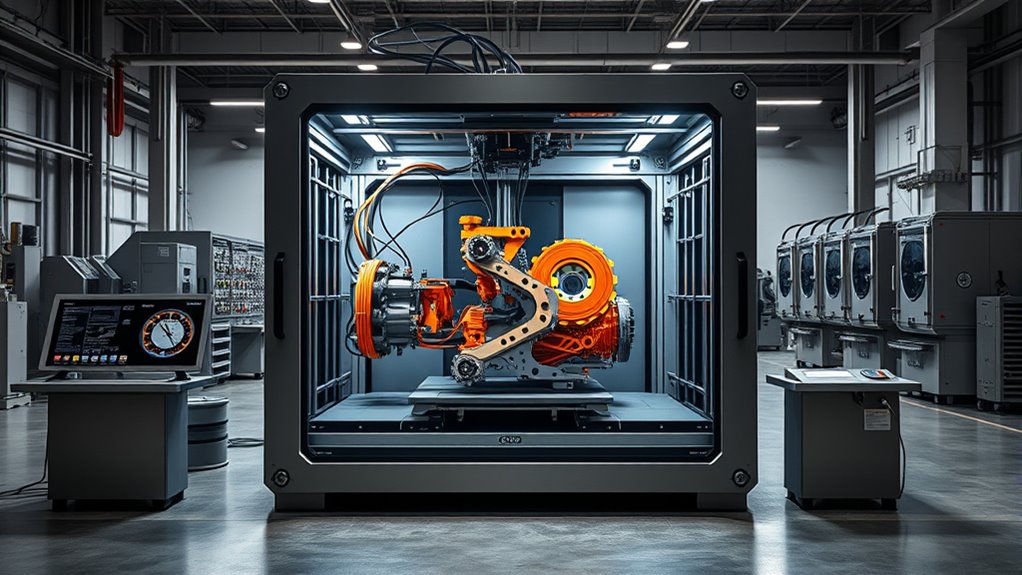

When it comes to industrial 3D printers, buyers face a balance between high performance, versatility, and cost. The FlashForge Creator 5 Pro stands out for its multi-material capabilities and toolhead flexibility, making it ideal for complex prototypes. The Original Prusa XL offers large-format printing with multi-material options, perfect for bigger projects. Meanwhile, the Creality K2 Pro combines multicolor printing with high-speed operation, suited for fast-paced production environments. However, tradeoffs include higher costs and maintenance complexity. Continue reading for a detailed breakdown of these options and how to choose the right industrial 3D printer for your needs.

Get business pricing on tech for your team
- Business-only prices and quantity discounts
- Tax-exempt purchasing
- Multiple users, one account, clear invoices
Complete the kit


Key Takeaways
- Multi-material and multi-color printing are common features but often come with increased costs and maintenance requirements.
- Large build volume printers tend to be more expensive and slower, requiring tradeoffs between size and speed.
- High-speed printing models, like the FlashForge AD5X, excel in rapid prototyping but may compromise on precision or material compatibility.
- Heated chambers and filtration systems are standard in premium models, improving print quality and safety but raising initial investment.
- Versatility in toolheads and material handling significantly impacts long-term usability and ROI.
| FlashForge Creator 5 Pro 3D Printer with 4 Toolheads and Multi-Material Printing |  | Best Overall for Versatility and Multi-Material Capabilities | Number of Toolheads: 4 | Heated Chamber Temperature: 65°C | Printing Speed: 600mm/s | VIEW ON AMAZON | See Our Full Breakdown |
| Original Prusa XL 5-Toolhead Multi-Material Large-Format CoreXY 3D Printer |  | Best for Large-Scale Multi-Material Industrial Prototyping | Build Volume: 14.17 × 14.17 × 14.17 inches | Toolheads: 5 | Material Support: Multi-material, multi-color | VIEW ON AMAZON | See Our Full Breakdown |
| FLASHFORGE Adventurer 5M 3D Printer with Auto Leveling and High-Speed Printing |  | Best for Fast, Precise Small-Scale Projects | Print Size: 220x220x220mm | Max Speed: 600mm/s | Extruder Temperature: 280°C | VIEW ON AMAZON | See Our Full Breakdown |
| Creality K2 Pro Combo 3D Printer with Multicolor Printing, Large Build Volume, High-Speed, Dual AI Cameras, Auto Leveling |  | Best for Large-Scale Multi-Material Production and Monitoring | Build Volume: 300×300×300mm | Max Speed: 600mm/s | Chamber Temperature: up to 60°C | VIEW ON AMAZON | See Our Full Breakdown |
| Creality K2 Combo 3D Printer with Multicolor Printing, Auto Leveling, and Smart Camera |  | Best for Multi-Color Precision and Ease of Use | Build Volume: 260×260×260 mm | Color Capabilities: Up to 16 colors with 4 CFS units | Printing Speed: 600mm/s | VIEW ON AMAZON | See Our Full Breakdown |
| Original Prusa XL 2-Toolhead Multi-Material Large-Format CoreXY 3D Printer |  | Best Overall for Large-Scale Multi-Material Printing | Build Volume: 14.17×14.17×14.17 in | Tool System: Dual toolhead multi-material | Heated Bed: Segmented heated bed | VIEW ON AMAZON | See Our Full Breakdown |
| Bambu Lab P2S Combo, P2S 3D Printer & AMS 2 Pro, Multi-Color 3D Printing |  | Best for Speed and Ease of Multi-Color Printing | Print Speed: 600 mm/s | Setup Time: 15 minutes | Filament Drying Temp: 65 °C | VIEW ON AMAZON | See Our Full Breakdown |
| FlashForge Creator 5 Pro Industrial 3D Printer with Heated Chamber and HEPA13 Filtration |  | Best for Multi-Material Industrial-Grade Performance | Active Chamber Temp: 65°C | Build Volume: 256mm³ | Number of Extruders: 4 | VIEW ON AMAZON | See Our Full Breakdown |
| FlashForge Creator 5 3D Printer with 4 Toolheads, Multi-Color & Multi-Material Printing, Auto Calibration, CoreXY System |  | Best for Versatility and Multi-Color Multi-Material Production | Number of Toolheads: 4 | Maximum Speed: 600mm/s | Calibration: Auto | VIEW ON AMAZON | See Our Full Breakdown |
| FlashForge AD5X Multi-Color 3D Printer, CoreXY, 600mm/s High-Speed, Auto Leveling, 300°C Extruder, 220x220x220mm Build Volume | 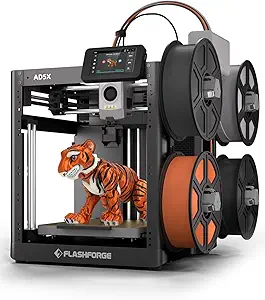 | Best for Rapid Prototyping and Multi-Color Detailing | Build Volume: 220x220x220 mm | Max Speed: 600mm/s | Extruder Temp: 300°C | VIEW ON AMAZON | See Our Full Breakdown |
| industrial 3d printer | Build Volume |
|---|---|
| FlashForge Creator 5 Pro 3D Pr | Not specified |
| Original Prusa XL 5-Toolhead M | 14.17 × 14.17 × 14.17 inches |
| FLASHFORGE Adventurer 5M 3D Pr | — |
| Creality K2 Pro Combo 3D Print | 300×300×300mm |
| Creality K2 Combo 3D Printer w | 260×260×260 mm |
| Original Prusa XL 2-Toolhead M | 14.17×14.17×14.17 in |
| Bambu Lab P2S Combo | — |
| FlashForge Creator 5 Pro Indus | 256mm³ |
| FlashForge Creator 5 3D Printe | — |
| FlashForge AD5X Multi-Color 3D | 220x220x220 mm |
More Details on Our Top Picks
FlashForge Creator 5 Pro 3D Printer with 4 Toolheads and Multi-Material Printing
The FlashForge Creator 5 Pro stands out for its ability to handle multiple materials and colors with minimal waste, thanks to its four independent toolheads and quick-change system. Its high-speed performance, reaching up to 600mm/s, makes it suitable for rapid prototyping of complex parts. The heated chamber at 65°C broadens filament compatibility, supporting materials like ABS, PC, and PA, which are common in industrial settings. Compared with the Creality K2 Pro, it offers more precise control and real-time monitoring, but this comes with a more complex setup that might challenge less experienced users. The absence of specific build volume details is a drawback for those needing large prints. Overall, this model makes the most sense for professionals who need flexible multi-material production but are prepared for a steeper learning curve and higher investment.
Pros:- Supports multi-material and multi-color printing with minimal waste
- High-speed printing up to 600mm/s
- Advanced safety features including HEPA filtration
- Precise control with real-time monitoring
Cons:- Complex setup requiring technical knowledge
- Build volume details are not specified, limiting clarity on part size
Best for: Manufacturers and engineers needing multi-material, multi-color production with fast turnaround
Not ideal for: Small workshops or hobbyists with limited technical expertise or smaller budgets
- Number of Toolheads:4
- Heated Chamber Temperature:65°C
- Printing Speed:600mm/s
- Filament Compatibility:ABS, PC, PA
- Build Volume:Not specified
- Connectivity:Remote control via Flash Studio
Our verdict“This printer is ideal for professionals seeking versatile, high-speed multi-material printing despite its setup complexity.”
Original Prusa XL 5-Toolhead Multi-Material Large-Format CoreXY 3D Printer
The Prusa XL excels in delivering large, multi-material prints with up to five different filaments used simultaneously, making it a top choice for high-detail prototypes. Its 14.17 x 14.17 x 14.17-inch build volume surpasses many competitors like the Creality K2 Pro, allowing for bigger, more complex parts. The CoreXY mechanics ensure high accuracy and speed, suited for professional environments. However, its assembly can be delicate, especially with fragile parts, and the complexity might overwhelm beginners. Compared to the FlashForge Creator 5 Pro, which is more versatile in material handling, the Prusa XL prioritizes size and multi-material capability, but at the cost of ease of use. It makes the most sense for industrial prototypes requiring high precision and large formats, prepared for a steeper learning curve.
Pros:- Supports up to five materials simultaneously
- Large build volume suitable for industrial prototypes
- High precision CoreXY mechanics for accuracy
- Smart material management reduces waste
Cons:- Assembly may require careful handling of fragile components
- Designed for professionals, not beginner-friendly
Best for: Industrial designers and prototype labs needing large, multi-material parts
Not ideal for: Hobbyists or small-scale creators unfamiliar with complex assembly and calibration
- Build Volume:14.17 × 14.17 × 14.17 inches
- Toolheads:5
- Material Support:Multi-material, multi-color
- Connectivity:Prusa ecosystem compatible
- Included:Satin print sheet, 1kg spool of Prusament PLA
Our verdict“Best suited for industrial settings where large, multi-material prototypes are a priority, accepting assembly complexity.”
FLASHFORGE Adventurer 5M 3D Printer with Auto Leveling and High-Speed Printing
The FlashForge Adventurer 5M is designed for quick, accurate prints with its 600mm/s speed and automatic bed leveling, reducing setup time. Its direct extruder reaches temperatures up to 280°C, enabling versatile materials like ABS and PETG, ideal for small, precision-focused projects. The 220x220x220mm build size is sufficient for many prototyping needs but less suitable for large parts compared to the Creality K2 Pro‘s 300×300×300mm volume. Its all-metal CoreXY structure ensures stability at high speeds but may produce more noise during operation. Compared with the FlashForge Creator 5 Pro, which emphasizes multi-material flexibility, the Adventurer 5M prioritizes speed and ease of use, though it might struggle with more complex multi-material setups. This pick is perfect for users needing rapid turnaround on small to medium parts with straightforward operation.
Pros:- Fast printing speeds up to 600mm/s
- Automatic bed leveling simplifies setup
- High-temperature extruder supports versatile materials
- Real-time app monitoring for remote control
Cons:- Limited build volume for larger projects
- Complex setup if unfamiliar with calibration procedures
Best for: Designers and engineers needing quick, precise small-format prototypes
Not ideal for: Large-scale manufacturing or users requiring extensive multi-material capability
- Print Size:220x220x220mm
- Max Speed:600mm/s
- Extruder Temperature:280°C
- Nozzle:3S Detachable
- Structure:CoreXY All Metal
- Features:Auto Leveling, App Monitoring, Dual-Fan Cooling
Our verdict“Ideal for rapid, precise small-scale prototyping where speed and ease of use are prioritized over size.”
Creality K2 Pro Combo 3D Printer with Multicolor Printing, Large Build Volume, High-Speed, Dual AI Cameras, Auto Leveling
The Creality K2 Pro Combo offers an impressive 300×300×300mm build volume combined with support for multi-material, multi-color prints using the innovative CFS system. Its high-speed capability of up to 600mm/s is complemented by active chamber heating up to 60°C, enabling a range of industrial-grade materials like ABS and ASA. Its dual AI cameras facilitate real-time monitoring and process optimization, setting it apart from models like the FlashForge Creator 5 Pro which focuses more on multi-material flexibility than integrated monitoring. The setup can be complex due to multiple CFS units, and the price is correspondingly higher. Nonetheless, this printer is a strong choice for large, multi-material projects requiring detailed oversight and speed, ideal for professional workshops and educational labs.
Pros:- Supports up to 16 colors with four CFS units
- Large build volume for big projects
- High-speed printing up to 600mm/s
- Dual AI cameras for precise monitoring and adjustment
Cons:- Requires multiple CFS units, increasing complexity and cost
- Setup can be technically demanding
Best for: Manufacturers producing large, multi-material parts with real-time process oversight
Not ideal for: Small-scale hobbyists or users with limited technical support resources
- Build Volume:300×300×300mm
- Max Speed:600mm/s
- Chamber Temperature:up to 60°C
- Filament Compatibility:PLA, ABS, ASA, PPA-CF, PET-CF
- Hotend:Quick-swap hotend
- Connectivity:WiFi, LAN
Our verdict“Best for large, multi-material production environments where monitoring and speed are essential, accepting higher complexity and cost.”
Creality K2 Combo 3D Printer with Multicolor Printing, Auto Leveling, and Smart Camera
The Creality K2 Combo makes multi-color printing accessible with its support for up to 16 colors through four CFS units, offering a versatile platform for intricate models. Its 260×260×260mm build volume is suitable for detailed prototypes, and its auto bed leveling paired with a smart AI camera streamlines setup and ensures consistent quality. Compared with the FlashForge Creator 5 Pro, which emphasizes multi-material flexibility, the K2 prioritizes user convenience and multi-color fidelity, ideal for educational or creative workflows. However, the need for multiple CFS units can drive up costs, and the limited material support may restrict some advanced applications. Overall, this model suits users seeking straightforward multi-color multi-material output with minimal fuss, right out of the box.
Pros:- Supports up to 16 colors with four CFS units
- Pre-assembled for quick setup
- Quiet operation with silent mode
- Auto leveling with AI camera for precision
Cons:- Requires multiple CFS units to unlock full multicolor capabilities
- Limited to specific materials listed
Best for: Creative professionals and educators needing easy, precise multi-color printing
Not ideal for: Users requiring extensive material variety or large-scale parts
- Build Volume:260×260×260 mm
- Color Capabilities:Up to 16 colors with 4 CFS units
- Printing Speed:600mm/s
- Auto Leveling:Yes
- Camera:Smart AI Camera
- Supported Materials:PLA, PETG, ABS, PLA-CF
Our verdict“Perfect for users who want reliable, multi-color, multi-material prints with minimal setup complexity, accepting higher hardware costs.”
Original Prusa XL 2-Toolhead Multi-Material Large-Format CoreXY 3D Printer
The Prusa XL stands out for its impressive 14x14x14-inch build volume, making it ideal for complex, large-scale projects. Its dual toolhead system allows seamless multi-material switching, surpassing many competitors like the FlashForge Creator 5 Pro in versatility. While its robust CoreXY motion system ensures high precision, the size and assembly complexity mean it demands careful handling and a higher investment. The segmented heated bed enhances print reliability for large, multi-material jobs, but fragile parts require careful transportation. Compared to smaller or simpler printers, this model offers industrial-grade performance at a premium price. Tradeoffs include increased setup time and cost, but it’s unmatched for professional multi-material, large-format tasks.
Pros:- Large build volume suitable for complex projects
- Multi-material capability with seamless switching
- Industrial-grade reliability and precision
- Fully integrated with Prusa ecosystem
Cons:- Fragile parts require careful packing
- Assembly can be time-consuming due to multiple components
- High cost for advanced features
Best for: Professionals and advanced makers needing large, multi-material prototypes or parts.
Not ideal for: Hobbyists with limited space or budget who only print small models or simple objects.
- Build Volume:14.17×14.17×14.17 in
- Tool System:Dual toolhead multi-material
- Heated Bed:Segmented heated bed
- Motion System:CoreXY
- Included Accessories:Satin print sheet, 1kg spool of Prusament PLA
Our verdict“This printer excels for those requiring large, multi-material prints and has the space and budget to support its complexity.”
Bambu Lab P2S Combo, P2S 3D Printer & AMS 2 Pro, Multi-Color 3D Printing
The Bambu Lab P2S Combo offers rapid, precise printing up to 600mm/s, making it a top pick for fast prototyping. Its quick setup process, taking about 15 minutes, and automatic calibration make it accessible to newcomers, unlike the more complex FlashForge Creator 5. The addition of the AMS 2 Pro enables straightforward multi-color and multi-material printing, though the P2S alone doesn’t support multi-color without the combo system. Its adaptive airflow and filament drying features improve print quality, but the high-speed operation demands careful calibration to avoid inaccuracies. Compared with slower, less integrated options, this combo provides an excellent balance of speed and multi-material capabilities, ideal for those who value quick turnaround times without sacrificing precision. Tradeoffs include a learning curve for advanced features and higher initial investment.
Pros:- High-speed printing up to 600mm/s
- Supports multi-color/multi-material with AMS 2 Pro
- Quick setup and auto calibration
- Adaptive airflow system for quality control
Cons:- Supports multi-color only with AMS 2 Pro, not standalone
- Features can be complex for new users
- Requires careful calibration for best accuracy
Best for: Speed-focused professionals and hobbyists who need quick, multi-color prototypes.
Not ideal for: Beginners seeking a simple single-material printer or those with tight space constraints.
- Print Speed:600 mm/s
- Setup Time:15 minutes
- Filament Drying Temp:65 °C
- Chamber Temp:50 °C
- Air Filtration:Carbon filter
Our verdict“Ideal for users prioritizing fast, multi-material production with minimal fuss during setup.”
FlashForge Creator 5 Pro Industrial 3D Printer with Heated Chamber and HEPA13 Filtration
The FlashForge Creator 5 Pro pushes into professional territory with its heated chamber reaching 65°C and four independent extruders, supporting multi-material, multi-color printing of challenging materials like ABS and Nylon. Its active chamber ensures consistent results on complex geometries, standing out from smaller or less equipped printers like the Creality K2 Pro. The integrated HEPA13 filter keeps the environment cleaner, which is vital in professional or educational settings. However, its large footprint and somewhat complex setup make it less suitable for small workshops or casual users. While the high speed of 600mm/s is impressive, it may sacrifice some accuracy if not finely tuned, especially with multi-material prints. This model’s price and complexity make it a strong choice for demanding environments, but not for hobbyists on a budget. Tradeoffs include higher costs and setup complexity for advanced features.
Pros:- Supports multi-material, multi-color printing
- Active heated chamber for challenging materials
- Advanced HEPA13 air filtration
- High print speeds of up to 600mm/s
Cons:- Complex setup requiring technical knowledge
- Higher price point for hobbyists
- Large footprint may not suit small spaces
Best for: Educational or professional environments requiring multi-material, multi-color printing with high reliability.
Not ideal for: Home hobbyists or small offices with limited space and less technical expertise.
- Active Chamber Temp:65°C
- Build Volume:256mm³
- Number of Extruders:4
- Print Speed:600mm/s
- Filtration:HEPA13
Our verdict“Best suited for professional or educational settings needing robust multi-material capabilities and high reliability.”
FlashForge Creator 5 3D Printer with 4 Toolheads, Multi-Color & Multi-Material Printing, Auto Calibration, CoreXY System
The FlashForge Creator 5 offers four independent toolheads, enabling true multi-color and multi-material printing with quick 7-second swaps and auto calibration. Its CoreXY system ensures high-speed, precise movements, comparable to the AD5X, but with added flexibility for multi-material jobs. This makes it a strong choice for creators who need rapid, multi-color prototypes with minimal downtime. The automatic calibration reduces setup time, but the complex configuration might be overwhelming for beginners. While the high speed of 600mm/s is attractive, maintaining accuracy requires careful calibration, especially with multiple extruders. Its high price reflects its advanced features, making it more suitable for experienced users or professional environments. Tradeoffs include complexity and cost, but it delivers unmatched multi-material versatility.
Pros:- Supports true multi-color, multi-material printing
- Fast tool swaps with preheating in 7 seconds
- Auto calibration for quick setup
- High-speed printing up to 600mm/s
Cons:- Complex setup for newcomers
- High cost for advanced features
- Requires regular maintenance for peak performance
Best for: Professionals and experienced hobbyists needing multi-color, multi-material, high-speed production.
Not ideal for: Absolute beginners or those with limited technical skills due to setup complexity.
- Number of Toolheads:4
- Maximum Speed:600mm/s
- Calibration:Auto
- Motion System:CoreXY
- Supported Materials:PLA, PETG, TPU, Support Materials
Our verdict“Perfect for users who need rapid, multi-material, multi-color production with minimal downtime.”
FlashForge AD5X Multi-Color 3D Printer, CoreXY, 600mm/s High-Speed, Auto Leveling, 300°C Extruder, 220x220x220mm Build Volume
The FlashForge AD5X combines high-speed performance with versatile multi-color printing, featuring auto bed leveling and a 300°C extruder capable of handling materials like ABS and PETG. Its 220x220x220mm build volume strikes a balance between size and speed, making it suitable for rapid prototyping of detailed models. The support for multiple nozzle sizes offers flexibility for fine or larger prints. While its speed of 600mm/s accelerates production, maintaining accuracy requires diligent calibration, especially with multi-color setups. Its smart features like resume printing and remote control via mobile app add convenience, but setup can be complex for less experienced users. This model is ideal for those needing quick turnaround on detailed, multi-color prototypes, at a price point reflecting its advanced capabilities. Tradeoffs involve technical setup and calibration, but it excels in speed and multi-color flexibility.
Pros:- Supports multi-color printing with multiple nozzles
- High-speed operation up to 600mm/s
- Auto bed leveling for consistent quality
- Versatile nozzle sizes for detailed or large prints
Cons:- Setup may be complex for beginners
- High-speed printing requires careful calibration
- Price may be high for casual users
Best for: Rapid prototyping teams and professionals needing multi-color, multi-material detailed models.
Not ideal for: Hobbyists seeking a simple, plug-and-play printer or those with limited technical skills.
- Build Volume:220x220x220 mm
- Max Speed:600mm/s
- Extruder Temp:300°C
- Auto Leveling:Yes
- Connectivity:Mobile app
Our verdict“Designed for fast, detailed multi-color prototyping, especially in professional environments where speed matters.”

How We Picked
I evaluated these industrial 3D printers based on performance, build quality, versatility, ease of use, and value. Priority was given to printers capable of handling multiple materials and colors, as these are essential in industrial settings. I also considered build volume, speed, and advanced features like auto-leveling and filtration systems. Cost was balanced against feature set to identify models that offer the best balance of capability and affordability. The ranking reflects a combination of user reviews, feature innovation, and overall reliability in demanding manufacturing environments.Factors to Consider When Choosing Industrial 3d Printers
Choosing an industrial 3D printer involves more than just looking at specs. You need to consider your specific production needs, material compatibility, and operational environment. The right model should fit your workflow and budget while offering room to grow. Here are key factors to keep in mind:Build Volume and Speed
Size matters in industrial settings. Larger build volumes enable printing bigger parts or multiple components simultaneously, but often come with slower speeds and higher costs. If you prioritize rapid iteration of smaller parts, a faster, smaller model may suffice. Consider your typical project size and production volume to strike the right balance.
Material Compatibility and Multi-Material Capabilities
Not all printers support the same materials. Industrial applications often demand a range of plastics, composites, or even metals. Multi-material and multi-color printing features add versatility but also increase complexity and price. Assess your material needs carefully to avoid investing in a machine that limits your options.
Ease of Maintenance and Reliability
Industrial printers are long-term investments, so durability and ease of maintenance matter. Features like auto-calibration, enclosed chambers, and robust construction reduce downtime. Be wary of models that require frequent repairs or complicated setups, as these can erode the cost benefits of high productivity.
Cost and Total Cost of Ownership
While high-end models come with a hefty upfront price, they often save money over time through faster production and fewer failures. Consider maintenance costs, material expenses, and potential downtime. Sometimes, a less expensive machine with lower operational costs offers better overall value for smaller-scale operations.
Safety and Environment Considerations
Features like HEPA filtration, heated chambers, and proper ventilation are vital in industrial environments to maintain safety and compliance. Overlooking these factors can lead to health risks or regulatory issues, especially with high-temperature or hazardous materials. Invest in models that prioritize safety features appropriate for your workspace.
Frequently Asked Questions
Can I switch between different materials easily on these industrial 3D printers?
Many industrial 3D printers support multi-material printing, but ease of switching varies. Machines like the FlashForge Creator 5 Pro and Original Prusa XL are designed with multiple toolheads or material feeds, simplifying transitions. However, some models may require manual adjustments or cleaning between materials, impacting overall efficiency. Check each model’s material handling features to ensure they meet your switching frequency and complexity needs.
Are these printers suitable for metal or composite materials?
Most of the models in this list are optimized for plastics and composites, with a few capable of handling metals in specialized setups. For true metal 3D printing, you typically need industrial-grade machines with powder bed fusion or directed energy deposition technologies, which are more expensive and complex. These printers excel at high-performance thermoplastics and composites, making them suitable for functional parts, tooling, and prototypes but not for metal parts unless specified.
What maintenance should I expect for a high-end industrial 3D printer?
Regular maintenance includes cleaning print beds and nozzles, replacing worn parts like belts or extruders, and updating firmware. Enclosed models with HEPA filters or heated chambers require additional upkeep, such as filter replacement and chamber cleaning. Investing in a model with auto-calibration and self-diagnostic features can reduce downtime and maintenance effort, but it’s important to follow manufacturer guidelines for optimal performance.
How do I choose between a multi-material or single-material industrial 3D printer?
The decision depends on your production needs. Multi-material printers offer greater versatility, enabling complex assemblies or multi-color parts in a single run. However, they tend to be more expensive and require more maintenance. Single-material printers are simpler and often more reliable, suitable if your projects involve only one type of material. Consider your typical output and future expansion plans before choosing.
Is a heated chamber necessary for industrial 3D printing?
Heated chambers improve print quality by reducing warping and improving layer adhesion, especially with high-performance materials like ABS or composites. For high-precision or large-format projects, a heated chamber can be essential to achieving consistent results. However, they add to the cost and complexity of the machine, so evaluate whether your material choices and production volume justify the investment.
Conclusion
The best overall choice for most users is the FlashForge Creator 5 Pro, thanks to its versatile toolheads and multi-material support. For those prioritizing large parts or multi-material flexibility, the Original Prusa XL offers impressive size and capability. Budget-conscious buyers should consider the Creality K2 Combo for its balance of features and cost. If speed and multi-color production are critical, the FlashForge AD5X delivers exceptional throughput. Beginners or small-scale operations may benefit from simpler, reliable models, while industrial-scale manufacturers should look at high-end, feature-rich options with safety and maintenance features built-in.
Fall Picks
fall essentials
As an affiliate, we earn on qualifying purchases.