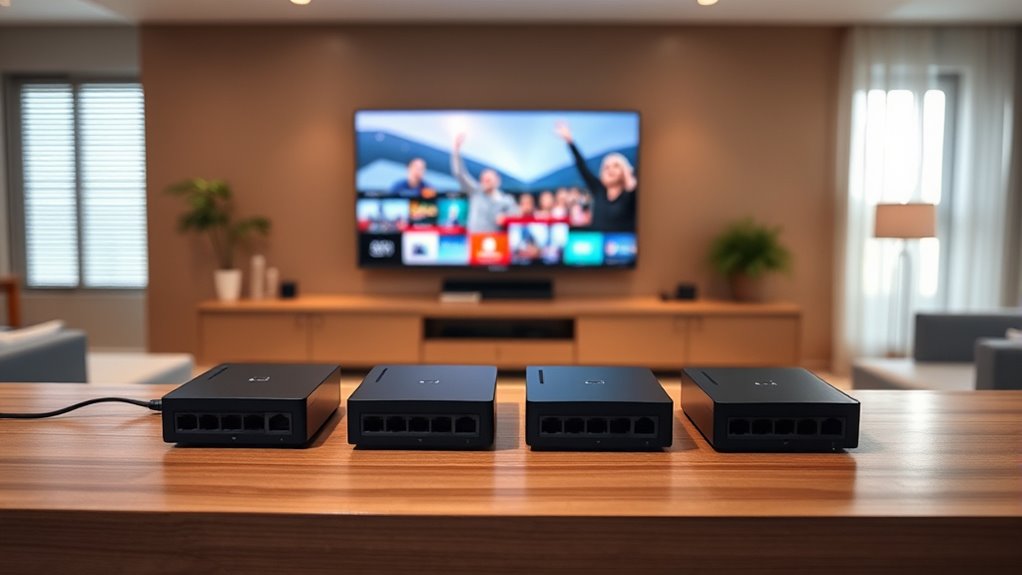
Searching for the best ethernet backhaul mesh WiFi kits in 2026? The top pick here is the NETGEAR Orbi 770 Series WiFi 7 Mesh System, known for its fast, reliable backhaul connections. The TP-Link Deco X55 offers excellent value with solid performance for most homes, while the TP-Link Deco 7 BE23 excels with WiFi 7 support for future-proofing. Buyers face tradeoffs between speed, coverage, and price—more advanced setups tend to cost more but deliver better stability and higher speeds. Continue reading for a detailed breakdown of each option to find the best fit for your home network needs.

Get business pricing on tech for your team
- Business-only prices and quantity discounts
- Tax-exempt purchasing
- Multiple users, one account, clear invoices
Key Takeaways
- Ethernet backhaul significantly boosts network stability and speed compared to wireless backhaul, especially in large homes.
- WiFi 7 systems, like Deco 7 BE23 and Orbi 770, offer future-proofing but come at a higher price point with more complex setup requirements.
- Most affordable kits, such as Tenda Nova MW6, still provide reliable coverage but may lack the latest WiFi standards and advanced features.
- Build quality and ease of setup vary widely—premium kits tend to be more user-friendly and durable, justifying higher costs.
- Choosing between dual-band and tri-band systems impacts performance; tri-band provides dedicated backhaul channels but costs more.
| WAVLINK AX3000 WiFi 6 Mesh System 2 Pack |  | Best Overall for Large Homes and Offices | Speed: Up to 3.0 Gbps | Bands: Dual-band (2.4GHz at 573Mbps, 5GHz at 2402Mbps) | Coverage: 5,000 sq. ft. | VIEW ON AMAZON | See Our Full Breakdown |
| TP-Link Deco 7 BE23 Dual-Band WiFi 7 Mesh System (3-Pack) |  | Best for Future-Proofing with Wi-Fi 7 and Wired Backhaul | Wi-Fi Technology: Wi-Fi 7 | Maximum Speed: 3.6 Gbps | Coverage: Up to 6,500 sq. ft | VIEW ON AMAZON | See Our Full Breakdown |
| NETGEAR Orbi 770 Series WiFi 7 Mesh System, 3 Pack |  | Best for Extensive Coverage and Ultra-High-Speed Streaming | Coverage: 8,200 sq. ft. | Wi-Fi Technology: Wi-Fi 7 | Maximum Speed: 11 Gbps | VIEW ON AMAZON | See Our Full Breakdown |
| Tenda Nova Mesh WiFi System MW6 |  | Best Budget Choice for Large Homes with AC1200 Speeds | Coverage: 3500 sq. ft. | WiFi Standard: AC1200 | Bands: Dual-Band | VIEW ON AMAZON | See Our Full Breakdown |
| TP-Link Deco X55 AX3000 WiFi 6 Mesh System (3-Pack) |  | Best for Reliable, High-Speed Wi-Fi with Wired Options | Wi-Fi Standard: Wi-Fi 6 (AX3000) | Coverage Area: 6500 sq ft | Number of Devices Supported: Up to 150 | VIEW ON AMAZON | See Our Full Breakdown |
| Tenda AX3000 WiFi 6 Mesh System Nova MX12 – Whole Home Mesh WiFi Coverage up to 7,000 sq. ft., Dual-Band WiFi Mesh Network for 160+ Devices, Fast & Stable, Replaces Wireless Router (3-Pack) |  | Best Overall for Large Homes | Wi-Fi Standard: Wi-Fi 6 (802.11ax) | Maximum Speed: 2976Mbps | Coverage Area: up to 7,000 sq. ft. | VIEW ON AMAZON | See Our Full Breakdown |
| Cudy AX3000 Wi-Fi 6 Whole Home Mesh System, 2-Pack |  | Best High-Speed Performance for Medium to Large Homes | Wi-Fi Standard: Wi-Fi 6 (AX3000) | Speed: 2402 Mbps on 5 GHz | Coverage: 2100 sq.ft. per unit | VIEW ON AMAZON | See Our Full Breakdown |
| Tenda Nova Mesh WiFi System MW5G – Covers up to 3500 sq.ft – AC1200 Whole Home WiFi Mesh System – Gigabit Mesh Router for 80 Devices – Dual-Band Mesh Network (3-Pack) |  | Best Budget-Friendly Whole Home Coverage | Coverage: Up to 3,500 sq.ft. | Wi-Fi Standard: AC1200 | Number of Devices: Supports 80 | VIEW ON AMAZON | See Our Full Breakdown |
| WAVLINK AX3000 WiFi 6 Mesh System 3 Pack |  | Best for Large Homes and Offices with Fast Wi-Fi 6 | Speed: Up to 3.0 Gbps | Coverage: 7,300 sq.ft. | Devices Supported: 256+ | VIEW ON AMAZON | See Our Full Breakdown |
| TP-Link Deco X15 Dual-Band AX1500 WiFi 6 Mesh Wi-Fi System, 3-Pack |  | Best for Balanced Performance and Security | Wi-Fi Standard: Wi-Fi 6 (AX1500) | Coverage: up to 5,600 sq.ft. | Number of Units: 3 | VIEW ON AMAZON | See Our Full Breakdown |
| Tenda Nova Mesh WiFi System MW6 – Covers up to 2400 sq.ft – AC1200 Whole Home WiFi Mesh System – Dual-Band Gigabit Network for 90 Devices – 2-Pack |  | Best Value for Moderate Coverage | Coverage: 2400 sq.ft | Technology: AC1200 Dual Band | Number of Devices Supported: 90 | VIEW ON AMAZON | See Our Full Breakdown |
| Deco 7 Dual-Band WiFi 7 Mesh System (BE5000), 4-Stream, 5 Gbps |  | Best for High-Speed, Large Coverage | WiFi Standard: WiFi 7 | Speed: 5 Gbps | Coverage: 6,600 sq.ft. | VIEW ON AMAZON | See Our Full Breakdown |
| NETGEAR Orbi 370 Series WiFi 7 Mesh System, 3 Pack |  | Best for Large, Multi-Story Homes with Expandability | Coverage: 6,000 sq.ft | Number of Units: 3 | WiFi Standard: WiFi 7 | VIEW ON AMAZON | See Our Full Breakdown |
| TP-Link Deco 7 Pro BE17000 Tri-Band Wi-Fi 7 Whole Home Mesh System (3-Pack) |  | Best for High-Performance Smart Homes | Wi-Fi Standard: Wi-Fi 7 | Total Speed: 17 Gbps | Coverage: 8,500 sq.ft. | VIEW ON AMAZON | See Our Full Breakdown |
| TP-Link Deco X15 Dual-Band AX1500 WiFi 6 Mesh Wi-Fi System, 2-Pack |  | Best for Small to Medium Homes with WiFi 6 | Wi-Fi Standard: WiFi 6 (AX1500) | Coverage Area: up to 3,900 sq.ft. | Number of Units: 2 | VIEW ON AMAZON | See Our Full Breakdown |
| ethernet backhaul mesh wifi kit | Coverage |
|---|---|
| WAVLINK AX3000 WiFi 6 Mesh Sys | 5,000 sq. ft. |
| TP-Link Deco 7 BE23 Dual-Band | Up to 6,500 sq. ft |
| NETGEAR Orbi 770 Series WiFi 7 | 8,200 sq. ft. |
| Tenda Nova Mesh WiFi System MW | 3500 sq. ft. |
| TP-Link Deco X55 AX3000 WiFi 6 | — |
| Tenda AX3000 WiFi 6 Mesh Syste | — |
| Cudy AX3000 Wi-Fi 6 Whole Home | 2100 sq.ft. per unit |
| Tenda Nova Mesh WiFi System MW | Up to 3,500 sq.ft. |
| WAVLINK AX3000 WiFi 6 Mesh Sys | 7,300 sq.ft. |
| TP-Link Deco X15 Dual-Band AX1 | up to 5,600 sq.ft. |
| Tenda Nova Mesh WiFi System MW | 2400 sq.ft |
| Deco 7 Dual-Band WiFi 7 Mesh S | 6,600 sq.ft. |
| NETGEAR Orbi 370 Series WiFi 7 | 6,000 sq.ft |
| TP-Link Deco 7 Pro BE17000 Tri | 8,500 sq.ft. |
| TP-Link Deco X15 Dual-Band AX1 | — |
More Details on Our Top Picks
WAVLINK AX3000 WiFi 6 Mesh System 2 Pack
This WAVLINK AX3000 Mesh System excels at delivering fast WiFi 6 speeds up to 3.0 Gbps across large spaces, making it ideal for big homes or office environments. Its dual-band setup and support for over 256 devices ensure smooth connectivity, especially when compared with the AC1200 systems like the Tenda Nova MW6, which deliver lower speeds and less future-proofing. While setup is straightforward, the lack of detailed wired backhaul performance can be a limitation for those wanting maximum stability. This system’s ability to support seamless roaming and high device density makes it a versatile choice, but users need compatible devices to fully benefit from WiFi 6’s capabilities.
Pros:- High-speed WiFi 6 performance supports many devices simultaneously
- Large coverage area up to 5,000 sq. ft. suitable for big spaces
- Easy setup through app with flexible operation modes
Cons:- Requires compatible WiFi 6 devices to experience full speeds
- Limited info on wired backhaul performance, which could affect stability
Best for: Large households or small business environments needing high-speed, high-capacity WiFi coverage
Not ideal for: Users with small apartments or limited device counts, as they may pay for more coverage and speed than they need
- Speed:Up to 3.0 Gbps
- Bands:Dual-band (2.4GHz at 573Mbps, 5GHz at 2402Mbps)
- Coverage:5,000 sq. ft.
- Antennas:2.4GHz x 2, 5GHz x 3
- Device Capacity:256+ devices
- Encryption:WPA3
Our verdict“This pick is best for those seeking robust WiFi 6 coverage in large homes or offices who prioritize speed and capacity over simplicity.”
TP-Link Deco 7 BE23 Dual-Band WiFi 7 Mesh System (3-Pack)
The TP-Link Deco 7 BE23 system stands out for its support of Wi-Fi 7, offering speeds up to 3.6 Gbps and covering up to 6,500 sq. ft., making it a strong choice for tech-savvy users wanting the latest standards. Its multi-link operation and 2.5G Ethernet ports per unit provide reliable wired backhaul options, unlike the wireless backhaul in the WAVLINK system, which can be less stable. Nevertheless, the system’s setup and management complexity may be daunting for non-technical users, and the higher price for a 3-pack might be a barrier for smaller homes. It’s ideal for those planning to future-proof their network with wired backhaul support and advanced security.
Pros:- Supports Wi-Fi 7 with speeds up to 3.6 Gbps for future-proof performance
- Includes 2.5G Ethernet ports per unit for wired backhaul
- Wide coverage up to 6,500 sq. ft. suitable for large homes
Cons:- Requires compatible Wi-Fi 7 client devices to utilize full speeds
- Setup complexity might challenge less experienced users
Best for: Tech enthusiasts or smart home owners seeking cutting-edge Wi-Fi 7 features and wired backhaul support
Not ideal for: Basic users or small apartments that don’t need Wi-Fi 7 speeds or extensive wired connections
- Wi-Fi Technology:Wi-Fi 7
- Maximum Speed:3.6 Gbps
- Coverage:Up to 6,500 sq. ft
- Ports:2× 2.5G Ethernet ports per unit
- Supported Devices:Over 150
- Security:HomeShield, WPA3
Our verdict“Ideal for users aiming for the latest Wi-Fi technology with wired backhaul options in large, connected homes.”
NETGEAR Orbi 770 Series WiFi 7 Mesh System, 3 Pack
The NETGEAR Orbi 770 Series offers an expansive 8,200 sq. ft. coverage, making it a top choice for large properties. Its Wi-Fi 7 speeds up to 11 Gbps outpace most competitors, making it especially suited for demanding tasks like 4K streaming and gaming. Compared with the TP-Link Deco 7, it supports more devices and provides a straightforward setup with the Orbi app, though it requires a subscription for NETGEAR Armor security, which adds to the ongoing costs. While the price is not specified, its large coverage and speed make it suitable for users with extensive networking needs who want reliability and ease of management.
Pros:- Huge coverage up to 8,200 sq. ft. ideal for big homes or offices
- Incredible Wi-Fi 7 speeds supporting high-bandwidth activities
- Simple setup and management via the Orbi app
Cons:- Requires subscription for advanced security with NETGEAR Armor
- Price may be high relative to smaller systems or less demanding setups
Best for: Large households or small businesses needing extensive coverage and ultra-fast Wi-Fi 7 speeds
Not ideal for: Users with modest internet needs or tight budgets, as the system might be costly and security subscription adds expense
- Coverage:8,200 sq. ft.
- Wi-Fi Technology:Wi-Fi 7
- Maximum Speed:11 Gbps
- Supported Devices:Up to 100
- Expandable Coverage:up to 2,750 sq. ft. per satellite
- Compatibility:Any ISP, plans up to 2.5 Gbps
Our verdict“Best suited for large homes with high-speed, reliable internet needs and a budget for premium features.”
Tenda Nova Mesh WiFi System MW6
The Tenda Nova MW6 provides reliable coverage of up to 3,500 sq. ft. at a budget-friendly price, making it suitable for large homes that don’t demand the latest WiFi 6 speeds. Its AC1200 dual-band setup and support for multiple devices make it a practical choice for everyday streaming and browsing, though it falls behind newer systems like the Deco X55 in speed and future-proofing. The lack of wired backhaul options and reliance on mobile app setup could be drawbacks for users seeking maximum stability and ease of management. Overall, it balances coverage and affordability but is less suited for high-demand or tech-forward users.
Pros:- Provides substantial coverage up to 3,500 sq. ft.
- Supports multiple devices with dual-band WiFi
- Affordable price point
Cons:- Limited to AC1200 speeds, not the latest WiFi standard
- No wired backhaul support, potentially reducing stability in complex layouts
Best for: Budget-conscious homeowners needing decent coverage without high-speed requirements
Not ideal for: Heavy gamers or smart home users with many devices who need faster speeds or wired backhaul
- Coverage:3500 sq. ft.
- WiFi Standard:AC1200
- Bands:Dual-Band
- Technology:MU-MIMO, Beamforming
- Device Capacity:Up to 90 devices
- Setup:Mobile app
Our verdict“A solid budget option for large homes that prioritize coverage over cutting-edge speed or wired connections.”
TP-Link Deco X55 AX3000 WiFi 6 Mesh System (3-Pack)
The TP-Link Deco X55 AX3000 system combines Wi-Fi 6 performance with broad coverage up to 6,500 sq. ft., supporting up to 150 devices. Its three Gigabit Ethernet ports per unit enable wired backhaul for more stable connections, making it a strong contender against systems like the WAVLINK AX3000 for those who want both speed and wired reliability. Its setup via the Deco app and advanced security features make it accessible and secure for most users. However, it requires a modem for most internet plans, which could add to the overall cost. This system strikes a balance between speed, coverage, and wired flexibility, suitable for busy households or small offices.
Pros:- Supports Wi-Fi 6 with speeds up to AX3000 for high performance
- Supports up to 150 devices with ease
- Includes 3 Gigabit Ethernet ports per unit for wired backhaul
Cons:- Requires a compatible modem, adding to setup complexity
- No built-in modem or Wi-Fi 7 support
Best for: Homeowners or small offices seeking a stable, high-speed mesh with wired backhaul support
Not ideal for: Users who prefer Wi-Fi 7 or have minimal device counts and smaller spaces
- Wi-Fi Standard:Wi-Fi 6 (AX3000)
- Coverage Area:6500 sq ft
- Number of Devices Supported:Up to 150
- Ethernet Ports:3 per unit
- Mesh System:Yes
- Security:TP-Link HomeShield
Our verdict“A dependable choice for those wanting fast, stable Wi-Fi 6 coverage with wired backhaul options in large or busy households.”
Tenda AX3000 WiFi 6 Mesh System Nova MX12 – Whole Home Mesh WiFi Coverage up to 7,000 sq. ft., Dual-Band WiFi Mesh Network for 160+ Devices, Fast & Stable, Replaces Wireless Router (3-Pack)
The Tenda AX3000 Nova MX12 stands out for its extensive coverage, reaching up to 7,000 sq. ft., making it ideal for big households with multiple floors. It supports over 160 devices thanks to Wi-Fi 6, ensuring fast, reliable connections even in busy environments. Compared to the TP-Link Deco X15, it offers more square footage but requires manual firmware updates, which can be less convenient. Its seamless roaming and easy setup via app or web GUI make it approachable for most users. However, it’s incompatible with the MW series and may need manual intervention for updates, which could be a drawback for those seeking a plug-and-play experience. This system is best suited for large homes with many connected devices, prioritizing coverage and capacity over simple management.
Pros:- Provides coverage up to 7,000 sq. ft., ideal for large homes
- Supports over 160 devices with Wi-Fi 6 technology
- Easy to set up via app or web interface
- Seamless roaming ensures smooth connectivity across the home
Cons:- Incompatible with MW series mesh systems
- Firmware updates require manual effort
- Limited full management features without app
Best for: Large households or multi-story homes needing extensive coverage and support for many devices
Not ideal for: Small apartments or users preferring a simple, plug-and-play setup without manual firmware management
- Wi-Fi Standard:Wi-Fi 6 (802.11ax)
- Maximum Speed:2976Mbps
- Coverage Area:up to 7,000 sq. ft.
- Bands:Dual-band (2.4G and 5G)
- Device Support:Over 160 devices
- Technology:MU-MIMO, OFDMA
Our verdict“This mesh system suits large homes with many devices, where expansive coverage and high capacity outweigh ease of management.”
Cudy AX3000 Wi-Fi 6 Whole Home Mesh System, 2-Pack
The Cudy AX3000 Mesh System excels with high-speed Wi-Fi 6, supporting speeds up to 2402 Mbps on 5 GHz, and covers up to 2,100 sq.ft. per unit, making it a solid choice for streaming, gaming, and smart home devices. Its dual-core 1.3 GHz processor and support for over 200 devices match or surpass many competitors like the WAVLINK AX3000. Compared to the Tenda Nova MW5G, it offers faster speeds and enterprise features such as VPN and OpenWRT firmware, but its setup and advanced options may be overwhelming for casual users. The app management is straightforward, but its higher price and complex features make it less ideal for those seeking simple plug-and-play solutions. This system is best suited for tech-savvy users with large homes or offices who want fast, reliable Wi-Fi 6.
Pros:- Supports speeds up to 2402 Mbps on 5 GHz
- Expands to cover up to 2900 sq.ft. with 2 units
- Supports over 200 devices seamlessly
- Includes enterprise features like VPN and OpenWRT firmware
Cons:- Requires a compatible high-speed internet plan to maximize performance
- Complex setup may be challenging for average users
- Higher price compared to basic mesh systems
Best for: Tech-savvy homeowners or small business owners needing high-speed, expandable Wi-Fi 6 coverage
Not ideal for: Casual users or those seeking a simple setup without advanced configuration options
- Wi-Fi Standard:Wi-Fi 6 (AX3000)
- Speed:2402 Mbps on 5 GHz
- Coverage:2100 sq.ft. per unit
- Expansion:Expandable to 2900 sq.ft.
- Processor:1.3 GHz Dual-Core ARM
- Devices Supported:Over 200
Our verdict“This mesh system offers high-performance Wi-Fi 6 for users comfortable with advanced features and larger coverage needs.”
Tenda Nova Mesh WiFi System MW5G – Covers up to 3500 sq.ft – AC1200 Whole Home WiFi Mesh System – Gigabit Mesh Router for 80 Devices – Dual-Band Mesh Network (3-Pack)
The Tenda Nova MW5G offers a reliable mesh solution at a more affordable price, supporting coverage up to 3,500 sq.ft. with a 3-pack. Its AC1200 dual-band Wi-Fi is sufficient for most everyday activities, supporting up to 80 devices with MU-MIMO and Beamforming. Compared to Wi-Fi 6 systems like the Cudy AX3000, it lacks the latest standards but compensates with straightforward setup via the Tenda Wi-Fi app. It’s ideal for smaller homes or users who prioritize cost over maximum speed. Its limited speed and device support might hinder high-bandwidth activities or very large households. This pick makes the most sense for budget-conscious users seeking decent coverage without advanced features.
Pros:- Covers up to 3,500 sq.ft. with 3 units
- Supports up to 80 devices with MU-MIMO
- Easy to set up via mobile app
- Cost-effective for the coverage offered
Cons:- Limited to AC1200 speeds, not Wi-Fi 6
- Less suitable for high-bandwidth activities
- More than enough for small spaces but less future-proof
Best for: Small to medium homes looking for reliable Wi-Fi without breaking the bank
Not ideal for: Gamer households or large homes requiring high-speed Wi-Fi 6 performance
- Coverage:Up to 3,500 sq.ft.
- Wi-Fi Standard:AC1200
- Number of Devices:Supports 80
- Technology:MU-MIMO, Beamforming
- Setup:App-based
- Security:WPA2-PSK
Our verdict“This mesh system is ideal for smaller homes or budget-conscious users who need reliable coverage without demanding high speeds.”
WAVLINK AX3000 WiFi 6 Mesh System 3 Pack
The WAVLINK AX3000 offers impressive speeds up to 3.0 Gbps and covers an enormous 7,300 sq.ft., making it well-suited for large homes or office environments. Its dual-band Wi-Fi 6, combined with support for over 256 devices, ensures robust, lag-free connectivity across extensive areas. Compared to the Tenda Nova MW5G, it provides faster speeds and WPA3 encryption, but it comes at a higher price point. Its flexible backhaul options and app management make setup straightforward, though some users might find the setup process complex due to its advanced features. This system is best for those needing extensive coverage and high-speed connectivity in demanding settings. It may be overkill for smaller homes or casual users.
Pros:- Supports speeds up to 3.0 Gbps for demanding applications
- Coverage up to 7,300 sq.ft. in a 3-pack setup
- Supports over 256 devices simultaneously
- Flexible backhaul options for optimized performance
Cons:- Higher price than basic mesh systems
- Setup complexity may challenge less tech-savvy users
- Requires app for full management
Best for: Large homes, offices, or demanding environments needing high-speed, extensive coverage
Not ideal for: Small households or users seeking a simple, budget-friendly Wi-Fi solution
- Speed:Up to 3.0 Gbps
- Coverage:7,300 sq.ft.
- Devices Supported:256+
- Antennas:5 high-gain antennas
- Encryption:WPA3
- Setup:App-based
Our verdict“This mesh system excels for large-scale deployments demanding high speeds and extensive coverage, suitable for tech-savvy users or businesses.”
TP-Link Deco X15 Dual-Band AX1500 WiFi 6 Mesh Wi-Fi System, 3-Pack
The TP-Link Deco X15 offers reliable dual-band Wi-Fi 6 coverage up to 5,600 sq.ft., making it a versatile choice for most homes. It supports up to 120 devices, with wired Ethernet backhaul enhancing stability and speed—an advantage over systems like the Tenda MW5G that lack Ethernet ports. Its setup via the Deco app is straightforward, and its security features, including TP-Link HomeShield, add peace of mind. While it doesn’t offer the highest speeds available in Wi-Fi 6, it strikes a good balance between performance, security, and ease of use. Compared to the Cudy AX3000, it’s simpler to manage but lacks some advanced features for power users. This system is ideal for families wanting solid coverage and security without complex configuration.
Pros:- Provides coverage up to 5,600 sq.ft.
- Supports up to 120 devices with Wi-Fi 6
- Includes wired Ethernet backhaul for stability
- Easy setup via Deco app with advanced security
Cons:- Requires a modem for internet connection
- Some advanced features may need a subscription
- Higher initial cost than basic routers
Best for: Families or small offices seeking dependable Wi-Fi 6 coverage with wired backhaul options
Not ideal for: Power users or gamers requiring the fastest Wi-Fi 6 speeds or extensive customization
- Wi-Fi Standard:Wi-Fi 6 (AX1500)
- Coverage:up to 5,600 sq.ft.
- Number of Units:3
- Ethernet Ports per Unit:2 Gigabit
- Device Support:up to 120
- Security:TP-Link HomeShield
Our verdict“This mesh system offers balanced performance, security, and ease of use, making it suitable for most families and small offices.”
Tenda Nova Mesh WiFi System MW6 – Covers up to 2400 sq.ft – AC1200 Whole Home WiFi Mesh System – Dual-Band Gigabit Network for 90 Devices – 2-Pack
The Tenda Nova MW6 stands out as an affordable option for those who need reliable whole-home coverage without the complexity of WiFi 7 systems. Compared to the Deco 7, it offers less coverage—up to 2400 sq.ft. versus 6,600 sq.ft.—but at a significantly lower price. Its AC1200 dual-band WiFi provides enough speed for streaming and browsing, though it may struggle with very high-bandwidth tasks or many simultaneous devices. Setup is straightforward via the Tenda app, but reliance on the app could be a hurdle for less tech-savvy users. Supports up to 90 devices, making it suitable for most households, yet the coverage limit means larger homes might need additional units or different systems.
Pros:- Cost-effective solution for moderate coverage needs
- Supports up to 90 devices for busy households
- Easy to set up and manage via mobile app
Cons:- Limited to 2400 sq.ft. coverage per 2-pack, not ideal for large homes
- Requires app for setup, which may be complex for some users
Best for: Budget-conscious homeowners wanting simple, reliable whole-home WiFi over moderate distances
Not ideal for: Large multi-story homes or users needing WiFi 6 or WiFi 7 speeds for multiple high-demand devices
- Coverage:2400 sq.ft
- Technology:AC1200 Dual Band
- Number of Devices Supported:90
- Number of Units:2
Our verdict“A solid choice for small to medium homes on a budget that prioritize ease of use over extensive coverage.”
Deco 7 Dual-Band WiFi 7 Mesh System (BE5000), 4-Stream, 5 Gbps
The Deco 7 offers a leap in speed and capacity with WiFi 7 technology, making it ideal for large homes and demanding users. Unlike the Tenda MW6, this system provides up to 6,600 sq.ft. of coverage with just two units, supporting over 150 devices, which is perfect for busy households or smart home setups. Its dual-band WiFi 7 delivers up to 5 Gbps, supporting seamless 4K streaming, gaming, and multiple smart devices simultaneously. Setup is quick via the Deco app, and advanced security features add peace of mind. However, the system’s complex features and need for multiple units mean it’s better suited to tech-savvy users or those with smart home integration plans.
Pros:- High-speed WiFi 7 with 5 Gbps throughput
- Supports large coverage up to 6,600 sq.ft.
- Supports over 150 devices simultaneously
- Seamless AI-Roaming for smooth connectivity
Cons:- Requires multiple units for optimal backhaul performance
- Complex features may be overwhelming for non-technical users
- Needs a modem for internet connection
Best for: Large households or tech enthusiasts seeking high-speed, extensive coverage supported by WiFi 7
Not ideal for: Small apartments or budget-conscious users who don’t need the latest WiFi standard or high device count
- WiFi Standard:WiFi 7
- Speed:5 Gbps
- Coverage:6,600 sq.ft.
- Number of Devices Supported:Over 150
- Setup:App-based, quick setup
- Security:TP-Link HomeShield, VPN support
Our verdict“Best suited for large homes and tech-savvy users demanding fast WiFi 7 coverage over wide areas.”
NETGEAR Orbi 370 Series WiFi 7 Mesh System, 3 Pack
The NETGEAR Orbi 370 excels in delivering extensive coverage up to 6,000 sq.ft., supporting fast speeds up to 5 Gbps, making it ideal for large, multi-story residences. Compared to the Deco 7, it offers greater expandability—up to 8,000 sq.ft. with additional satellites—and includes security and parental controls. Its simple setup and compatibility with any internet provider make it a flexible choice for families who want reliable WiFi across multiple floors. The subscription for advanced security might be a hurdle for some, and performance can vary depending on home construction, but overall, it’s an effective, expandable solution for big homes.
Pros:- Extensive coverage up to 6,000 sq.ft.
- Supports WiFi speeds up to 5 Gbps
- Expandable up to 8,000 sq.ft. with additional satellites
- Includes security and parental controls
Cons:- Requires subscription for advanced security features
- Performance may vary based on home layout
- WiFi 7 compatibility may be limited with some devices
Best for: Families in large, multi-story homes needing reliable, expandable WiFi with fast speeds
Not ideal for: Small apartments or users who prefer WiFi 6 technology or lower-cost solutions
- Coverage:6,000 sq.ft
- Number of Units:3
- WiFi Standard:WiFi 7
- Maximum Speed:5 Gbps
- Expandable Coverage:Up to 8,000 sq.ft.
Our verdict“A robust, expandable mesh system ideal for large homes needing dependable, fast WiFi with room to grow.”
TP-Link Deco 7 Pro BE17000 Tri-Band Wi-Fi 7 Whole Home Mesh System (3-Pack)
The TP-Link Deco 7 Pro combines tri-band WiFi 7 with multi-gig wired backhaul, supporting coverage up to 8,500 sq.ft. for demanding smart home setups. Its multiple Ethernet ports, including 10G SFP+ options, make it a prime choice for users needing high-speed wired connections alongside wireless coverage. Compared to the NETGEAR Orbi 370, it offers faster wired backhaul and higher overall speeds, making it better suited for complex smart homes or gaming setups. The higher price reflects its advanced features, but setup remains straightforward through the Deco app. Performance may depend on environment and device placement, but it’s a strong pick for tech-heavy households.
Pros:- Expansive coverage up to 8,500 sq.ft.
- Fast WiFi 7 with 17 Gbps total speed
- Multiple multi-gig Ethernet ports including 10G SFP+
- Easy setup via Deco app
Cons:- Requires a separate modem for internet access
- Higher price point due to advanced features
- Performance may vary depending on environment and placement
Best for: Smart home enthusiasts and gamers requiring high-speed wired and wireless connectivity over large areas
Not ideal for: Budget users or those with smaller homes who don’t need tri-band WiFi or multi-gig Ethernet
- Wi-Fi Standard:Wi-Fi 7
- Total Speed:17 Gbps
- Coverage:8,500 sq.ft.
- Ethernet Ports:Multiple including 10G SFP+
- Number of Units:3
Our verdict“Ideal for high-demand smart homes or gaming setups seeking maximum wired and wireless speeds over large areas.”
TP-Link Deco X15 Dual-Band AX1500 WiFi 6 Mesh Wi-Fi System, 2-Pack
The Deco X15 delivers solid WiFi 6 performance with coverage up to 3,900 sq.ft., making it a practical upgrade for homes still on WiFi 5 or earlier standards. Its dual-band AX1500 speeds support up to 120 devices, providing responsive internet for everyday tasks and some smart home devices. Compared to WiFi 7 systems like the Deco 7, it offers less speed and coverage but at a lower cost and with broader compatibility. Wired Ethernet backhaul support enhances stability, and setup through the Deco app is straightforward. This system is better suited for smaller homes or users prioritizing WiFi 6’s proven reliability over cutting-edge speed.
Pros:- Coverage up to 3,900 sq.ft.
- Supports up to 120 devices simultaneously
- Ethernet backhaul support for stability
- Easy setup via Deco app
Cons:- Limited to WiFi 6 — slower than WiFi 7 systems
- Two units may be insufficient for larger homes
- Advanced features may require subscriptions
Best for: Small to medium homes seeking reliable WiFi 6 coverage with wired backhaul support
Not ideal for: Large homes or users wanting WiFi 7 speeds and future-proofing
- Wi-Fi Standard:WiFi 6 (AX1500)
- Coverage Area:up to 3,900 sq.ft.
- Number of Units:2
- Ethernet Ports per Unit:2
- Supports Ethernet Backhaul:Yes
Our verdict“A reliable, cost-effective choice for small to medium homes prioritizing WiFi 6 technology.”

How We Picked
These products were evaluated based on performance, build quality, ease of installation, and value. Priority was given to systems with dedicated ethernet backhaul ports, as this feature greatly enhances stability and speed. Systems supporting WiFi 6 or WiFi 7 standards were favored for future-proofing, while coverage area and device capacity were also considered. Price was a factor, but only when paired with performance benefits. The ranking reflects a balance of these factors, aiming to recommend options suitable for different budgets and technical requirements.Factors to Consider When Choosing Ethernet Backhaul Mesh Wifi Kits
When selecting an ethernet backhaul mesh WiFi kit, understanding key factors helps you choose the best system for your needs. Consider your home’s size, device count, and internet speed to ensure the kit can handle your daily demands. Compatibility with existing equipment and future-proofing features like WiFi 6 or WiFi 7 are important to avoid quick obsolescence. Think about the ease of setup and ongoing maintenance, especially if you prefer a plug-and-play experience. Lastly, weigh the tradeoff between cost and performance—sometimes investing more yields significantly better stability and longevity.Coverage Area and Scalability
Estimating your home’s size and layout is crucial. Ethernet backhaul kits excel in large or multi-story homes where wireless signals weaken over distance. Look for systems that specify coverage per unit and consider adding more nodes if needed. Some kits are easily expandable, allowing you to scale up as your needs grow without replacing the entire system. Neglecting coverage can lead to dead zones, so choose a system that comfortably covers your space with room for expansion.
Supported WiFi Standards and Future-Proofing
WiFi 6 and WiFi 7 are game-changers for speed and device capacity. WiFi 7, used by the Deco 7 BE23 and Orbi 770, offers higher throughput and lower latency, ideal for demanding applications like 4K streaming or gaming. However, these systems tend to cost more and may require compatible client devices to see full benefits. WiFi 6 remains a solid choice for most users and is more affordable. Balancing current needs with future upgrades is key—investing in WiFi 7 now can extend the lifespan of your network.
Ethernet Backhaul Quality and Ports
The core advantage of these systems is dedicated wired backhaul, which prevents wireless congestion and improves stability. Check that the kit includes gigabit Ethernet ports and that they are accessible for daisy-chaining nodes. Not all kits offer multiple Ethernet ports per node, which could limit your setup options. The quality of Ethernet ports and the ease of wiring influence the system’s performance and simplicity of installation. Poor-quality ports or limited connectivity options may diminish the benefits of wired backhaul.
Ease of Setup and Management
User-friendly apps and straightforward installation are essential, especially for non-technical users. Premium systems often come with intuitive apps that simplify network management, firmware updates, and device prioritization. Cheaper kits or older models might require more technical knowledge or manual configuration. Consider whether you prefer plug-and-play solutions or are willing to tinker for potentially better customization. The initial setup experience can significantly influence your satisfaction with the system long-term.
Price, Value, and Long-Term Investment
While budget options can meet basic coverage needs, they may lack the latest standards and future-proofing features. Higher-priced kits tend to provide better build quality, faster speeds, and more advanced management options, making them suitable for demanding environments. Evaluate the cost against expected lifespan and your specific needs—paying more upfront can reduce the need for upgrades later. Remember, a reliable ethernet backhaul system can prevent costly network issues and future replacements.
Frequently Asked Questions
Is ethernet backhaul necessary for a mesh WiFi system?
Ethernet backhaul is highly beneficial for mesh WiFi systems, especially in large homes or environments with many devices. It provides a dedicated wired connection between nodes, significantly reducing wireless congestion and improving overall stability and speeds. While some systems work well with wireless backhaul, Ethernet backhaul offers a marked performance boost, making it essential for high-demand setups or when maximum reliability is needed.
Can I upgrade my existing mesh system to include ethernet backhaul?
Yes, many modern mesh systems support adding Ethernet backhaul if the devices have Ethernet ports. Upgrading involves wiring the nodes with Ethernet cables, which can often be done with minimal disruption. However, compatibility depends on your existing hardware, so check whether your current system supports wired backhaul or if you’ll need to replace some nodes. This upgrade can significantly improve network performance, especially if your current setup relies solely on wireless links.
Are WiFi 7 mesh systems worth the extra cost?
WiFi 7 mesh systems are designed to deliver faster speeds, lower latency, and better device capacity, making them appealing for future-proofing. If your internet plan supports gigabit speeds and you have many smart devices or high-bandwidth applications, investing in WiFi 7 can be worthwhile. However, for typical home use, WiFi 6 systems still provide excellent performance at a lower price, so consider your current needs and whether your devices can capitalize on WiFi 7’s advantages.
How important is the number of Ethernet ports on each node?
The number of Ethernet ports influences how flexible and scalable your setup can be. More ports allow you to connect multiple wired devices directly to each node, improving network stability for devices like gaming consoles, smart TVs, or desktop PCs. If you plan to wire multiple devices or expand your network in the future, choose a system with sufficient ports. Limited ports can restrict your wiring options and diminish the benefits of wired backhaul, especially in larger or more device-dense environments.
Is a tri-band system worth the extra cost over dual-band options?
Tri-band systems dedicate one band exclusively for backhaul, which can significantly improve performance and reduce congestion in busy networks. This setup is especially beneficial in large homes or environments with many connected devices. However, they tend to cost more and may be more complex to configure. For smaller homes or less demanding use, dual-band systems often suffice and offer better value, but if maximum stability and speed are priorities, a tri-band system justifies the higher investment.
Conclusion
For most home users seeking reliable performance without overspending, the TP-Link Deco X55 offers a balanced blend of speed, coverage, and affordability. Those with larger or more demanding setups will benefit from the NETGEAR Orbi 770 Series WiFi 7 for top-tier performance, especially with ethernet backhaul support. Beginners or less technical users should consider systems with intuitive setup apps, like the TP-Link Deco 7 BE23. If you prioritize future-proofing and maximum stability, investing in a higher-end tri-band WiFi 7 kit makes sense. Ultimately, your choice depends on your home’s size, device load, and budget—use this guide to match your needs with the best system for you.