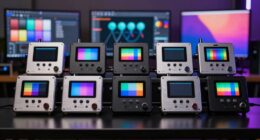
This checklist is for people choosing hardware to support AI tools and automation, from a compact computer to devices for vision, home organization, and storage. It pairs named products with practical advice where no specific pick was supplied.

Get business pricing on tech for your team
- Business-only prices and quantity discounts
- Tax-exempt purchasing
- Multiple users, one account, clear invoices
The sections follow the roles in an AI hardware setup: compute first, then development and acceleration, vision, a home hub, and network storage. Each slot focuses on what the device needs to do and the details to check before buying.
Use the list as a starting point, then compare each pick with your actual workload, connections, and space. Confirm the complete product configuration and compatibility details with the seller or manufacturer before placing an order.
AI Mini PC
A mini PC can serve as a compact compute base for AI tools and automation. The named pick is the MINISFORUM MS-S1 Max Mini Workstation AMD Ryzen AI Max+ 395, 128GB LPD. Before choosing it, define the tasks you expect to run and check whether the listed configuration suits those demands; a product name alone does not establish performance for a particular model or workflow.
A common buying mistake is treating a processor name or memory figure as a guarantee that every workload will fit. Verify the exact memory configuration, storage capacity, operating system, and available ports for the specific listing. Check whether your required peripherals and displays can connect, and whether the computer will fit your desk or intended installation spot. If you plan to use external storage or other devices, confirm the needed connection types on both ends.
Also review what is included in the box and how the system can be expanded or serviced. Product configurations can vary by listing, so confirm the exact model and specifications before purchase. Match the machine to the work you actually plan to do, rather than assuming that a mini workstation will meet every AI or automation need.
What to look for:
- Exact processor and memory configuration in the listing
- Included storage capacity and operating system
- Ports for displays and required peripherals
- Physical dimensions and placement requirements
- Expansion and service details for the exact model
MINISFORUM MS-S1 Max Mini Workstation AMD Ryzen AI Max+ 395, 128GB LPDDR5, 2TB S
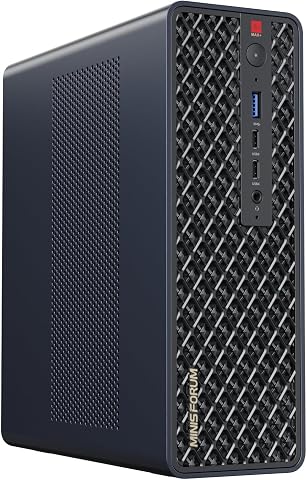
The MINISFORUM MS-S1 Max Mini Workstation features an AMD Ryzen AI Max+ 395 processor with 16 cores and 32 threads, delivering high performance for demanding tasks. It supports multiple 8K video outputs, fast wired and wireless connectivity, and extensive storage options, making it ideal for professional multimedia and computing applications.
Pros:
- High-performance AMD Ryzen AI Max+ processor with 16 cores and 32 threads
- Supports multiple 8K video outputs for multi-monitor setups
- Fast wired and wireless connectivity including 10G Ethernet and WiFi 7
- Extensive storage options with expandable SSD slots
Cons:
- Likely high power consumption due to high-performance components
- Potentially noisy operation despite advanced cooling system
- Limited user upgrade options for RAM and storage without technical expertise
Best for: Shoppers considering a compact workstation for AI tools and automation
Not ideal for: Anyone whose required software or connections have not been checked against the listing
Bottom line: Confirm the exact configuration and compatibility details before choosing this mini PC.
Edge AI Development Board
No specific product was supplied for this slot, so choose an edge AI development board by starting with the project requirements. Identify the framework, model format, sensors, and connections your prototype needs. Check the board maker’s documentation for supported software and interfaces rather than assuming that a board described as AI-capable will work with your chosen tools.
A frequent mistake is picking based on a headline feature while overlooking setup and integration. Check whether the board’s connectors match your camera, sensors, and other hardware, and whether any required cables or accessories are included. Consider the physical dimensions and how the board will be mounted or enclosed. If the project needs to operate away from a desktop, determine how it will receive power and connect to the network.
For sizing, compare the board’s documented memory and compute resources with the requirements of the model and software you intend to run. For fit and compatibility, verify the specific operating system, drivers, and software versions in the product documentation. Keep a short list of must-have interfaces and supported tools, then compare candidate boards against it. Documentation-backed compatibility is more useful than an unverified feature label when choosing a development platform.
What to look for:
- Documented support for your framework and model format
- Interfaces matching your sensors and peripherals
- Memory and compute resources for the intended model
- Power, network, and mounting requirements
- Included accessories, drivers, and setup documentation
USB AI Accelerator
No product was provided for this slot. A USB AI accelerator is best assessed as part of a specific host computer and software setup, so begin by checking the supported host and runtime. Confirm that the accelerator works with your computer’s operating system, the framework you plan to use, and the model format you intend to run.
A common mistake is assuming that a USB connector guarantees plug-and-play compatibility or sufficient capacity for a chosen model. Read the manufacturer’s compatibility notes and check the required drivers, runtime, and supported software versions. Verify the connector type and any stated host requirements. If the accelerator will be attached to a laptop or compact computer, consider whether its size and cable arrangement will block nearby ports or interfere with other devices.
Match the accelerator’s documented capabilities to the workload rather than relying on a broad AI label. Check whether your software can direct the relevant tasks to the device and whether the model needs conversion or other preparation. Confirm what is included, such as adapters or cables, and look for setup guidance for your host system. A careful host-and-software check can prevent choosing a device that fits physically but not operationally.
What to look for:
- Operating system and host computer compatibility
- Supported framework, runtime, and model formats
- Connector type and any adapter requirements
- Workload capabilities documented by the manufacturer
- Included cables, drivers, and setup instructions
AI Camera Module
The HUSKYLENS 2 Plus Kit – Edge AI Vision Sensor with Wide-Angle Camera & is the named pick for this vision slot. A camera module can be central to an automation project, so begin by checking the complete product listing and the intended use. The supplied product name ends after an ampersand, so it does not establish which accessories or remaining specifications are included.
A common mistake is assuming that a camera’s description confirms compatibility with a particular board, software library, or enclosure. Check the manufacturer’s documentation for supported hosts, interfaces, setup steps, and any required software. Verify whether the kit includes the cables, mounts, or other components your installation requires. For fit, consider the camera’s field of view and mounting position in relation to the scene you want it to observe; confirm the documented viewing characteristics rather than inferring them from the product title.
Check the module’s physical dimensions and connector arrangement against your development board and enclosure. If your project has lighting, distance, or placement constraints, review the product documentation for relevant operating guidance. Make sure you understand how image data is handled in the intended setup and which components perform the processing. Confirm the full kit contents and host compatibility before treating this pick as ready for a particular build.
What to look for:
- Complete product name and full kit contents
- Documented host, interface, and software support
- Mounting options and physical dimensions
- Camera viewing characteristics for the intended scene
- Required cables, accessories, and image-processing setup
HUSKYLENS 2 Plus Kit – Edge AI Vision Sensor with Wide-Angle Camera & WiFi for A

The HUSKYLENS 2 Plus Kit is an advanced AI vision sensor featuring a wide-angle camera and support for custom YOLO models. It offers real-time video transmission via WiFi and wired connections, making it ideal for robotics and AI projects.
Pros:
- Powerful edge AI processing with support for custom models
- Wide-angle camera minimizes blind spots
- Supports real-time wireless video transmission with low latency
- Easy to use with plug-and-play interfaces and touchscreen
Cons:
- Effective distance limited to close-range (0.1~1.5m)
- Requires some technical knowledge for advanced customization
- No mention of included accessories or detailed software support
Best for: Builders exploring an edge AI vision sensor for a compatible setup
Not ideal for: Anyone who needs confirmed kit contents from the incomplete supplied name
Bottom line: Review the complete listing and compatibility documentation before buying this camera kit.
Smart Home Hub
The named pick is the NORI Family Hub 15.6-Inch AI Digital Calendar. In a home automation checklist, a hub or shared display needs to suit both its placement and intended role. Confirm the product’s documented functions and supported services before assuming it can control specific devices or connect with the apps your household already uses.
A common buying mistake is inferring capabilities from words such as “AI” or “hub.” Check the manufacturer information for supported integrations, setup requirements, and whether any companion app or account is needed. Confirm the display size against the intended wall, counter, or other location, and review the mounting or stand arrangement for that placement. The product name identifies a 15.6-inch screen, but it does not specify the complete dimensions or installation hardware.
For compatibility, compare the listed connectivity and supported platforms with your home network and devices. Check how household members will add or view calendar information and whether the workflow fits your needs. Review what is included and any documented power or placement requirements. Keep your decision grounded in the functions you can verify in the product documentation, rather than assuming the title guarantees a particular automation feature.
What to look for:
- Documented calendar and hub functions
- Supported apps, services, and device integrations
- Connectivity and setup requirements
- Screen dimensions and placement options
- Included mounting or stand hardware and power details
NORI Family Hub 15.6-Inch AI Digital Calendar

The NORI Family Hub is a 15.6‑inch touchscreen calendar that syncs Google, iCloud and Outlook calendars into one color‑coded view for the whole family. It includes routine scheduling, chore tracking with rewards, meal planning tools, and AI‑powered organization across the hub, mobile app and web without requiring a subscription.
Pros:
- All family calendars combined into one easy‑to‑read touchscreen view.
- Built‑in routine, chore and reward system encourages kids’ independence.
- Meal planning with nutrition details and shared shopping lists saves time.
- AI integration works across hub, app and web without a mandatory subscription.
Cons:
- May have a learning curve for families new to digital scheduling.
- Limited usefulness for single users or small households.
Best for: Households considering a shared digital calendar display
Not ideal for: Shoppers who need integrations not confirmed in the product documentation
Bottom line: Confirm supported services, setup, and placement requirements for the NORI Family Hub.
Network Attached Storage
The named pick is the Synology DS1525+ 5-Bay NAS with 8GB RAM and 40TB Bundle (Includes 5x 8. The supplied name ends mid-description, so confirm the complete bundle listing before deciding what the package contains. A network attached storage system should be chosen around the files, devices, and access pattern you expect it to support.
A common mistake is treating a bundle’s stated capacity as the usable space or assuming its drive arrangement is already suited to a particular purpose. Check the full product details for the included drives, configuration, and storage options. Confirm the number and type of bays, supported drive specifications, and any setup steps described by the manufacturer. Consider where the unit will sit, how it connects to your network, and whether your router or switch has the required connection.
For compatibility, review the NAS documentation for supported client devices, backup workflows, and software features you intend to use. Check whether the bundle includes everything needed to get started and whether any separately required components are identified. Think through who needs access and how data will be backed up. The product name supplies some configuration details, but verify the full specifications and bundle contents instead of inferring them from the truncated title.
What to look for:
- Complete bundle name and confirmed included drives
- Bay count, drive support, and stated configuration
- Network connections and placement requirements
- Supported clients, backup workflows, and software features
- Included startup components and separately required items
Synology DS1525+ 5-Bay NAS with 8GB RAM and 40TB Bundle (Includes 5x 8TB Seagate

The Synology DS1525+ is a versatile 5-bay NAS designed for scalable storage, offering up to 300TB with expansion. It features fast network performance with 2.5GbE ports, supports SSD caching, and runs DiskStation Manager for file sharing, backup, virtualization, and surveillance.
Pros:
- Scalable storage up to 300TB with expansion unit
- Fast network performance with 2.5GbE ports and optional 10GbE support
- All-in-one platform with DSM for file sharing, backup, virtualization, and surveillance
- Includes 5 high-capacity HDDs for immediate use
Cons:
- Expansion unit sold separately
- Requires technical knowledge for setup and management
- Higher price point due to advanced features
Best for: Shoppers comparing a multi-bay NAS bundle for shared storage
Not ideal for: Anyone who cannot confirm the truncated listing’s full contents
Bottom line: Check the complete bundle, drive configuration, and network requirements before choosing this NAS.
Build your shopping order around the job at hand: first identify the compute or development platform your workflow needs, then verify any camera or USB accelerator against that host. Add a home hub or NAS when its documented functions match your household or storage requirements. This needs-first order helps focus attention on compatibility and the components that matter most to your setup.
You do not need to choose every category at once. Write down your required software, connections, placement, and included accessories, then check each candidate against that list. Where a product name is incomplete or no pick is supplied, use the guidance here to compare documented options. With a few careful checks, you can build a practical, compatible setup one piece at a time.
Fall Picks
fall essentials
As an affiliate, we earn on qualifying purchases.