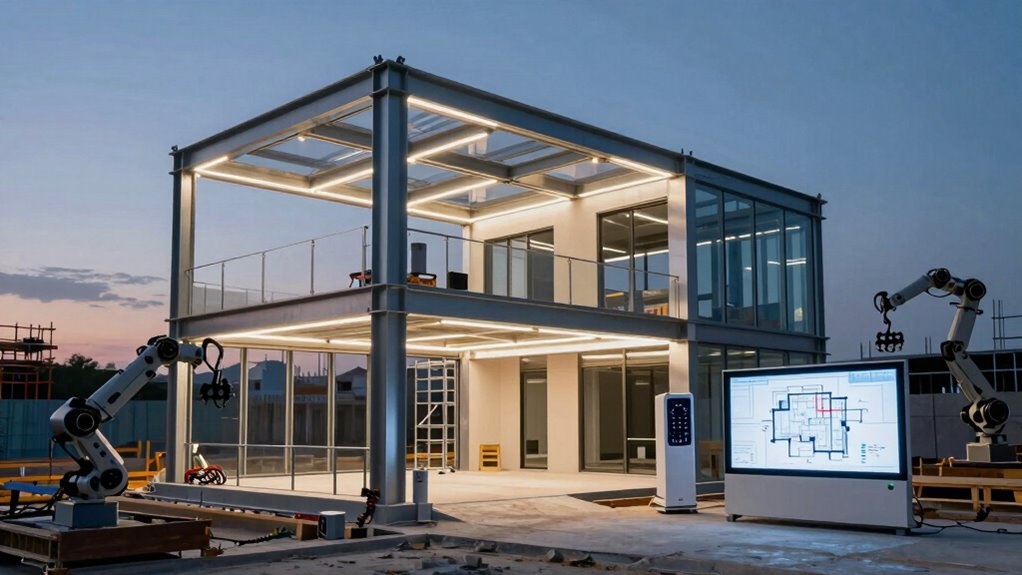

You’ve seen how smart homes evolve from simple gadgets to complex infrastructures that require careful planning. Modern smart homes integrate devices through standardized protocols, creating seamless networks focused on safety, efficiency, and sustainability. You need to contemplate energy management, security, and device compatibility to build a resilient system. As you explore further, you’ll uncover how these interconnected systems turn a house into a sophisticated, secure living environment — quite an impressive transformation.

Get business pricing on tech for your team
- Business-only prices and quantity discounts
- Tax-exempt purchasing
- Multiple users, one account, clear invoices
Key Takeaways
- Integration of advanced technology systems transforms smart homes into complex, cohesive infrastructure projects.
- Emphasis on energy efficiency drives the development of sustainable, interconnected home management networks.
- Standardized communication protocols ensure reliable device interoperability within the home infrastructure.
- Security measures and data protection are critical in establishing a resilient, trustworthy smart home infrastructure.
- Designing for resilience and sustainability elevates smart homes to comprehensive, future-proof infrastructure environments.
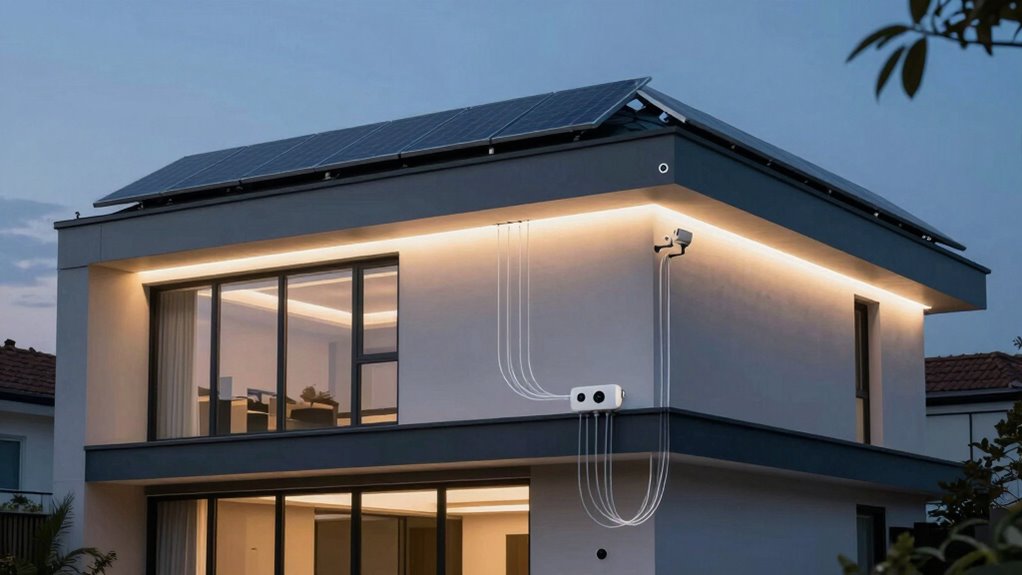
In today’s world, building a modern smart home infrastructure means integrating technology seamlessly into your daily life. It’s no longer just about adding a few smart devices; it’s about creating a cohesive system that enhances convenience, safety, and efficiency. This shift has transformed the traditional home into a sophisticated network that requires careful planning and execution. At the core of this transformation are concerns like energy efficiency and data security, which now play a crucial role in how you design and operate your smart home.
Energy efficiency is a key driver behind the move toward smarter homes. You want your devices to work together in a way that minimizes energy consumption without sacrificing comfort. Smart thermostats, for example, learn your schedule and adjust temperature settings automatically, reducing unnecessary heating or cooling. Automated lighting systems can turn off when rooms are unoccupied, cutting down on waste. Solar integration, energy monitoring systems, and smart appliances allow you to track and optimize your energy use in real time, making your home more sustainable and cost-effective over the long run. Building this infrastructure involves selecting devices and systems that communicate well and operate efficiently, ensuring you get maximum benefit while reducing your carbon footprint. Additionally, choosing secure communication protocols is vital to protect your data and maintain privacy within your smart home network. Implementing interoperable technology ensures that all your devices work together smoothly, creating a truly unified system. Developing a comprehensive energy management plan can further enhance the efficiency and sustainability of your smart home. Incorporating standardized communication methods is essential for achieving reliable device interoperability and seamless integration.
Smart devices coordinate to optimize energy use, lowering costs and reducing your carbon footprint sustainably.
Data security also becomes a primary concern as your home becomes more connected. When devices transmit sensitive information—such as security camera footage, personal habits, or access codes—protecting this data from breaches is essential. You need a robust security strategy that includes encrypted communications, secure Wi-Fi networks, and regular firmware updates. Not only does this safeguard your personal information, but it also prevents malicious attacks that could compromise your home’s safety. As you integrate more devices, you must be vigilant about potential vulnerabilities and ensure that your entire smart home infrastructure adheres to the highest security standards.
Achieving a truly modern smart home infrastructure isn’t just about adding gadgets; it’s about creating a well-thought-out system that prioritizes energy efficiency and data security. You’ll need to consider how devices connect, how data flows, and how to keep that data protected. The process involves selecting the right technology, establishing secure networks, and maintaining your system with ongoing updates. When done correctly, your smart home becomes a resilient, efficient, and secure environment that enhances your everyday life. This shift from basic automation to a fully integrated infrastructure marks the evolution of modern living—where technology works for you, securely and sustainably.
smart home energy management system
As an affiliate, we earn on qualifying purchases.
As an affiliate, we earn on qualifying purchases.
Frequently Asked Questions
How Does Smart Home Infrastructure Impact Daily Energy Consumption?
Smart home infrastructure boosts your daily energy efficiency by seamlessly integrating devices that optimize power use. You can control lighting, heating, and appliances remotely, reducing waste and saving money. With automation, your lifestyle becomes more convenient and eco-friendly, as systems adjust to your routines automatically. Overall, smart home infrastructure actively helps you lower energy consumption, making your home more sustainable while enhancing comfort and convenience in your daily life.
What Are the Security Risks Associated With Smart Home Infrastructure?
You face security risks like hacking vulnerabilities and privacy concerns with smart home infrastructure. Hackers can exploit weak points to access personal data or control devices remotely. To protect yourself, regularly update firmware, use strong, unique passwords, and enable two-factor authentication. Be mindful of the data your devices collect and share, and choose reputable brands with robust security measures. Staying vigilant helps minimize these risks and keeps your smart home safer.
How Scalable Is Current Smart Home Technology for Future Upgrades?
Smart home scalability swiftly shifts with technology, but scalability challenges can complicate future upgrades. You’ll find upgrade pathways becoming increasingly flexible as manufacturers design systems for seamless integration, supporting new devices and features. While some platforms offer expansive expansion options, others face limitations, requiring careful planning. To future-proof your home, choose systems emphasizing compatibility, modularity, and open standards, ensuring your smart home can grow gracefully with evolving technology.
What Are the Legal Implications of Data Collected by Smart Home Systems?
You need to be aware that data collected by smart home systems raises significant legal implications regarding data privacy and legal compliance. You’re responsible for ensuring your devices adhere to privacy laws like GDPR or CCPA, which protect your personal information. Failing to comply can lead to hefty fines or legal action. So, it’s essential to understand how your data is stored, used, and shared to protect your rights and stay compliant.
How Does Smart Home Infrastructure Affect Property Value?
Your smart home acts like a magnet for property appraisal and market influence—raising your property’s value and appeal. It’s as if your house whispers modernity and convenience, attracting savvy buyers. The infrastructure makes your home more competitive in the market, turning tech into a tangible asset. By embracing smart home technology, you not only enhance your living experience but also fortify your property’s market position, making it a wise investment for the future.
interoperable smart home devices
As an affiliate, we earn on qualifying purchases.
As an affiliate, we earn on qualifying purchases.
Conclusion
As you step into your smart home, imagine it as a carefully woven web of invisible threads, connecting every device and sensor in harmony. This infrastructure isn’t just wires and signals; it’s the heartbeat of a future where comfort, security, and efficiency dance seamlessly around you. Embrace this digital symphony, and watch as your home transforms into a living, breathing ecosystem—an intelligent sanctuary built on the foundation of modern innovation.
smart home security system with encryption
As an affiliate, we earn on qualifying purchases.
As an affiliate, we earn on qualifying purchases.
solar integration for smart homes
As an affiliate, we earn on qualifying purchases.
As an affiliate, we earn on qualifying purchases.
Fall Picks
fall essentials
As an affiliate, we earn on qualifying purchases.