
📊 Full opportunity report: One Video In, a Whole Publishing Kit Out — Without the Cloud on ThorstenMeyerAI.com — validation score, market gap, and execution plan.

Get business pricing on tech for your team
- Business-only prices and quantity discounts
- Tax-exempt purchasing
- Multiple users, one account, clear invoices
TL;DR
A new offline tool enables creators to generate a complete set of publishing assets from one video entirely on their local machine. This approach improves privacy, speeds up workflows, and reduces costs by eliminating cloud dependence.
A new local-first AI system now enables creators to generate an entire publishing kit—including titles, clips, descriptions, and social posts—from a single video entirely offline, with no reliance on cloud services. This development offers faster workflows, enhanced privacy, and cost savings, making it a significant shift in content automation.
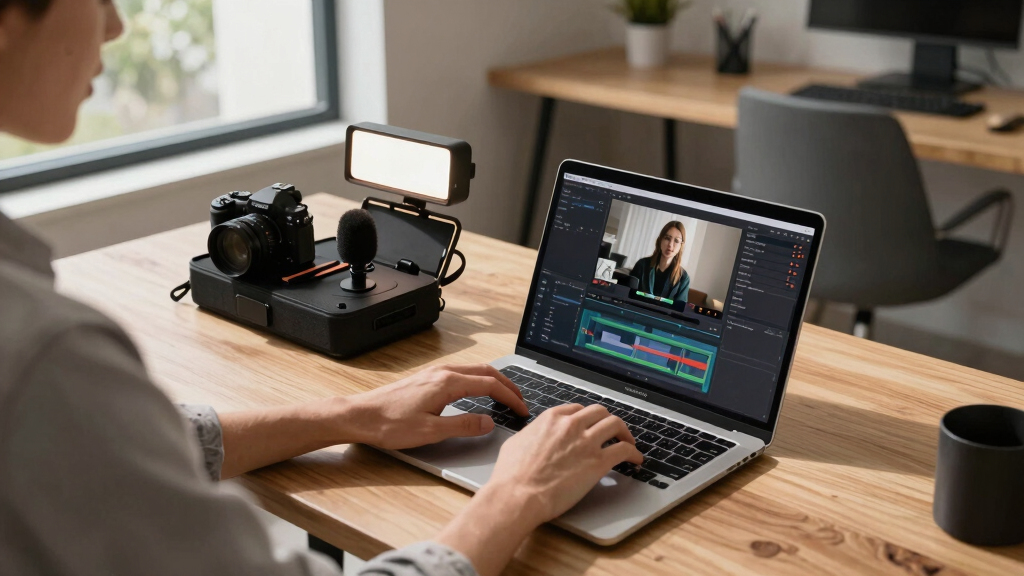
The system processes videos locally on a user’s hardware, analyzing content through transcription, scene detection, and visual recognition to produce ready-to-publish assets. Users can upload videos via file or link, initiate analysis, and receive a comprehensive set of outputs—titles, social snippets, thumbnails, transcripts—all generated offline. This approach contrasts with traditional cloud-based workflows, which depend on internet speed, incur ongoing costs, and pose privacy risks.
According to sources familiar with the technology, this offline workflow can process a typical video in under 10 minutes on a mid-range PC, such as an Intel i7 with 32GB RAM and an RTX 3060 GPU. The process involves layered analysis and real-time review interfaces, allowing creators to approve or edit assets before publishing. Hardware costs are upfront, but over time, this method can eliminate recurring cloud fees, saving hundreds annually for high-volume creators.
Impact on Content Creation and Workflow Efficiency
This development matters because it fundamentally changes how creators and teams handle content automation. By removing dependence on cloud services, creators gain greater control over their data, reduce costs, and accelerate production timelines. The approach also enhances privacy, making it suitable for sensitive or proprietary content. As a result, creators can produce and publish more content faster, with less ongoing expense and risk.
As an affiliate, we earn on qualifying purchases.
Shift Toward Local AI Content Automation
Recent industry trends show increasing interest in local AI tools that prioritize speed, control, and privacy. Traditionally, cloud-based platforms have dominated content automation, but rising concerns over data security, ongoing costs, and processing delays have prompted a shift. This new system reflects a broader movement toward local-first workflows, enabling creators to process large volumes of content without relying on external servers or subscriptions.
Prior efforts focused on cloud solutions offering scalable processing but often at the expense of privacy and cost. The new offline approach aims to address these issues directly, offering a faster, more private alternative that can be implemented with standard hardware.
“This new system transforms a single video into a full publishing toolkit entirely offline, giving creators unprecedented control and speed.”
— Thorsten Meyer, AI Developer
As an affiliate, we earn on qualifying purchases.
Unanswered Questions About Scalability and Compatibility
It is not yet clear how well the system performs with very large or complex videos, or how it integrates with existing publishing platforms. Details about software licensing, hardware requirements for optimal performance, and long-term reliability are still emerging. Additionally, the scope of AI capabilities—such as advanced visual recognition or multi-language support—remains to be confirmed in broader testing.
video transcription and clipping software
As an affiliate, we earn on qualifying purchases.
As an affiliate, we earn on qualifying purchases.
Next Steps for Adoption and Development
Expect ongoing updates to improve processing speed, asset quality, and compatibility with various content platforms. Wider adoption among creators and teams will likely depend on software availability, user feedback, and hardware affordability. Industry watchers anticipate further integration of local AI tools into mainstream content workflows over the coming months, with potential enhancements in automation and customization features.
privacy-focused video publishing tools
As an affiliate, we earn on qualifying purchases.
As an affiliate, we earn on qualifying purchases.
Key Questions
Can this system replace all cloud-based content automation tools?
While it offers significant advantages in speed, privacy, and cost, its capabilities may currently be best suited for certain types of content. Full replacement depends on future feature development and integration options.
What hardware do I need to run this offline publishing kit?
A mid-range desktop or laptop with at least an Intel i7 processor, 16GB RAM (preferably 32GB), and a dedicated GPU like an RTX 3060 can process videos in under 10 minutes. Higher specs improve performance for larger files.
Is this system suitable for professional or enterprise-level content production?
It is currently targeted at individual creators and small teams. Larger organizations may require customized solutions or enterprise-grade hardware for optimal performance.
How does this approach impact data security?
Since all processing occurs locally, user data remains on their own hardware, significantly reducing privacy risks associated with cloud storage and processing.
Will this system be available commercially soon?
Details about commercial release and licensing are still emerging. Industry sources expect some version of this technology to become available within the next year, pending further development and testing.
Source: ThorstenMeyerAI.com
Fall Picks
fall essentials
As an affiliate, we earn on qualifying purchases.