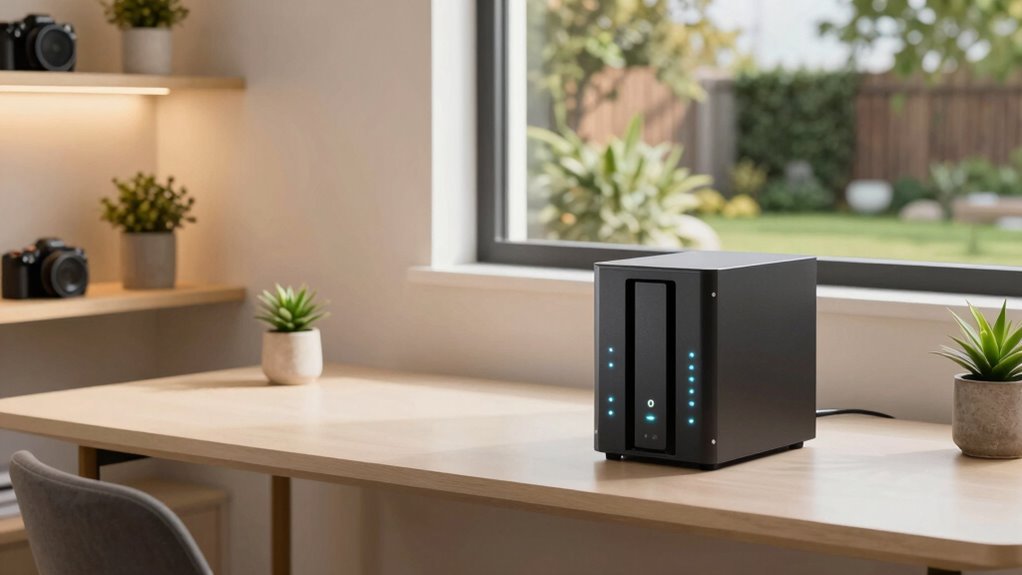

Network attached storage (NAS) devices provide centralized data access, backup, and media streaming for homes and small offices. The best NAS options vary from simple, budget-friendly models for personal use to powerful, feature-rich systems for advanced users and creative teams. Key tradeoffs include speed versus cost, capacity versus size, and ease of setup versus customization. The top pick for overall performance is the Synology DS225+, praised for its balance of features and user-friendliness, while the UGREEN NAS DH2300 offers excellent value for beginners. Continue reading for a detailed comparison that helps you find the right NAS for your needs.

Get business pricing on tech for your team
- Business-only prices and quantity discounts
- Tax-exempt purchasing
- Multiple users, one account, clear invoices
Key Takeaways
- The best NAS devices balance capacity, speed, and ease of use, with high-end models offering advanced features at a premium price.
- For small teams or creative workflows, multi-bay systems like the UGREEN DXP4800 Plus deliver both scalability and performance.
- Diskless models provide flexibility but require careful selection of compatible drives and setup effort.
- Entry-level options like the UGREEN NAS DH2300 are ideal for personal or light users but lack advanced features and expandability.
- Performance features such as 10GbE connectivity and HDMI output are game-changers for power users needing fast data access and media streaming.


More Details on Our Top Picks
UGREEN NAS DXP2800 2-Bay for Advanced Home Users, Remote Workers & Creators
The UGREEN NAS DXP2800 stands out for its robust hardware, combining an Intel N100 quad-core CPU with 8GB DDR5 RAM, making it ideal for handling large media libraries, virtual machines, and intensive workloads. Compared with the Synology DS225+, this model offers more raw power and AI surveillance features, though it requires users to purchase drives separately and handle setup complexities. Its support for up to 80TB of storage and multi-device compatibility makes it perfect for creators needing a central hub for media, backups, and smart home security. However, the need for additional investment in drives and technical knowledge for setup could be hurdles for less experienced users. This NAS is best suited for advanced home users or remote workers who need high performance and security integration.
Pros:- Supports up to 80TB of storage with flexible drive options
- Powerful hardware suited for media servers and virtual machines
- AI-powered surveillance features enhance home security
- Compatible across multiple operating systems
Cons:- Requires separate purchase of drives, increasing initial cost
- Setup and configuration demand technical knowledge
- No included drives or pre-installed software
Best for: Power users, remote workers, and creators needing large storage and AI surveillance capabilities
Not ideal for: Beginners or users seeking an out-of-the-box, plug-and-play NAS with included drives
- Processor:Intel N100 Quad-Core
- RAM:8GB DDR5
- Networking:2.5GbE
- Drive Bays:2 HDD + 2 M.2 NVMe slots
- Max Storage Capacity:80TB
- HDDs/SSDs Included:No
Our verdict“This NAS is perfect for tech-savvy users seeking high performance, security, and extensive storage capacity.”
UGREEN DXP4800 Plus 4-Bay NAS for Families, Creators & Small Teams
The UGREEN DXP4800 Plus offers a substantial upgrade over smaller NAS options like the QNAP TS-462A-4G, with its 4-bay design supporting up to 144TB of storage. It excels in environments requiring significant data capacity, fast transfers via 10GbE, and support for advanced features like Docker containers and virtual machines. While it surpasses the QNAP in storage and speed, it’s crucial to note that drives are sold separately, and its reliance on wired Ethernet limits flexibility in wireless environments. For small teams, families, or creators with large media or data needs, this NAS provides exceptional value and performance. Nonetheless, its complexity and higher initial setup costs mean it’s best for users comfortable with network hardware and storage management.
Pros:- Supports up to 144TB of storage, ideal for large media libraries
- Fast transfer speeds with 10GbE and USB 3.0 ports
- Supports advanced applications like Docker and virtual machines
- Secure encryption and permission management
Cons:- Hard drives are not included, adding to total cost
- Requires wired Ethernet, limiting wireless flexibility
- Setup complexity may be challenging for non-technical users
Best for: Small teams, families, and creators needing large storage and high-speed data transfer
Not ideal for: Home users with limited technical knowledge or those preferring Wi-Fi connectivity without wired Ethernet
- Storage Capacity:Up to 144TB
- Number of Bays:4
- Connectivity:10GbE, USB 3.0
- Compatibility:Windows, macOS, Linux, iOS, Android
- Hard Drives Included:No
- Warranty:2 years
Our verdict“This NAS offers high capacity and speed for small teams and power users who can handle its setup complexity.”
Synology DS225+ Private Cloud Media Server – 2-Bay Diskless NAS with Intel CPU
The Synology DS225+ shines as a reliable choice for users prioritizing media streaming, automated backups, and personal cloud access. Its Intel-powered hardware supports 4K media transcoding, making it suitable for home entertainment setups. Compared with the UGREEN NAS DXP2800, the DS225+ offers a more user-friendly interface and easier setup, but lacks the raw processing power and AI surveillance capabilities. Its RAID redundancy and 3-year warranty provide peace of mind for data protection, while the diskless design means users must purchase drives separately. For those new to NAS or looking for a straightforward media and backup server, this offers a balanced mix of ease of use and reliable performance, though it may fall short for advanced workloads or surveillance.
Pros:- Supports 4K media transcoding and personal cloud storage
- Automated backups and RAID support for data safety
- Supports surveillance with AI detection, up to 30 cameras
- Three-year warranty adds reliability
Cons:- Diskless, requiring separate purchase of drives
- Setup can be complex for beginners with advanced features
- Limited scalability with only 2 bays
Best for: Home users seeking easy setup, media streaming, and personal cloud storage
Not ideal for: Power users needing intensive workloads or built-in surveillance features
- Storage Bays:2-Bay
- CPU:Intel
- Transfer Speed:282 MB/s
- Surveillance Support:Up to 30 IP cameras
- Warranty:3 Years
Our verdict“This NAS is ideal for home users seeking an easy-to-use, reliable media and backup solution with some surveillance features.”
MINISFORUM N5 Pro 5-Bay Desktop AI NAS with AMD Ryzen AI 9 HX PRO 370, 128GB SSD, 10GbE, 8K HDMI, Modular Design, Diskless
The MINISFORUM N5 Pro offers unmatched performance and flexibility for advanced users, combining an AMD Ryzen AI 9 HX PRO processor with up to 188TB of storage and extensive connectivity options. Its modular design allows for easy upgrades, and support for 8K HDMI makes it suitable for AI, gaming, or multimedia applications. Compared with the UGREEN NAS DXP2800, it provides a more customizable and powerful platform, though its complexity and lack of pre-installed drives make it less accessible to novices. The dual PCIe slots, 10GbE port, and multiple NVMe slots enable tailored setups for demanding workloads, but the setup process can be daunting. This NAS makes the most sense for tech-savvy professionals needing maximum flexibility and raw power.
Pros:- High-performance AMD Ryzen AI 9 processor with AI acceleration
- Supports up to 188TB with 5 SATA and multiple NVMe slots
- Modular design for easy upgrades and maintenance
- Supports 8K video output and high-speed network interfaces
Cons:- Complex setup requiring technical expertise
- System disk occupies an NVMe slot, reducing available storage
- No hot-swapping for OCuLink interface
Best for: Advanced users, AI researchers, and gamers who require high customization and performance
Not ideal for: Home users with minimal technical skills or those seeking plug-and-play simplicity
- Processor:AMD Ryzen AI 9 HX PRO 370
- Memory:Up to 96GB DDR5 ECC
- Storage Capacity:Supports up to 188TB
- Network Ports:1x 10GbE, 1x 5GbE
- Video Outputs:8K HDMI
- Drive Bays:5 SATA, 3 NVMe
Our verdict“This NAS is suited for power users needing maximum flexibility, performance, and AI capabilities, accepting a complex setup process.”
QNAP TS-462A-4G 4-Bay Desktop NAS
The QNAP TS-462A-4G offers a balanced solution for home and small office users needing straightforward setup, media transcoding, and reliable data backup. Its 4-bay design makes it less suitable for those with very large storage demands compared to the UGREEN DXP4800 Plus, but its hardware transcoding capabilities excel at streaming high-resolution multimedia smoothly. Compared with Synology DS225+, the QNAP features faster network options and expandability, yet it lacks detailed info on RAM upgrade options, which could limit future performance. Its 2.5GbE network and M.2 slots make it a flexible choice for multimedia enthusiasts, though it may require some network setup knowledge for optimal use. This makes it appealing for users seeking an easy, multimedia-focused NAS with scalable features.
Pros:- Supports hardware transcoding for smooth 4K media streaming
- Fast 2.5GbE network connectivity and M.2 PCIe slots for expansion
- Easy to set up and access from multiple devices
- AES-NI encryption for data security
Cons:- Limited to 4 drive bays, less suitable for very large storage needs
- No detailed info on RAM upgrade options
- Requires network setup skills for optimal performance
Best for: Home multimedia enthusiasts and small office users needing reliable streaming and scalable storage
Not ideal for: Users with large storage needs beyond 4 bays or those requiring extensive surveillance features
- Number of Bays:4
- Network:2.5GbE
- SSD Slots:2 M.2 PCIe
- Storage Type:SATA
- Encryption:AES-NI
- Backup Speed:10Gbps USB 3.2 Gen2
Our verdict“This NAS provides a reliable, multimedia-friendly solution ideal for home users who value ease of use and scalability within moderate storage limits.”
UGREEN NAS DH2300 2-Bay Personal Storage for Beginners & Personal Users
The UGREEN NAS DH2300 stands out as the most well-rounded choice for personal users new to NAS. Its straightforward setup, support for up to 64TB of storage, and AI-powered organization make it accessible for those who want simple data management without complexity. Compared with the Synology DS223j, it offers faster file transfers and more privacy features, but it lacks Wi-Fi support, requiring a wired Ethernet connection, which could be a limitation for flexible placement. Its security features, including RAID modes and two-factor authentication, prioritize personal privacy. However, it doesn’t include drives, so users must purchase compatible HDDs or SSDs separately, adding to initial costs. This device is best suited for beginners who need a large-capacity, secure, and easy-to-use personal storage solution.
Pros:- Easy to set up and use for beginners
- Supports large storage capacity up to 64TB
- Fast file transfer speeds and AI photo organization
- Strong privacy and security features
Cons:- Does not support Wi-Fi, relying solely on Ethernet
- Requires third-party drives, increasing initial setup costs
Best for: Beginners seeking secure, large-capacity personal storage with minimal setup
Not ideal for: Power users or small offices needing Wi-Fi support or enterprise features
- Capacity:Up to 64TB
- Number of Bays:2
- Processor:High-performance processor
- RAM:4GB
- Network Interface:1GbE port
- File Transfer Speed:125MB/s
- Security Features:RAID modes, two-Factor Authentication, encrypted transfers
Our verdict“This NAS is ideal for personal users prioritizing security, capacity, and ease of use, but not for those needing wireless connectivity or enterprise features.”
UGREEN NAS DH2300 2-Bay Desktop Network Attached Storage (Diskless) Bundle with Cat8 Ethernet Cable
This UGREEN NAS DH2300 bundle offers excellent value for beginners who want a complete setup. With support for up to 64TB and a included 10FT Cat8 Ethernet cable, it simplifies initial installation, especially compared to the Yxk Zero1, which requires buyers to purchase drives separately. Its AI features for photo organization and duplicate detection make it a compelling choice for personal, long-term storage. However, its lack of support for Docker or virtual machines may disappoint users wanting more advanced customization. It’s a straightforward, cost-effective solution for those who prioritize ease of use over advanced features, making it perfect for home users managing personal media and backups.
Pros:- Easy to set up and use for beginners
- Supports large storage capacity and fast transfers
- Includes a high-quality Ethernet cable for quick installation
- AI-powered photo organization and duplicate detection
Cons:- Does not support Docker or virtual machines
- Storage drives not included, requiring additional purchase
Best for: Budget-conscious beginners needing a complete, easy-to-setup NAS bundle
Not ideal for: Advanced users or small businesses requiring virtualization or enterprise features
- Capacity:Up to 64TB
- Number of Bays:2
- Network Speed:1GbE
- RAM:4GB LPDDR4X
- Processor:High-performance processor
- Included Cable:10FT Cat8 Ethernet
- Power:Minimal power consumption
Our verdict“This bundle delivers great value for beginners looking for simple, reliable storage with essential AI features, but lacks advanced customization options.”
Yxk Zero1 2-Bay Desktop NAS, Beginner-Ready Silent Home NAS Storage 2.5GbE, Max 60TB Capacity (Diskless), Support Docker, Remote Access, 4GB RAM, 4K HDMI
The Yxk Zero1 caters to users who want a flexible, home-friendly NAS with support for Docker and 2.5GbE networking. Its compact and quiet design makes it suitable for living spaces, and its ability to support Docker sets it apart from simpler models like the UGREEN NAS DH2300. Compared with the Synology DS223j, it offers faster network speeds and more customization options, though it requires buyers to supply their own drives. The absence of pre-installed drives means initial setup takes extra effort, but it appeals to those who want a more versatile, expandable system. It’s best for home users who want straightforward remote access, media streaming with 4K HDMI, and some advanced features without enterprise complexity.
Pros:- Supports Docker for advanced customization
- Fast 2.5GbE network speed for quick file transfers
- Compact, quiet, and home-friendly design
- Supports 4K HDMI for media playback
Cons:- Requires separate purchase of drives
- Limited to 2 bays, restricting future expansion
- More complex initial setup compared to simpler NAS options
Best for: Home users who want a customizable NAS with Docker and media streaming capabilities
Not ideal for: Complete beginners who prefer plug-and-play solutions or those unwilling to purchase drives separately
- Maximum Capacity:60TB
- Diskless:Yes
- Connectivity:2.5GbE
- RAM:4GB
- Supports:Docker, Remote Access, 4K HDMI
- Weight:2kg
Our verdict“This NAS is perfect for home users who want a flexible, media-capable device with advanced features, but less suited for complete beginners or those seeking an all-in-one ready-to-use solution.”
Synology DiskStation DS223j (Diskless) 2-Bay NAS
The Synology DS223j is a reliable choice for users prioritizing security and ease of use. As a diskless unit, it provides a secure private cloud environment with support for remote access and multi-platform sharing. Its automated backup features make it ideal for households and small offices that need simple, automated data protection. Compared to the Yxk Zero1, it offers a more user-friendly interface and robust software updates, though it does not support Docker or media streaming features. It’s most suitable for those who want a dedicated, secure backup device without the fuss of additional features, or for users who prefer Synology’s supportive ecosystem.
Pros:- Secure private cloud with multi-platform access
- Automated backup for multiple devices
- Supports remote monitoring with IP cameras
- Reliable Synology software ecosystem
Cons:- Requires additional disks for storage
- Limited to NAS functionalities, no included drives
Best for: Small offices or families needing secure backup and easy remote access
Not ideal for: Power users requiring Docker, multimedia streaming, or high customization
- Model:DS223j
- Number of Bays:2
- Diskless:Yes
- Warranty:2 years
Our verdict“This NAS excels for users seeking straightforward, secure backup and remote access, but it’s less suited for multimedia or advanced virtualization needs.”
Synology DS124 Personal Backup & File Hub – 1-Bay Diskless NAS
The Synology DS124 is a compact, single-bay NAS tailored for personal backup and home security. Its primary advantage lies in automatic backups for phones and computers, combined with remote access for file sharing. Compared with multi-bay options like the DS223j, it’s less scalable but ideal for minimalistic setups or space-constrained environments. Its AI-powered home surveillance features provide added security, making it a strong choice for those wanting full control over their data without ongoing subscription fees. The main limitation is the need to purchase a hard drive separately, which could increase initial costs and reduce immediate usability.
Pros:- Automatic, easy backup for multiple devices
- Secure remote access from anywhere
- AI-powered home surveillance with alerts
- No subscription fees for security features
Cons:- Requires additional hard drive to operate
- Limited to 1 bay, less scalable for large storage needs
Best for: Individuals needing simple, secure backup and home security with minimal hardware
Not ideal for: Users with large storage needs or requiring multiple drives for redundancy
- Type:Diskless NAS
- Number of Bays:1
- Warranty:2 years
- Features:Backup, File Sharing, Home Security
Our verdict“This NAS offers a compact, secure solution for personal backups and home surveillance, but is not suitable for expanding storage over time.”

How We Picked
The products in this roundup were chosen based on their performance, ease of setup, build quality, and versatility. We prioritized models that cater to different user types—from beginners to advanced professionals—ensuring a range of price points and feature sets. Our ranking emphasizes reliability, data security features, scalability, and user interface quality. We also considered customer reviews and expert feedback to identify which NAS devices truly deliver value and performance across varied use cases.Factors to Consider When Choosing Network Attached Storage Devices
Choosing the right network attached storage device involves assessing several key factors beyond specifications. It’s important to consider your storage needs, future expandability, and technical comfort level. Understanding these broader considerations helps avoid common pitfalls, such as overpaying for features you won’t use or selecting a model that can’t scale with your needs.Capacity and Scalability
Start by estimating your current storage needs and consider future growth. Many NAS devices come with drive bays that support expansion, but not all are equally easy to upgrade. For users with growing media libraries or business data, opting for models with higher max capacities or additional bays can save money and hassle later. Keep in mind that drive compatibility and RAID support impact how effectively your storage can scale and protect data.
Performance and Connectivity
Speed is critical if you plan to stream high-resolution media or run data-intensive applications. Look for models with fast processor options, ample RAM, and network interfaces such as 1GbE or 10GbE. Power users should prioritize models with multiple Ethernet ports or link aggregation. Also, consider whether the device supports features like HDMI output for media use or SSD caching for speed boosts.
Ease of Use and Management
User interface matters, especially for less technical users. Devices with intuitive apps, straightforward setup procedures, and good customer support reduce frustration. Advanced features like remote access, backup solutions, and media management should be accessible without requiring deep technical knowledge. Overly complex systems can deter regular use or lead to misconfiguration, risking data security.
Security and Data Protection
Data security features such as encryption, user permissions, and automatic backups are essential, especially for business or sensitive data. Consider whether the NAS supports remote wipe, two-factor authentication, or integrated antivirus. Also, evaluate RAID options—more drives and better RAID support improve data redundancy and protect against drive failure. Security shouldn’t be an afterthought, particularly for network-connected devices exposed to external access.
Price and Total Cost of Ownership
Initial purchase price is only part of the equation. Consider the ongoing costs of drives, energy consumption, and potential future upgrades. Cheaper models may lack expandability or advanced features, leading to higher costs later. Conversely, investing in a more capable system upfront can reduce maintenance and upgrade expenses, especially if it aligns well with your long-term needs.
Frequently Asked Questions
How much storage capacity do I need for my NAS?
Start by assessing your current data volume, including media libraries, backups, and work files. Add an estimate for future growth, typically 20-50% depending on your usage. For most home users, 4-8TB is sufficient for media and backups, while small businesses might need 20TB or more. Remember, choosing a NAS with expandable bays or support for additional drives can help your storage grow over time without needing a new device.
Is it better to buy a diskless NAS or one with pre-installed drives?
Diskless NAS units offer flexibility to choose your own drives, which is ideal if you want specific capacities or brands. They also allow you to upgrade drives gradually without replacing the entire system. However, they require more technical knowledge during setup. Pre-installed drives simplify the process but limit upgrade options and can be more costly upfront. Your choice depends on your comfort with hardware and your specific storage needs.
Can a NAS be used for media streaming and backups at the same time?
Yes, most modern NAS devices are designed for multiple simultaneous functions, including media streaming, backups, and remote access. Features like hardware transcoding and HDMI output enhance media use, while backup software ensures data protection. However, performance can be affected if the NAS isn’t powerful enough or if network bandwidth is limited. Selecting a device with sufficient processing power and network interfaces helps maintain smooth operation across different tasks.
What security features should I look for in a NAS?
Security is vital, especially if your NAS is accessible over the internet. Look for devices with built-in encryption, user permission controls, and automatic malware scanning. Support for VPN access, two-factor authentication, and remote wipe adds extra layers of protection. Regular firmware updates are also essential for patching vulnerabilities. Securing your NAS prevents unauthorized access and safeguards your valuable data.
How does network speed impact NAS performance?
The speed of your network connection directly affects data transfer rates to and from the NAS. While 1GbE Ethernet is standard, upgrading to 10GbE dramatically improves transfer times, especially for large files or multiple users. If streaming high-resolution videos or editing media directly from the NAS, faster network interfaces reduce lag and buffering. Investing in a compatible router and switches ensures you get the full benefit of higher-speed interfaces.
Conclusion
For most home users and small teams, the Synology DS225+ offers a balanced mix of performance, ease of use, and expandability, making it the best overall choice. If budget is a primary concern, the UGREEN NAS DH2300 provides reliable basic functionality without breaking the bank. Power users and creative professionals should consider the MINISFORUM N5 Pro for its advanced features and high performance. Beginners or casual users will find the Yxk Zero1 straightforward and silent, perfect for personal storage. Tailoring your selection based on these categories ensures your NAS supports your current needs while accommodating future growth.
As an affiliate, we earn on qualifying purchases.Halloween Picks

Haunted Hill Farm 2-Ft. Zombie Raccoon Halloween Animatronic

Halloween Inflatable Haunted House Maze – 20×20 ft with Removable Roof and Blower

12.5-Foot Lighted Halloween Inflatable Archway