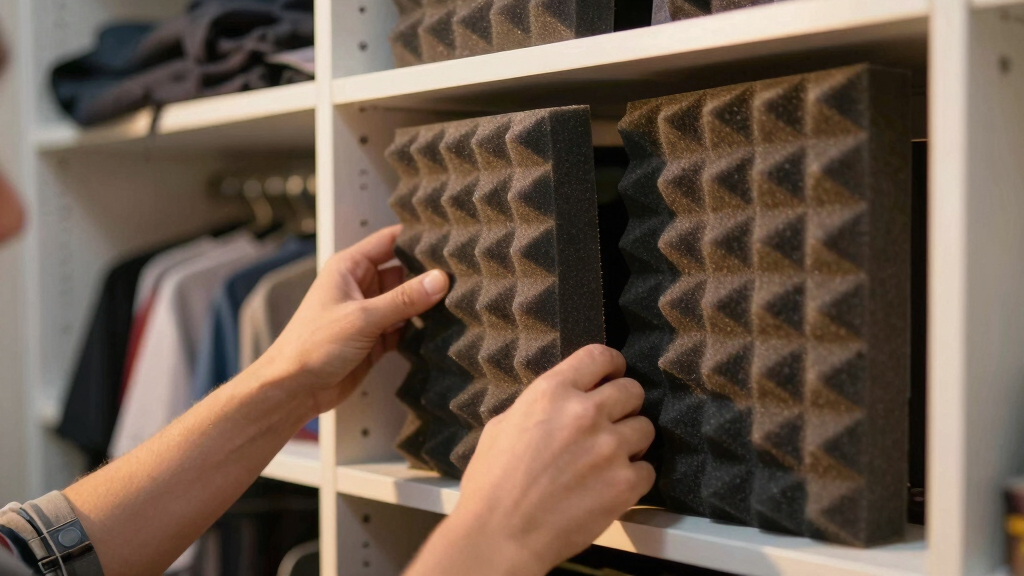

📊 Full opportunity report: Acoustic Dampening, Placement, and the “Rig in the Closet” Setup on ThorstenMeyerAI.com — validation score, market gap, and execution plan.
Open a free Amazon Business account
Business pricing, bulk buying and tax-exempt orders.
Create a free accountAs an affiliate, we earn on qualifying purchases.
TL;DR
This article explains how to best reduce noise from high-power AI workstations through placement and acoustic techniques. Moving the rig out of the workspace into a separate room or closet is the most effective method, with proper ventilation essential for enclosed setups.
Placing AI workstations in separate rooms or closets, combined with proper ventilation, is the most effective way to reduce noise in a workspace, according to experts.
Experts emphasize that the most impactful method to minimize noise from high-power AI rigs is to move the hardware out of the immediate workspace, such as into another room or closet. This approach leverages distance and isolation, which are far more effective than acoustic foam or other soundproofing materials.
A common misconception is that acoustic foam and dampening materials are the first line of defense. However, these address airborne noise only and are less effective than physically distancing the source of noise. The primary goal should be to eliminate or significantly reduce the sound reaching the user, which is best achieved by relocating the rig.
For those who choose to place their rigs in closets or cabinets, proper ventilation is critical. Sealed enclosures trap heat, risking overheating and hardware throttling. Experts recommend incorporating active ventilation, such as quiet exhaust fans and ducted airflow, to dissipate heat while maintaining noise reduction. Specialized soundproof cabinets with integrated cooling solutions are also available, though they tend to be costly.
Additionally, mechanical decoupling—using rubber feet or anti-vibration pads—can reduce structure-borne noise transmitted through desks or floors. Combining these strategies yields the best results in creating a quiet working environment.
Acoustic dampening
& the rig in the closet.
The most powerful noise fix isn’t a material — it’s a floor plan. A rig you can’t hear because it’s in another room beats any amount of foam. Tap the approaches in Part 1 to see what actually works.
(another room)
(levers 1–4)
(door / barrier)
(acoustic foam)
Contain the noise, not the heat
Why Proper Placement and Ventilation Matter for Noise Reduction
Effective noise reduction enhances workspace comfort, productivity, and health by minimizing auditory distractions and stress. Moving the rig out of the workspace or into a ventilated enclosure allows users to operate high-power AI hardware without noise interference, enabling quieter environments for work or collaboration. Proper placement also prevents overheating, extending hardware lifespan and maintaining performance. These strategies are especially relevant as AI workloads grow more demanding and noise levels increase.
quiet computer case with ventilation
As an affiliate, we earn on qualifying purchases.
As an affiliate, we earn on qualifying purchases.
Current Best Practices for Managing AI Workstation Noise
Historically, users attempted to dampen noise by adding acoustic foam or upgrading case fans. However, experts highlight that these methods address only airborne noise or structure-borne vibrations minimally. The most effective approach remains relocating the hardware to a different room or a dedicated, ventilated enclosure. This aligns with the hierarchy of noise mitigation, prioritizing distance and isolation over absorption.
Recent developments include the availability of purpose-built soundproof cabinets with integrated cooling, designed specifically for high-performance hardware. The shift toward network-based workflows, where the physical rig can be placed remotely, further supports the practicality of these placement strategies.
"The most effective way to reduce noise isn’t acoustic treatment — it’s moving the rig away from your workspace. A rig in another room is quieter than any foam can make a desk-mounted system."
— Thorsten Meyer, AI workstation expert
soundproof server cabinet with cooling
As an affiliate, we earn on qualifying purchases.
As an affiliate, we earn on qualifying purchases.
Remaining Questions About Enclosed Setup Effectiveness
While experts agree on the importance of ventilation, the optimal design of soundproof, ventilated enclosures for high-power hardware remains varied. Costs, complexity, and specific hardware configurations influence the best approach, and more empirical data on long-term reliability of these setups is needed.
Additionally, the precise noise reduction levels achievable with different enclosure designs are still being studied, and user experiences vary based on hardware specifications and installation quality.
As an affiliate, we earn on qualifying purchases.
Next Steps in Noise Management for AI Workstations
Users are encouraged to evaluate their workspace and consider relocating their rigs to separate rooms or dedicated enclosures with proper ventilation. Advances in soundproof cabinet design and cooling solutions are likely to become more accessible, making quiet, high-performance setups easier to implement. Ongoing research and case studies will clarify best practices for balancing noise reduction with effective cooling in enclosed environments.
quiet exhaust fan for computer closet
As an affiliate, we earn on qualifying purchases.
As an affiliate, we earn on qualifying purchases.
Key Questions
Is acoustic foam effective for reducing noise from AI workstations?
Acoustic foam primarily absorbs airborne sound within a room and does little to block noise transmission through walls or structure-borne vibrations. It should be considered a secondary measure after placement and isolation strategies.
Can I place my high-power rig in a closet without overheating?
Yes, but only if the closet has proper ventilation, such as active exhaust fans and ducted airflow. Otherwise, heat buildup can cause hardware throttling and damage.
What are the benefits of moving my rig to another room?
Relocating the rig away from your workspace provides the most significant noise reduction, improves comfort, and prevents heat-related issues, especially when combined with network-based workflows.
Are soundproof cabinets worth the cost?
Purpose-built soundproof cabinets with integrated cooling can effectively contain noise and dissipate heat, but they are more expensive. They are a good investment for dedicated, high-power setups requiring silence.
What should I consider when designing a ventilated enclosure?
Ensure it has active ventilation with quiet exhaust fans, ducting for airflow, and possibly thermostatic controls to prevent overheating while maintaining noise suppression.
Source: ThorstenMeyerAI.com
Fall Picks
fall essentials
As an affiliate, we earn on qualifying purchases.