📊 Full opportunity report: A US Pharmacy Index For Brand-Name GLP-1 Access on IdeaNavigator AI — validation score, market gap, and execution plan.
TL;DR
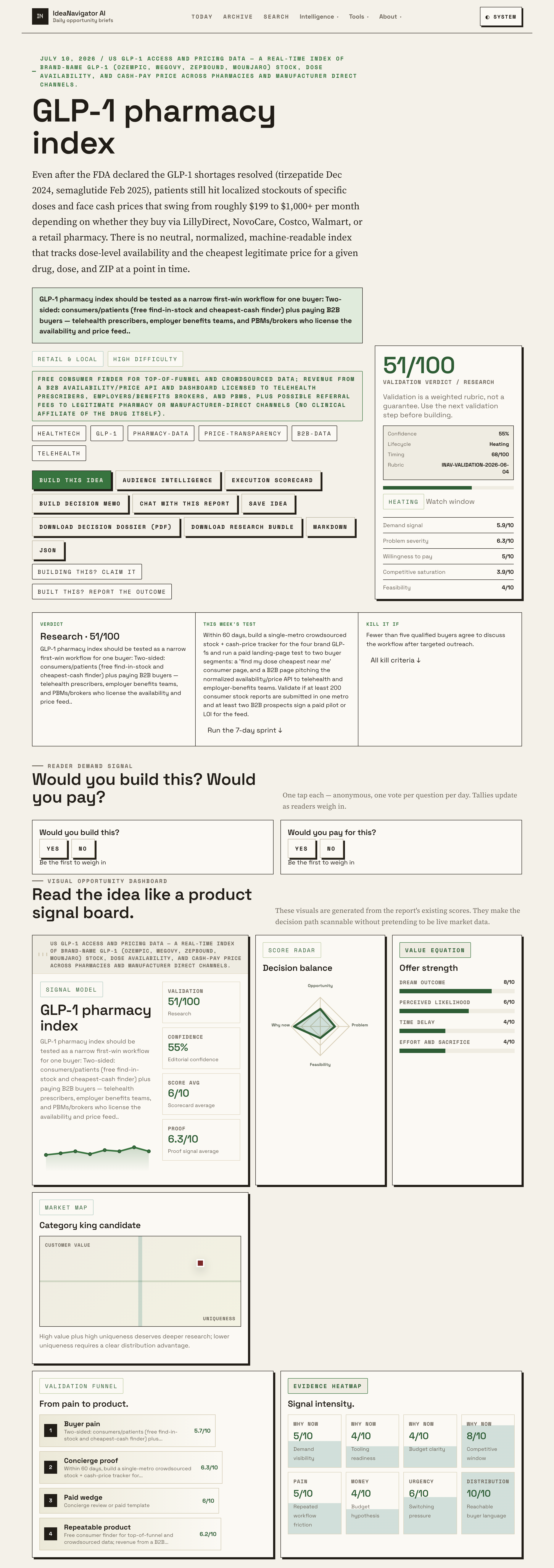
A proposal from IdeaNavigator AI calls for a US index showing dose-level availability and cash prices for Ozempic, Wegovy, Zepbound and Mounjaro. The proposed service would start with a free consumer finder and seek revenue from data feeds for telehealth providers and benefits buyers; it has not been reported as launched or independently validated.
The proposed index would cover Ozempic, Wegovy, Zepbound and Mounjaro, allowing a user to search by drug, dose and ZIP code for reported stock and the lowest listed legitimate cash price. The proposal identifies manufacturer direct channels, Costco, Walmart and retail pharmacies as potential price sources, with crowdsourced reports helping track local dose availability.
IdeaNavigator AI frames the opportunity as a shift from nationwide shortage concerns to fragmented local supply and pricing. It says monthly cash prices can range from roughly $199 to more than $1,000, depending on the drug and purchase channel. The proposal does not provide a dated price survey, specify which doses those figures cover, or establish that every listed price is currently available to every patient.
The suggested first version would offer consumers a free finder and availability alerts, then license a normalized data feed or dashboard to telehealth prescribers, employer benefits teams, pharmacy benefit managers and brokers. It also mentions possible referral fees for legitimate pharmacy or manufacturer-direct channels. No partners, contracts, operating business or product launch are identified.
Drug Prices Vary by Channel
A comparison tool could address a practical information gap for patients who need a particular dose and are paying cash. A listed price may be of limited use if that dose is unavailable nearby, while a stock report without a current price may not help a patient compare options. The proposal’s core value is combining those details at the drug, dose and ZIP-code level.
The business case also depends on whether organizations will pay for the information. The proposal says GLP-1 medicines account for roughly 20% of pharmacy spending for employers, but supplies no survey, date or definition for that estimate. If accurate for a buyer’s plan, better price and availability data could inform purchasing or patient guidance; the proposal does not show that an index would reduce costs or improve access.
Any consumer-facing price comparison would need clear distinctions between cash prices, discounts, eligibility conditions and other terms. A low advertised price is not automatically a price available to every patient or a comparison of equivalent products and doses. The proposal does not describe how listings would be verified or updated.
From Shortages to Scattered Prices
The proposal points to federal shortage-list changes as part of the market shift. It says the FDA declared tirzepatide shortages resolved in December 2024 and semaglutide shortages resolved in February 2025. It also cites compounding-related deadlines and the expansion of manufacturer and retailer cash-pay channels. Those events may change where patients look for medicines, but they do not by themselves establish current stock or prices at individual pharmacies.
The named channels include LillyDirect and NovoCare, along with Costco and Walmart cash programs and retail pharmacies. The proposal also refers to the TrumpRx portal in February 2026. It provides no underlying portal documentation or price list, so its present status, coverage and terms cannot be assessed from the proposal alone.
The suggested index would combine information that is currently spread across different channels. It would depend on consistent product and dose listings, geographic coverage, timely updates and a way to distinguish verified inventory from user-submitted reports.
Data and Buyer Demand Unproven
No operating index, pharmacy participation, live inventory feed or independently checked price dataset is documented. The proposal does not say how often data would refresh, how crowdsourced stock reports would be verified, or how expired, inaccurate or duplicate reports would be removed. Local availability can change quickly, so the age and reliability of each listing would matter.
It is also unclear whether manufacturers, retailers or pharmacies would provide usable data, and whether the proposed buyers would pay for it. The stated price range and employer spending share lack a cited methodology in the proposal. Neither should be read as a current nationwide measurement. No evidence is provided that patients could purchase every listed medicine at the lowest displayed price or that the tool would change clinical decisions.
A Proposed 60-Day Market Test
IdeaNavigator AI proposes building a single-metro pilot within 60 days, tracking crowdsourced stock reports and cash prices for the four named medicines. Its suggested test would aim for at least 200 consumer stock reports in that metro and a paid pilot or letter of intent from at least two business prospects.
Those figures are proposed validation targets, not results. The proposal gives no metro, start date, named design partners or evidence that the test has begun. Whether an index proceeds will depend on collecting sufficiently reliable data and demonstrating interest from both patients and paying organizations.
Key Questions
Has the GLP-1 pharmacy index launched?
No launch is reported. IdeaNavigator AI describes a product proposal and a possible pilot, without identifying an operating service or launch date.
Which medicines would it cover?
The proposed index would track Ozempic, Wegovy, Zepbound and Mounjaro, with searches by drug, dose and ZIP code.
What prices would the index compare?
The proposal describes cash prices from manufacturer direct channels, Costco, Walmart and retail pharmacies. It cites a rough range of $199 to more than $1,000 per month, but gives no dated survey or dose-by-dose breakdown.
Who would pay for the service?
The proposed consumer finder would be free. Potential paying customers include telehealth providers, employers, benefits brokers and pharmacy benefit managers seeking an availability and price feed.
What would count as a successful pilot?
The proposal sets targets of 200 consumer stock reports in one metro and at least two business prospects signing a paid pilot or letter of intent within 60 days. No results have been reported.
Source: IdeaNavigator AI