
🔍 Read the full analysis: What To Look For In A High Refresh Gaming Monitor For 2027 on ThorstenMeyerAI.com

Get business pricing on tech for your team
- Business-only prices and quantity discounts
- Tax-exempt purchasing
- Multiple users, one account, clear invoices
TL;DR
A roundup from ThorstenMeyerAI.com compares nine gaming monitors by refresh rate, resolution and screen size, rather than treating the highest Hz figure as the automatic winner. It identifies QHD models for added detail and Full HD options for competitive play, but does not provide independent performance testing or confirm 2027 pricing and availability.
ThorstenMeyerAI.com has published its original guide to nine high-refresh gaming monitors, ranking them by how refresh rate, resolution and screen size work together rather than by maximum refresh rate alone. Its picks range from a QHD 300Hz ASUS to Full HD models rated at up to 310Hz, giving shoppers a way to compare detail, speed and the graphics performance each setup may require.
The guide names the ASUS TUF VG27AQM5A its best overall choice, citing its combination of QHD resolution and a 300Hz refresh rate, a useful comparison point for matching a high-refresh monitor to competitive play. It singles out the ASUS TUF VG259QMR5A for competitive players, with a 24.5-inch Full HD screen and a stated 310Hz refresh rate. The article also recommends the Dell SE2426HG as a straightforward 24-inch, 240Hz Full HD option.
The remaining picks in the nine-monitor list are the ASUS TUF VG27AQ3A (27-inch QHD at 180Hz), Dell SE2726HG (27-inch Full HD at 240Hz), two curved Full HD monitors from SANSUI and Sceptre, and two additional models whose names and specifications are not supplied in the source material provided for this article. The guide cautions that a 32-inch Full HD screen may look less sharp than a smaller Full HD display.
These are rankings based on stated specifications and intended use, not reported laboratory results. The source says it did not assume differences in panel quality or response behavior where it lacked test data. Buyers should verify each model’s exact specifications, connectivity and availability with the manufacturer or retailer before purchasing.
The 9 picks
- 1
 ASUS TUF Gaming VG27AQM5A 27-inch QHD 300Hz Gaming MonitorView on Amazon →
- 2
 SANSUI 32-Inch Curved 240Hz FHD Gaming MonitorView on Amazon →
- 3
 ASUS TUF Gaming VG27AQ3A 27-Inch QHD 180Hz Gaming MonitorView on Amazon →
- 4
 Dell SE2726HG 27-Inch FHD 240Hz Gaming MonitorView on Amazon →
- 5
 SANSUI 27-Inch Curved 240Hz FHD Gaming MonitorView on Amazon →
- 6
 ASUS TUF Gaming VG259QMR5A 24.5-Inch Full HD 310Hz Fast IPS Gaming MonitorView on Amazon →
- 7
 Sceptre 24.5-Inch Curved 240Hz Full HD Gaming Monitor (C255B-FWT240)View on Amazon →
- 8
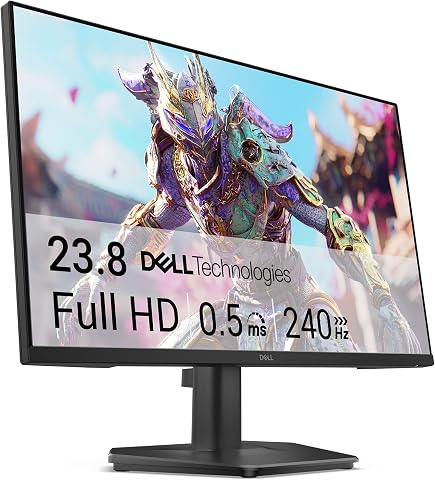 Dell 24 240Hz Gaming Monitor – SE2426HG – 23.8-inch FHD (1920×1080) 240Hz Dis…View on Amazon →
- 9
 Sceptre 27-Inch Curved Full HD Gaming Monitor, 180Hz, 1ms, 1500RView on Amazon →
Balancing Speed, Detail and Hardware
The choice affects more than how smooth motion appears. A monitor rated at 300Hz or 310Hz can make sense for fast-paced competitive games, but a gaming PC must produce enough frames to take practical advantage of that refresh rate. The source does not report testing that establishes what frame rates a particular system can reach.
Resolution and size change the tradeoff. QHD at 27 inches provides more detail than Full HD at the same size, but places a greater rendering demand on the graphics card. Full HD can be a more manageable pairing for high frame rates, especially on smaller screens. At 27 or 32 inches, the lower pixel density may be more noticeable, depending on viewing distance and personal preference.
For readers, the guide’s main point is that the highest refresh-rate label is not a complete buying recommendation. Matching a screen to games, hardware, desk space and viewing distance may matter more than choosing the largest number on a product page.
Products Worth Considering

LG UltraGear 32-inch Curved QHD Gaming Monitor (2560×1440, 180Hz, 1ms, 1000R, HDR10)

LG UltraGear 27-inch QHD OLED Gaming Monitor, 240Hz, 0.03ms, G-SYNC Compatible, FreeSync Premium Pro, HDMI 2.1, DisplayPort 1.4, Black

Samsung Odyssey OLED G5 27-Inch QHD Gaming Monitor
As an affiliate, we earn on qualifying purchases.
How the Guide Ranks Its Picks
The source says it compared the monitors by refresh rate, resolution and screen size, alongside whether the specification mix suited a particular use case. It grouped tradeoffs around QHD versus Full HD, 24- to 32-inch formats, and flat versus curved screens. Its overall pick favors a balance of resolution and speed; its competitive-player pick prioritizes speed in a smaller Full HD format.
The guide also addresses curved Full HD models from SANSUI and Sceptre. It treats curvature as a viewing preference, not a performance upgrade: a curved screen does not itself increase resolution or refresh rate. A centered single-monitor setup may suit a curve, while side viewing or mixed-monitor arrangements could make it less convenient.
Its advice is to check the whole setup, including graphics hardware, supported inputs and desk dimensions. A stated maximum refresh rate alone does not confirm that a particular cable, port or gaming device can deliver the desired resolution and rate together.
“I ranked these monitors by how well their refresh rate, resolution, and screen size work together for gaming, rather than treating the largest Hz figure as an automatic win.”
— ThorstenMeyerAI.com guide
Specifications Buyers Must Confirm
The supplied source does not identify two of the nine monitors by name or provide their specifications, so they cannot be reliably described here. It also does not give prices, retailer availability, release dates or independent test measurements. Its rankings should not be read as proof that the picks outperform alternatives in response time, image quality or other measured performance.
Before buying, shoppers still need to confirm each model’s current specifications, including the exact refresh rate supported at the chosen resolution, compatible ports, adaptive-sync features, stand adjustments and mounting support. The guide notes that the graphics card and connection can limit whether the listed maximum is usable. Actual achievable frame rates will vary by game, graphics settings and PC hardware.
Verify Models Before Purchasing
The next step for shoppers is to compare the manufacturer’s current specifications and retailer listings for the models under consideration. Confirm that the monitor supports the intended resolution and refresh rate through the connection available on the gaming device, then compare stand dimensions and adjustment options with the desk setup.
The source gives no date for a product refresh or further testing. Its guide can serve as a starting shortlist for 2027 shopping, but prices, stock and specifications should be checked again at the time of purchase.
Key Questions
Which monitor does the guide name as its best overall pick?
It names the ASUS TUF VG27AQM5A, citing its QHD resolution and stated 300Hz refresh rate. The ranking reflects the guide’s specification-based assessment, not reported independent testing.
Which pick is aimed at competitive players?
The guide highlights the ASUS TUF VG259QMR5A, a 24.5-inch Full HD model listed at 310Hz. Its smaller screen and lower resolution prioritize high refresh rate over QHD detail.
Is a higher refresh rate always better?
No. A high refresh rate is most useful when the gaming system can produce enough frames, and the source advises matching the monitor to the games and hardware. A lower refresh rate with higher resolution may be a better fit for some players.
What should buyers check beyond the refresh rate?
Check resolution, screen size, graphics-card capability and compatible connections. Confirm the manufacturer’s current details for adaptive sync, ports, stand adjustment and mounting support as well.
Does the guide confirm 2027 prices or availability?
No. The supplied material does not give current prices, retailer stock or release dates. Buyers should check manufacturer and retailer listings before making a purchase.
Source: ThorstenMeyerAI.com