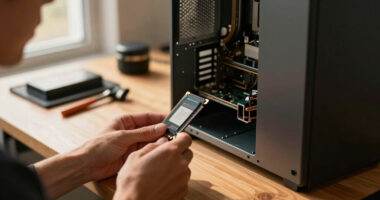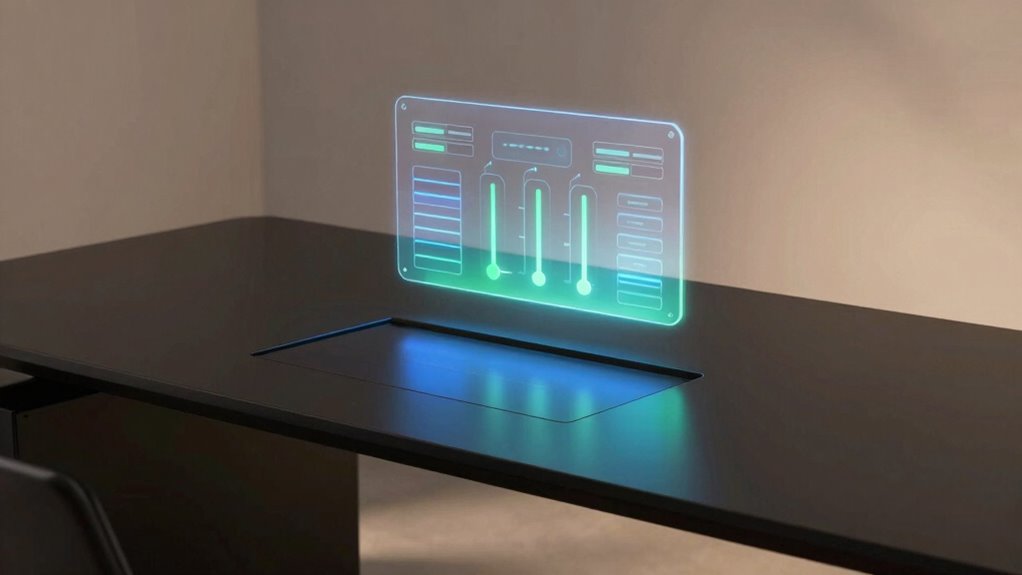

In a software-driven world, physical controls will continue to play a essential role by offering immediate tactile feedback, which digital interfaces can’t fully replace. You’ll see smart, adaptive controls that change based on context, making your interactions more intuitive and safe. Haptic feedback will become more refined, helping you confirm actions effortlessly. If you want to discover how these innovations will shape your experience and enhance safety, keep exploring this evolving interface landscape.

Get business pricing on tech for your team
- Business-only prices and quantity discounts
- Tax-exempt purchasing
- Multiple users, one account, clear invoices
Key Takeaways
- Integration of tactile interfaces with advanced haptic feedback enhances user experience and safety in digital environments.
- Adaptive controls that modify sensations based on context or user preferences improve intuitiveness.
- Physical controls remain essential for critical tasks, ensuring reliability and immediate tactile feedback.
- Emerging technologies enable seamless merging of physical and digital systems for more intuitive interactions.
- Customized tactile feedback reduces cognitive load and shortens training time in complex operations.
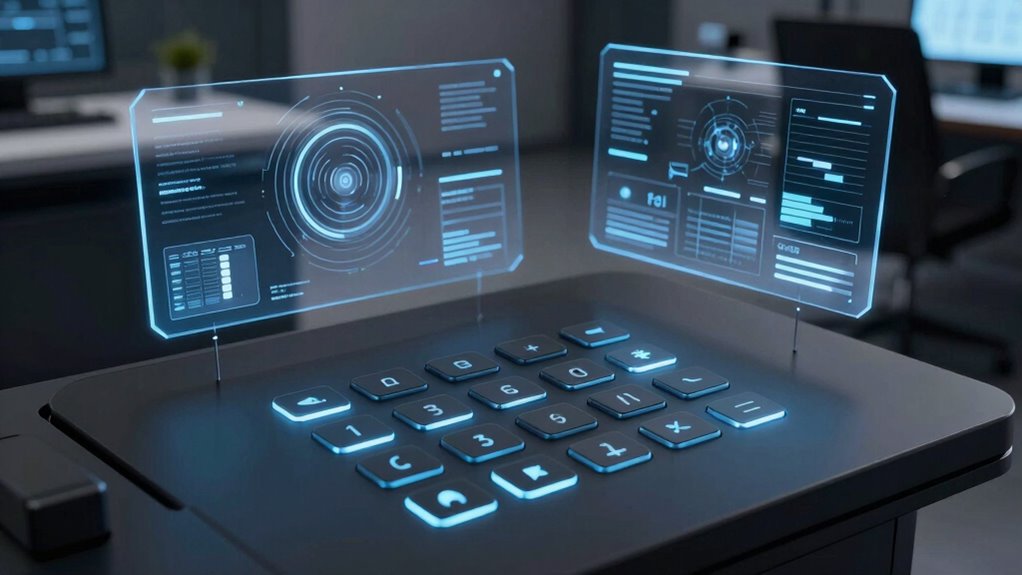
In a world increasingly dominated by software, physical controls remain crucial for ensuring security, safety, and efficiency. While digital interfaces and touchscreens have transformed how we interact with technology, they don’t fully replace the reliability and immediacy that physical controls provide. You recognize this every time you need to quickly adjust a machine, confirm a critical setting, or feel the reassurance of a tactile response. That’s where haptic feedback and tactile interfaces come into play, bridging the gap between digital precision and physical certainty.
Physical controls ensure safety and efficiency, providing reliable, immediate tactile feedback that digital interfaces alone cannot replace.
Haptic feedback, in particular, allows you to receive tactile responses through vibrations or force sensations, making digital interactions feel more natural and intuitive. When you press a button on a touchscreen, for example, subtle vibrations can confirm your input, reducing errors and increasing confidence. These tactile signals serve as a form of communication, providing immediate sensory confirmation that your command has been registered. As technology advances, haptic feedback becomes more sophisticated, enabling you to distinguish between different controls and settings without looking. This is especially useful in environments where visual attention must be focused elsewhere, such as in industrial settings, medical devices, or vehicles.
Tactile interfaces, on the other hand, emphasize the physical aspect of controls, offering tangible buttons, switches, and knobs that you can feel and manipulate. Unlike flat touchscreens, tactile interfaces give you a physical sense of the control’s location, size, and resistance. This tactile dimension helps you operate complex machinery or equipment more efficiently, without constantly glancing at the controls. You can develop muscle memory, which speeds up operation and reduces the likelihood of mistakes. For example, in high-stakes environments like aviation or healthcare, tactile controls ensure quick, accurate responses, even in stressful situations.
Looking ahead, the future of physical controls involves a seamless integration of tactile interfaces and advanced haptic feedback. Imagine control panels that adapt dynamically, changing their tactile sensations based on context or user preferences. These adaptive controls could provide customized feedback, making interactions more intuitive and reducing cognitive load. Despite the proliferation of software-based solutions, physical controls will continue evolving to complement digital systems, offering a reliable, user-friendly experience. You’ll find yourself relying on these controls not just for safety but also for efficiency and precision, especially in scenarios where digital interfaces might fall short or be too distracting. Incorporating physical controls with emerging technologies ensures that safety and usability are maintained even as digital systems become more prevalent. As technological innovations advance, the integration of physical controls with digital systems will become even more seamless, enhancing overall user experience. Additionally, integrating natural user interfaces can further improve intuitiveness and reduce training time for operators.
haptic feedback gaming controller
As an affiliate, we earn on qualifying purchases.
As an affiliate, we earn on qualifying purchases.
Frequently Asked Questions
How Will Physical Controls Influence User Privacy Concerns?
Physical controls can heighten your privacy concerns because they may introduce new security vulnerabilities, such as unauthorized access or tampering. You might worry about privacy risks if these controls aren’t properly secured or if they collect sensitive data without clear consent. As technology advances, ensuring robust security measures becomes essential to protect your personal information from potential misuse or breaches linked to physical control devices.
Are Physical Controls More Sustainable Than Digital Alternatives?
Physical controls, like tactile interfaces with haptic feedback, tend to be more sustainable than digital alternatives because they often require less energy and have longer lifespans. You benefit from tangible, durable devices that don’t rely heavily on power or frequent upgrades. Plus, they reduce electronic waste over time. By choosing physical controls, you’re supporting eco-friendly options that minimize environmental impact while enhancing user experience through sensory feedback.
What Industries Are Most Likely to Retain Physical Controls?
You’ll find that industries like aviation, manufacturing, and healthcare are most likely to keep physical controls. They value tactile feedback, which enhances user engagement and safety. In these fields, the precision and reliability of physical controls are irreplaceable, ensuring operators can respond quickly and confidently. While digital systems evolve, these industries’ll continue to rely on tangible interfaces for critical tasks, blending tradition with innovation to keep safety and efficiency at the forefront.
How Do Physical Controls Impact Accessibility for Disabled Users?
Physical controls greatly enhance accessibility for disabled users by providing tactile feedback and ergonomic design, which help those with visual impairments or limited dexterity. You find that tactile feedback allows users to feel responses from controls, ensuring proper operation without sight. Ergonomic design reduces strain and increases comfort, making devices easier to use. Together, these features promote independence and inclusivity, making physical controls a crucial accessibility tool even amid digital advancements.
Will Physical Controls Become Obsolete With Advancements in AI?
Physical controls won’t become completely obsolete with AI advancements. Instead, you’ll see haptic feedback and tactile interfaces coexist with digital solutions, enhancing user experience. These controls provide tactile reassurance, especially for accessibility and precision tasks, making interactions more intuitive. AI will complement physical controls by adapting to your preferences, but tactile interfaces will remain essential for those who rely on touch-based feedback or require a more tangible connection to technology.
As an affiliate, we earn on qualifying purchases.
Conclusion
As you navigate a world increasingly dominated by software, remember that physical controls still hold value. They offer tactile feedback and intuitive interactions that screens can’t fully replace. By examining successful examples like musical instruments or industrial machinery, you see how physical controls enhance precision and user engagement. Embracing a balanced approach, blending digital innovation with tangible interfaces, promises a future where technology feels natural and accessible, enriching your experience rather than replacing it.
tactile feedback industrial switch
As an affiliate, we earn on qualifying purchases.
As an affiliate, we earn on qualifying purchases.
As an affiliate, we earn on qualifying purchases.
Halloween Picks
halloween
As an affiliate, we earn on qualifying purchases.