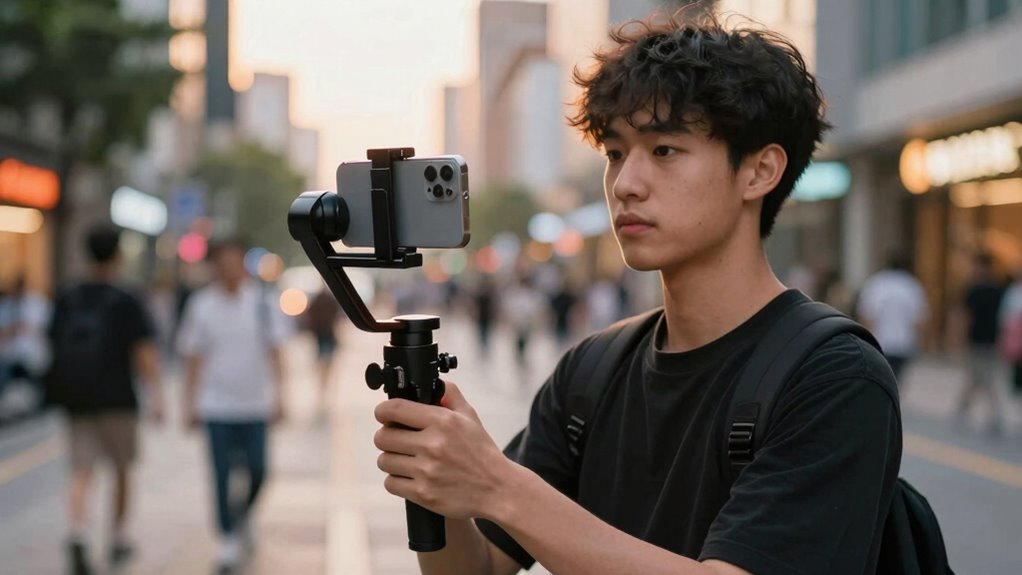

If you’re shopping for a 3-axis smartphone gimbal in 2027, the field is dominated by two names: DJI’s Osmo Mobile lineup and Hohem’s budget-friendly iSteady series. My top pick overall is the DJI Osmo Mobile 7P, which pairs native tracking with the most polished companion app and the strongest build in this group. For value hunters, the hohem iSteady X3 SE delivers surprisingly capable stabilization at a fraction of the price, while the DJI Osmo Mobile 6 remains the safest mid-range bet if you find it discounted. The main tradeoff you’ll face is between app ecosystem maturity (where DJI clearly leads) and price (where Hohem and AOCHUAN win). Keep reading for the full breakdown of all ten stabilizers and which one fits your shooting style.

Get business pricing on tech for your team
- Business-only prices and quantity discounts
- Tax-exempt purchasing
- Multiple users, one account, clear invoices
Key Takeaways
- The DJI Osmo Mobile 7P and Osmo Mobile 8 separated themselves from the pack with native tracking that works without relying entirely on the companion app — a genuine advantage over older models like the Osmo Mobile 3 and 6.
- Hohem‘s iSteady X3 SE and X3 SE Plus proved that motor power is no longer the dividing line between cheap and premium gimbals — the real gap is in app polish, tracking reliability, and firmware support.
- The AOCHUAN Smart XE twins (standard and AI versions) are the lightest foldable options here, but their AI tracking depends on a separate module/app workflow that adds friction DJI avoids.
- The original DJI Osmo Mobile 3, while still functional, lacks the folding magnets, extension rod, and improved motors of newer models — it only makes sense as a deep-discount pickup.
- The COMITOK L7C Pro is the only option with built-in AI tracking hardware at a budget price, but its heavier frame and less refined balancing make it better for static setups than run-and-gun shooting.


| smartphone gimbals 3 | Weight | Stabilization | Battery Life | Compatibility |
|---|---|---|---|---|
| DJI Osmo Mobile 7 Gimbal Stabi | 300 g | 3-axis | Up to 10 hours | — |
| DJI Osmo Mobile 3 3-Axis Smart | 405 g | 3-axis | — | — |
| DJI Osmo Mobile 6 Smartphone G | 305 g | 3-axis | — | Android and iPhone |
| hohem iSteady X3 SE 3-Axis Gim | 0.79 lbs (approx. 358 g) | 3-axis, iSteady 8.0 | 11 hours (2-hour charge) | iPhone and Android |
| AOCHUAN Smart XE 3-Axis Foldab | 0.78 lbs (approx. 354 g) | 3-axis, 7.0 anti-shake, brushless motors | Up to 10 hours | iPhone and most Android phones |
| Hohem iSteady X3 SE Plus 3-Axi | 0.85 lbs | — | 11 hours | iPhone & Android |
| COMITOK L7C Pro 3-Axis Smartph | 0.8 lbs | 3-Axis | — | Smartphones under 7 inches, up to 0.62 lbs |
| DJI Osmo Mobile 7P Gimbal Stab | 368 g | 3-Axis | 10 hours | iPhone & Android |
| AOCHUAN Smart XE AI Gimbal Sta | 350 g | 3-axis | 10 hours | iOS and Android |
| DJI Osmo Mobile 8 Gimbal Stabi | — | 3-Axis | 10 hours | — |
More Details on Our Top Picks
DJI Osmo Mobile 7 Gimbal Stabilizer for iPhone & Android, 3-Axis Gimbal
DJI Osmo Mobile 7 earns the top spot because it solves the two problems that sink most gimbal purchases: setup friction and solo-creator awkwardness. The built-in tripod folds into the handle, so there is no extra accessory to carry or forget, and ActiveTrack 7.0 with dual-lens tracking keeps subjects locked even during fast close-up movement — a real step up from the Osmo Mobile 6‘s single-camera approach. At 300 grams with a 10-hour battery and reverse phone charging, it outlasts a full shoot day. Compared with the hohem iSteady X3 SE, the tracking software is more polished, though DJI pushes you toward its ecosystem hard. The separate Tracking Kit purchase and the Mimo app’s removal from Google Play add friction Android buyers should weigh.
Pros:- Built-in foldable tripod eliminates the need for a separate stand
- ActiveTrack 7.0 with dual-lense tracking stays locked on fast-moving subjects
- 10-hour battery with USB-C phone charging for all-day shoots
- Light 300g build with ergonomic anti-slip grip
Cons:- Full tracking feature set requires buying the separate OM 7 Series Tracking Kit
- DJI Mimo app must be sideloaded on Android due to Google Play removal
Best for: Solo creators and vloggers who want the most reliable subject tracking and a do-everything gimbal without extra accessories
Not ideal for: Android users who dislike sideloading apps — Mimo is no longer on Google Play, which adds an annoying setup hurdle
- Weight:300 g
- Stabilization:3-axis
- Battery Life:Up to 10 hours
- Folded Size:179 x 95 x 39 mm
- Max Payload:300 g
- Tracking:ActiveTrack 7.0, dual-lens
- Extras:Built-in tripod, phone charging via USB-C
Our verdict“If you want one gimbal that handles tracking, solo filming, and long shoot days out of the box, this is the one to buy.”
DJI Osmo Mobile 3 3-Axis Smartphone Gimbal Stabilizer
The Osmo Mobile 3 is the aging ancestor of this lineup, and that is exactly its appeal. What buyers get is DJI’s core stabilizer DNA — foldable design, gesture control, and solid single-handed handling — without paying for the newer bells. ActiveTrack 3.0 still follows a subject acceptably for casual vlogging, but anyone comparing it against the Osmo Mobile 6 or OM 7 will notice slower response and fewer creative modes. The 62–88mm phone width limit is the real catch: modern large-screen flagships with cases simply will not fit. For a first-time gimbal user or a backup stabilizer, the fundamentals remain sound. For anyone shooting regularly in 2024 and beyond, the newer models justify their step up.
Pros:- Foldable, lightweight 405g design that travels easily
- Gesture control and creative modes like Dolly Zoom and Timelapse
- Comfortable ergonomic single-handed operation
- 1-year manufacturer warranty
Cons:- Phone width limit of 88mm excludes many modern large flagships
- ActiveTrack 3.0 lags well behind the 6.0 and 7.0 versions in speed and reliability
Best for: First-time gimbal buyers on a tight budget who want DJI-quality stabilization fundamentals and own a standard-width phone
Not ideal for: Owners of large flagship phones — anything wider than 88mm or thicker than 9.5mm will not mount
- Weight:405 g
- Stabilization:3-axis
- Compatible Phone Width:62–88 mm
- Compatible Phone Thickness:Up to 9.5 mm
- Operating Temperature:0–40 °C
- Tracking:ActiveTrack 3.0
- Warranty:1 year manufacturer
Our verdict“A sensible low-cost way into stabilized phone video, provided your phone physically fits and you accept older tracking tech.”
DJI Osmo Mobile 6 Smartphone Gimbal Stabilizer
What separates the Osmo Mobile 6 from nearly everything else here is the built-in extension rod — a 200mm-ish telescoping arm that turns group selfies and low-angle vlogging shots from awkward into effortless. No other gimbal in this lineup offers that, including the Osmo Mobile 7, which dropped the rod in favor of the built-in tripod. ActiveTrack 6.0 remains dependable for walking-and-talking footage, and ShotGuides actively coaches beginners toward better compositions. Auto power-on when unfolding means it is shooting within seconds. The catch is app dependence: without DJI Mimo, half the feature set disappears, and the Apple Watch remote only matters if you live in that ecosystem.
Pros:- Built-in extension rod for selfies and creative angles, unique in this lineup
- ActiveTrack 6.0 delivers dependable subject tracking for moving shots
- ShotGuides coaching helps beginners frame professional-looking footage
- Powers on automatically when unfolded for fast deployment
Cons:- Full functionality depends entirely on the DJI Mimo app
- Apple Watch remote control is unavailable to Android users
Best for: Vloggers and travel creators who shoot lots of selfies, group frames, and talking-head content and want the extension rod
Not ideal for: Buyers who skip companion apps — without Mimo installed, key features are locked away
- Weight:305 g
- Stabilization:3-axis
- Tracking:ActiveTrack 6.0
- Compatibility:Android and iPhone
- Special Features:Built-in extension rod, side wheel for focus/zoom
- App:DJI Mimo
Our verdict“The pick for creators whose feed is full of selfies and handheld vlogs, thanks to an extension rod nobody else here offers.”
hohem iSteady X3 SE 3-Axis Gimbal Stabilizer for iPhone & Android, Black
The hohem iSteady X3 SE is the value argument of this roundup: it bundles features DJI reserves for pricier tiers — most notably a detachable magnetic remote good for about 33 feet — into a beginner-friendly package. That remote changes how you shoot solo, handling selfies and group videos without sprinting back to the camera. iSteady 8.0 stabilization holds up while walking or jogging, and the 11-hour battery actually beats the Osmo Mobile 7‘s 10 hours. Compared with the similarly priced AOCHUAN Smart XE, the hohem’s 0.66 lb payload handles large flagship phones more confidently. The tradeoff is tracking intelligence: hohem’s AI tracking through the Joy app is serviceable but noticeably less refined than DJI’s ActiveTrack when subjects move erratically.
Pros:- Detachable magnetic remote works from up to 32.8 feet away
- 11-hour battery life outlasts every other pick in this batch
- 0.66 lb payload securely carries large-screen flagship phones
- Quick landscape-to-portrait switching for social content
Cons:- AI tracking via the Hohem Joy app is less reliable than DJI’s ActiveTrack on fast subjects
- Build and motor smoothness feel a notch below DJI’s offerings
Best for: Budget-conscious solo travelers and family videographers who want a remote control and long battery without DJI pricing
Not ideal for: Creators who rely heavily on flawless subject tracking — hohem’s AI tracking is a step behind ActiveTrack 7.0
- Weight:0.79 lbs (approx. 358 g)
- Stabilization:3-axis, iSteady 8.0
- Battery Life:11 hours (2-hour charge)
- Max Payload:0.66 lbs (approx. 300 g)
- Remote Range:Up to 32.8 feet
- Compatibility:iPhone and Android
- App:Hohem Joy
Our verdict“The smart spend for casual creators who prize battery life and a wireless remote over cutting-edge tracking.”
AOCHUAN Smart XE 3-Axis Foldable Gimbal Stabilizer for Smartphones
The AOCHUAN Smart XE plays the compact card well: it folds to palm size, weighs under a pound, and still packs a 2600mAh battery rated for 10 hours — matching the Osmo Mobile 7 on endurance while shrinking the footprint. Its party trick for social-first creators is the one-click horizontal/vertical switch, which makes jumping between YouTube landscape and TikTok portrait nearly instant. The focus wheel and zoom slider add a level of manual control rarely found at this size. Where it falls behind: the 250-gram payload is the lowest in this batch, so big flagships with cases may strain the motors, and AI Face Track 4.0 requires the AOCHUAN app and behaves less consistently than the hohem iSteady X3 SE‘s tracking in busy scenes.
Pros:- Palm-size folding design that fits in a jacket pocket
- 10-hour battery life from a 2600mAh cell for all-day shooting
- One-click horizontal/vertical switching built for vertical social content
- Focus wheel and zoom slider give manual control rare at this size
Cons:- 250g payload is the lowest here and may struggle with large phones
- AI Face Track 4.0 requires the AOCHUAN app and is less consistent than rival tracking systems
Best for: TikTok, Shorts, and live-stream creators who want the smallest possible folding gimbal with manual zoom and focus control
Not ideal for: Owners of heavy large-screen phones with cases — the 250g payload is the weakest in this lineup
- Weight:0.78 lbs (approx. 354 g)
- Stabilization:3-axis, 7.0 anti-shake, brushless motors
- Max Payload:250 g
- Battery Capacity:2600mAh
- Battery Life:Up to 10 hours
- Charging:USB-C
- Compatibility:iPhone and most Android phones
Our verdict“A pocketable, battery-strong choice for vertical-first creators — as long as your phone is not a heavyweight.”
Hohem iSteady X3 SE Plus 3-Axis Gimbal Stabilizer for iPhone & Android
The iSteady X3 SE Plus stands out for one feature almost nobody else in this lineup offers: a detachable remote that works up to 32 feet away. That changes how you shoot — group photos, distance framing, and hands-free starts become genuinely practical instead of gimmicks. Compared with the standard hohem iSteady X3 SE, this Plus version adds the 8-inch extension rod and the remote, which justifies choosing it for solo travel creators who film themselves. The 11-hour battery also outlasts the DJI Osmo Mobile 8 by an hour, and the 0.85 lb weight keeps it jacket-pocket friendly. The tradeoffs are real, though: the 0.66 lb payload is the tightest here, and hohem itself warns that leaving the selfie rod extended can deform it over time.
Pros:- Detachable remote with 32-foot range for hands-free shooting
- 8-inch extension rod adds framing versatility
- 11-hour battery life with quick 2-hour recharge
- Foldable 0.85 lb design travels easily
Cons:- 0.66 lb payload excludes many phone-and-case combos
- Prolonged selfie rod extension risks deformation per the manufacturer
Best for: Solo travelers and vloggers who film themselves from a distance and want a remote plus selfie stick in one light package
Not ideal for: Owners of large phones in thick cases — the 0.66 lb payload limit will struggle, and long-term rod durability is a concern
- Weight:0.85 lbs
- Max Payload:0.66 lbs
- Battery Life:11 hours
- Charging Time:2 hours
- Remote Range:32 feet
- Extension Rod:8 inches
- Compatibility:iPhone & Android
- Warranty:1 year
Our verdict“Pick this if you shoot solo from a distance and want the remote-plus-rod combo no other gimbal in this group matches.”
COMITOK L7C Pro 3-Axis Smartphone Gimbal Stabilizer with AI Tracking
Where the DJI Osmo Mobile 7P bundles tracking into a proprietary module you pay for, the L7C Pro keeps things lean: AI face and object tracking, gesture control, and a grip tripod in the box, all at a lighter 0.8 lbs. The standout convenience is no leveling required — clip the phone in and start filming, which makes it a better fit for casual users than fussier setups. Its 2600mAh battery recharges in just 80 minutes, faster than the AOCHUAN Smart XE‘s 3-hour top-up. The compromises sit in the ecosystem: full functionality depends on the third-party ‘Gimbal Pro’ app, which won’t match the polish of DJI’s Mimo, and the 0.62 lb payload is the lowest in this batch, ruling out larger phones.
Pros:- AI face and object tracking included at a budget-friendly tier
- No leveling required for near-instant setup
- Fast 80-minute recharge on a 2600mAh battery
- Includes grip tripod and wrist strap
Cons:- Requires the third-party ‘Gimbal Pro’ app for full features
- 0.62 lb payload is the lowest of this lineup
- Limited to phones under 7 inches
Best for: Budget-conscious beginners and casual vloggers who want core AI tracking without paying for a premium ecosystem
Not ideal for: Creators who rely on polished app tooling or use phones near 7 inches — the app and payload limits will frustrate both
- Stabilization:3-Axis
- Weight:0.8 lbs
- Folded Dimensions:6 x 4.3 x 1.8 inches
- Unfolded Dimensions:10.2 x 5.1 x 3.5 inches
- Battery Capacity:2600mAh
- Charging Time:80 minutes
- Compatibility:Smartphones under 7 inches, up to 0.62 lbs
Our verdict“This makes the most sense for first-time gimbal buyers who want AI tracking and quick setup without investing in a premium brand.”
DJI Osmo Mobile 7P Gimbal Stabilizer for iPhone & Android, Native Tracking
The Osmo Mobile 7P earns the top spot because its Multifunctional Module combines three accessories — tracking, a DJI Mic receiver, and a fill light — into one snap-on unit. Compared with the COMITOK L7C Pro, whose tracking lives in a third-party app, the 7P’s native tracking works outside any app and uses dual-lens tracking so fast, close-up subjects stay locked. Against the DJI Osmo Mobile 7, the 7P adds the extension rod and the module itself, making it the more complete creator kit. Setup is nearly frictionless: unfold to power on, and the magnetic clamp auto-launches the Mimo app. The 300g payload handles most modern phones, and the module can even charge your phone while filming. The main headache is Android friction — Mimo is no longer on Google Play and must be sideloaded from DJI’s site.
Pros:- Multifunctional Module adds native tracking, DJI Mic reception, and lighting
- Dual-lense enhanced tracking keeps fast subjects in frame
- Built-in extension rod and tripod replace extra accessories
- Can charge your phone while shooting
Cons:- DJI Mimo app requires sideloading from DJI’s website on Android
- Premium pricing tier compared with value rivals like the COMITOK L7C Pro
- 300g payload may struggle with heavy phone setups
Best for: Serious content creators who want tracking, wireless audio reception, and lighting in a single well-integrated system
Not ideal for: Android users who dislike sideloading apps — the missing Google Play listing adds setup friction others avoid
- Stabilization:3-Axis
- Weight:368 g
- Max Payload:300 g
- Battery Life:10 hours
- Folded Size:190 x 95 x 46 mm
- Key Features:Native tracking, lighting, DJI Mic reception, extension rod, tripod
- Compatibility:iPhone & Android
Our verdict“If you want the most complete, future-proof gimbal system in this roundup and shoot on iPhone, the 7P is the one to buy.”
AOCHUAN Smart XE AI Gimbal Stabilizer for Smartphone
The Smart XE‘s differentiator is its onboard AI vision sensor, which handles face tracking with no app open at all — a genuine advantage over the DJI Osmo Mobile 7P, whose native tracking is slick but still lives inside DJI’s ecosystem. For creators who shoot in the phone’s own camera app or third-party software like Filmic, that independence matters more than any polish. Compared with the COMITOK L7C Pro, the tracking hardware is more capable and the 10-hour battery is roomier, though the 3-hour recharge is the slowest here. Four shooting modes (F, POV, DM, GO) give room to grow creatively, and a mini tripod ships in the box. Just know that deeper controls still require AOCHUAN’s app, which isn’t as refined as DJI Mimo.
Pros:- Hardware AI vision sensor tracks faces without any app
- 10-hour battery life for all-day shoots
- Four shooting modes offer creative flexibility
- Mini tripod included in the box
Cons:- 3-hour charging is the slowest in this lineup
- Advanced features require the AOCHUAN app, which lacks DJI’s polish
- Smartphone not included — a bare-bones package overall
Best for: Videographers who shoot in native or third-party camera apps and want hardware tracking that doesn’t depend on any ecosystem
Not ideal for: Users who want a seamless all-in-one ecosystem with audio and lighting — the DJI options cover that better
- Weight:350 g
- Battery Capacity:2600mAh
- Battery Life:10 hours
- Charging Time:3 hours
- Stabilization:3-axis
- Compatibility:iOS and Android
- Shooting Modes:F, POV, DM, GO
Our verdict“Choose this if app-independent hardware tracking is your priority and you’re willing to accept a slower ecosystem experience elsewhere.”
DJI Osmo Mobile 8 Gimbal Stabilizer for Phone with 3-Axis Stabilization
The Osmo Mobile 8 takes what the 7P proved — that a built-in module beats carrying separate accessories — and refines it into the most self-contained package here. Native tracking, integrated audio, a fill light, a built-in extension rod and tripod, and 360° pan rotation mean there’s almost nothing to add or lose. Unlike the AOCHUAN Smart XE, which tracks through a dedicated sensor but leaves audio and lighting to you, the 8 handles all three in one grip. The phone-charging capability during filming is a practical edge for long streaming sessions. The same caveat as the 7P applies: Android users must sideload Mimo from DJI’s website since it left Google Play, and heavy phones with big cases may strain the motors in low-angle work.
Pros:- All-in-one design with native tracking, audio, and lighting
- Built-in extension rod and tripod
- Charges your phone while filming
- 360° pan rotation for dynamic shots
Cons:- Mimo app must be sideloaded from DJI’s site on Android
- Heavy phone setups may strain grip and low-angle stability
- Premium price for features casual shooters won’t use
Best for: Live streamers and dedicated vloggers who want tracking, audio, lighting, and charging handled by one device during long sessions
Not ideal for: Light casual users — paying a premium for audio and lighting features you’ll never use makes the cheaper picks smarter
- Brand:DJI
- Model:Osmo Mobile 8
- Stabilization:3-Axis
- Battery Life:10 hours
- Rotation:360° pan
- Key Features:Native tracking, built-in audio and lighting, extension rod, tripod, phone charging
- Includes:Gimbal, Multifunctional Module, magnetic phone clamp, USB-C cables, storage pouch
Our verdict“This is the buy for creators who stream or vlog long enough that built-in audio, lighting, and phone charging pay for themselves.”

How We Picked
I evaluated each gimbal against four buyer-facing criteria: stabilization performance (how well the 3-axis motors handle walking shots, quick pans, and heavier phones), tracking and app experience (how reliably the gimbal follows a subject and how polished the companion software is), portability and build (folded size, weight, extension rods, and materials), and everyday usability (balancing speed, battery life, and how quickly you can go from pocket to shooting). Where relevant, I also weighed long-term value — a gimbal is only as good as the firmware updates and app support behind it.
The ranking logic favors ecosystem maturity first, hardware second, price third. That’s why the newer DJI models sit at the top despite costing more: their native tracking and app stability solve the problems buyers actually complain about. Budget models from Hohem and AOCHUAN rank high on value but lose points where tracking stutters or the app forces extra steps. Older models like the Osmo Mobile 3 and 6 rank lower simply because their successors match or beat them in nearly every measurable way.
| smartphone gimbals 3 | Compatibility |
|---|---|
| DJI Osmo Mobile 7 Gimbal Stabi | — |
| DJI Osmo Mobile 3 3-Axis Smart | — |
| DJI Osmo Mobile 6 Smartphone G | Android and iPhone |
| hohem iSteady X3 SE 3-Axis Gim | iPhone and Android |
| AOCHUAN Smart XE 3-Axis Foldab | iPhone and most Android phones |
| Hohem iSteady X3 SE Plus 3-Axi | iPhone & Android |
| COMITOK L7C Pro 3-Axis Smartph | Smartphones under 7 inches, up to 0.62 lbs |
| DJI Osmo Mobile 7P Gimbal Stab | iPhone & Android |
| AOCHUAN Smart XE AI Gimbal Sta | iOS and Android |
| DJI Osmo Mobile 8 Gimbal Stabi | — |
Factors to Consider When Choosing Smartphone Gimbals 3
Before picking a gimbal from this list, step back and think about how you actually shoot. The right choice depends less on specs on paper and more on your phone, your content style, and how much friction you’ll tolerate between idea and recording.Phone Weight and Motor Strength
The most common mistake buyers make is ignoring payload limits. Modern phones with cases, add-on lenses, or external mics can push past a small gimbal’s motor capacity, causing vibration, drift, and motor strain that ruins the smooth footage you bought the gimbal for. If you carry a large flagship phone like an iPhone Pro Max or a Galaxy Ultra with a case, prioritize models with stronger motors and a magnetic clamp that holds firmly. Lighter foldable gimbals are tempting for travel, but they’re the first to struggle with heavy rigs. A good habit: weigh your phone with its case before buying, then choose a gimbal rated comfortably above that number rather than right at the limit.
Tracking: App-Based vs. Native vs. Hardware
Not all ‘AI tracking’ is equal, and the differences matter more than any spec sheet suggests. App-based tracking (used by most Hohem and AOCHUAN models) requires your phone’s camera to run through the gimbal’s app, which can limit resolution options, disable some camera features, and occasionally stutter. Native tracking, found on the newer DJI Osmo Mobile 7P and 8, works with more of your phone’s own camera capabilities and keeps follow modes responsive. Hardware-based tracking, like the COMITOK’s built-in sensor, works independently of any app but tends to be less precise in busy scenes. If you film yourself talking to camera, tracking quality should drive your decision more than motor specs.
The App Ecosystem Is Half the Product
A gimbal’s motors are only as useful as the software controlling them, and this is where budget brands cut corners. Weak companion apps mean delayed firmware updates, forcing you into restrictive camera modes, and losing features after phone OS updates. DJI’s app ecosystem is the most consistently maintained in this roundup, which is a real reason its older models still function well years later. Before buying a lesser-known brand, check whether the app has been updated within the last several months — an abandoned app turns a great hardware deal into a paperweight. This hidden cost is why the cheapest gimbal is rarely the best value over a two-year ownership period.
Folded Size and the Extension Rod Question
Portability isn’t just about weight — it’s about whether the gimbal actually fits in the bag you carry daily. Foldable designs like the Osmo Mobile 6 through 8 and the iSteady X3 series collapse to roughly pocket-sized, which is the difference between a gimbal you use and one that stays home. An extension rod (built into several models here) is more useful than it sounds for group selfies, high-angle shots, and vlogging at arm’s length. If you mostly shoot from a fixed position — product demos, desk setups — a bulkier non-folding gimbal is fine. If you travel or shoot outdoors constantly, prioritize folded dimensions over almost everything else.
Battery Life and Charging Habits
Gimbal battery life in this category ranges from roughly six hours to well over ten, and the number matters differently depending on your shooting style. Long-form creators and travelers should treat short battery life as a dealbreaker, since a dead gimbal mid-shoot means handheld shake with no fix. Also check whether the gimbal can reverse-charge your phone — several models here double as a power bank in a pinch, which is genuinely useful on all-day shoots. Charging port type matters too; USB-C is now standard, but older models like the Osmo Mobile 3 feel dated when you’re packing cables. Realistically, most casual shooters will charge weekly, so only heavy users should pay a premium for bigger cells.
When to Pay More — and When Not To
The honest answer: paying more buys you reliability and software support, not dramatically smoother footage. A $60 gimbal and a $150 gimbal both produce visibly stabilized video in calm conditions — the premium model wins in edge cases like strong wind, fast movement, heavy phones, and tracking in crowded scenes. Pay more if you publish content regularly, film other people, or use a heavy flagship phone. Skip the premium tier if you’re a casual user capturing family moments or occasional travel clips; the mid-range Hohem and AOCHUAN options will exceed your needs. The worst outcome is buying flagship features you’ll never access because your workflow doesn’t use them.
Frequently Asked Questions
Is it worth upgrading from an Osmo Mobile 6 to the Osmo Mobile 7 or 8?
Only if tracking matters to your workflow. The Osmo Mobile 6 produces essentially the same stabilization quality as its successors — the motors haven’t changed dramatically between generations. What you gain on the 7P and 8 is native tracking that behaves more reliably, better battery management, and refinements to the folding mechanism and clamp. If you film yourself regularly or shoot moving subjects, the tracking upgrade alone justifies the move. If you mostly shoot static vlogs or B-roll with your own framing, the 6 remains a perfectly capable tool and your money is better spent elsewhere.
Can budget gimbals like the hohem iSteady X3 SE really compete with DJI?
On raw stabilization, yes — the motor gap has narrowed enough that casual viewers won’t spot the difference in normal shooting conditions. Where the gap shows up is in the details: DJI’s app receives more consistent updates, its magnetic clamp feels more secure over months of use, and its tracking recovers faster when a subject is briefly blocked. The Hohem models also occasionally require more patient balancing with heavier phones. For occasional and travel use, the iSteady X3 SE is a legitimate money-saver. For daily publishing, the reliability difference compounds and DJI earns its premium.
Do these gimbals work with both iPhone and Android?
All ten models in this roundup physically support both platforms, but the experience isn’t identical. Android’s fragmentation means some features — especially active tracking through the gimbal’s app — behave differently across phone brands, and certain modes may be limited on less common devices. iPhones generally get the smoothest implementation on every gimbal here. Before buying, check the manufacturer’s compatibility list for your specific phone model, particularly if you use a less mainstream Android brand. If tracking is your main reason for buying, native-tracking models like the Osmo Mobile 7P sidestep some of these app inconsistencies.
Will a gimbal still help if my phone has built-in stabilization?
Yes, but the benefit is smaller than it was five years ago, and you should know what you’re buying. Optical and sensor-shift stabilization in modern phones handles handheld shake well for standing shots, but it struggles with walking motion, running, and the subtle bob that makes footage look amateur. A 3-axis gimbal physically holds the phone steady, which produces that floating-camera look software can’t fully replicate. A gimbal also gives you controlled pans, follow shots, and programmable movements no phone can do alone. If you shoot while seated or standing still, save your money — the difference will be minimal.
What’s the AI tracking module on some AOCHUAN and COMITOK models actually like?
It’s a genuine feature at budget prices, but with real tradeoffs. Hardware tracking works independently of apps and phone brands, which makes it more universally compatible than app-based alternatives — that’s the appeal. The downside is precision: sensor-based tracking tends to lose subjects more often in crowded scenes or when lighting drops, and it can’t distinguish between people as intelligently as phone-camera-based tracking. The COMITOK L7C Pro’s built-in system is convenient for solo filming at home or in a studio. For dynamic outdoor shooting with fast movement, app or native tracking from DJI remains more dependable.
Conclusion
For most buyers, the DJI Osmo Mobile 7P is the best overall choice — its native tracking, mature app, and versatile build make it the gimbal that solves the most problems for the widest range of shooters, with the Osmo Mobile 8 as the step-up pick if you want the newest hardware. The hohem iSteady X3 SE is the clear value winner for casual and travel use, while its sibling, the X3 SE Plus, suits value-minded buyers with heavier phones. For beginners, the DJI Osmo Mobile 6 offers the gentlest learning curve at a now-reduced price. If tracking on a tight budget is your priority, the COMITOK L7C Pro covers the self-filming use case, and the AOCHUAN Smart XE is the pick for minimalists who want the lightest possible kit. Match the gimbal to how often you’ll actually use it — that’s the decision that matters most.
Fall Picks
fall essentials
As an affiliate, we earn on qualifying purchases.