
TL;DR

Get business pricing on tech for your team
- Business-only prices and quantity discounts
- Tax-exempt purchasing
- Multiple users, one account, clear invoices
Google DeepMind introduced Genie 4 on October 27, 2026, showing an AI model that generates interactive scenes with sound and accepts live text instructions. The demonstrations are company-selected, access is limited to trusted testers, and DeepMind says scenes can drift over time and support only a few minutes of interaction.
Google DeepMind announced Genie 4 on October 27, demonstrating an AI model that generates interactive scenes with sound and lets users change them while they run. The system could support early work on game prototypes, film planning and simulation, but it is not publicly available, and DeepMind says objects can drift and sessions last only a few minutes.
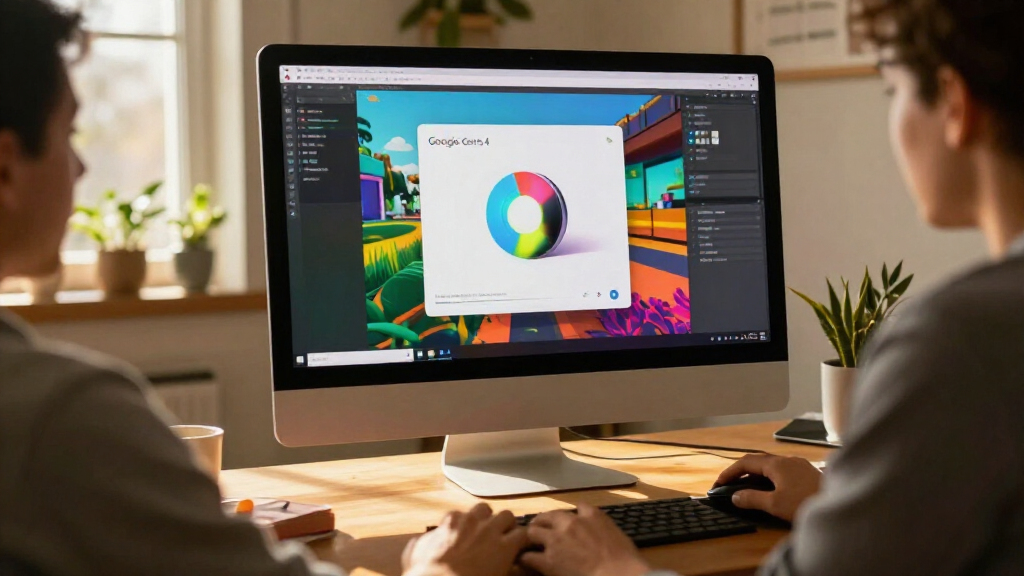
In DeepMind’s demonstration, a user enters a scene with a misty lake and a saxophone player, then moves through it with keyboard controls and changes the weather by typing. The model generates what appears next as the user acts. Unlike a conventional video generator, which renders a clip for later viewing, Genie 4 is presented as an interactive system; unlike a game engine, it does not rely on a stored 3D map of the world.
DeepMind says Genie 4 combines image and audio generation, including environmental sounds, music and dialogue. The company also says users can issue text instructions during a session and that a Gemini model helps interpret goals and guide the generated scene. These are vendor descriptions shown in selected company demonstrations; DeepMind did not publish benchmark numbers in the source material.
Access is limited to trusted testers. DeepMind says access is planned for Google AI Ultra subscribers through Project Genie and for early partners using the Gemini API, but it has not announced a release date or API price. The source identifies Google AI Ultra as a $200-a-month tier. DeepMind also says Genie 4 outputs carry an invisible SynthID watermark.
Interactive world models · October 27, 2026
What You Can Explore In Google Genie 4—and What Still Breaks
Google DeepMind’s Genie 4 generates interactive scenes with sound and live text instructions. The demonstrations point to new ways to sketch worlds—but access is limited, sessions are brief, and scenes can drift.
Enter a scene. Change it as it runs.
In DeepMind’s demonstration, a user explores a misty lakeside scene with keyboard controls, then types a weather change. Genie 4 generates the next view as the user moves and responds to instructions.
01 · Explore
Move through a generated world
Scenes unfold in response to user actions instead of arriving only as a finished video clip.
02 · Direct
Make live text changes
Users can issue instructions during a session. DeepMind says Gemini helps interpret goals and guide the scene.
03 · Hear
Generate sound with visuals
The company describes environmental audio, music and dialogue as part of Genie 4’s output.
From 2D worlds to live scenes
A quick view of DeepMind’s stated progression. These descriptions are not a common, independent benchmark across versions.
February 2024
Genie
Generated simple 2D worlds. The research paper described an 11-billion-parameter model trained on unlabeled internet video.
December 2024
Genie 2
Created 3D worlds from one image, with scenes lasting up to a minute; real-time output traded away visual quality.
August 2025
Genie 3
Introduced as a real-time world model, described at 720p and 24 frames per second for a few minutes.
October 2026
Genie 4
DeepMind adds native audio, live text changes, and claims of more realistic people and physics.
Where it may help—and what remains uncertain
The announcement suggests creative and research uses. The evidence described so far comes from selected company demonstrations and tester feedback.
Early creative work
DeepMind says testers have tried Genie 4 for film previsualization and game prototypes. Those are company-reported examples, not independently measured production results.
Simulation research
A robotics example showed Gemini breaking down a task while Genie 4 represented a humanoid robot playing checkers. It was a simulation; no physical robot took part. Waymo uses predecessor Genie 3 in its driving simulator.
What the announcement establishes
The company describes the capabilities below. Public access, independent evaluation and reliable scene consistency remain open questions.
Enter a prompt
Start with a scene idea or goal.
Move and observe
Controls shape what comes into view.
Give instructions
Change details while the session runs.
Generated next view
The world model predicts what appears next.
Access, provenance and open questions
Access path
Testing is gated
Access is limited to trusted testers. DeepMind plans availability for Google AI Ultra subscribers through Project Genie and early Gemini API partners. No date or API price has been announced. The source lists Ultra at $200 per month.
Consistency
Scenes may drift
DeepMind says interaction lasts “a few minutes.” Reports cited by heise put sessions at about two minutes, but that figure is not DeepMind’s wording and conditions are unclear.
Authenticity
SynthID watermark
DeepMind says video and audio outputs carry an invisible SynthID watermark. The source does not explain how viewers detect it or how well it survives editing and sharing.
Key questions
What is Genie 4?
An AI world model that generates a scene as users move through it and give instructions, rather than producing only a finished video clip.
Can the public use it now?
No. Access is limited to trusted testers. Subscriber and Gemini API partner access is planned, but no date or API price is public.
What can users do?
In company demonstrations, users explore with keyboard controls and change scene details with text prompts. DeepMind says audio is generated alongside visuals.
Does it control real robots?
The cited robotics example is a simulation, not a physical-world trial. It does not establish real robot control.
Early Uses Face Practical Limits
Genie 4 points toward a way to make interactive scenes without building every environment in a traditional game engine. If the system becomes reliable, creators may be able to sketch scenes and test ideas through conversation and movement. DeepMind says testers have used it for film previsualization and game prototypes, but those examples are feedback reported by the company, not independently measured results.
The technology also has research implications. DeepMind showed a robotics simulation in which Gemini broke a task into steps and Genie 4 represented a humanoid robot playing checkers. According to the source material, no physical robot took part in that demonstration. Waymo, meanwhile, already uses the predecessor Genie 3 in its driving simulator, offering a concrete example of how world models can support simulation research without establishing that Genie 4 is ready for commercial deployment.
For viewers, realistic generated scenes with matching sound may become harder to distinguish from recorded footage. DeepMind says SynthID watermarking is included in Genie 4 video and audio output. The source does not describe how viewers can detect the watermark or how reliably it survives sharing and editing.
Products Worth Considering

Samsung 27-inch Odyssey OLED G6 QD-OLED QHD Gaming Monitor

Bose QuietComfort Wireless Bluetooth Headphones with Active Noise Cancellation, Mic, USB‑C Charging, Deep Bass, 24‑Hour Battery – White Smok

Samsung 32-Inch Odyssey OLED G8 (G80SH) 4K Gaming Monitor
As an affiliate, we earn on qualifying purchases.
From 2D Worlds to Live Scenes
Google’s Genie research has advanced through several versions. The first Genie, announced in February 2024, generated simple 2D worlds; its research paper described an 11-billion-parameter model trained on unlabeled internet videos. Genie 2 followed in December 2024, creating 3D worlds from a single image and maintaining them for up to a minute, though its real-time version traded away visual quality.
In August 2025, DeepMind introduced Genie 3 as its first real-time world model, describing output at 720p and 24 frames per second that remained consistent for a few minutes. Genie 4’s announcement extends that pitch with native audio, live text changes and more realistic people and physics, according to the company. These comparisons describe DeepMind’s stated capabilities; the source provides no common independent benchmark across versions.
The label “world model” describes an AI that predicts what a scene will look like next based on earlier frames and user input. Because it generates the next view rather than consulting a complete map, objects may change as the user moves around. That quality can make scenes flexible, but it also creates a challenge for tasks that need stable geometry or repeatable outcomes.
“Details and objects “can shift or drift over time.””
— Google DeepMind
Consistency and Access Remain Open
DeepMind has not published benchmark results in the source material, and the announcement rests on selected company demonstrations. The source says TechCrunch and Bloomberg, as cited by heise, reported scenes lasting about two minutes; that figure does not appear in DeepMind’s own wording, which describes “a few minutes” of interaction. The exact duration and conditions behind the reports are not established here.
It is also unclear how consistently Genie 4 can preserve a scene when users move far from their starting point, issue many changes or repeat the same task. The source gives no public access date, API pricing or detailed technical evaluation. Reported uses in film and game development are tester feedback, while the robot example is a simulation rather than a physical-world trial.
Wait for Broader Testing
The next visible milestone is access for Google AI Ultra subscribers through Project Genie and for early Gemini API partners. DeepMind has not set a date or disclosed the API price, so broader availability and the terms for testing remain pending.
More independent testing will be needed to establish how long scenes remain coherent, how well live instructions work and whether the generated audio stays aligned with what happens on screen. Until those details are available, Genie 4 is best understood as a promising but limited demonstration of interactive scene generation, rather than a proven production tool.
Key Questions
What is Google Genie 4?
Genie 4 is an AI world model that generates a scene as a user moves through it and gives it instructions. It is designed for interactive exploration rather than generating only a finished video clip.
Can the public use Genie 4 now?
No. DeepMind says access is currently limited to trusted testers, with plans for Google AI Ultra subscribers through Project Genie and early Gemini API partners. It has not announced a date or API price.
What can users do in a Genie 4 scene?
In DeepMind’s demonstrations, users move through scenes with keyboard controls and change details with text prompts. The company also says the model generates sound alongside visuals, including environmental audio, music and dialogue.
What are Genie 4’s known limitations?
DeepMind says objects and details can shift or drift over time and describes interaction as lasting “a few minutes.” Independent benchmarks and precise session limits are not provided in the source material.
Does Genie 4 train or control real robots?
The robotics example described in the source is a simulation, with no physical robot involved. The demonstration shows a possible research use, not evidence that Genie 4 controls robots in the real world.
Source: Thorsten Meyer AI