
Spatial computing combines augmented reality, virtual reality, and the Internet of Things to create immersive environments where digital and physical worlds blend seamlessly. You can interact with virtual content overlaid onto real spaces or explore fully digital environments that adapt to your movements. This technology connects smart devices and sensors to deliver real-time data, making spaces more responsive and intuitive. Keep exploring how these innovative systems are transforming everyday experiences and opening new possibilities.
Key Takeaways
- Spatial computing seamlessly combines AR, VR, and IoT to create immersive, interactive environments that blend digital and physical worlds.
- IoT sensors collect real-time data from physical spaces, enhancing digital overlays and enabling responsive virtual experiences.
- AR and VR technologies enable users to visualize digital content within physical environments, improving navigation, training, and collaboration.
- Integration of these technologies transforms industries like healthcare, manufacturing, and retail through immersive, data-driven solutions.
- The future of spatial computing promises highly responsive, intelligent spaces that adapt to user movements and intentions for enhanced engagement.
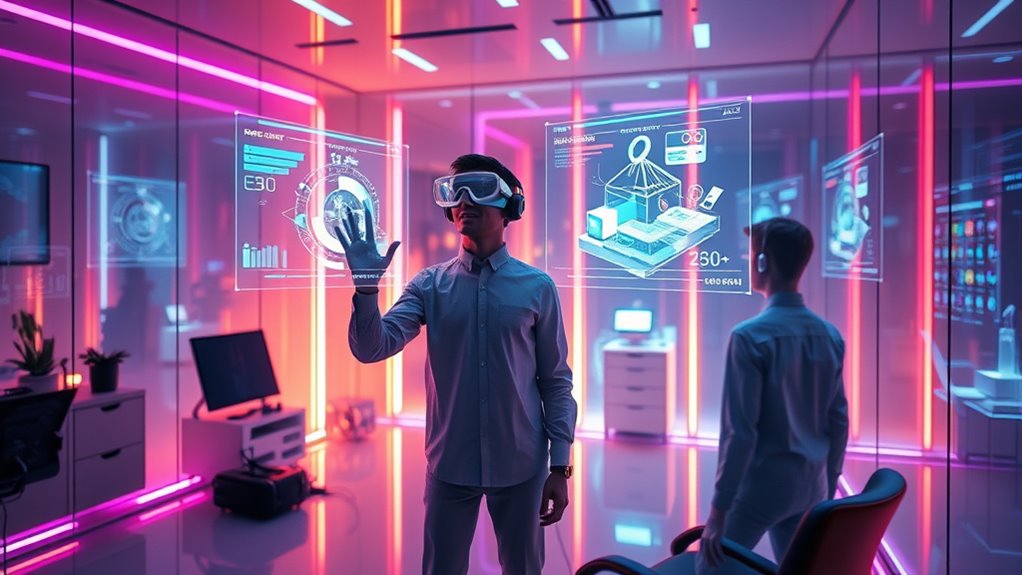
Spatial computing is transforming how we interact with digital environments by seamlessly integrating virtual elements into the physical world. With augmented reality, or AR, you can see digital information overlaid onto your real-world surroundings, creating a blend that enhances your perception and understanding of your environment. Whether you’re using AR glasses or smartphone apps, this technology allows you to access contextual data, navigate spaces more efficiently, or even play immersive games that feel genuinely integrated into your daily life. Virtual environments, on the other hand, transport you into entirely digital worlds where physical boundaries disappear. By immersing yourself in these virtual spaces, you can explore new places, train for real-world tasks, or collaborate with others in a shared digital setting, regardless of geographic location.
Spatial computing merges virtual and physical worlds through AR and virtual environments, transforming how we perceive and interact with digital content.
The power of spatial computing lies in its ability to connect these augmented reality experiences with other technologies like the Internet of Things (IoT). IoT devices embedded in physical spaces collect data that can be instantly reflected through AR or virtual environments, creating a dynamic, responsive ecosystem. For example, in a smart building, sensors monitor temperature, lighting, and occupancy, then relay this information to your AR headset, helping you find the most energy-efficient settings or navigate through a space more intuitively. You’re no longer confined to screens; instead, you’re immersed in a layered experience where digital and physical elements interact seamlessly. Additionally, high refresh rates in projectors and displays contribute to smoother visual experiences, making virtual interactions more natural and comfortable.
This integration opens up possibilities for industries like healthcare, where surgeons use AR to see real-time patient data overlaid onto their view during operations, or manufacturing, where workers interact with virtual models of equipment for maintenance or assembly tasks. It also enhances entertainment, education, and retail, enabling you to visualize products in your environment before buying or learning through interactive virtual scenarios. As spatial computing advances, your interactions with digital environments become more intuitive and immersive. You’ll find yourself moving naturally between the physical and virtual worlds, with augmented reality enriching your perception and virtual environments offering entirely new ways to learn, work, and play.
Ultimately, the fusion of AR, virtual environments, and IoT within spatial computing creates immersive spaces that are not just about observing digital content but experiencing it. You become an active participant, with technology adapting to your movements and intentions, blurring the lines between the real and the digital. This ongoing evolution promises to redefine how you live, work, and connect, turning everyday spaces into interactive, intelligent environments that respond to your presence and needs.
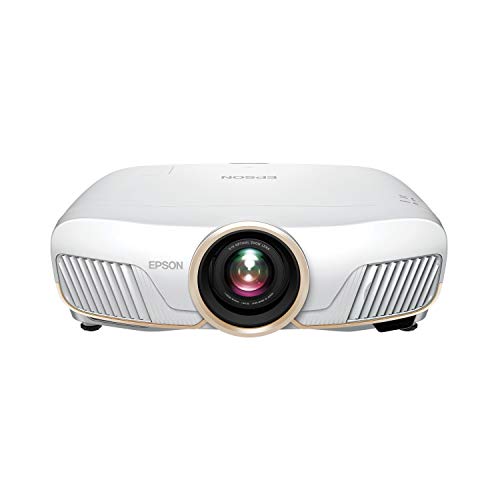
Epson Home Cinema 5050UB 4K PRO-UHD 3-Chip Projector with HDR,White
4K PRO-UHD (1) Projection Technology – A new type of 4K home theater experience utilizing advanced processing for...
As an affiliate, we earn on qualifying purchases.
Frequently Asked Questions
How Does Spatial Computing Impact Privacy and Data Security?
Spatial computing markedly impacts your privacy and data security by collecting detailed environment and user data. You need to guarantee data encryption is in place to protect sensitive information from breaches. Be aware that your user privacy could be compromised if companies don’t implement strict security measures. By staying informed and advocating for strong privacy policies, you can help safeguard your personal data in immersive spaces.
What Industries Are Fastest to Adopt Spatial Computing Technologies?
You’ll find healthcare innovation and manufacturing automation adopt spatial computing fastest. In healthcare, you’ll see it transforming surgeries and diagnostics with AR and VR, enhancing precision. In manufacturing, you benefit from automated processes that streamline operations and improve safety. These industries leverage spatial computing’s immersive capabilities to boost efficiency and outcomes, making them quick to integrate new AR, VR, and IoT solutions into their workflows.
How Cost-Effective Is Implementing Spatial Computing Solutions?
Implementing spatial computing solutions can be quite cost-effective, with many businesses seeing a 30% reduction in operational costs over time. You should focus on thorough cost analysis and strategic budget planning to maximize benefits. While initial investments might seem high, the long-term savings and increased efficiency make it worthwhile. By carefully evaluating your needs, you’ll find that integrating AR, VR, and IoT technologies can deliver solid ROI for your organization.
What ARe the Current Limitations of AR and VR Devices?
You’ll find that current AR and VR devices face hardware constraints like limited battery life, processing power, and resolution, which can impact your experience. Additionally, the user interface often isn’t as intuitive as you’d like, making it harder to navigate or interact seamlessly. These limitations can hinder immersion and usability, but ongoing advancements aim to address these issues and improve device performance and user comfort.
How Will Spatial Computing Influence Everyday Consumer Experiences?
Spatial computing will transform your daily life by blending Augmented Reality and Virtual Environments seamlessly. You’ll experience enhanced shopping, gaming, and learning as digital elements interact naturally with your surroundings. Imagine trying on clothes virtually or exploring 3D models at home. This technology makes interactions more intuitive and immersive, so everyday tasks become more engaging and efficient, changing how you connect with the world around you.
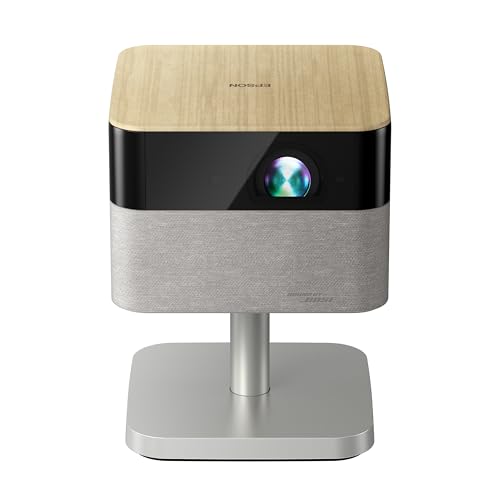
Epson Lifestudio Flex Plus 4K PRO-UHD Portable Lifestyle Projector 1,000 Lumens of Color and White Brightness, Sound by Bose, Google TV, 3-Chip 3LCD Triple Core Engine, Projection Studio App
Big. Bright. Beautiful. — 4K PRO-UHD¹ with 1,000 Lumens of Color Brightness (IDMS Rated) and 1,000 Lumens of...
As an affiliate, we earn on qualifying purchases.
Conclusion
As you step into the domain of spatial computing, imagine a world where AR, VR, and IoT weave together like an intricate tapestry, transforming ordinary spaces into immersive wonderlands. You’re not just observing; you’re living within a digital universe that responds to your every move. This synergy creates a symphony of technology and reality, inviting you to explore limitless possibilities. Embrace this evolution, and watch as your environment transforms into a vibrant, interactive canvas that’s uniquely yours.

LG HU810PW 4K 300” UHD (3840 x 2160) Smart Dual Laser CineBeam Projector with 97% DCI-P3 Color , 2700 ANSI Lumen, 2,000,000:1 Contrast, HDR10 & HLG - White
LG LASER Projector 300" 4K UHD (3840 x 2160) Smart Dual Laser CineBeam, 2700 Ansi Lumens, Dynamic Tone...
As an affiliate, we earn on qualifying purchases.

Epson Home Cinema 3800 4K PRO-UHD 3-Chip Projector with HDR
4K PRO-UHD (1) Projection technology — a new type of 4K home theater experience, utilizing advanced technologies for...
As an affiliate, we earn on qualifying purchases.