TL;DR
The FCC authorized SpaceX to deploy as many as 1 million satellites intended to function as orbital data centers, under a permission covering backup and emergency radio links. No satellites have launched under the authorization, the agency did not assess whether the system is technically or commercially viable, and one disposal request remains unresolved.
The Federal Communications Commission authorized SpaceX on November 25 to deploy up to 1 million satellites designed as data centers, giving the company permission to pursue a proposed orbital computing network called Starmind. The decision sets deployment milestones through 2040, but it does not establish that the system will work or become a commercial service; no satellite has been launched under this authorization.

Get business pricing on tech for your team
- Business-only prices and quantity discounts
- Tax-exempt purchasing
- Multiple users, one account, clear invoices
The FCC’s Space Bureau granted most of SpaceX’s application and authorized radio links for backup and emergency control. SpaceX says the satellites would carry most data between one another using laser links, with radio serving as a spare channel. The FCC licenses radio use; its order does not amount to an engineering approval of the computers or the wider data center concept.
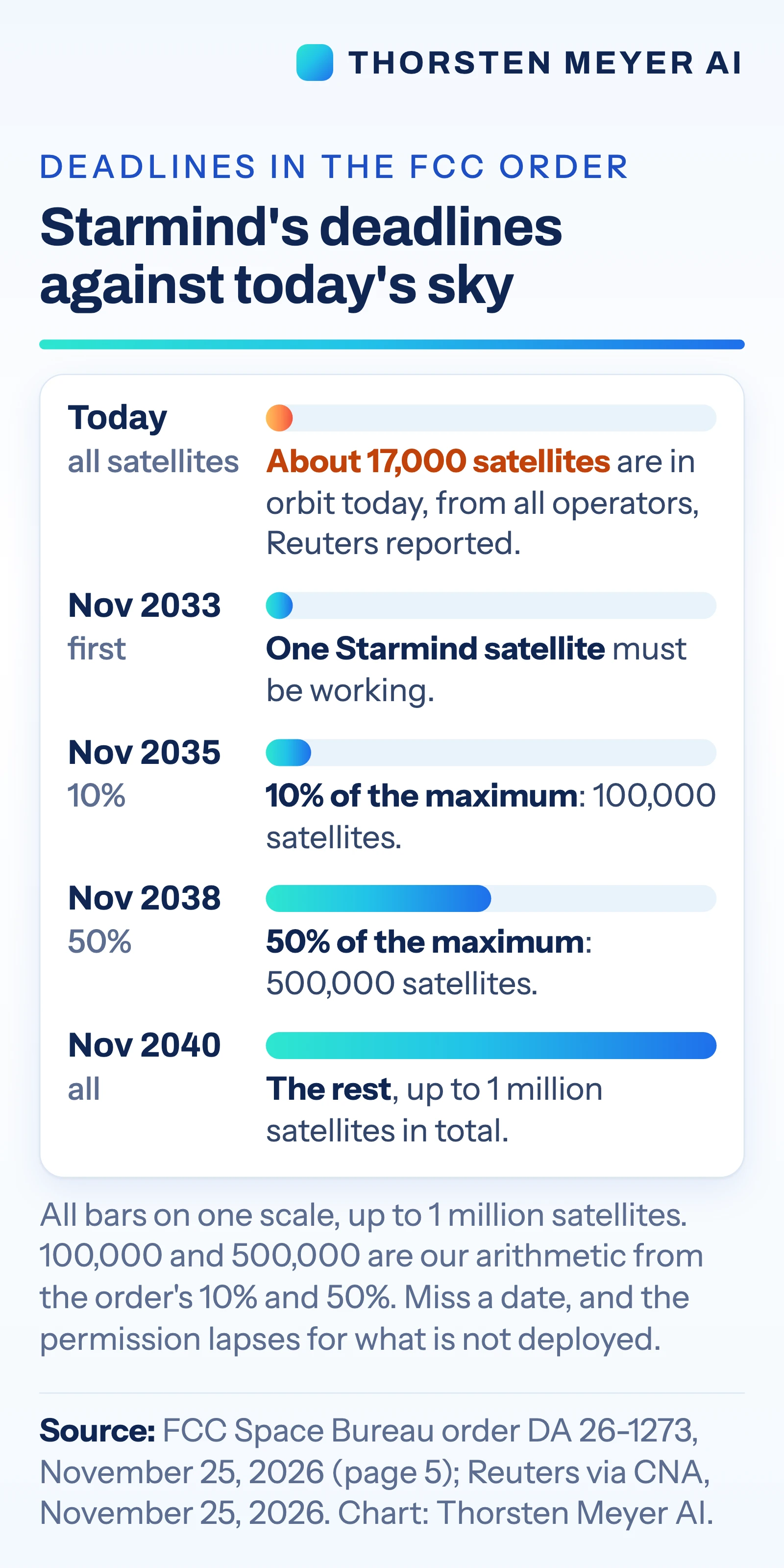
The authorization describes satellite shells, each 50 kilometers thick, at altitudes from 500 to 1,002 kilometers. It also imposes milestones: SpaceX must have at least one satellite operating by November 25, 2033, half of the authorized constellation by 2038, and the full deployment by 2040. The permission can lapse if the company misses those deadlines.
The FCC deferred SpaceX’s request concerning disposal orbits for satellites above 600 kilometers, requiring further detail before those satellites can be sent to such orbits. The commission also denied petitions asking it to reject the application. Amazon’s satellite unit, Viasat and the American Astronomical Society had urged denial, according to the source material.
A Long Road to Orbital Computing
The authorization clears a regulatory step for a proposal aimed at a growing constraint on computing: the electricity and cooling required by AI data centers. SpaceX has argued that satellites could use solar power in orbit and send computing results back to Earth through laser links connected to Starlink. Those are company arguments about the system’s potential, not findings made by the FCC.
For customers and businesses, the near-term effect is limited. The decision does not make orbital computing available to rent, and the first required operating satellite is due in 2033. The proposal’s scale could also matter to astronomers and other satellite operators. The source says opponents raised concerns about heat and light from a constellation this large, while the FCC did not add conditions addressing those concerns in this authorization.
The regulatory distinction matters: permission to use specified radio links does not show that the network can be built affordably, safely or at the proposed scale. The FCC said questions about whether space data centers work or pay off fall outside its role in deciding the application. Those questions remain for SpaceX and future technical and commercial evidence.
Products Worth Considering

DJI Mic 2 Wireless Microphone System (2 Transmitters, 1 Receiver, Charging Case)

Kindle Paperwhite (16 GB) with 6.8-inch Display and Adjustable Warm Light

Samsung Odyssey G5 32-Inch QHD 180Hz Gaming Monitor (G51F)
As an affiliate, we earn on qualifying purchases.
What the FCC License Covers
The FCC regulates access to radio spectrum for satellite communications. In this case, its order authorizes backup and emergency radio control links, rather than licensing the computers as such. SpaceX’s plan relies primarily on optical, or laser, connections between satellites, according to the source material. The distinction helps explain why the FCC could grant a communications authorization without deciding whether orbital data centers are practical.
SpaceX calls the proposed system Starmind. The company has told the FCC that satellites could use near-constant solar power with low operating or maintenance costs, Reuters reported, and has described the project as capturing solar energy in space to power AI on Earth, The Verge reported. These descriptions are attributed company claims. The source material does not provide independent measurements or a demonstrated operating system.
The authorized altitude range places the proposed satellites in low Earth orbit, between 500 and about 1,000 kilometers above the planet. A large constellation would require many satellites to work together, with communications links carrying data across the network and back to Earth. The FCC order supplies deployment conditions and radio permissions; it does not show that the complete network has been built or tested.
““the first authorization in U.S. history for a constellation of data centers in space””
— Federal Communications Commission
Key Technical Questions Remain
The authorization does not establish whether the proposed satellites can host data center equipment that performs reliably in orbit, how much computing capacity the network could deliver, or what it would cost to build and operate. The source material gives no independent performance figures or customer commitments. SpaceX’s statements about solar power and operating costs remain company claims.
Satellite disposal above 600 kilometers is unresolved under the decision: the FCC deferred that part of the request and called for more detail. The source material also says astronomers raised concerns about heat and light from a constellation of this size, but it does not provide a settled assessment of the effects or describe additional FCC conditions addressing them.
No launch has taken place under this permission. The milestones extend over more than a decade, so the final constellation’s size, schedule and operational design may change. The source material does not specify when SpaceX will submit the additional disposal information or when the FCC will decide that issue.
Milestones Begin in 2033
The first stated deployment milestone is one operating satellite by November 25, 2033. SpaceX must then reach half of the authorized constellation by 2038 and complete deployment by 2040 to retain the permission under the order’s schedule. These are authorization deadlines, not announcements of scheduled launches.
Before SpaceX can use disposal orbits above 600 kilometers as requested, the FCC has deferred that portion of its application pending further detail. The order and source material do not set a public date for a follow-up decision. Until the company launches and operates satellites, questions about performance, economics, impacts on astronomy and service availability remain open.
Key Questions
What did the FCC authorize SpaceX to do?
The FCC authorized SpaceX to deploy up to 1 million proposed data center satellites and approved backup and emergency radio links. The authorization does not certify that the system works or make a service available.
Are any Starmind satellites in orbit?
No satellite has been launched under this authorization, according to the source material. The first operating satellite is due by November 25, 2033.
How are the satellites supposed to communicate?
SpaceX says the main data links would be lasers between satellites, with radio links available for backup and emergency control. The FCC authorization covers those radio links.
Did the FCC decide that space data centers are viable?
No. The FCC said whether the data centers work or pay off is outside its role in this decision. SpaceX’s claims about solar power and costs have not been established by the authorization.
What part of the application remains unresolved?
The FCC deferred SpaceX’s request concerning disposal orbits for satellites above 600 kilometers and requires more detail. The source material does not state when the agency will rule on that request.
Source: Thorsten Meyer AI