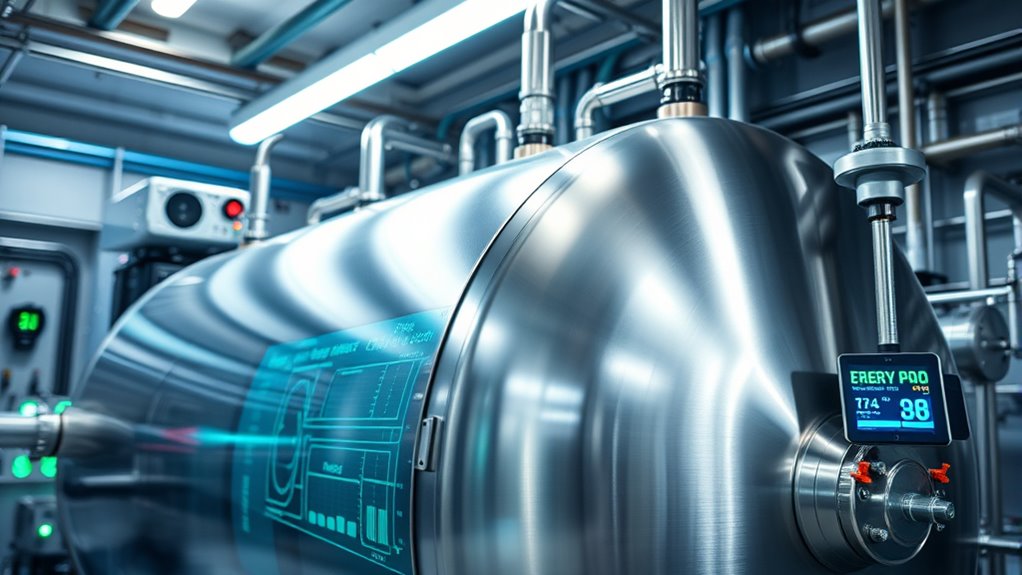

Recent breakthroughs in hydrogen fuel innovations have made production and storage more efficient and safe. Advances in electrolysis powered by renewable energy are lowering costs and boosting green hydrogen output. Meanwhile, new storage methods like solid-state materials and chemical bonds increase safety and reduce size and weight. These developments are paving the way toward cleaner energy systems and sustainable transportation. To discover how these innovations are shaping a greener future, explore the latest advancements transforming hydrogen technology.

Get business pricing on tech for your team
- Business-only prices and quantity discounts
- Tax-exempt purchasing
- Multiple users, one account, clear invoices
Key Takeaways
- New electrolysis technologies increase efficiency and reduce costs, enabling more sustainable green hydrogen production.
- Solid-state storage methods using metal hydrides and nanomaterials offer safer, more compact hydrogen containment solutions.
- Chemical storage techniques bond hydrogen with other compounds, enhancing safety and ease of handling.
- Innovations in storage materials decrease size and weight, making hydrogen storage more practical for transportation.
- Integrated advances in production and storage support scalable, eco-friendly hydrogen energy applications globally.

Hydrogen fuel innovations are transforming how we think about clean energy and transportation. As these advancements unfold, the focus sharpens on improving hydrogen production methods and storage techniques, which are essential for making hydrogen a practical, widespread energy source. You might wonder how hydrogen is generated in the first place. Currently, the most common process is electrolysis, where electricity splits water into hydrogen and oxygen. When powered by renewable energy, this method becomes a sustainable way to produce green hydrogen, reducing reliance on fossil fuels. Innovations in electrolysis equipment have made the process more efficient and cost-effective, enabling larger-scale production that can meet growing demand.
Hydrogen production via electrolysis powered by renewable energy is key to sustainable green hydrogen.
But producing hydrogen is only part of the challenge. Storing it safely and efficiently is equally critical to its success as a clean fuel. Traditional storage techniques involve compressing hydrogen into high-pressure tanks or liquefying it at extremely low temperatures. These methods, while functional, come with drawbacks—high energy costs, safety concerns, and bulky infrastructure. To overcome these issues, researchers are exploring advanced storage techniques, such as solid-state storage, where hydrogen is stored within metal hydrides or other porous materials. These methods promise to store larger quantities of hydrogen at lower pressures and temperatures, making storage safer and more practical for everyday use.
You’ll find that innovations are also pushing the boundaries of how hydrogen is stored in innovative materials that can absorb and release hydrogen efficiently. For example, new composite materials and nanostructured compounds are being developed to enhance storage capacities and reduce costs. Additionally, there’s progress in chemical storage methods, where hydrogen is bonded with other compounds and released when needed, offering another pathway to safer, more compact storage options. These breakthroughs could dramatically decrease the size and weight of storage systems, making hydrogen more suitable for vehicles, portable devices, and large-scale energy grids. Advancements in hydrogen storage technology are crucial to unlocking the full potential of hydrogen as a versatile energy carrier.
As you look into the future, you’ll see how these developments in hydrogen production and storage techniques are interconnected. More efficient production methods make hydrogen more affordable, while better storage techniques make it safer and easier to handle. Together, these innovations are paving the way for hydrogen to serve as a cornerstone of a clean energy economy. They’re making it possible for you to envision a world where transportation is emission-free, energy grids are more resilient, and reliance on fossil fuels diminishes considerably. The ongoing research and technological breakthroughs are indispensable steps toward a sustainable, hydrogen-powered future that benefits everyone.
As an affiliate, we earn on qualifying purchases.
Frequently Asked Questions
What Are the Safety Concerns With Hydrogen Storage?
You should be aware that hydrogen storage safety involves risks like leaks and explosions. Hydrogen is highly flammable, so preventing leaks is vital to avoid accidents. Proper storage techniques, such as using reinforced tanks and leak detection systems, help guarantee leak prevention. Regular maintenance and safety protocols are essential to minimize dangers, making hydrogen storage safer for users and the environment.
How Cost-Effective Are Hydrogen Fuel Innovations?
Think of hydrogen fuel innovations as planting a seed for future savings. Currently, their cost-effectiveness depends on a detailed cost analysis and ensuring economic viability. While initial investments are high, advancements in technology are lowering production and storage costs, making hydrogen more affordable. Over time, these innovations could transform clean energy, offering a sustainable and economical alternative that benefits both your wallet and the planet.
Can Hydrogen Infrastructure Be Scaled Globally?
Yes, hydrogen infrastructure can be scaled globally, but you’ll face significant infrastructure challenges. To enable global deployment, you need to develop extensive networks for production, storage, and distribution. It requires substantial investments, technological advancements, and international collaboration. Overcoming these challenges is vital for hydrogen to become a viable clean energy source worldwide, making large-scale adoption possible and helping reduce carbon emissions on a global scale.
What Are the Environmental Impacts of Hydrogen Production?
You wonder about hydrogen’s environmental impact? Producing hydrogen can create a significant footprint, especially if derived from fossil fuels, releasing carbon and pollutants. However, sustainable sources like electrolysis using renewable energy minimize environmental harm, promoting resource sustainability. This cleaner process reduces emissions and conserves resources, making hydrogen a promising, eco-friendly fuel option. Yet, understanding its full environmental footprint helps you weigh its benefits against its potential ecological costs.
How Long Will It Take to Replace Fossil Fuels With Hydrogen?
Replacing fossil fuels with hydrogen depends on how quickly hydrogen supply and market adoption grow. You might see significant shifts within 20 to 30 years as infrastructure improves and costs drop. However, this timeline varies based on government policies, technological advancements, and public acceptance. If hydrogen becomes more accessible and affordable, you could experience a cleaner energy future sooner, transforming transportation, industry, and power generation.
As an affiliate, we earn on qualifying purchases.
Conclusion
As you explore these hydrogen fuel innovations, remember that while breakthroughs promise a cleaner future, challenges remain. On one hand, cutting-edge storage solutions make hydrogen more viable than ever; on the other, infrastructure gaps present hurdles. Your role in supporting clean energy adoption becomes essential. Embrace these advances, but stay aware of the obstacles, because in the race toward sustainability, progress and perseverance go hand in hand.
As an affiliate, we earn on qualifying purchases.
As an affiliate, we earn on qualifying purchases.
Halloween Picks
halloween
As an affiliate, we earn on qualifying purchases.