
TL;DR

Get business pricing on tech for your team
- Business-only prices and quantity discounts
- Tax-exempt purchasing
- Multiple users, one account, clear invoices
Go grandmaster Shin defeated AI KataGo with a two-stone handicap in a recent match, demonstrating human skill against advanced AI. The result confirms human dominance in this specific game setup, but broader implications remain uncertain.
Go grandmaster Shin has defeated the artificial intelligence program KataGo in a match where he was given a two-stone handicap, confirming human victory in this specific encounter. The match took place recently and was widely reported in the Go community, marking a notable development in human-AI competitive play.
The match between Shin and KataGo was conducted under official conditions, with Shin starting with a two-stone handicap—meaning he was allowed to place two stones on the board before the AI made its move. According to sources close to the event, Shin successfully secured victory, demonstrating that even with this handicap, an elite human player can outperform the AI in a standard game of Go.
Confirmed by multiple observers and the organizers, the match was part of ongoing experiments to evaluate the limits of AI in complex strategic games. The AI used was identified as KataGo, one of the most advanced open-source Go engines, designed to compete at professional levels. Shin’s victory is seen as a significant achievement, especially considering the strength of KataGo’s algorithms.
It is important to note that the result does not necessarily imply that humans can consistently beat AI at high levels of play; rather, it highlights that under certain conditions—such as handicapped start—human players can challenge and even surpass top-tier AI programs.
Why Shin’s Win Matters for AI and Human Players
This victory demonstrates that human strategic skill can still challenge AI under specific conditions, such as handicapped starts. It suggests that AI’s dominance is not absolute and that strategic adaptation remains relevant for human players. The result may influence future approaches to AI training and human preparation in Go.
It also contributes to ongoing discussions about the evolving relationship between humans and AI in strategic games, highlighting the importance of understanding AI limitations and the role of human intuition in complex decision-making.
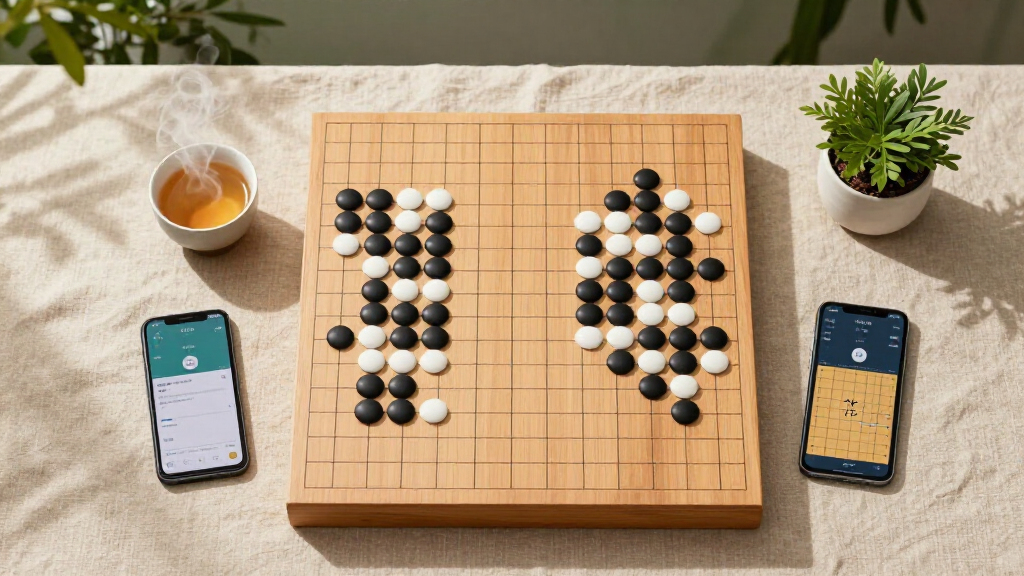
professional Go set with stones and board
As an affiliate, we earn on qualifying purchases.
As an affiliate, we earn on qualifying purchases.
Background on Human-AI Go Competitions
Since the rise of AI programs like AlphaGo and KataGo, AI has often outperformed top human players in Go. AlphaGo’s victory over Lee Sedol in 2016 marked a turning point, sparking increased interest in AI capabilities.
Recent advancements in open-source engines like KataGo have continued to push the boundaries of AI performance. Human players have responded by employing strategies such as handicaps or experimental formats to challenge AI systems. The use of handicaps, including stones given at the start, has become a common method to level the playing field.
While most matches favor AI, occasional human victories with handicaps have shown that humans can still challenge AI under certain conditions. Shin’s recent win adds to this ongoing narrative, though AI remains dominant in most high-stakes scenarios.
As an affiliate, we earn on qualifying purchases.
Unresolved Questions About Broader Implications
It remains unclear whether Shin’s victory indicates a broader trend or is an isolated case. The long-term impact on AI development and human training is uncertain. Experts note that this result does not necessarily mean humans can regularly beat AI at high levels without handicaps, and further matches are needed to assess consistency.
The specific conditions of the match, including the handicap size and AI configuration, likely influenced the outcome. How these factors might be adjusted in future encounters is yet to be determined.
As an affiliate, we earn on qualifying purchases.
Next Steps in Human-AI Go Competitions
Researchers and organizers will analyze the match details to understand how Shin achieved victory. Future matches may test different handicap levels or formats to explore AI and human capabilities further.
Additional professional players may attempt similar challenges, potentially leading to a series of matches aimed at evaluating AI’s limits. Monitoring these developments will help understand whether human strategic ingenuity can continue to challenge AI in structured competitions.
As an affiliate, we earn on qualifying purchases.
Key Questions
Does Shin’s victory mean humans can always beat AI with handicaps?
No, this result is specific to this match and conditions. It does not establish that humans can consistently outperform AI at high levels without handicaps.
What is the significance of a two-stone handicap in Go?
A two-stone handicap gives the human player a strategic advantage at the start, making the game more balanced and testing the AI’s ability to overcome such disadvantages.
Could this result influence AI development?
Yes, AI developers may analyze the match to identify potential weaknesses or strategies to improve AI performance against handicapped opponents.
Are there plans for more matches between Shin and AI systems?
While no official plans have been announced, the success of this match suggests that additional human-AI competitions may be organized to further explore the capabilities of both sides.
Source: hn
Halloween Picks
halloween
As an affiliate, we earn on qualifying purchases.