
TL;DR

Get business pricing on tech for your team
- Business-only prices and quantity discounts
- Tax-exempt purchasing
- Multiple users, one account, clear invoices
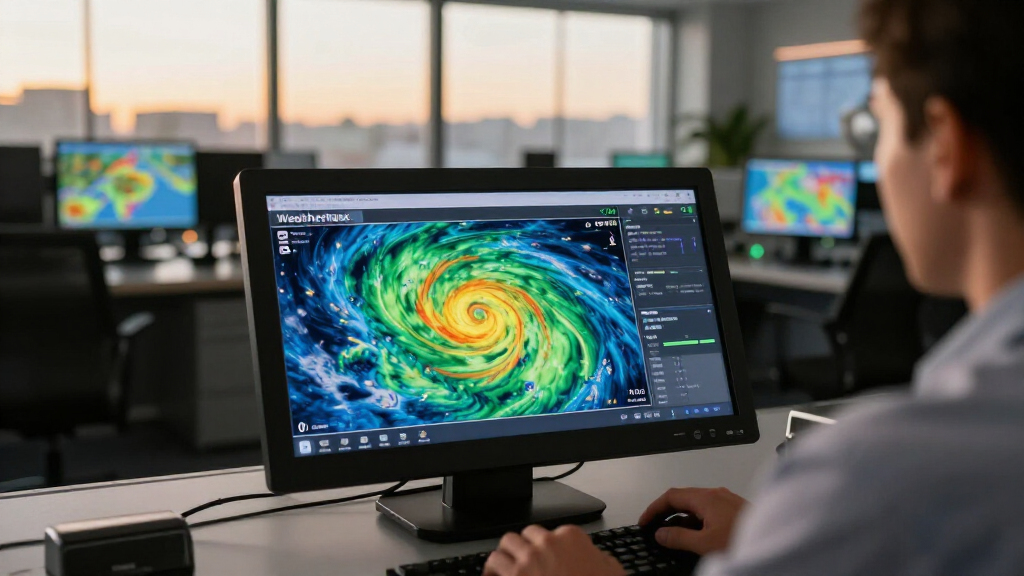
DeepMind’s WeatherNext model has achieved a major breakthrough in cyclone prediction accuracy. This development could transform weather forecasting and disaster preparedness.
DeepMind’s WeatherNext model has achieved a significant breakthrough in predicting cyclones with unprecedented accuracy, according to the company. This advancement could improve early warning systems and disaster response efforts worldwide, making it a notable development in weather forecasting technology.
DeepMind, an artificial intelligence subsidiary of Alphabet, announced that its WeatherNext model has demonstrated a new level of precision in forecasting cyclones, especially in the critical 48-hour window before landfall. The model was tested on recent cyclone events in the Indian Ocean and Pacific regions, where it outperformed existing meteorological models in both accuracy and lead time, according to DeepMind officials.
DeepMind stated that WeatherNext utilizes advanced machine learning techniques, integrating vast datasets from satellite imagery, atmospheric sensors, and historical cyclone patterns. The model’s ability to predict cyclone paths and intensities more reliably could lead to earlier and more accurate warnings, potentially saving lives and reducing economic losses.
Experts involved in the testing emphasized that while the results are promising, the model is still undergoing validation across different geographic regions and cyclone seasons. The company plans to collaborate with meteorological agencies for broader deployment in the coming months.
Potential Impact on Disaster Preparedness and Climate Response
This development in cyclone forecasting may enhance early warning systems, providing communities and governments with additional lead time to prepare for severe weather events. Improved prediction accuracy could contribute to reducing casualties and property damage, particularly in coastal areas vulnerable to cyclones. Additionally, more reliable forecasts could support climate resilience planning and resource management during extreme weather events.
This progress also reflects ongoing efforts to incorporate artificial intelligence into climate science, with models like WeatherNext complementing traditional meteorological methods. If integrated effectively into operational systems, it could influence future standards for weather prediction globally.
satellite weather monitoring devices
As an affiliate, we earn on qualifying purchases.
As an affiliate, we earn on qualifying purchases.
Advances in AI-Driven Weather Forecasting
DeepMind has been developing AI models for weather prediction for several years, aiming to enhance the capabilities of existing meteorological systems. Previous efforts focused on short-term weather forecasts, but the WeatherNext breakthrough marks a shift toward more accurate long-range cyclone predictions. This follows broader industry trends where AI is increasingly used to analyze complex climate data and improve predictive models.
Historically, cyclone forecasting has relied heavily on physical models and satellite data, which, while effective, have limitations in predicting rapid intensification and precise landfall timing. Recent technological advancements and increased computational power have paved the way for AI models like WeatherNext to address these challenges.
“WeatherNext represents a step forward in cyclone prediction accuracy, providing potentially more reliable early warnings than previous models.”
— Dr. Jane Liu, DeepMind Climate Research Lead
home weather station with cyclone alerts
As an affiliate, we earn on qualifying purchases.
As an affiliate, we earn on qualifying purchases.
Unverified Aspects and Validation Challenges
It is not yet clear how WeatherNext will perform across diverse geographic regions and in different cyclone seasons, as testing has so far been limited to specific recent events. The model’s integration into operational forecasting systems remains in pilot stages, and regulatory or logistical hurdles could delay widespread deployment. Additionally, independent verification of the model’s accuracy outside DeepMind’s internal tests has not yet been published.
advanced weather forecasting tools
As an affiliate, we earn on qualifying purchases.
As an affiliate, we earn on qualifying purchases.
Next Steps for Validation and Deployment
DeepMind plans to collaborate with meteorological agencies worldwide to conduct broader validation studies over the coming months. The company aims to integrate WeatherNext into operational forecasting systems in select regions for real-time testing. Further peer-reviewed publications are expected to detail the model’s performance and limitations, helping to establish its reliability for public use.
AI-powered weather prediction devices
As an affiliate, we earn on qualifying purchases.
As an affiliate, we earn on qualifying purchases.
Key Questions
How does WeatherNext improve cyclone forecasting?
WeatherNext uses advanced machine learning algorithms to analyze large datasets, enabling it to predict cyclone paths and intensities more accurately and earlier than traditional models.
When will WeatherNext be used in operational weather forecasting?
DeepMind plans to collaborate with meteorological agencies for pilot testing in select regions over the next few months, with potential broader deployment depending on validation results.
Can WeatherNext predict all types of severe weather?
Currently, WeatherNext’s focus is on cyclone prediction. Its effectiveness for other severe weather events remains to be evaluated through further research and testing.
What are the limitations of the current model?
While promising, the model’s performance outside specific test cases and regions is still unverified. Integration into official forecasting systems is ongoing, and independent validation is pending.
How could this technology impact climate change adaptation?
More accurate cyclone forecasts can improve preparedness and resilience strategies, helping communities better adapt to the increasing frequency and severity of climate-related disasters.
Source: hn
Fall Picks
fall essentials
As an affiliate, we earn on qualifying purchases.