
TL;DR
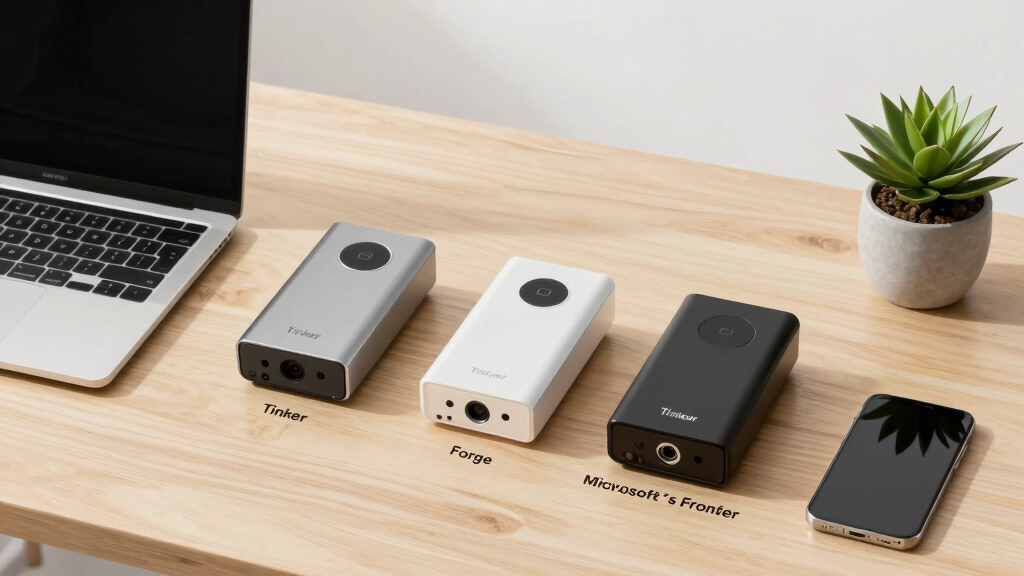
Three major AI platforms—Tinker, Forge, and Microsoft’s Frontier Tuning—are competing to provide customizable, secure AI models for regulated industries. Each offers distinct approaches suited to different enterprise needs, with ongoing developments and strategic implications.
Three major AI platform providers—Thinking Machines with Tinker, Mistral with Forge, and Microsoft with Frontier Tuning—are now offering distinct solutions for enterprise clients seeking customizable AI models that meet strict regulatory and security standards. These developments mark a significant shift in how organizations in regulated sectors can control and deploy AI, moving away from reliance on rented APIs toward owning and managing their models directly.
Tinker, developed by Thinking Machines, offers an open weights approach, allowing users to fine-tune models like Inkling, Qwen, and GPT-OSS with the ability to download the resulting weights. It is designed primarily for research and technically advanced teams, emphasizing flexibility and control. Its API exposes low-level functions, enabling detailed customization, and it is suitable for labs and organizations with deep ML expertise.
Forge, from Mistral, targets European and other regulated markets with a managed, full-lifecycle approach. It offers domain-adaptive pre-training, on-premises deployment options, and embedded engineering support, emphasizing data sovereignty and compliance. Its clients include industrial, aerospace, and cybersecurity organizations that require strict data locality and control, often at a higher cost and complexity.
Microsoft’s Frontier Tuning, announced at Build 2026, integrates tuning capabilities directly within Azure AI Foundry, allowing organizations to customize first-party MAI models with enterprise-grade governance, data lineage, and seamless integration into existing tools like GitHub and Windows. Microsoft’s approach combines model ownership with platform integration, appealing to clients seeking a unified, scalable solution.
Strategic Impact on Regulated Industry AI Adoption
This competition among Tinker, Forge, and Microsoft’s Frontier Tuning reflects a broader industry shift toward enabling organizations in highly regulated sectors to own and control their AI models. It reduces dependency on external APIs, addresses compliance concerns like GDPR and HIPAA, and offers tailored solutions for complex reasoning tasks. The ability to customize models securely and transparently is increasingly vital for sectors such as healthcare, finance, and defense, impacting how AI is adopted and scaled in these fields.
enterprise AI model tuning software
As an affiliate, we earn on qualifying purchases.
As an affiliate, we earn on qualifying purchases.
Emergence of Enterprise-Grade AI Customization Platforms
Until recently, many organizations relied on generic AI APIs, which often posed compliance and data security challenges in regulated industries. The rise of platforms like Tinker, Forge, and Microsoft’s Frontier Tuning signifies a shift toward in-house or controlled deployment of AI models, driven by regulatory pressures, data sovereignty laws, and the need for domain-specific reasoning. Each platform addresses different needs: Tinker for research flexibility, Forge for sovereign, on-prem deployment, and Microsoft for integrated, enterprise-wide solutions.
This development follows increased regulatory scrutiny, including GDPR, HIPAA, and the EU AI Act, which restrict data leaving certain jurisdictions and demand transparency in model lineage. The trend underscores a move away from black-box APIs toward transparent, ownership-based AI models in sensitive sectors.
“Forge is designed to meet the strictest data sovereignty requirements, providing full control over sensitive data and models within regional jurisdictions.”
— A Mistral spokesperson
AI model fine-tuning tools for regulated industries
As an affiliate, we earn on qualifying purchases.
As an affiliate, we earn on qualifying purchases.
Unresolved Questions About Platform Maturity and Adoption
It remains unclear how quickly enterprises will adopt these platforms at scale, especially given Forge’s complexity and cost, and Tinker’s technical demands. The long-term security, data privacy, and model ownership implications are still being evaluated, with ongoing regulatory developments potentially influencing adoption. Additionally, the competitive landscape may evolve as new entrants or updates emerge, and real-world case studies are still limited.
on-premises AI deployment platforms
As an affiliate, we earn on qualifying purchases.
As an affiliate, we earn on qualifying purchases.
Upcoming Deployments and Industry Adoption Milestones
Expect further announcements from these providers as they roll out more enterprise-focused features and expand their client base. Regulatory bodies may also issue new guidelines affecting ownership, data security, and model transparency. Monitoring how regulated organizations implement these solutions will reveal the true impact of this AI tuning showdown in sectors like healthcare, finance, and defense.
AI model management and governance tools
As an affiliate, we earn on qualifying purchases.
As an affiliate, we earn on qualifying purchases.
Key Questions
How do Tinker, Forge, and Microsoft’s Frontier Tuning differ in their approach?
Tinker offers open weights and low-level control for research teams. Forge provides managed, on-premises, sovereign deployment for sensitive data. Microsoft’s Frontier Tuning integrates customization within a platform, combining ownership with seamless enterprise integration.
Which platform is best suited for regulated industries?
Forge is tailored for highly regulated sectors requiring sovereign, on-prem deployment. Microsoft’s solution appeals to organizations seeking platform integration and governance, while Tinker suits research-heavy teams with advanced ML expertise.
What are the main challenges in adopting these platforms?
Challenges include the complexity and cost of Forge, the technical expertise required for Tinker, and the need for organizational readiness to manage model ownership and compliance with evolving regulations.
Will these platforms replace traditional API-based AI models?
They are unlikely to replace API models entirely but will complement them, especially in sectors where data security, compliance, and customization are critical. The trend points toward more ownership-based AI solutions in regulated markets.
Source: ThorstenMeyerAI.com