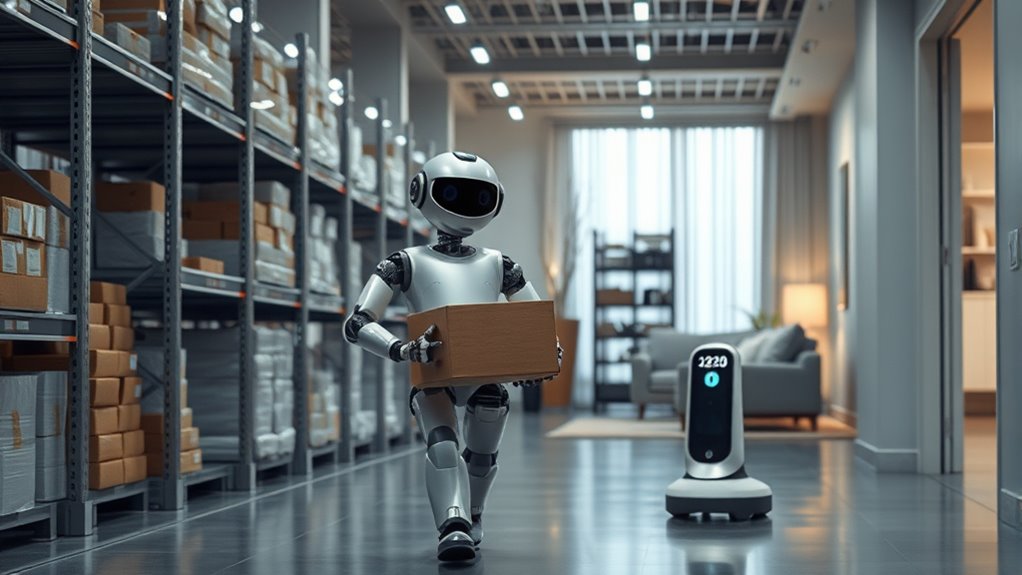

Autonomous robots are revolutionizing logistics and home assistance by maneuvering complex environments safely and efficiently. Using sensors, cameras, and machine learning, they adapt to obstacles, changing layouts, and moving objects in real-time. This helps them deliver packages, clean your home, or assist with daily tasks with minimal human input. As they learn from experience, their performance keeps improving, making them more reliable and helpful. Stay with us to explore how these advancements continue to transform everyday life.
Key Takeaways
- Autonomous robots navigate complex environments in logistics and homes using sensors, lidar, and advanced mapping technologies.
- Machine learning enables robots to adapt to dynamic obstacles and changing layouts for safer, more efficient operation.
- Robots perform tasks like delivery, cleaning, and assistance by learning user habits and environment layouts over time.
- Real-time data analysis and continuous learning improve navigation accuracy, safety, and task execution in unpredictable settings.
- These systems increase independence, reduce human intervention, and optimize productivity in logistics and home assistance.

Have you ever wondered how machines are becoming capable of performing complex tasks without human intervention? It’s a question that lies at the heart of autonomous robotics, especially in sectors like logistics and home assistance. At the core of this technological leap is robot navigation, a critical skill that allows robots to move efficiently and safely through unpredictable environments. Unlike traditional machines that follow fixed paths or rely on pre-programmed instructions, autonomous robots use advanced algorithms that enable real-time decision-making. These algorithms are powered by machine learning, which helps robots adapt to new obstacles, changing layouts, and dynamic scenarios.
When you think about robot navigation, imagine a delivery robot weaving through crowded warehouses or bustling streets without bumping into obstacles. These robots rely on a combination of sensors, cameras, and lidar to create detailed maps of their surroundings. They constantly analyze this data, recognizing pathways, obstacles, and even moving objects like people or other robots. Machine learning algorithms process this information to improve navigation accuracy over time, learning from past experiences to avoid errors and optimize routes. This continuous learning process makes autonomous robots more dependable, reducing the need for human oversight and increasing efficiency.
In home environments, autonomous robots like vacuum cleaners or assistive devices depend heavily on sophisticated robot navigation systems. They map out your living space, remember the locations of furniture, and adjust their paths as you move around. Machine learning plays an essential role here by enabling these robots to personalize their behavior based on your habits. For instance, a robotic vacuum might learn which rooms get dirtier and prioritize cleaning those areas more frequently. It can also recognize obstacles like pets or toys, adapting its route to avoid collisions and ensure thorough cleaning without constant human input.
The integration of machine learning into robot navigation isn’t just about moving from point A to B; it’s about creating intelligent systems that can handle unexpected situations gracefully. These robots learn from each encounter, refining their understanding of the environment and improving their decision-making capabilities. As a result, they can operate more independently, perform complex tasks efficiently, and seamlessly adapt to new environments. Whether in a warehouse or your home, autonomous robots powered by machine learning and advanced navigation are transforming how tasks are accomplished, making life easier and work more productive.
Frequently Asked Questions
What Are the Cost Implications of Deploying Autonomous Robots?
Deploying autonomous robots involves significant initial investments, but a thorough cost analysis helps you understand long-term savings. You’ll need to contemplate purchase costs, integration, and maintenance. Conducting an ROI assessment shows how quickly automation pays off by reducing labor and error costs. While upfront expenses are high, the efficiency gains and improved accuracy make autonomous robots a financially sound choice over time, ultimately boosting your operational profitability.
How Do Robots Adapt to Dynamic Home Environments?
You’ll find that robots adapt to dynamic home environments through adaptive navigation and obstacle detection. Studies show that advanced robots can re-route in real-time, handling up to 90% of unexpected obstacles seamlessly. They use sensors and machine learning to recognize changes and adjust their paths instantly. This means your robot can navigate cluttered spaces, avoid moving objects, and work efficiently without constant human intervention, making home assistance smoother and more reliable.
What Safety Measures Are in Place for Autonomous Robots?
You can trust that safety measures are in place for autonomous robots by ensuring sensor accuracy and implementing emergency protocols. These robots use advanced sensors to detect obstacles and prevent accidents, while emergency protocols enable quick shutdowns or alerts if they encounter issues. Regular system updates and safety checks keep everything running smoothly, giving you peace of mind knowing the robots operate safely and respond effectively to any unexpected situations.
How Is User Privacy Protected With Home Robots?
You should know that your privacy is protected through strict measures. The home robots use data encryption to secure your personal information, preventing unauthorized access. Additionally, manufacturers implement privacy controls, allowing you to manage what data is collected and shared. Regular updates and security protocols help address privacy concerns, ensuring your data remains confidential. These steps work together to give you peace of mind while enjoying the convenience of your home robot.
What Are the Maintenance Requirements for Autonomous Logistics Robots?
Think of your autonomous logistics robot as a high-performance car needing regular tune-ups. You should check its battery lifespan regularly and replace or recharge batteries as recommended. Keep its software updated to guarantee smooth operation and security. Periodically inspect for worn parts and clean sensors to maintain efficiency. By staying proactive with maintenance, you’ll keep your robot running like a well-oiled machine, ready for any task.
Conclusion
Think of autonomous robotics as the silent backbone of modern life, quietly supporting and elevating your daily routines. Like a trusted compass, they guide logistics and home assistance with precision and purpose, making complexity feel simple. As technology advances, these robots become more than tools—they’re partners shaping a future where convenience and efficiency seamlessly intertwine. Embrace this evolution, knowing you’re steering toward a horizon where innovation acts as your steadfast navigator.