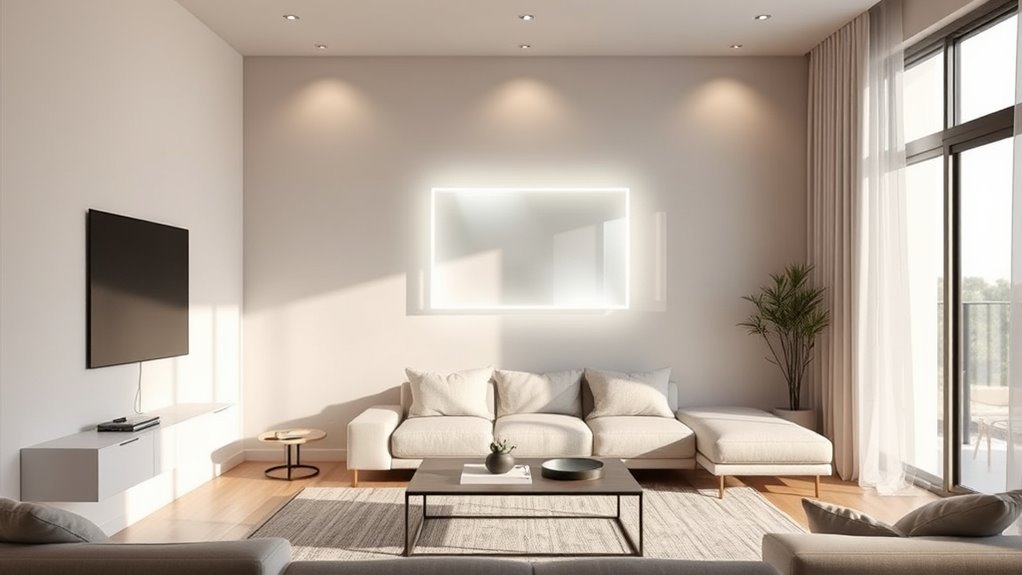

Ambient computing quietly blends into your environment, anticipating your needs without effort. It uses smart devices and sensors to learn your routines, preferences, and habits, adjusting lighting, temperature, or music automatically. This creates an unobtrusive experience, making everyday life smoother and more personalized. As technology becomes more intuitive, your surroundings will adapt proactively to support you better. Keep exploring to discover how this seamless integration can transform your daily routines effortlessly.
Key Takeaways
- Ambient computing creates an unobtrusive environment by seamlessly blending technology into daily life.
- It employs contextual awareness to anticipate user needs and adjust settings proactively.
- Smart devices continuously collect data to recognize routines and preferences without manual input.
- The system learns over time, making automatic adjustments for comfort and efficiency.
- It transforms environments into intelligent partners that respond quietly and proactively to users.
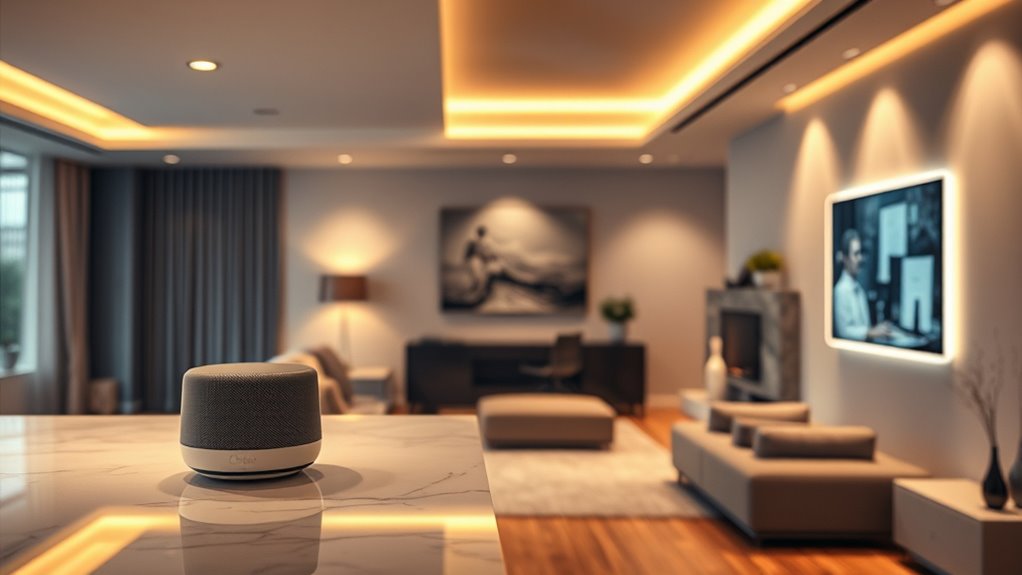
Have you ever wondered how your environment can seamlessly adapt to your needs without you even noticing? That’s the magic of ambient computing—a system designed to create an intuitive, unobtrusive experience by blending technology into your everyday life. At the core of this innovation is the concept of smart homes, where devices work together using contextual awareness to anticipate your actions and preferences. Instead of manually adjusting thermostats or searching for your keys, your environment responds automatically, making life smoother and more efficient.
Imagine walking into your house after a long day. Without lifting a finger, the lights turn on softly, your favorite music starts playing, and the room temperature adjusts to your preferred setting. All of this happens because your smart home continuously gathers data about your habits, routines, and current context. It recognizes that you’re home, knows the time of day, and understands your typical preferences at that moment. This is possible through advanced sensors and interconnected devices that communicate in real time, creating a web of awareness around you.
Your smart home senses your habits and adjusts seamlessly, creating a personalized, intuitive environment every day.
Contextual awareness is what makes ambient computing feel almost alive. It’s not just about having gadgets; it’s about having a system that understands your environment and reacts accordingly. For instance, if you’re reading in the living room and suddenly start to nod off, your system might dim the lights and lower the volume of the TV to create a more relaxing atmosphere. When you get up, the environment readjusts, ensuring you’re never left in an uncomfortable setting. This constant, subtle adaptation guarantees that your surroundings are always aligned with your current needs, often even before you realize they exist.
The beauty of ambient computing lies in its unobtrusiveness. It doesn’t require constant input or manual commands. Instead, it learns from your behaviors and automatically adjusts, creating a seamless experience. Your devices and environment work as a cohesive unit, sensing changes and responding naturally. This level of integration means fewer interruptions and a more comfortable, personalized space. Over time, as these systems learn more about you, they can even predict your needs, making life not just easier but more intuitive.
In essence, ambient computing transforms your environment into an intelligent partner that anticipates and adapts to your needs without you having to think about it. It’s a future where technology blends into the background, enhancing your daily routines with quiet efficiency and intelligent responsiveness. With smart homes powered by contextual awareness, your surroundings become more than just a backdrop—they become an active, attentive participant in your life.

QIXZOCV MWE 32 Inch Digital Signage Display, Portable LCD Digital Kiosk, Advertising Display Poster, Android Kiosk with Auto Media Player, HDMI/USB
【High-Quality Display】This MWE-QIXZOCV digital signage kiosk features an IPS display screen with FHD image and video quality, offering...
As an affiliate, we earn on qualifying purchases.
Frequently Asked Questions
How Secure Is Ambient Computing Regarding User Privacy?
Ambient computing’s privacy security depends on how well data encryption is implemented and how clearly you give user consent. When your data is encrypted, it’s protected from unauthorized access, but if you aren’t informed or don’t consent, your privacy could be at risk. Always review privacy policies and guarantee your settings prioritize encryption and explicit consent, so you stay in control of your personal information while enjoying ambient technology’s benefits.
What Are the Main Challenges in Implementing Ambient Computing?
Implementing ambient computing is like solving a complex puzzle. You face main challenges such as achieving seamless contextual awareness and integrating diverse data sources. Ensuring privacy while maintaining real-time responsiveness demands sophisticated technology and robust security measures. You must also address interoperability issues among devices and manage vast data flows efficiently. Overcoming these hurdles requires careful planning, innovative solutions, and a clear focus on user trust and privacy protection.
How Does Ambient Computing Differ From Smart Home Technology?
You’ll find ambient computing differs from smart home tech because it focuses on contextual awareness and user personalization, seamlessly integrating into your environment. Unlike traditional smart devices, ambient computing anticipates your needs by understanding your habits and preferences, responding proactively. It creates a more intuitive experience, adapting in real-time without explicit commands, making your interactions smoother and more natural. This technology truly anticipates your needs before you even realize them.
Can Ambient Computing Adapt to Individual User Preferences?
Ambient computing uses personalization strategies and adaptive learning to tailor experiences to your preferences. As you go about your day, it learns your routines, adjusts settings, and anticipates your needs without missing a beat. This technology is like having a personal assistant who always stays one step ahead, ensuring your environment feels just right every time. It’s a game-changer for creating seamless, intuitive experiences.
What Industries Are Most Likely to Benefit From Ambient Computing?
You’ll find healthcare, retail, and manufacturing benefit most from ambient computing. These industries leverage contextual awareness and data integration to streamline operations, improve customer experiences, and enhance safety. For example, in healthcare, sensors monitor patient conditions automatically; in retail, smart environments personalize shopping; and in manufacturing, systems optimize workflows. By seamlessly anticipating needs, ambient computing helps you operate more efficiently and respond proactively to real-time data.

Canlarriz Digital Signage Display 50 inch Wall Mount Digital Menu Board for Restaurants and Stores Advertising Screen 1000 nits Ultra-High Brightness 4K UHD Free Web Content Editor Android 4GB + 32GB
【Ultra-thin ultra-narrow bezels】Digital signage with a 6.8mm ultra-narrow bezel delivers a seamless visual experience. Paired with a 3.5cm...
As an affiliate, we earn on qualifying purchases.
Conclusion
As you embrace ambient computing, imagine your smart home intuitively adjusting the temperature as you settle in after work, or your wearable device alerting you to stress levels before you even notice. This seamless technology quietly anticipates your needs, making life smoother and more personalized. By integrating ambient computing into daily routines, you’ll experience a future where convenience feels effortless—like having a helpful, invisible assistant always ready to support you without you even asking.

Canlarriz Digital Menu Board 18.5 inch Desktop Digital Signage Display Advertising Screen for Stores Restaurants and Commercial Display 700 nits Ultra-High Brightness Free Web Content Editor Android
【Remote Management】: The electronic menu board supports cross-platform remote control via smartphones, computers, and tablets, and can intelligently...
As an affiliate, we earn on qualifying purchases.

Canlarriz 32 inch Digital Signage Kiosk 700 nits FHD Ultra-Bright Advertising Screen Floor Standing Digital Poster for Retail Displays and Trade Show Display Free Web Content Editor Android USB/HDMI
【Forward-Thinking Design】This digital signage features a hollow floating base for a visually transparent and lightweight appearance. Its sleek,...
As an affiliate, we earn on qualifying purchases.