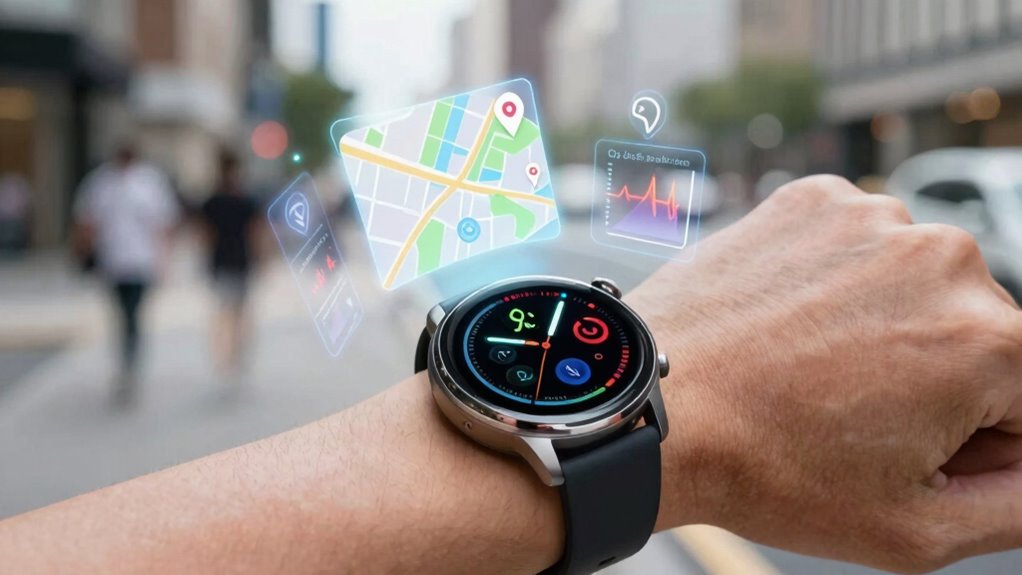

AI makes wearables more context-aware than phones by using advanced sensors to monitor your environment, activities, and emotional states in real time. These devices can interpret subtle cues like stress or fatigue, offering personalized support and automatic adjustments based on your behaviors. Sensor fusion combines multiple data streams for nuanced understanding, making wearables smarter about your needs. If you’re curious how this technology will evolve further, keep exploring these innovative capabilities.

Get business pricing on tech for your team
- Business-only prices and quantity discounts
- Tax-exempt purchasing
- Multiple users, one account, clear invoices
Key Takeaways
- Wearables can integrate multiple sensors to continuously monitor environment, activities, and physiological signals for deeper context understanding.
- AI algorithms enable real-time interpretation of complex data streams, allowing wearables to accurately recognize user states and surroundings.
- Personalization through machine learning tailors device responses to individual habits, enhancing context-awareness over generic smartphone capabilities.
- Wearables can detect subtle emotional and stress cues, providing more nuanced insights than standard phone sensors.
- Advanced privacy and security measures ensure sensitive contextual data is protected, fostering user trust in wearable AI insights.
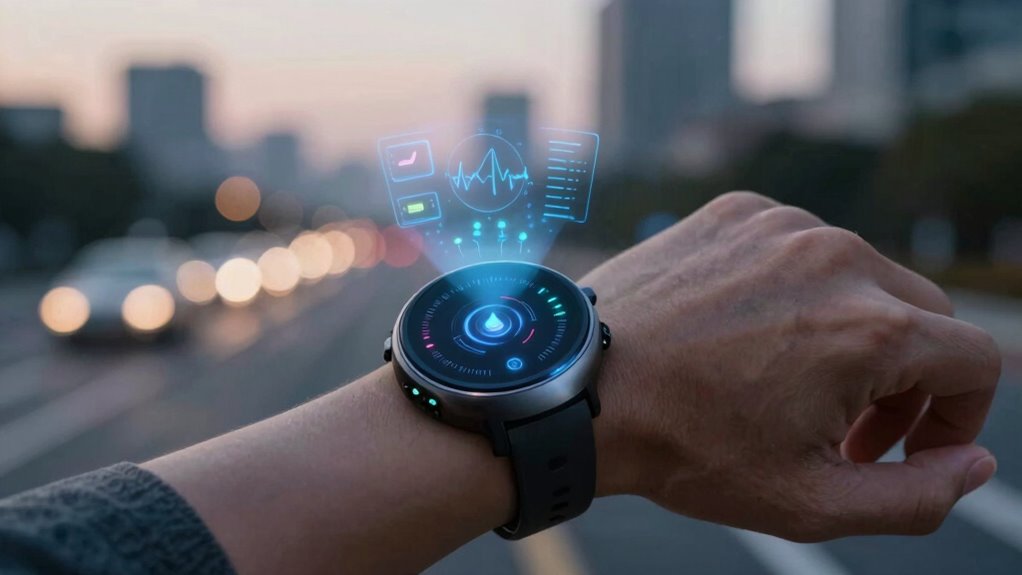
Wearables are rapidly evolving, and artificial intelligence is poised to make them more context-aware than smartphones. As technology advances, these devices will understand your environment and activities better than ever before, offering personalized insights and seamless support. Central to this progress is sensor integration, which allows wearables to collect a vast array of data—heart rate, movement, skin temperature, even environmental factors like light and sound. With AI processing this data on the fly, your wearable can interpret your actions and surroundings in real time. For example, it might recognize when you’re exercising, working, or resting, then adjust notifications or suggest tailored routines without your input. This level of context-awareness could transform your daily experience, making technology more intuitive and responsive. Additionally, advancements in sensor fusion will enable wearables to combine multiple data streams for even more accurate and nuanced understanding of your states and activities. As these systems become more sophisticated, they will also be better at predicting your future needs based on past patterns, further enhancing their usefulness. In this way, personalized insights could become a cornerstone of wearable technology, tailoring solutions uniquely to each user. Moreover, as AI models improve, these devices will increasingly adapt to your individual behaviors, providing more precise and relevant support over time.
Wearables are becoming more intelligent, understanding your environment and activities to provide personalized, seamless support through advanced sensor integration and AI.
Furthermore, the ongoing development of machine learning algorithms will allow wearables to refine their understanding of your habits, making their assistance more proactive and effective. However, as wearables gather increasing amounts of sensitive data, privacy considerations become paramount. You need to be aware that these devices often store and transmit personal information, which makes them attractive targets for breaches or misuse. Developers and manufacturers must prioritize robust security measures—such as encryption, anonymization, and user consent protocols—to protect your data. It’s crucial that you remain in control of what information your wearable collects and how it’s shared. Transparent privacy policies and customizable settings will empower you to decide what data is used for AI-driven insights, helping to prevent unauthorized access or exploitation. Balancing the benefits of AI-driven context-awareness with privacy safeguards will be key to gaining your trust and maximizing the utility of these devices.
As AI enhances sensor integration, wearables will become better at understanding subtle cues, like your emotional state or stress levels, which are difficult for traditional devices to detect. This means your wearable could, for instance, recognize signs of fatigue or anxiety and suggest calming activities or alert you to take a break. Such capabilities could lead to healthier habits and a more supportive user experience. Yet, this also underscores the importance of privacy considerations—your emotional data is deeply personal, and mishandling it could cause harm. Developers must implement strict privacy controls and transparent data practices to ensure your emotional and health data is used ethically and securely. Furthermore, ongoing research into ethical data handling will be essential to ensure that AI-driven insights respect personal boundaries and promote user well-being. Establishing clear privacy policies that outline data use and protection will be fundamental in building user confidence in these emerging technologies.
In essence, the combination of sensor integration and AI has the potential to make wearables more context-aware than smartphones, transforming how you interact with technology. But for these advancements to truly benefit you, privacy considerations must be at the forefront. When designed responsibly, these devices will enhance your daily life by providing smarter, more intuitive support while respecting your personal boundaries.
wearable sensors for activity tracking
As an affiliate, we earn on qualifying purchases.
As an affiliate, we earn on qualifying purchases.
Frequently Asked Questions
How Do Wearables Gather Context Data Differently From Smartphones?
You notice that wearables gather context data differently by integrating sensors like accelerometers, gyroscopes, and heart rate monitors directly into the device. They use sensor integration to continuously collect real-time data, then apply data fusion techniques to combine this information for an all-encompassing understanding of your environment and activity. Unlike smartphones, wearables stay closer to your body, providing more immediate, personalized, and accurate context insights.
What Privacy Concerns Arise With More Context-Aware Wearables?
Imagine your wearable as a guardian whispering secrets. As it gathers more context, privacy concerns bloom like shadows, threatening your data security. You might worry about unauthorized access or misuse of your personal info. It’s essential that user consent is clear and respected, like a handshake you trust. Without proper safeguards, these devices could turn into spies rather than allies, making it imperative to prioritize your privacy at every step.
Can Wearables Replace Smartphones Entirely With AI?
Wearables could replace smartphones as AI advances, especially with personalization evolution making devices more tailored to your needs. They’ll become more intuitive, predicting your actions and preferences. Battery optimization will also improve, ensuring longer usage without frequent charging. However, full replacement depends on whether wearables can handle all functions, including communication and media, effectively. For now, they’re more likely to complement than fully substitute your smartphone.
How Accurate Is AI in Interpreting Wearable Sensor Data?
Imagine your wearable as a vigilant guardian—AI’s sensor accuracy and data interpretation are quite precise. It’s like a finely tuned instrument, capturing subtle signals from your body. While not perfect, AI’s interpretation of sensor data is increasingly reliable, especially with advanced algorithms. As technology improves, your wearable’s ability to interpret data will become more accurate, making it a trusted extension of your health and activity insights.
What Are the Limitations of Current AI in Wearables?
You might find that current AI in wearables faces personalization challenges, making it harder to tailor experiences perfectly to you. Battery limitations also restrict how much processing power AI can use, often reducing accuracy and responsiveness. These constraints mean wearables can struggle with delivering seamless, highly personalized insights or long-lasting performance. As technology advances, addressing these issues will be key to making wearables more effective and user-friendly.
As an affiliate, we earn on qualifying purchases.
Conclusion
As AI advances, your wearables could soon understand your environment and needs better than your phone ever could. Imagine devices that anticipate your next move, adjusting seamlessly without you lifting a finger. But what if this technology reveal even deeper insights into your life—secrets you didn’t realize were within reach? The future’s just around the corner, and with every breakthrough, you’ll want to ask: what comes next for your most personal tech?
As an affiliate, we earn on qualifying purchases.
personalized smart watch with sensors
As an affiliate, we earn on qualifying purchases.
As an affiliate, we earn on qualifying purchases.
Fall Picks
fall essentials
As an affiliate, we earn on qualifying purchases.