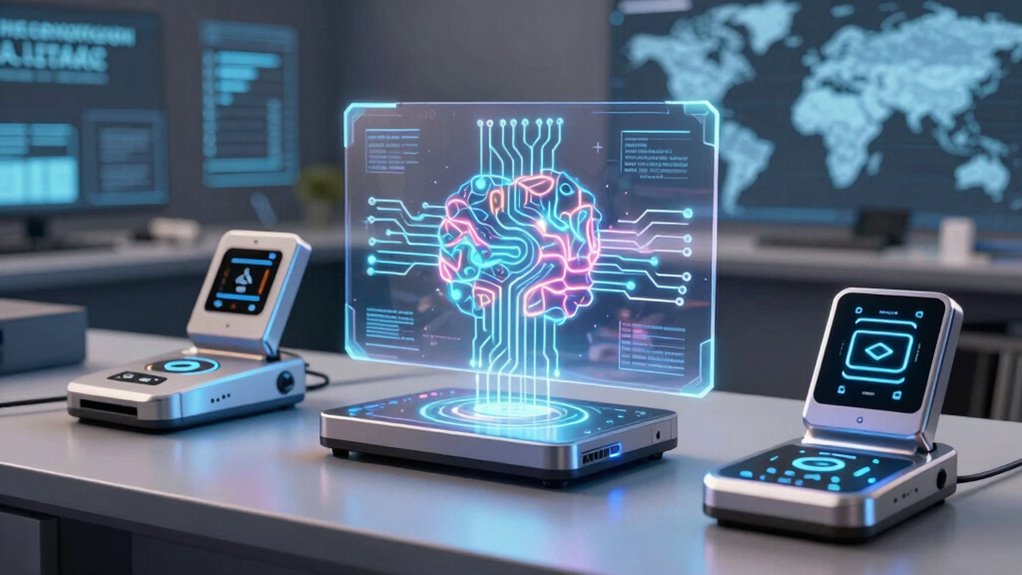

AI can rebuild translation hardware by using neural networks to improve accuracy, speed, and understanding of complex language nuances. Speech synthesis technology now creates natural, expressive voices that make conversations feel more authentic. These advancements allow devices to adapt to your speech patterns and preferences, making translations more personalized. As AI continues to evolve, it transforms static tools into smart partners for seamless cross-language communication. Keep exploring how these innovations are shaping the future of translation.

Get business pricing on tech for your team
- Business-only prices and quantity discounts
- Tax-exempt purchasing
- Multiple users, one account, clear invoices
Key Takeaways
- AI-powered neural networks enable more accurate, real-time translations that adapt to context, idioms, and nuances.
- Advanced speech synthesis creates natural, expressive communication, improving user engagement and comprehension.
- Increased processing power and efficiency allow instant translation during conversations without sacrificing quality.
- Personalization through machine learning tailors translations to individual speech patterns and vocabulary.
- AI-driven features enhance device intelligence, fostering cultural connection while emphasizing security against vulnerabilities.

As artificial intelligence continues to evolve, it’s revolutionizing the way we approach translation hardware. Gone are the days when translation devices relied solely on static algorithms and limited dictionaries. Today, neural networks are at the core of this transformation, allowing hardware to process language more naturally and accurately. These networks mimic the way human brains learn, enabling devices to understand context, idioms, and nuances in speech, which was once a significant challenge. By training neural networks on vast datasets, translation hardware can now deliver more precise results, making communication smoother and more seamless across languages.
Speech synthesis plays an essential role in this overhaul. Instead of robotic and monotone outputs, AI-powered translation hardware now produces speech that sounds more human and expressive. This advancement isn’t just about clarity; it’s about capturing tone, emotion, and natural intonation. When combined with neural networks, speech synthesis can generate responses that feel intuitive and engaging, reducing misunderstandings and creating a more authentic conversational experience. As you use these devices, you’ll notice how they adapt to different speech patterns and dialects, thanks to continuous learning and improvements in AI models. Additionally, advancements in side-channel attacks highlight the importance of safeguarding these intelligent systems from potential security vulnerabilities.
The integration of neural networks into hardware also means that translation devices are becoming faster and more efficient. They can process complex language structures in real time, enabling instant translations during conversations, meetings, or even casual chats. This speed doesn’t come at the expense of accuracy; it’s a result of sophisticated AI algorithms optimized for quick computation. As a user, you benefit from fewer delays, more reliable translations, and a more natural flow of communication, especially in situations where timing is critical. Moreover, processing power continues to increase, which further enhances the capabilities of these devices. The scalability of AI-driven translation hardware ensures it can meet diverse user needs across different contexts and environments. Furthermore, ongoing research into neural network architectures is helping to improve the adaptability and learning speed of these systems.
Moreover, AI-driven translation hardware is increasingly personalized. Neural networks learn from your interactions, adapting to your speech patterns and preferred vocabulary. This personalization makes translations more relevant and context-aware, enhancing your overall experience. As the technology continues to improve, it’s likely that future hardware will seamlessly integrate with other AI systems, offering even smarter, more intuitive tools for cross-language communication.
In essence, AI is not just rebuilding the value of translation hardware; it’s redefining what it can do. Neural networks and speech synthesis are transforming static devices into dynamic, intelligent partners that bridge language gaps with unprecedented accuracy, speed, and naturalness. This evolution empowers you to communicate more effectively across cultures, opening new opportunities for connection and understanding in a globalized world.
As an affiliate, we earn on qualifying purchases.
Frequently Asked Questions
How Will AI Impact the Cost of Translation Hardware?
AI will notably reduce the cost of translation hardware by enabling hardware innovation that makes devices more efficient and affordable. As AI advances, it minimizes the need for expensive, specialized components, allowing you to access powerful translation tools at lower prices. This cost reduction encourages wider adoption, making real-time translation hardware more accessible for personal and professional use, ultimately transforming how you communicate across languages worldwide.
What Are the Environmental Benefits of Ai-Driven Translation Devices?
Think of AI-driven translation devices as seeds for sustainability innovations—they help grow eco-friendly materials and reduce waste. By optimizing power use and enabling precise communication, these devices lower environmental impact. For example, using AI reduces the need for bulky, resource-heavy hardware, minimizing electronic waste. This shift promotes eco-conscious practices, making translation technology more sustainable and supporting your efforts toward a greener future.
How Secure Is Data Processed by AI in Translation Hardware?
You can trust that data processed by AI in translation hardware is quite secure, thanks to robust data encryption and strict privacy protocols. Manufacturers implement advanced encryption methods to protect your information from unauthorized access. Additionally, privacy protocols ensure your data stays confidential, minimizing risks. While no system is entirely invulnerable, these security measures greatly enhance the safety of your data during translation, giving you peace of mind.
Can AI Adapt to Rare or New Languages Effectively?
AI can adapt to rare or new languages effectively by leveraging advanced machine learning techniques, especially in language preservation and cultural adaptation. You can train AI models on limited data, allowing them to recognize unique linguistic features. This way, AI supports endangered languages and promotes cultural diversity. As AI continues improving, it becomes more capable of understanding and translating even the most obscure dialects, helping preserve linguistic heritage worldwide.
What Are the Long-Term Maintenance Needs for Ai-Based Translation Hardware?
You’ll need to regularly monitor your AI-based translation hardware for hardware durability issues, such as wear and tear, and guarantee it stays operational. Frequent software updates are essential to maintain accuracy, security, and compatibility with evolving language datasets. Over time, you might also need to replace components or upgrade systems to keep up with advancements, ensuring your hardware remains reliable and effective for long-term use.
As an affiliate, we earn on qualifying purchases.
Conclusion
Imagine a future where your translation device is no longer bulky or slow, but sleek and instant—thanks to AI. Just as a smartphone transformed communication, AI is revolutionizing translation hardware, making it more efficient and accessible. The contrast between yesterday’s clunky gadgets and tomorrow’s seamless tech highlights a profound shift. You won’t just use a tool—you’ll experience a bridge across languages, connecting worlds in real time. The future of translation is closer than you think.
speech synthesis translation hardware
As an affiliate, we earn on qualifying purchases.
As an affiliate, we earn on qualifying purchases.
As an affiliate, we earn on qualifying purchases.
Evergreen bestsellers Picks
bestsellers
As an affiliate, we earn on qualifying purchases.