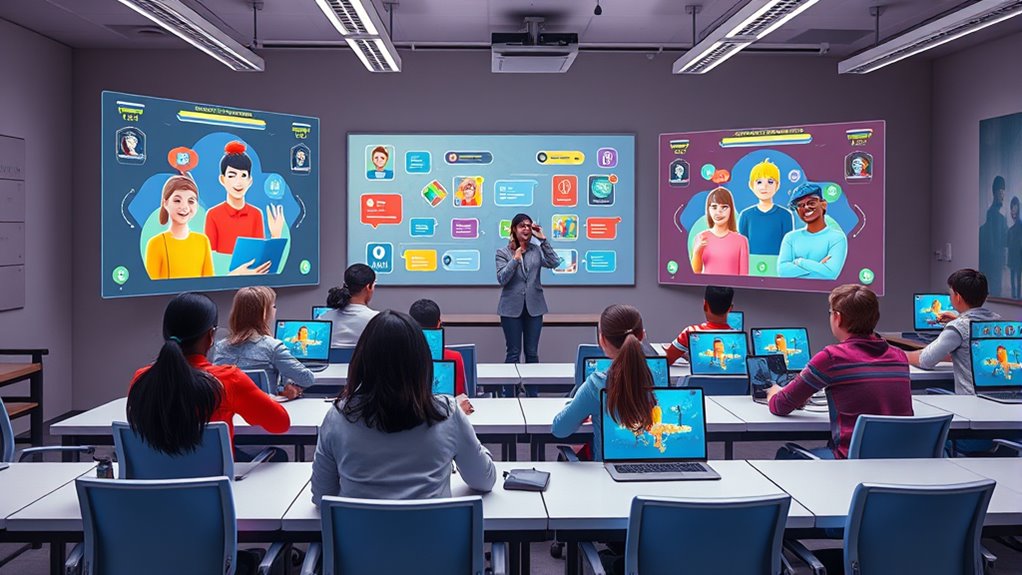

Virtual classrooms and gamified education are shaping the future of learning by making education more engaging, accessible, and personalized. You can connect with peers and instructors regardless of location, participate actively through interactive tools, and enjoy tailored content that fits your learning style. Gamification adds motivation with badges, challenges, and leaderboards, transforming the learning process into an enjoyable experience. Continue exploring to discover how these innovative methods can boost your educational journey.
Key Takeaways
- Virtual classrooms expand access and flexibility, making gamified learning more inclusive worldwide.
- Incorporating gamification elements boosts motivation, engagement, and active participation in virtual learning environments.
- Interactive tools and real-time feedback enhance student involvement and transform passive lessons into dynamic experiences.
- Personalized, adaptive platforms address diverse learning styles, increasing retention and comprehension of complex concepts.
- Collaborative features foster peer interaction and community building, enriching the overall virtual and gamified educational experience.
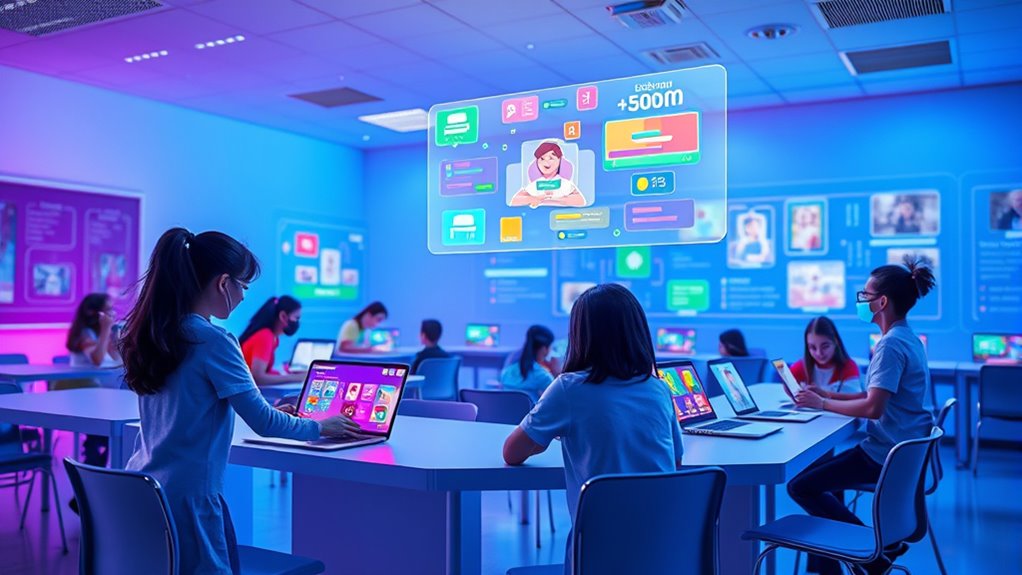
Virtual classrooms have transformed traditional education by making learning more accessible and flexible. As a student, you now have the opportunity to connect with instructors and peers from anywhere in the world, breaking down geographical barriers that once limited educational access. This shift isn’t just about convenience; it fundamentally changes how you engage with the material. Student engagement is now at the forefront of virtual learning, and it’s driven by innovative technological integration. When your learning environment leverages the latest tools—interactive quizzes, multimedia presentations, and real-time feedback—you’re more likely to stay motivated and involved. These technological features turn passive listening into active participation, keeping you attentive and enthusiastic to learn.
The integration of advanced technology in virtual classrooms isn’t simply about adding bells and whistles; it’s about creating a more dynamic, personalized learning experience. For example, adaptive learning platforms analyze your progress and tailor content to suit your pace and level. This kind of technological integration helps address individual learning styles, making it easier for you to grasp complex concepts and retain information. Additionally, virtual classrooms often utilize gamified elements—badges, leaderboards, and challenges—that make learning feel more like a game than a chore. These features boost your motivation, encouraging you to complete assignments and participate more fully in discussions. The gamification aspect turns education into an enjoyable experience, which can considerably improve your overall engagement and success.
Furthermore, virtual classrooms foster a sense of community through collaborative tools like breakout rooms, discussion boards, and live chats. As a student, you’re encouraged to work with peers on projects, share ideas, and provide feedback, all within a digital environment. This sense of connection enhances your learning experience and promotes active participation. Technological integration also means that you can access learning materials anytime, anywhere, giving you control over your education. You’re not bound by rigid schedules or physical classrooms; instead, you can review lectures, complete assignments, and engage with content at your own pace. The impact of color accuracy in virtual environments ensures that visual content remains clear and true to life, enhancing multimedia learning experiences.
In essence, virtual classrooms leverage technological integration to make learning more engaging, personalized, and accessible. This approach keeps you motivated and involved, turning education into a more interactive and enjoyable journey. As technology continues to evolve, so will the ways you learn and connect, promising an even more engaging future for virtual education. The combination of innovative tools and a focus on student engagement is shaping a future where learning is more inclusive, dynamic, and effective.

PWR4GTR 15.6" Digital Signage Capacitive Touchscreen Advertising Display with Adjustable Stand, 10000mAh Battery, Android 11 Commercial LCD Monitor with Auto Play, Wireless Screen Mirroring, 4+64GB
10-Point Capacitive Touch Screen: The 15.6" LCD monitor features a 2K FHD touch panel for a high-definition visual...
As an affiliate, we earn on qualifying purchases.
Frequently Asked Questions
How Do Virtual Classrooms Accommodate Students With Disabilities?
You can guarantee students with disabilities thrive in virtual classrooms by implementing assistive technologies like screen readers and speech recognition tools. You also follow accessibility standards, making content easy to navigate and understand. By customizing learning experiences and providing alternative formats, you make education inclusive. This proactive approach helps remove barriers, enabling students with disabilities to participate fully and succeed in digital learning environments.
What Are the Best Gamification Tools for Language Learning?
You should try using interactive quizzes and progress badges for language learning. Interactive quizzes make practicing vocabulary and grammar engaging, helping you retain information better. Progress badges motivate you by rewarding milestones, boosting your confidence as you improve. These gamification tools turn language practice into a fun, rewarding experience, making it easier to stay consistent and motivated on your learning journey.
How Secure Is Student Data in Virtual Learning Platforms?
Your student data’s security depends on the platform’s use of data encryption and strict access controls. Most reputable virtual learning platforms implement strong encryption to protect data during transmission and storage. Access controls limit who can view or modify sensitive information, reducing risks. However, always stay informed about the platform’s security measures and guarantee it complies with privacy laws to keep your data safe and secure.
Can Gamified Education Replace Traditional Classroom Teaching Entirely?
You wonder if gamified education can fully replace traditional classrooms. While it boosts student engagement and offers curriculum flexibility, it can’t capture all the nuances of face-to-face interaction. Imagine a future where digital games inspire curiosity, but also recognize the importance of personal connection. As technology advances, gamified learning may transform education, yet it’s unlikely to replace the rich, dynamic experience of traditional teaching entirely.
What Are the Cost Implications for Implementing Virtual and Gamified Education?
Implementing virtual and gamified education involves significant cost analysis, including initial infrastructure investment in hardware, software, and reliable internet access. You’ll need to budget for platform licenses, content development, and ongoing technical support. While upfront costs can be high, long-term savings may come from reduced physical resource expenses and expanded accessibility. Careful planning guarantees you balance these costs with the educational benefits to maximize your investment.

AG Neovo DS4351U 43'' Commercial Digital Signage Display for Business, All-in-one, 4K UHD, 500 nits, HDMI, USB, LAN, WiFi, 3-Year Waranty, 24/7 Operation, Portrait and Landscape
4K ULTRA HD DIGITAL SIGNAGE: Experience captivating visuals with stunning 4K resolution and 500 nits brightness, making it...
As an affiliate, we earn on qualifying purchases.
Conclusion
As you embrace virtual classrooms and gamified learning, remember that over 70% of students find these methods more engaging and enjoyable. This shift makes education more interactive and accessible, preparing you for future challenges. By combining technology with innovative teaching strategies, you’re not just learning—you’re experiencing education in a way that motivates you to succeed. The future of learning is here, and it’s more exciting than ever before.

Canlarriz Digital Menu Board 18.5 inch Desktop Digital Signage Display Advertising Screen for Stores Restaurants and Commercial Display 700 nits Ultra-High Brightness Free Web Content Editor Android
【Remote Management】: The electronic menu board supports cross-platform remote control via smartphones, computers, and tablets, and can intelligently...
As an affiliate, we earn on qualifying purchases.
PWR4GTR 15.6" Digital Signage with Battery, Capacitive Touchscreen Advertising Display, Commercial LCD Monitor with Stand, Auto Play, Wireless Screen Mirroring, 2+32GB, Black
10-Point Capacitive Touch Screen: The 15.6" LCD monitor features a 2K FHD touch panel for a high-definition visual...
As an affiliate, we earn on qualifying purchases.