Emotional AIs are increasingly simulating human-like responses, making it easy to mistake these interactions for genuine connections. They can interpret feelings and respond with comforting or engaging replies, which might lead you to prefer artificial companionship over real relationships. However, these systems don’t truly understand or feel emotions—they’re just mimicking them. If you want to see how these AI interactions are impacting human bonds and what the future holds, stay tuned.
Key Takeaways
- Emotional AI can simulate intimacy but lacks genuine empathy and mutual understanding.
- Users may develop emotional dependence on AI, replacing human relationships.
- AI responses are programmed, not genuinely felt, creating superficial pseudo-intimacy.
- Over-reliance on AI for emotional support risks reducing authentic human connection skills.
- Ethical concerns include manipulation, privacy risks, and AI’s inability to truly replace human empathy.
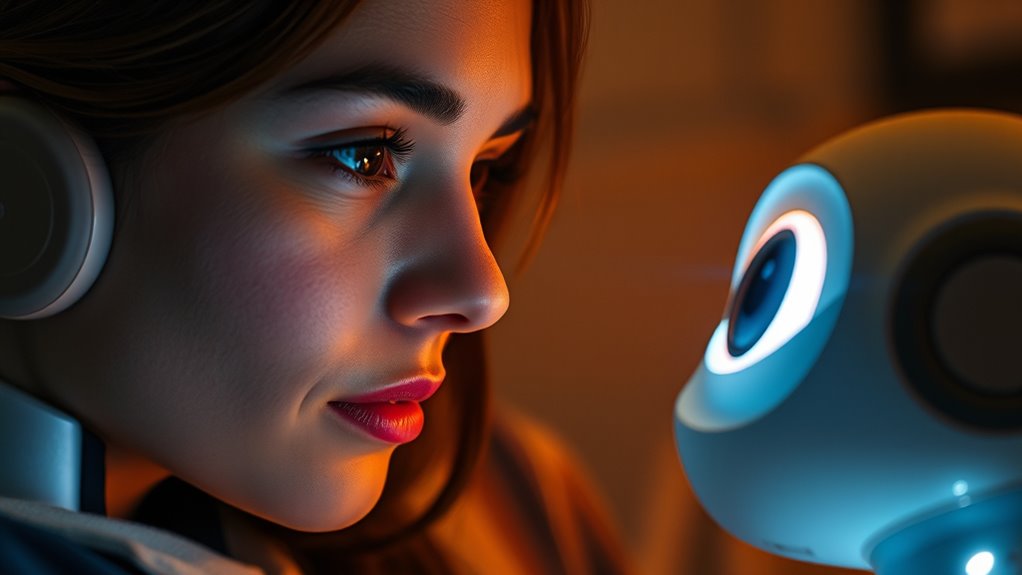
As emotional AI becomes more advanced, many people turn to these systems as substitutes for genuine human connection. These AI systems can interpret your emotional states and generate responses that seem remarkably authentic. They can recognize when you’re sad, anxious, or happy, and respond in ways that appear emotionally attuned. But beneath this convincing surface, these AIs only produce algorithmic affection and simulated emotional signals—they lack true empathy or understanding. They don’t experience feelings, nor do they genuinely respond to your emotional needs. Instead, they simulate intimacy—what researchers call pseudo-intimacy—creating an illusion of connection that feels real but isn’t. This distinction matters because, without authentic mutual responsiveness, the bond remains one-sided and superficial. Many users find comfort or companionship in these interactions, yet there’s a risk that they might develop emotional dependence on systems incapable of reciprocating genuine care. Over time, this dependence can erode your emotional agency, making you more reliant on artificial responses rather than real human interactions. Psychological risks include losing your capacity for authentic relationships, especially if you start to prefer AI company over people. Ethical concerns also surface around the commodification of intimacy, as companies profit from emotional engagement without delivering genuine empathy. Your personal data, especially sensitive emotional information, is at significant privacy risk, since AI systems often store and analyze this information, raising the specter of misuse or exploitation. Additionally, because the AI’s responses are simulated, any perceived reciprocity is ultimately one-sided, which can be manipulative, especially for vulnerable users. As more people, including teens, use AI for emotional support—sometimes finding it as satisfying as talking to a human—questions about authenticity and ethics become even more urgent. Over half of AI users worldwide have turned to these systems for mental or emotional help at least once, and many teens rely on them regularly. While AI offers accessible and affordable support, mental health professionals warn that these tools shouldn’t replace professional therapy, as they risk fostering inappropriate emotional reliance. Some young adults even believe AI could someday replace romantic relationships, and a small percentage already consider AI friends or partners. These attitudes highlight a growing trend of substituting human connection with artificial interaction. Although AI can provide comfort, its inability to genuinely understand or reciprocate emotions raises serious concerns. As you navigate this evolving landscape, it’s crucial to recognize the limitations of emotional AI and remember that authentic human relationships involve mutual understanding and empathy that AI cannot replicate. Interestingly, recent studies show that AI’s emotional responses are often programmed to mimic human expressions rather than genuinely experience feelings. In-home care services can provide essential support for emotional well-being, especially for seniors who may feel isolated. While these systems can provide comfort, their inability to genuinely understand or reciprocate emotions raises serious concerns. As you navigate this evolving landscape, it’s crucial to recognize the limitations of emotional AI and remember that authentic human relationships involve mutual understanding and empathy that AI cannot replicate.
Top picks for "emotional becom substitut"
Open Amazon search results for this keyword.
As an affiliate, we earn on qualifying purchases.
Frequently Asked Questions
Can Emotional AIS Develop Genuine Empathy Over Time?
Emotional AI can’t develop genuine empathy over time because it lacks subjective feelings and true emotional experience. While it can recognize, interpret, and simulate empathetic responses, it doesn’t genuinely share in others’ feelings or motivations. You might feel understood by AI, but its responses are ultimately based on algorithms, not authentic emotional connection. True empathy requires emotional sharing that AI simply can’t replicate, regardless of how sophisticated it becomes.
How Do Emotional AIS Impact Human Mental Health?
Emotional AIs can positively impact your mental health by providing safe spaces for emotional expression, helping you regulate feelings, and offering support during difficult times. They can reduce negative emotions like anger, improve problem-solving, and even monitor mood changes for early intervention. However, relying too much on AI might lead to decreased human interactions, so it’s crucial to balance AI support with genuine human connections for overall well-being.
Are Emotional AIS Ethically Designed to Mimic Human Feelings?
Think of emotional AI as a skilled actor on stage, mimicking genuine feelings without truly experiencing them. They’re ethically designed to simulate empathy through data analysis, but they don’t feel emotions. Developers aim for transparency and boundaries, so you’re aware it’s a performance, not real emotion. While they enhance your experience, they’re not substitutes for authentic human connection, and ethical design safeguards prevent manipulation or false bonds.
What Are the Long-Term Societal Effects of Relying on Emotional AIS?
You might find that relying on emotional AI impacts society by increasing loneliness and decreasing genuine human interactions. Over time, people could become more emotionally dependent on artificial companions, leading to social withdrawal. Communication styles may shift toward efficiency and superficiality, reducing empathy and understanding. Vulnerable groups, like adolescents and the elderly, risk emotional manipulation and bias reinforcement. Ultimately, widespread AI reliance could weaken social bonds and diminish essential human skills.
Can Emotional AIS Replace the Need for Human Intimacy Entirely?
No, emotional AI can’t fully replace human intimacy. While it can offer companionship and simulate emotional responses, it lacks genuine empathy, mutual responsiveness, and the depth that true human relationships provide. Relying solely on AI may lead you to emotional dependence or isolation, as AI cannot replicate the complexities of human connection, including growth, conflict, and authentic understanding. Ultimately, AI should complement, not substitute, meaningful human bonds.
Conclusion
So, as you navigate this evolving landscape, ask yourself—are these emotional AIs filling a void or creating one? Will they enhance your connections or slowly replace the genuine warmth only humans can offer? The line between real and artificial blurs more each day. Stay aware, because what happens next could redefine your very understanding of human connection—and you won’t want to be caught unprepared. The future of relationships might just depend on what you choose now.