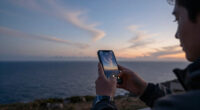

Most interfaces are designed around what users can see. Noctilucent starts with a stranger problem: how do you help someone watch for clouds that appear after sunset, when the sun is already below the horizon? The answer is a tightly controlled visual system that turns atmospheric conditions into a readable field guide.

Get business pricing on tech for your team
- Business-only prices and quantity discounts
- Tax-exempt purchasing
- Multiple users, one account, clear invoices
Built for tracking noctilucent clouds near 83 kilometres up, the experience pairs a deliberately spare “night watch” setting with precise cues: altitude, twilight angle, and observation status. Its signature move is one-variable-at-a-time design. Rather than piling on decoration, the system gives each meaningful change room to register, making a rare sky event feel approachable without flattening its science.
For AI tools and automation builders, the project offers a useful lens on interface decisions: how to make data legible, keep a specialized tool focused, and let visual rules do some of the work that explanatory text usually carries. The construction notes reveal how those choices came together—and why the most memorable part of the interface depends on a light source its users can’t see.
Read the full design teardown → · Visit the live room
As an affiliate, we earn on qualifying purchases.
As an affiliate, we earn on qualifying purchases.
As an affiliate, we earn on qualifying purchases.
As an affiliate, we earn on qualifying purchases.
Halloween Picks
halloween
As an affiliate, we earn on qualifying purchases.