
📊 Full opportunity report: Leveraging Computer Vision To Enhance Food Safety In Restaurants on IdeaNavigator AI — validation score, market gap, and execution plan.

Get business pricing on tech for your team
- Business-only prices and quantity discounts
- Tax-exempt purchasing
- Multiple users, one account, clear invoices
TL;DR
Restaurants are deploying computer vision models to automatically identify food safety violations from phone photos taken during daily walk-throughs. This new approach aims to replace traditional checklists with verifiable, timestamped inspection data, enhancing safety oversight across multiple locations.
Restaurants are piloting a computer vision system that automatically detects food safety violations from photos taken during daily kitchen walk-throughs, promising to improve inspection accuracy and accountability. This technology could transform how food safety checks are documented and verified across multiple locations, addressing longstanding issues with traditional checklist methods.
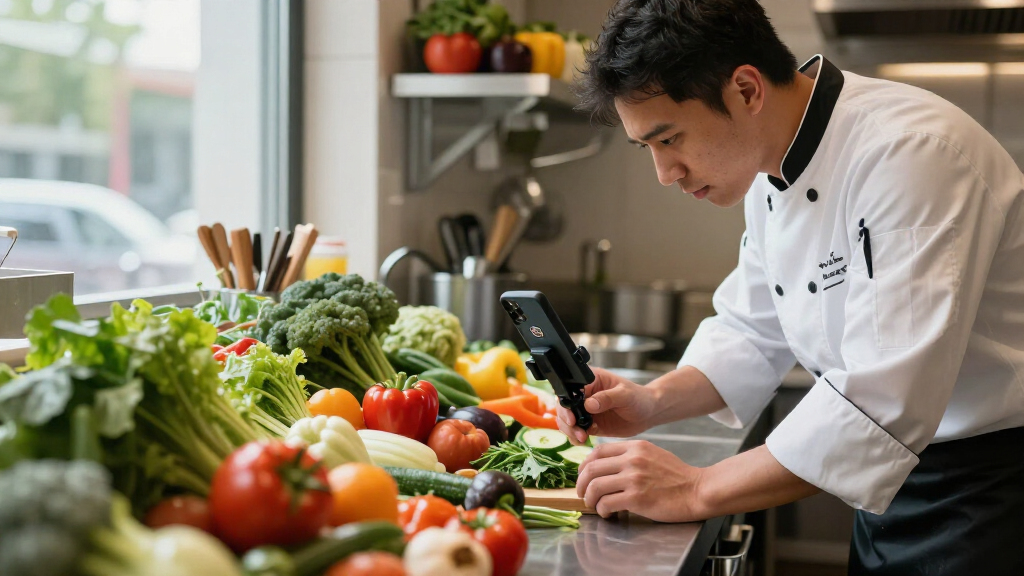
The proposed system uses existing smartphone cameras to capture images of prep stations, storage areas, and sinks during morning inspections. A trained vision model then analyzes these photos in real time, flagging violations such as uncovered containers, propped cooler doors, or missing date labels. The system generates timestamped reports and identifies trends across locations, providing managers with verifiable data rather than relying solely on manual checklists.
According to an anonymous researcher involved in the pilot, the system has demonstrated reliable detection of common violations during initial testing. The pilot involves five restaurant locations over a two-week period, comparing the AI’s flagged violations with assessments from a hired health-inspection consultant. The goal is to validate the model’s accuracy and determine its suitability for broader deployment.
Potential for Verifiable, Automated Food Safety Checks
This development could significantly improve food safety compliance by providing objective, timestamped evidence of inspections. It reduces reliance on human memory and manual recording, which are prone to oversight or bias. For restaurant groups managing multiple locations, this system offers a scalable way to monitor safety standards consistently, potentially reducing violations and improving public health outcomes.
smartphone camera food safety inspection tools
As an affiliate, we earn on qualifying purchases.
As an affiliate, we earn on qualifying purchases.
Current Limitations of Traditional Inspection Methods
Many restaurants rely on manual checklists completed by staff or inspectors, which often record that a task was checked without verifying actual conditions. This can lead to undetected violations, such as uncovered food or improper storage, until a health inspection occurs. Recent advances in computer vision enable the analysis of ordinary phone photos to automatically identify such violations, promising a more reliable and verifiable approach to food safety management.
“The vision model can reliably flag common violations from standard phone photos, turning routine walk-throughs into verifiable inspection data.”
— an anonymous researcher
AI-powered kitchen inspection camera
As an affiliate, we earn on qualifying purchases.
As an affiliate, we earn on qualifying purchases.
Unconfirmed Aspects and Validation Challenges
While initial results are promising, it is not yet clear how well the system will perform across different restaurant types, lighting conditions, or in detecting less obvious violations. The pilot is limited to five locations, and broader validation is needed to confirm accuracy, false positive rates, and integration with existing operations. Additionally, the long-term impact on compliance and safety outcomes remains to be seen.
food safety violation detection app
As an affiliate, we earn on qualifying purchases.
As an affiliate, we earn on qualifying purchases.
Next Steps for Broader Deployment and Evaluation
The pilot program will continue for the next two weeks, with detailed comparisons between AI-flagged violations and expert assessments. If successful, the restaurant group plans to expand testing to more locations and refine the model based on feedback. Further validation will involve larger sample sizes and possibly integration with existing food safety management software. The goal is to establish a scalable, verifiable system that can be offered as a subscription service to other restaurant chains.
verifiable restaurant inspection software
As an affiliate, we earn on qualifying purchases.
As an affiliate, we earn on qualifying purchases.
Key Questions
How does the AI system analyze photos for violations?
The system uses a trained computer vision model to identify specific food safety violations such as uncovered food, open cooler doors, or missing labels, by analyzing images captured during inspections.
Will this replace human inspectors entirely?
Currently, the system is designed to supplement human inspections by providing verifiable data, but it is not expected to fully replace human inspectors in the near term.
What are the benefits of using AI for kitchen inspections?
AI can provide consistent, objective, and timestamped records of safety conditions, reducing human error and oversight, especially across multiple locations.
Are there privacy or operational concerns with using phone photos?
The system relies on photos taken during routine walk-throughs, with data stored securely and used solely for safety verification; implementation details are still being finalized.
When will this technology be available for wider use?
If the pilot proves successful, the restaurant group plans to roll out the system more broadly within the next few months, offering it via a subscription model.
Source: IdeaNavigator AI
Columbus Day / Indigenous Peoples' Day Picks
long weekend sales
As an affiliate, we earn on qualifying purchases.