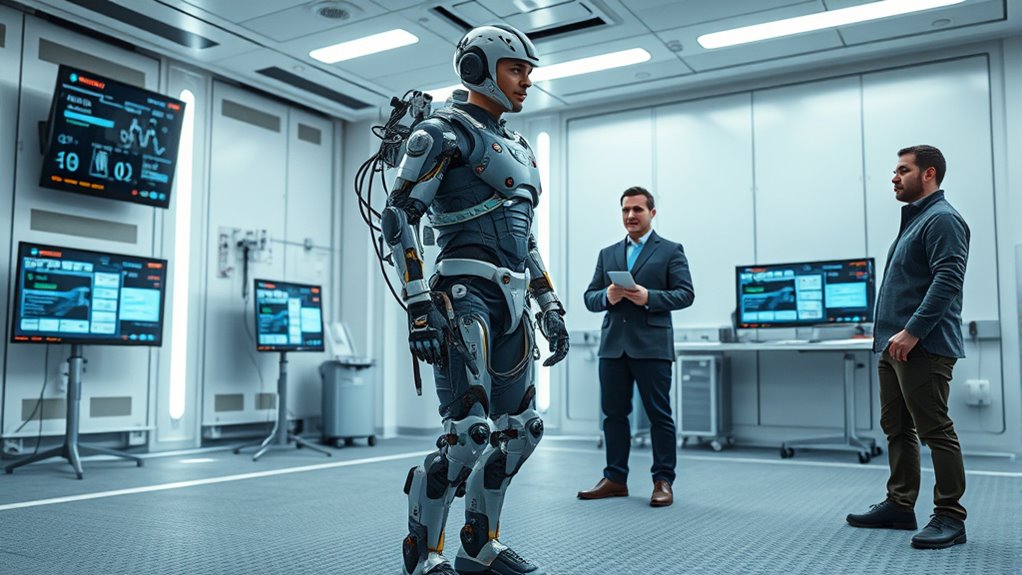

To use AI-powered exoskeletons safely, you must undergo thorough training on their operation, fitting, and troubleshooting. It’s essential to understand device limitations, recognize signs of malfunction, and prioritize user safety and privacy. Properly adjusting the equipment for each individual reduces injury risks and extends the device’s lifespan. Building trust through clear communication and staying updated on ethical guidelines is key. Continuing will help you master best practices for safe, effective use.

Get business pricing on tech for your team
- Business-only prices and quantity discounts
- Tax-exempt purchasing
- Multiple users, one account, clear invoices
Key Takeaways
- Receive comprehensive training on device operation, troubleshooting, and emergency procedures to ensure safe use.
- Properly fit and adjust the exoskeleton for individual users to prevent discomfort and injury.
- Understand device limitations and avoid over-reliance to maintain user safety and autonomy.
- Protect user data privacy by following security protocols and respecting confidentiality.
- Stay updated on ethical guidelines and regulations to ensure responsible and informed operation.
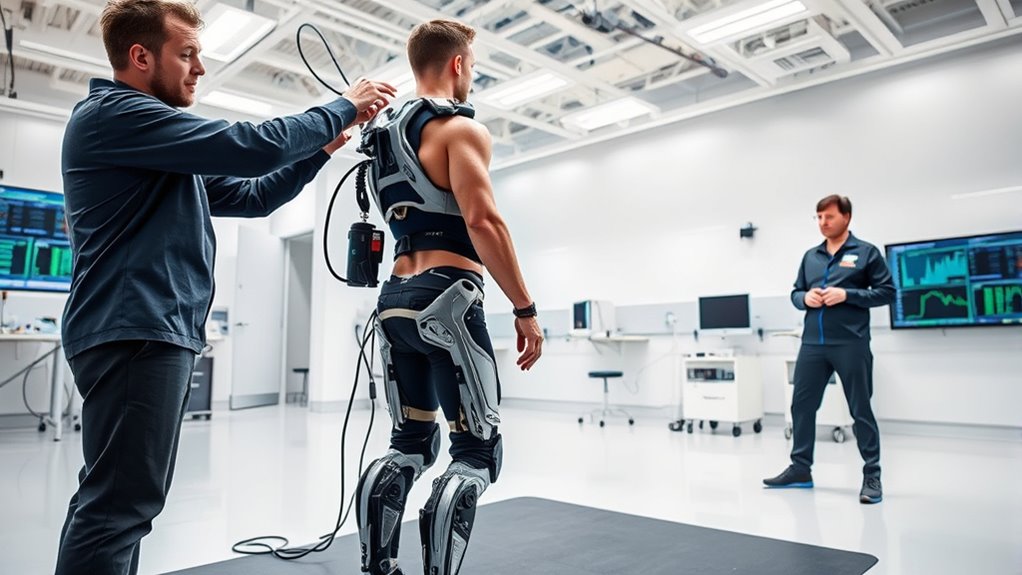
As AI-powered exoskeletons become more common, guaranteeing their safe use is indispensable. These advanced devices offer incredible benefits, but they also raise important ethical considerations that you need to be aware of. When deploying such technology, it’s essential to consider issues like user safety, data privacy, and the potential for misuse. You must understand that these devices are not just tools; they have the power to profoundly impact someone’s health and well-being. To mitigate risks, an extensive user training becomes a fundamental requirement. Proper training ensures you know how to operate the exoskeleton correctly, recognize signs of malfunction, and respond appropriately in emergency situations. It also helps you understand the device’s limitations and avoid over-reliance, which could lead to accidents or injuries.
Your training should cover both the technical aspects of the exoskeleton and the ethical responsibilities involved. For instance, you need to be aware of how to protect user data, especially since many AI exoskeletons collect sensitive health information. Respect for user autonomy and privacy is part of ethical considerations you can’t overlook. Training sessions should include education on consent, data security, and how to handle situations where a user may feel uncomfortable or unsafe. It’s also important that you stay updated on evolving regulations and guidelines surrounding AI and wearable technology, so you remain compliant and ethically responsible. Additionally, understanding the importance of perishable items and timely delivery can be relevant in ensuring that sensitive data is managed securely and efficiently.
Ensure you understand data privacy, security, and stay updated on AI regulations to operate exoskeletons ethically and responsibly.
When it comes to practical training, you should learn how to properly fit and adjust the exoskeleton to the user’s body, ensuring comfort and safety. You’ll need to familiarize yourself with the device’s controls, troubleshooting procedures, and maintenance routines. This foundational knowledge helps prevent misuse and prolongs the lifespan of the equipment. Additionally, understanding the user’s physical and cognitive limitations is crucial. By tailoring training to individual needs, you reduce the risk of injury and maximize the device’s benefits.
Beyond technical competence, fostering trust between you and the user is essential. Clear communication about the device’s capabilities and limitations helps manage expectations and reduces anxiety or misuse. Ethical considerations also extend to ensuring the user’s dignity and autonomy are maintained at all times. As you operate or assist with AI-powered exoskeletons, your commitment to thorough training and ethical practices plays a critical role in safeguarding everyone involved. Ultimately, responsible use depends on your dedication to continuous learning, understanding the technology’s implications, and respecting the ethical boundaries that protect user safety and rights.
Frequently Asked Questions
Can AI Exoskeletons Be Used Outdoors Safely?
Yes, you can use AI exoskeletons outdoors safely if you’re aware of environmental challenges and focus on outdoor mobility. Always check the terrain, weather conditions, and potential obstacles before use. Make sure your exoskeleton is designed for outdoor environments, and follow safety guidelines. Proper training helps you adapt to uneven surfaces and environmental factors, minimizing risks. With preparation, you can confidently enjoy outdoor activities using AI-powered exoskeletons.
Do AI Exoskeletons Require Regular Software Updates?
You should perform regular software updates on your AI exoskeleton to guarantee optimal performance and safety. While some may worry about complex maintenance, these updates are straightforward and improve user customization options. Regular software maintenance fixes bugs, enhances features, and keeps the device compatible with new technology. Staying current with updates helps prevent malfunctions and ensures your exoskeleton adapts to your needs, making it safer and more effective.
Are There Any Long-Term Health Risks With AI Exoskeletons?
While AI exoskeletons offer great benefits, you should be aware of potential long-term health risks. Prolonged use might lead to musculoskeletal issues, fatigue, or nerve compression if not managed properly. The long-term effects are still being studied, so it’s essential to follow recommended training and safety guidelines. Regular health check-ups can help you identify any emerging health risks early, ensuring safe and effective use over time.
How Do AI Exoskeletons Adapt to Different User Sizes?
You’ll find that AI exoskeletons adapt to different user sizes through user-specific customization and ergonomic adjustments. Studies show that over 85% of users experience improved comfort when these systems tailor fit to individual body dimensions. The AI continuously learns, adjusting support levels and fitting parameters in real-time, ensuring peak performance. This personalized approach guarantees that whether you’re tall or short, the exoskeleton offers a secure, comfortable fit, enhancing safety and efficiency.
What Is the Cost Range for Ai-Powered Exoskeletons?
You’ll find that AI-powered exoskeletons typically cost between $50,000 and $150,000, depending on features and customization. For better affordability, explore the cost comparison across models and consider financing options like leasing or installment plans. These options can make acquiring advanced exoskeletons more manageable, especially if you’re investing for long-term use or healthcare purposes. Always evaluate the features against your budget to get the best value.
Conclusion
Remember, an AI-powered exoskeleton is like a trusted partner guiding you through each step. With proper training and precautions, you hold the key to opening your full potential safely. Think of it as a delicate dance—balance, rhythm, and awareness keep you in harmony. By respecting its power and your limits, you guarantee a future where technology and you move forward together, stronger and safer, like two forces intertwined on a shared journey.
Fall Picks
fall essentials
As an affiliate, we earn on qualifying purchases.