To secure your crypto with cold storage, you should use hardware wallets to keep private keys offline and verify transactions directly on the device. Store seed phrases securely in offline locations like safes or deposit boxes, and never digitalize them. Regularly review your security procedures and stay informed about device updates and threats. Following these best practices helps protect your assets from online hackers, and there’s more to discover to enhance your security even further.
Key Takeaways
- Use reputable hardware wallets to store private keys offline and prevent internet exposure.
- Generate and verify private keys and seed phrases in an offline environment for maximum security.
- Store seed phrases securely in physical, offline locations like safes or safety deposit boxes.
- Regularly update security practices and keep hardware wallet firmware current to protect against vulnerabilities.
- Maintain strict handling procedures, avoiding digital storage of seed phrases and using secure, offline backups.
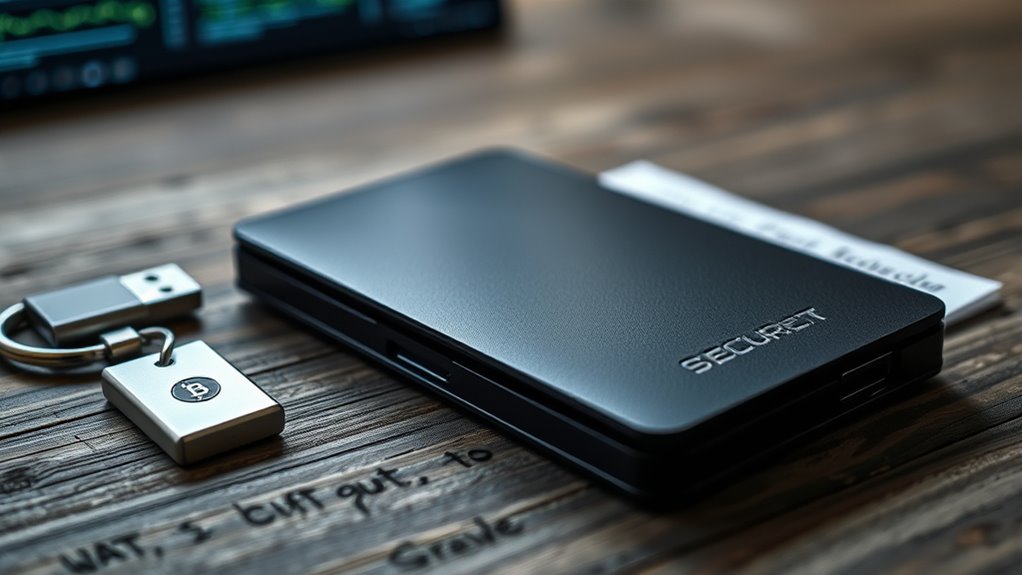
Are you looking for the safest way to protect your cryptocurrency holdings? If so, you need to consider cold storage options that keep your assets safe from online threats. Cold storage involves keeping your cryptocurrencies completely offline, away from internet-connected devices that could be hacked or compromised. One of the most effective methods for this is using hardware wallets, which are specialized devices designed to securely store your private keys offline. Unlike software wallets or online exchanges, hardware wallets never expose your keys to the internet, significantly reducing the risk of theft. When you use a hardware wallet, your private keys are stored securely within the device, and transactions are signed internally, never exposing sensitive information to the web.
Offline storage is key to safeguarding your crypto assets. By keeping your private keys in a physical form, disconnected from any network, you eliminate the risk of remote hacking attempts. Hardware wallets are particularly popular because they combine ease of use with robust security features. They often come with a small display, allowing you to verify transaction details directly on the device, ensuring no malicious software can alter or intercept your transactions. To maximize security, always purchase hardware wallets directly from reputable manufacturers or authorized sellers to avoid tampered devices. Once you set up your hardware wallet, generate your private keys offline, and store the seed phrase securely in a safe location that only you can access.
In addition to hardware wallets, consider storing backup seed phrases in a secure, offline location, such as a safe or safety deposit box. Never store your seed phrase digitally or online, as that opens the door to potential hacking or theft. Physical safety should be your priority—avoid leaving your seed phrase in obvious places or sharing it with anyone. For added protection, some users split their seed phrase into parts and store each piece in separate secure locations, reducing the risk of losing everything if one location is compromised. Remember, cold storage isn’t just about choosing the right device; it also involves establishing strong procedures for handling and safeguarding these assets. Regularly review your storage security practices and stay updated on new hardware wallet features or security advisories to ensure your crypto remains safe in offline storage. Incorporating sound science principles can also enhance your understanding of secure storage methods and improve your overall security strategy.
Frequently Asked Questions
What Are the Risks of Using Hardware Wallets?
Using hardware wallets can expose you to hardware wallet vulnerabilities and physical theft risks. If the device has manufacturing flaws or malware, hackers may exploit vulnerabilities to access your crypto. Physical theft is also a concern if you don’t store your wallet securely. To protect yourself, always buy from reputable sources, keep your wallet in a safe place, and consider using additional security measures like PINs and recovery phrases.
How Often Should I Update My Cold Storage Security?
You should update your cold storage security at least every six months, or sooner if there’s a security breach or a significant software update. Regularly change your passwords and perform security audits to identify vulnerabilities. Keeping your firmware up-to-date and reviewing your access controls helps prevent unauthorized access. Consistent updates guarantee your crypto stays protected against evolving threats, giving you peace of mind that your assets remain secure over time.
Can Cold Storage Be Hacked Remotely?
Cold storage can be hacked remotely if security vulnerabilities exist, but it’s much less common than online hacks. You’re less vulnerable to remote hacking when you keep your private keys offline, away from the internet. However, if you connect your cold wallet to a compromised device or fall for phishing scams, hackers could exploit vulnerabilities. Regularly updating your security measures helps prevent remote hacking and keeps your crypto safe.
Is Paper Wallet Storage Safe Long-Term?
Ever wondered if a paper wallet offers long-term safety? While paper wallets can be safe if stored properly, concerns about paper security and longevity are valid. Over time, paper can degrade, and exposure to elements may damage your keys. To guarantee your crypto remains protected, you should keep your paper wallet in a secure, climate-controlled environment, and consider transferring your assets to more durable cold storage options when possible.
How Do I Recover Access if My Cold Wallet Is Lost?
If you lose your cold wallet, don’t panic. Use your seed phrase to restore access, as it’s the key to recovering your funds. Always have multiple backup strategies, like storing your seed phrase securely offline or in a safe location. Make sure your seed phrase is well-protected but accessible only to you. This way, even if your cold wallet is lost, your crypto stays safe and recoverable.
Conclusion
Think of your crypto wallet as a treasure chest hidden deep in a fortress. Cold storage is your fortress’s unbreakable walls, protecting your valuables from intruders. By following best practices, you’re constructing a sanctuary where only you hold the key. Just as a seasoned guardian keeps watch over priceless artifacts, stay vigilant and secure your assets with unwavering diligence. With these safeguards, your crypto remains as safe as treasures tucked away behind impregnable walls.