📊 Full opportunity report: The AI Front Office That Helps Trades Book Work on IdeaNavigator AI — validation score, market gap, and execution plan.

Get business pricing on tech for your team
- Business-only prices and quantity discounts
- Tax-exempt purchasing
- Multiple users, one account, clear invoices
TL;DR
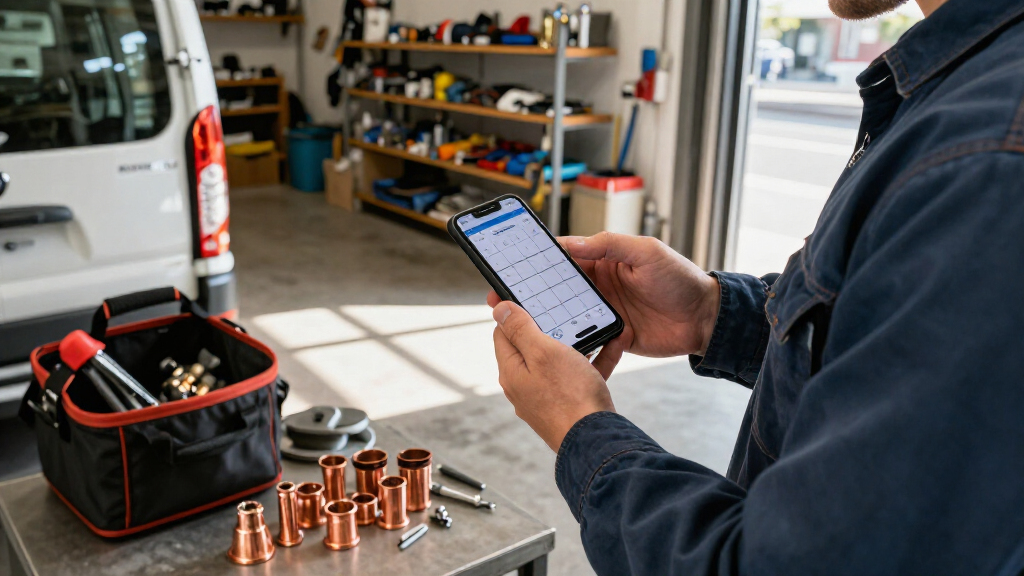
IdeaNavigator AI proposes testing an AI phone-answering service for plumbing, HVAC and electrical businesses that miss customer calls while working. The proposed system would qualify requests, schedule jobs, alert owners and escalate emergencies, but no pilot results or verified performance figures are provided.
IdeaNavigator AI has proposed an AI phone-answering service for plumbing, HVAC and electrical businesses that miss customer calls while owners are on jobs. The proposed system would collect job details, book appointments, send the owner a summary and pass emergencies to a person; no pilot results or customer adoption figures are provided.
The concept is aimed at owner-operators who may be unable to answer while working under a sink, on a roof or at another job site. IdeaNavigator AI argues that a caller who cannot reach one contractor may contact another, turning an unanswered inquiry into a potential lost booking. The proposal does not quantify how often this happens or how much revenue a typical business loses.
The suggested minimum product would answer calls using a natural-sounding voice, ask about the problem, service address and urgency, and schedule work in the business’s calendar or software such as ServiceTitan or Jobber. It would also text the owner a call summary and escalate emergencies live. The proposal does not specify how emergency calls would be identified, how callers could reach a human in other situations, or how booking errors would be handled.
For an initial test, IdeaNavigator AI recommends forwarding after-hours calls for five shops over one month and counting jobs booked that owners believe they would otherwise have missed. The suggested commercial model combines a flat monthly fee per phone line with a charge for each booked job. No prices, trial findings or evidence of willingness to pay are included.
The AI Front Office That Helps Trades Book Work
IdeaNavigator AI proposes an after-hours phone service for plumbing, HVAC and electrical businesses. The concept has no reported pilot results or verified performance figures.
What the service would do
The proposed workflow aims to capture calls while owners are out on jobs.
Ask about the problem, service address and urgency.
Schedule an appointment in the shop’s calendar or software.
Text the owner a call summary and pass emergencies to a person.
How the idea would be tested
The proposed trial focuses on after-hours calls and bookings owners believe they would otherwise have missed.
What remains unproven
The proposal describes a product to build and test; it does not report a launch or completed trial.
- Capture inquiries while owners are working.
- Schedule ordinary jobs and send owners summaries.
- Call accuracy, booking reliability and emergency handling.
- Integration status, pricing and how recovered jobs are counted.
The Cost of a Missed Service Call
The proposal targets a practical operational gap: many small trade businesses rely on an owner or a small team to answer new inquiries while also doing field work. If an AI service can reliably take details and schedule ordinary jobs, it could help keep leads from going unanswered outside business hours without requiring a dedicated receptionist. That potential is particularly relevant to businesses whose owners cannot stop work to handle every call.
But the economic case depends on more than answering the phone. The system must capture accurate information, book an appropriate appointment, handle urgent calls safely and fit into the shop’s existing workflow. Booked jobs that would otherwise have been lost are the proposed measure of value, but the pilot would need to distinguish genuinely recovered work from calls that would have converted through voicemail, a later callback or another channel.
The pricing proposal also links the provider’s revenue to the number of bookings. That could make the service’s costs easier for a small operator to compare with incoming work, but the proposal supplies no terms or method for deciding what counts as a successful booking. For owners, the central question is whether added appointments outweigh subscription charges, per-booking fees and any costs from mistakes or unnecessary dispatches.
Products Worth Considering

Sonos Era 300 Wireless Smart Speaker with Dolby Atmos, Black

Kindle Paperwhite Signature Edition Bundle, 32GB, Jade, with Plant-Based Leather Cover and Wireless Charging Dock

Sonos One (Gen 2) Two-Room Set Voice-Controlled Smart Speaker with Alexa (2-Pack, Black)
As an affiliate, we earn on qualifying purchases.
A Proposed Test, Not a Product Launch
IdeaNavigator AI frames the idea as a narrow first workflow for home-services businesses, rather than a general-purpose AI receptionist. Its rationale is that voice AI reached a reliability threshold for structured intake calls in 2025–2026, making around-the-clock answering potentially less expensive than a human answering service. That is the proposal’s assessment; it is not accompanied by benchmark results, comparative pricing or independent evidence in the material provided.
The suggested pilot is intentionally small: route after-hours calls from five businesses for a month, then compare the jobs booked with the owners’ estimate of calls that would otherwise have been missed. The result would offer an initial indication of whether the workflow is useful, though a short trial across five shops would not establish performance across the wider trades market or during different seasons and call volumes.
Performance and Pilot Results Remain Unknown
No deployment, customer, or trial results are identified in the proposal. It is unclear whether a product is available, which businesses might participate, what a service would cost, or how many calls it could handle successfully. The claim that voice AI is now reliable enough for the task is not supported here by accuracy rates, test conditions or comparisons with human answering services.
Important operational questions also remain open: how the system would confirm caller details, avoid duplicate appointments, handle changes to a shop’s availability, recognize emergencies and transfer callers to a person. The proposal names ServiceTitan and Jobber as possible scheduling integrations but does not say that integrations have been built or tested. It also provides no rules for measuring a job as recovered or attributing it to the AI.
A Five-Shop Trial Could Test Demand
The next step proposed by IdeaNavigator AI is a one-month trial with five trade businesses, focused on calls received after hours. For the test to establish more than a simple booking count, operators would need to track call volume, caller intent, successful transfers, scheduling accuracy, cancellations and the jobs that would otherwise have been missed. Comparing those results with the trial’s fees and each shop’s average job value could help assess whether the service pays for itself.
No trial start date or follow-up findings are provided. Until a test is completed and its methods and results are disclosed, the concept remains a business proposal rather than a demonstrated service. Whether it can book work reliably at a price trades operators will accept is still the central unanswered question.
Source: IdeaNavigator AI
Key Questions
What is the proposed AI front office?
It is a proposed phone service for plumbing, HVAC and electrical businesses. It would answer calls, collect job details, schedule appointments, text the owner and pass emergencies to a live person.
Is the service already available?
The information provided describes an opportunity and a minimum product to build. It does not confirm a product launch, availability or participating customers.
How would the proposed service make money?
The suggested model combines a monthly charge for each phone line with a fee for each booked job. No prices or payment terms are specified.
How would the idea be tested?
IdeaNavigator AI proposes forwarding after-hours calls for five shops for one month and counting jobs owners say they would otherwise have missed. No completed trial results are reported.
What remains uncertain about its performance?
There are no reported accuracy rates, pilot outcomes or independent comparisons with human answering services. Emergency handling, scheduling reliability, integration status and the definition of a recovered booking also remain unspecified.
Source: IdeaNavigator AI