
AI image generators range from direct image-making tools to prompt guides, style kits, and technical learning resources. Artify AI Image Generator is my best overall pick for a straightforward image-generation option, while Anime AI Image Generator stands out for anime-focused work and Local Image Synthesis with Stable Diffusion suits readers who want more control over local setups. The main tradeoff is between ease of use and creative control: ready-made generators can shorten the path to an image, while prompt resources and technical guides ask for more effort. Some items in this roundup teach or refine image-making rather than generate images on their own. Read on for the full breakdown and a guide to choosing the right fit.

Get business pricing on tech for your team
- Business-only prices and quantity discounts
- Tax-exempt purchasing
- Multiple users, one account, clear invoices
Complete the kit


Key Takeaways
- The roundup includes different kinds of tools: direct generators sit alongside prompt collections, style resources, and tutorials, so check whether an item creates images or helps you make better use of another tool.
- Artify AI Image Generator earns the overall lead as a direct-generation pick, while specialist options such as Anime AI Image Generator make more sense when a particular visual style matters more than broad use.
- Prompt resources address a different problem than generators. Prompt Mastery and the 270+ prompt collection focus on shaping results; they are best treated as companions to an image tool, not substitutes.
- Local Stable Diffusion setup trades convenience for control. Its configuration and custom-training focus suits readers willing to handle technical setup, unlike beginner-oriented guides.
- Learning resources serve distinct skill levels: the beginner guides explain tool use, while Build a Text-to-Image Generator from Scratch is aimed at readers who want to understand implementation.
| Chrome and Retro Sci-Fi Style Kit for AI Image Generators | 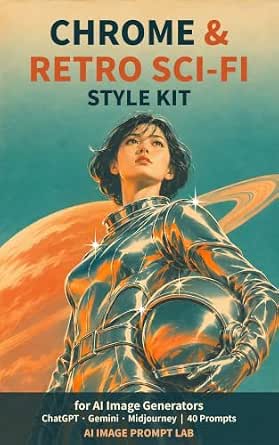 | Best for Retro Sci-Fi Styling | Content: Templates and 40 prompts | Compatible tools: ChatGPT, Gemini, and Midjourney | Style: Chrome and retro sci-fi | VIEW LATEST PRICE | See Our Full Breakdown |
| Super AI Image Generator |  | Best for Buyers Seeking a Standalone Generator | Product type: AI-powered image generator | Supported tools: Not specified | Prompt content: Not specified | VIEW LATEST PRICE | See Our Full Breakdown |
| AI Image Generator Prompt Mastery: Techniques for Crafting Better Prompts and Controlling Results |  | Best for Learning Prompt Control | Format: Step-by-step guide | Subject: Prompt writing for AI image generators | Core focus: Crafting better prompts | VIEW LATEST PRICE | See Our Full Breakdown |
| AIArtGen Plus: AI Image and Video Generator |  | Best for Image-and-Video Workflows | Product type: AI image and video generator | Image generation: Included in stated scope | Video generation: Included in stated scope | VIEW LATEST PRICE | See Our Full Breakdown |
| 270+ AI Image Generation, Editing, and Enhancement Prompts with Face Lock |  | Best for a Broad Prompt Library | Prompt count: More than 270 | Supported tasks: Image generation, modification, and enhancement | Feature: Face lock | VIEW LATEST PRICE | See Our Full Breakdown |
| AI Image Generator |  | Best for Buyers Seeking a Direct Generator | Product name: AI Image Generator | ASIN: B0DP5NGCG7 | Description: Not provided | VIEW LATEST PRICE | See Our Full Breakdown |
| Build a Text-to-Image Generator from Scratch: With Transformers and Diffusions |  | Best for Technical Builders | ASIN: 1633435423 | Format: Book | Topic: Building a text-to-image generator | VIEW LATEST PRICE | See Our Full Breakdown |
| How to Create Amazing AI-Generated Images and Word Resource Catalog |  | Best for Expressive Image-Making Guidance | ASIN: B0BZFNTZRM | Format: Softcover | Pages: 114 | VIEW LATEST PRICE | See Our Full Breakdown |
| AI Image Generator |  | Best for Buyers Willing to Verify the Listing | Product name: AI Image Generator | ASIN: B0DJGBYTDQ | Description: Not provided | VIEW LATEST PRICE | See Our Full Breakdown |
| AI Image Generation Made Simple: A Beginner’s Guide to DALL·E, Midjourney, and Other Generator Tools |  | Best for Beginners Comparing Tools | ASIN: B0HS47HD6Q | Format: Book | Series: Tech Made Simple | VIEW LATEST PRICE | See Our Full Breakdown |
| Artify AI Image Generator |  | Best for a General-Purpose Starting Point | Product type: AI image generator | Named style focus: Not specified | Image controls: Not specified | VIEW LATEST PRICE | See Our Full Breakdown |
| Anime AI Image Generator |  | Best for Anime-Focused Image Creation | Product type: AI image generator | Stated focus: Anime imagery | Supported styles: Not specified | VIEW LATEST PRICE | See Our Full Breakdown |
| GPT AI Image Generator |  | Best for Buyers Seeking a GPT-Named Generator | Product type: AI image generator | Named technology: GPT | Specific model: Not specified | VIEW LATEST PRICE | See Our Full Breakdown |
| Local Image Synthesis with Stable Diffusion: A Beginner’s Configuration Guide to Custom Training Models and Render Controls |  | Best for Learning Local Stable Diffusion | Format: Book | Topic: Stable Diffusion configuration and local image synthesis | Local setup: Covered | VIEW LATEST PRICE | See Our Full Breakdown |
| VisionArt AI Image Generator |  | Best for Buyers Comparing Another General-Purpose Option | Product type: AI image generator | Named style focus: Not specified | Image controls: Not specified | VIEW LATEST PRICE | See Our Full Breakdown |
More Details on Our Top Picks
Chrome and Retro Sci-Fi Style Kit for AI Image Generators
This kit is the most style-specific option here: its 40 prompts and templates focus on chrome and retro sci-fi images rather than general-purpose image making. The choices for reflection and composition give creators ways to vary a look without starting each prompt from scratch. It works with ChatGPT, Gemini, and Midjourney, so it can support more than one image generator. Compared with 270+ AI Image Generation, Editing, and Enhancement Prompts with Face Lock, this kit trades breadth for a clearer visual direction; the larger collection covers more tasks, while this one is easier to narrow to a cohesive sci-fi aesthetic. Its main limitation is the same focus that makes it useful: buyers seeking portraits, product photography, or varied art styles may find little here for them. The listing also does not specify a prompt format or output controls beyond reflection and composition.
Pros:- Includes 40 prompts and templates for a defined visual style.
- Compatible with ChatGPT, Gemini, and Midjourney.
- Offers choices for reflection and composition.
Cons:- The narrow style focus limits its usefulness for unrelated image genres.
- The listing does not explain prompt customization or how the templates are organized.
Best for: Creators using ChatGPT, Gemini, or Midjourney who want a consistent chrome and retro sci-fi look and prefer guided prompt starting points.
Not ideal for: Buyers seeking prompts across many genres or detailed editing workflows, since the collection is limited to chrome and retro sci-fi styling.
- Content:Templates and 40 prompts
- Compatible tools:ChatGPT, Gemini, and Midjourney
- Style:Chrome and retro sci-fi
- Reflection choices:Available
- Composition choices:Available
- Product format:Prompt and template collection
Our verdict“Choose this kit if you want repeatable chrome and retro sci-fi images across supported generators, and skip it if you need broad style coverage.”
Super AI Image Generator
Super AI Image Generator is presented as an image-generation product, but the available description provides no details about its tools, output controls, supported platforms, or intended users. That makes it hard to judge whether it offers meaningful advantages over named alternatives or simply provides a basic generation experience. By contrast, Chrome and Retro Sci-Fi Style Kit for AI Image Generators clearly states its prompt count, compatible tools, and visual niche, while AIArtGen Plus: AI Image and Video Generator at least identifies video generation as part of its scope. Super may suit buyers who specifically want a generator rather than a prompt collection, but the listing does not explain how they would access it or shape results. I would treat this as an option to investigate, not a confident pick, until those core capabilities are confirmed.
Pros:- Identified as an AI-powered image generator.
- Its stated focus is image generation rather than prompt education or a themed prompt pack.
- May appeal to buyers looking for a direct generation tool rather than templates.
Cons:- No supported platforms or access method are specified.
- The listing gives no information about controls, editing, or output capabilities.
- There is not enough detail to distinguish it confidently from other generators.
Best for: Buyers who specifically want an AI image generator and can verify its platform, access requirements, and controls before choosing.
Not ideal for: Shoppers who need documented compatibility, prompt guidance, editing tools, or clear output options to compare before purchase.
- Product type:AI-powered image generator
- Supported tools:Not specified
- Prompt content:Not specified
- Image editing:Not specified
- Output controls:Not specified
- Platform or access method:Not specified
Our verdict“Consider Super AI Image Generator only if you can confirm its capabilities and access details, since the available listing does not support a reliable feature comparison.”
AI Image Generator Prompt Mastery: Techniques for Crafting Better Prompts and Controlling Results
This guide is aimed at people who want to improve their process, not simply collect ready-made prompts. Its step-by-step prompt-writing techniques and focus on controlling results make it a learning-oriented choice for creators who want to shape outputs more deliberately. Compared with 270+ AI Image Generation, Editing, and Enhancement Prompts with Face Lock, it appears to emphasize methods over volume: the prompt collection offers a large set of starting points and specific image tasks, while this guide focuses on how prompts can influence results. That distinction is useful if you want skills you can apply across projects, but the listing does not name compatible generators, provide sample lessons, or describe a particular curriculum. Buyers who want immediate, ready-to-use prompts may find the 270+ collection more direct; this title makes more sense for those willing to learn a repeatable approach.
Pros:- Provides step-by-step prompt-writing techniques.
- Focuses on controlling generated results, not only writing initial prompts.
- Aims to help creators produce higher-quality visuals through better prompting.
Cons:- No compatible image generators are specified.
- The listing does not state how many techniques, examples, or lessons are included.
- Less direct for buyers who want a large library of ready-to-use prompts.
Best for: Image creators who want structured prompt-writing guidance and methods for steering results rather than a large ready-made prompt library.
Not ideal for: Buyers looking for a specified set of reusable prompts, compatibility details, or generator-specific instructions.
- Format:Step-by-step guide
- Subject:Prompt writing for AI image generators
- Core focus:Crafting better prompts
- Control topic:Techniques for controlling generated results
- Stated goal:Producing high-quality visuals
- Compatible tools:Not specified
Our verdict“Pick this guide if you want to build prompt-control skills, but choose a prompt collection instead if you need ready-made ideas immediately.”
AIArtGen Plus: AI Image and Video Generator
AIArtGen Plus stands apart from the prompt packs and instructional titles because its stated scope includes both image and video generation. That could suit creators who want visual work beyond still images, though the listing does not describe how the two outputs connect or what controls are available. Compared with Super AI Image Generator, it makes a broader promise by naming video as well as images; neither listing, however, supplies information about platforms, generation limits, or editing features. This lack of detail makes it difficult to weigh the practical value of the added video capability. Buyers focused strictly on improving image prompts may get clearer direction from AI Image Generator Prompt Mastery, while AIArtGen Plus is the more relevant title to investigate if moving images are part of the intended workflow.
Pros:- Described as supporting both image and video generation.
- Its stated scope extends beyond still-image generation.
- May suit creators looking to explore image and video creation in one product.
Cons:- No supported platforms or access details are provided.
- The listing does not describe generation controls or editing features.
- Video capabilities and their relationship to image workflows are unspecified.
Best for: Creators seeking a tool described as supporting both AI image and video generation, provided they can confirm its platform and features.
Not ideal for: Buyers who need documented compatibility, specific image controls, or a clear account of video output options before selecting a tool.
- Product type:AI image and video generator
- Image generation:Included in stated scope
- Video generation:Included in stated scope
- Supported tools:Not specified
- Editing features:Not specified
- Platform or access method:Not specified
Our verdict“Investigate AIArtGen Plus if you need both image and video generation, but verify its actual tools and platform before relying on that broader scope.”
270+ AI Image Generation, Editing, and Enhancement Prompts with Face Lock
This collection offers the broadest stated prompt coverage in this group: more than 270 prompts span image generation, modification, and enhancement, with face lock included as a feature. That makes it a more flexible starting point than Chrome and Retro Sci-Fi Style Kit for AI Image Generators, which centers on one visual genre and provides 40 prompts. The wider range may help creators who want prompt options for several stages of image work, while face lock points to a focus on maintaining facial identity. The listing does not explain which tools support that feature or how it works, though, so I would not assume consistent results across generators. Compared with AI Image Generator Prompt Mastery, this is the more immediately practical option for ready-made prompts; the guide is better suited to learning a repeatable prompting method.
Pros:- Includes more than 270 prompts.
- Covers image generation, modification, and enhancement.
- Includes face lock as a stated feature.
- Offers broader task coverage than the retro sci-fi prompt kit.
Cons:- The compatible image generators are not specified.
- The listing does not explain how face lock works or which tasks support it.
- A large prompt collection may be less useful to buyers seeking guided instruction.
Best for: Creators who want a large prompt library for generating, modifying, and enhancing images, especially when keeping faces consistent matters.
Not ideal for: Buyers who need confirmed generator compatibility or detailed instructions on how face lock works before choosing prompts.
- Prompt count:More than 270
- Supported tasks:Image generation, modification, and enhancement
- Feature:Face lock
- Compatible tools:Not specified
- Prompt format:Not specified
- Product type:AI image prompt collection
Our verdict“Choose this collection for breadth and varied image tasks, but look elsewhere if you need confirmed tool compatibility or a tutorial on prompt technique.”
AI Image Generator
This listing is labeled AI Image Generator, but the supplied information does not identify a platform, workflow, image controls, or output options. That makes it hard to judge whether it functions as a generator, provides access to one, or serves another purpose. Compared with AI Image Generation Made Simple, which is explicitly a beginner’s guide covering several named tools, this product offers no documented learning context either. I can’t recommend it over more clearly described options for a particular creative task. Its main possible appeal is the direct, generator-focused positioning in the title, but buyers should verify the product type and capabilities before choosing it. The missing details are a real limitation, not evidence of a simple or capable tool.
Pros:- The title clearly identifies AI image generation as its subject
- May suit buyers seeking a generator-focused option rather than a general guide
- Does not claim a particular workflow that could mislead buyers about its intended use
Cons:- No description or technical specifications are provided
- The product format and actual generation capabilities are unclear
- There is not enough information to compare its controls or use cases with named tools
Best for: Buyers who specifically want an item presented as an AI image generator and can confirm its format and capabilities before purchase
Not ideal for: Beginners who need documented instructions, tool compatibility, or clear image-generation features before deciding
- Product name:AI Image Generator
- ASIN:B0DP5NGCG7
- Description:Not provided
- Format:Not specified
- Technical details:Not provided
- Image-generation features:Not specified
Our verdict“Choose this only if you can verify that the listing provides the kind of image generator you need.”
Build a Text-to-Image Generator from Scratch: With Transformers and Diffusions
Unlike a ready-to-use generator, Build a Text-to-Image Generator from Scratch is aimed at readers who want to understand how text-to-image systems are made. Its stated focus on transformers and diffusion techniques gives it a distinct role beside practical introductions such as AI Image Generation Made Simple, which is framed for beginners exploring existing tools like DALL·E and Midjourney. The tradeoff is clear: this book may suit a technical learning project, but it is not presented as a shortcut to generating finished images. The supplied listing gives no author, contents, prerequisites, or format beyond “Book,” so I can’t judge its depth or accessibility. Buyers should check those details if they need a guided path rather than a topic-focused title.
Pros:- Focuses on building a text-to-image generator from scratch
- Names transformers and diffusion as core topics
- Offers a technical angle distinct from guides about using existing generator tools
Cons:- No contents, author information, or prerequisites are provided
- The listing does not specify the book’s format beyond identifying it as a book
- It is not described as a ready-to-use image-generation service
Best for: Developers and technically minded readers who want to study the construction of text-to-image systems using transformers and diffusion
Not ideal for: People who want a ready-to-use image generator or a clearly documented beginner tutorial for using existing apps
- ASIN:1633435423
- Format:Book
- Topic:Building a text-to-image generator
- Methods covered:Transformers and diffusion techniques
- Author:Not provided
- Page count:Not provided
Our verdict“Pick this if your goal is to study text-to-image system construction, not simply create images with an existing tool.”
How to Create Amazing AI-Generated Images and Word Resource Catalog
This 114-page guide is the most specifically oriented toward dramatic, vivid, expressive imagery among the books in this group. Its 8 × 10-inch softcover format may appeal to readers who prefer a physical reference, while the organized approach suggests a structured guide rather than an account of how generator models work. Compared with Build a Text-to-Image Generator from Scratch, it is aimed more at image creation than technical construction. Still, the listing does not explain its exercises, tools, or the contents of the “Word Resource Catalog,” so buyers cannot tell how practical or broad its instruction is. It may fit readers seeking visual direction, but those needing named software guidance should look for clearer details before choosing it.
Pros:- States a clear focus on dramatic, vivid, expressive images
- Provides a 114-page length and a defined softcover format
- Its large 8 × 10-inch dimensions suit a print reference
- The organized approach distinguishes it from a technical build-from-scratch book
Cons:- The listing does not detail the guide’s methods or chapter contents
- No specific image-generation tools or platforms are identified
- The scope and contents of the Word Resource Catalog are unclear
Best for: Hobbyist creators who want a physical, structured guide focused on dramatic and expressive AI-generated images
Not ideal for: Readers seeking detailed instructions for a named generator, model-building lessons, or a clearly documented catalog of prompts
- ASIN:B0BZFNTZRM
- Format:Softcover
- Pages:114
- Dimensions:8 × 10 inches
- Focus:Dramatic, vivid, expressive AI-generated images
- Approach:Organized image-creation guidance
Our verdict“Choose this for a print guide centered on expressive imagery, provided its unspecified instruction matches your needs.”
AI Image Generator
This second AI Image Generator listing has no supplied description or specifications, so it cannot be meaningfully distinguished from the similarly titled AI Image Generator with ASIN B0DP5NGCG7. I would not infer that either one offers a particular model, editing controls, or output quality from its title alone. That uncertainty puts it behind described resources such as How to Create Amazing AI-Generated Images and Word Resource Catalog, which at least states its format, length, and creative focus. This listing may still suit someone who can confirm the product’s actual format and functions from additional information, but it is a weak choice for shoppers comparing capabilities from the supplied details. The key tradeoff is a generator-focused title without evidence about what the buyer receives.
Pros:- The title makes its broad image-generation subject clear
- May appeal to shoppers looking specifically for a generator-oriented product
- Its identity can be checked against the separate listing with the same title
Cons:- No product description or technical specifications are supplied
- The actual product type and generation features are unknown
- The available information does not distinguish it from the other similarly titled listing
Best for: Shoppers who can inspect additional listing details and confirm the product is an image-generation tool that fits their workflow
Not ideal for: Buyers comparing technical capabilities or seeking a clearly described guide, format, or image-generation workflow
- Product name:AI Image Generator
- ASIN:B0DJGBYTDQ
- Description:Not provided
- Format:Not specified
- Technical details:Not provided
- Image-generation features:Not specified
Our verdict“Buy only after confirming the product format and capabilities, since the supplied listing does not establish what it offers.”
AI Image Generation Made Simple: A Beginner’s Guide to DALL·E, Midjourney, and Other Generator Tools
This guide is the clearest fit for newcomers who want an introduction to multiple image-generation tools, including DALL·E and Midjourney. That cross-tool scope gives it a different purpose from Build a Text-to-Image Generator from Scratch, which focuses on the technical methods behind creating a generator rather than using existing ones. The Tech Made Simple series positioning also signals an introductory approach, though the listing provides little detail about chapters, exercises, or how current its tool guidance is. Compared with the expressive-image focus of How to Create Amazing AI-Generated Images and Word Resource Catalog, this title appears more useful for learning the landscape of available tools. Its main limitation is the lack of specifics needed to judge depth or format.
Pros:- Explicitly names DALL·E and Midjourney alongside other generator tools
- Targets beginners rather than assuming technical experience
- The Tech Made Simple series gives it a distinct introductory role
- Covers tool use rather than generator construction
Cons:- The supplied description does not explain its chapter contents or teaching methods
- Format and page count are not provided
- The listing does not state how its guidance addresses tool updates
Best for: Newcomers who want an introductory overview of DALL·E, Midjourney, and other AI image-generation tools
Not ideal for: Experienced creators seeking advanced prompt techniques, detailed model-building instruction, or confirmed step-by-step exercises
- ASIN:B0HS47HD6Q
- Format:Book
- Series:Tech Made Simple
- Volume:8
- Topic:AI image generation
- Named tools:DALL·E, Midjourney, and other generator tools
Our verdict“Choose this for a beginner-oriented introduction to several named image generators, not for advanced or technical instruction.”
Artify AI Image Generator
Artify AI Image Generator is the most straightforward fit here for someone seeking an image-generation tool rather than a guide or prompt collection. The available product information identifies it as an AI image generator, but gives no details about styles, editing controls, output formats, or platform support. That makes it harder to judge its range than the specifically named Anime AI Image Generator, whose focus at least signals a clear visual direction. Compared with the Stable Diffusion configuration guide, Artify is positioned as a generator, not a learning resource for setting up local workflows. I’d treat it as a possible general-purpose option only if its actual listing confirms the features you need. The lack of documented capabilities is a real limitation: buyers cannot verify workflow fit from the supplied information alone.
Pros:- Identified as an AI image generator
- Does not appear limited to a named style in the provided product information
- Could suit buyers seeking a generator rather than instructional material
Cons:- No supported styles or image controls are documented
- Platform, output formats, and workflow requirements are unspecified
- The available details do not support a confident feature comparison
Best for: People looking for a general-purpose AI image generator who can confirm the tool’s capabilities and compatibility from its full listing before choosing.
Not ideal for: Buyers who need verified style controls, editing features, output specifications, or platform compatibility before committing.
- Product type:AI image generator
- Named style focus:Not specified
- Image controls:Not specified
- Editing features:Not specified
- Output formats:Not specified
- Platform:Not specified
Our verdict“Consider Artify only if its full listing verifies the image-generation features and workflow you need.”
Anime AI Image Generator
The Anime AI Image Generator has the clearest audience in this group: buyers who want anime-oriented imagery rather than an unspecified general-purpose generator. That named focus can make it a more natural starting point for character concepts or stylized scenes, though the supplied information does not confirm specific styles, controls, or editing tools. Compared with Artify AI Image Generator, its identity is narrower and easier to match to a visual goal; Artify’s listing gives no comparable style signal. The tradeoff is that this apparent specialization may not suit people seeking photorealistic, commercial, or varied visual outputs. Because no technical details are provided, I would verify supported subject matter and output options before relying on it for a defined project.
Pros:- Its stated anime focus gives buyers a clear intended use
- More visually specific than the general-purpose Artify listing
- May fit character and stylized-scene ideation
Cons:- No supported anime styles or control options are documented
- The product information does not confirm editing or refinement features
- Output formats and platform requirements are unspecified
Best for: Anime fans, hobby illustrators, and character-concept creators seeking a generator whose stated focus matches anime-style imagery.
Not ideal for: Buyers who need confirmed photorealistic output, broad style coverage, specific editing controls, or documented file formats.
- Product type:AI image generator
- Stated focus:Anime imagery
- Supported styles:Not specified
- Image controls:Not specified
- Editing features:Not specified
- Output formats:Not specified
Our verdict“Choose this over a general-purpose option when anime imagery is your target, but verify its controls and outputs first.”
GPT AI Image Generator
GPT AI Image Generator is a possible match for buyers specifically drawn to a GPT-named image tool, but the provided information does not establish which model, interface, or image-generation features it includes. That missing detail matters more here than the title’s terminology: it does not confirm conversational prompting, text rendering, editing, or any connection to a particular service. By comparison, the Anime AI Image Generator communicates a clearer intended visual use, while this product’s name points to a technology category without defining a workflow. I would not select it based on the GPT label alone. Check the full listing for model identity, supported inputs, and output capabilities; without those, it is difficult to know whether it fits a beginner’s simple prompt workflow or a more controlled creative process.
Pros:- The title clearly identifies it as an image-generation product
- Its GPT naming may appeal to buyers researching GPT-associated tools
- Could merit comparison if the full listing supplies workflow details
Cons:- The specific model or service behind the name is not provided
- No prompt, editing, or output features are documented
- The title alone does not establish compatibility or capabilities
Best for: Buyers comparing GPT-named image tools who are prepared to check the full listing for model identity, prompt workflow, and output support.
Not ideal for: Anyone who needs confirmed model details, editing functions, text rendering, or integration with a named platform.
- Product type:AI image generator
- Named technology:GPT
- Specific model:Not specified
- Prompt workflow:Not specified
- Editing features:Not specified
- Output formats:Not specified
Our verdict“Treat this as a candidate only after confirming what the GPT label refers to and which image features are included.”
Local Image Synthesis with Stable Diffusion: A Beginner’s Configuration Guide to Custom Training Models and Render Controls
This is the group’s instructional pick, not a ready-to-use generator. Local Image Synthesis with Stable Diffusion is a book about configuring local image synthesis, with coverage of custom model training and render controls. That makes it more useful to readers who want to understand or shape a Stable Diffusion workflow than to someone seeking an immediate alternative to VisionArt AI Image Generator or Artify. Its local focus may appeal to buyers who want hands-on configuration rather than a named, ready-made tool. The tradeoff is the extra setup and learning involved, and the beginner orientation may not offer enough depth for experienced practitioners. The supplied details do not specify hardware requirements, software versions, or chapter structure, so readers should check those before treating it as a complete setup reference.
Pros:- Focuses on local Stable Diffusion configuration
- Covers custom model training
- Includes render controls as a topic
- Beginner orientation may help readers new to local image synthesis
Cons:- It is a book, not an image-generation application
- Beginner-level coverage may not satisfy advanced users
- Hardware needs and software-version coverage are not specified
Best for: Beginners who want a book-led introduction to local Stable Diffusion setup, custom model training, and render controls.
Not ideal for: Buyers seeking a ready-to-use image generator, or advanced Stable Diffusion users looking for detailed specialist instruction.
- Format:Book
- Topic:Stable Diffusion configuration and local image synthesis
- Local setup:Covered
- Custom model training:Covered
- Render controls:Covered
- Intended level:Beginner
Our verdict“Choose this guide if you want to learn local Stable Diffusion configuration, not if you need an image generator ready to use.”
VisionArt AI Image Generator
VisionArt AI Image Generator is presented as an image generator, but the supplied product data offers no details about its style range, prompt controls, editing tools, or supported outputs. That makes it difficult to distinguish from Artify AI Image Generator, which is similarly described only by its product category. Neither listing provides enough evidence to claim a particular image quality or workflow advantage. VisionArt therefore suits buyers who are already considering a general-purpose generator and can inspect the full listing before deciding, rather than shoppers choosing from titles alone. Its role is less defined than the anime-focused option, and it is not a substitute for the Stable Diffusion book if learning local configuration is the goal. Verify platform access and file options before purchase.
Pros:- Identified as an AI image generator
- May be relevant to buyers seeking a general-purpose tool
- Can be compared with Artify once fuller feature details are available
Cons:- No supported styles or generation controls are documented
- Editing capabilities and output formats are unspecified
- The supplied information does not distinguish it from other general-purpose options
Best for: Shoppers comparing general-purpose AI image generators who can review the complete product details for compatibility and capabilities.
Not ideal for: Buyers who need a clearly stated style specialty, specific editing tools, or confirmed output and platform specifications.
- Product type:AI image generator
- Named style focus:Not specified
- Image controls:Not specified
- Editing features:Not specified
- Output formats:Not specified
- Platform:Not specified
Our verdict“Compare VisionArt only after checking the full listing, since the available details do not establish a clear advantage over Artify.”
How We Picked
I ranked these 15 entries by how directly they help someone create or improve AI-generated images, then by the clarity of their intended audience and the effort required to get useful results. Direct image generators rank ahead of books and prompt collections for readers who want an image-making tool; resources earn a place when they solve a clear adjacent need, such as learning prompt control, exploring a specific style, or building a model. I also considered breadth of use, accessibility for beginners, and whether an option offers a distinct reason to choose it over another entry.
The supplied titles do not establish details such as output quality, supported platforms, licensing, or feature limits, so I do not make unsupported claims about them. The ordering reflects the role suggested by each title and the likely buyer task, not a claim of hands-on testing. Readers should verify current capabilities, usage rights, hardware needs, and whether a listed item is software or instructional material before choosing.
Factors to Consider When Choosing AI Image Generators
Choosing among AI image generators starts with identifying what you actually need to buy: a tool that creates images, guidance that improves your prompts, or instruction for building and controlling a system. These categories can appear side by side in a roundup but solve different problems. Use the following checks to avoid paying for material that does not match your workflow.
Decide Whether You Need a Generator or a Learning Resource
Start by checking whether the product itself generates images or teaches you to use another system. A title mentioning prompts, techniques, or a beginner’s guide usually signals instructional content rather than an image-making application. That distinction matters if you expect to enter a prompt and receive an image immediately. A guide may be more useful over time if you already have access to a generator but struggle to get consistent results. Avoid judging a book by the capabilities of the tool it discusses; software features can change after the material is published. Match the purchase to the task you want to complete this week.
Match the Tool to Your Visual Style
Broad-purpose generators are usually a better starting point when your projects vary, while style-specific tools can be a better fit when the output needs a recognizable look. An anime-focused option, for example, may suit character art better than a general tool, but it may be less useful for product mockups or editorial imagery. Before choosing a specialist, decide whether that style will remain central to your work or is only an occasional request. A narrow tool can reduce prompt experimentation for repeat work, yet add friction when your brief changes. If style flexibility matters, prioritize range over a single polished niche.
Check How Much Control You Want
Some buyers want quick results with minimal setup; others need control over models, settings, and repeatability. Local image synthesis and custom training can offer a more hands-on workflow, but they also bring configuration steps and possible hardware demands. A prompt guide offers a lighter route to more control without requiring you to manage a local installation. Commonly, buyers underestimate the time needed to learn a technical workflow and overestimate how often they will use its advanced options. Choose the more involved route only when control solves a recurring problem. For occasional images, a simpler generator may leave more time for the creative work itself.
Treat Prompt Collections as Workflow Aids
A prompt collection can help you explore variations and get past a blank prompt box, but prompts are not guaranteed recipes. Results depend on the generator, its current model, and how it interprets wording. Face-lock or editing language in a prompt resource should not be assumed to provide a technical feature unless the image tool itself supports it. Use prompt materials as starting points, then adapt them to your subject, composition, and desired output. This approach is more useful than copying prompts unchanged and expecting consistent results across platforms. If you already have a reliable prompt workflow, a large collection may add less value than a focused guide to a specific weakness.
Review Rights, Privacy, and Output Requirements
Before relying on generated images for paid or public work, read the tool’s current terms for commercial use, attribution, and ownership. Policies can differ by service and may change, so a product title alone cannot answer those questions. Privacy matters too: avoid submitting sensitive faces, client concepts, or unpublished work until you understand how inputs and outputs are handled. Check the image dimensions, file formats, editing options, and export limits against your intended use. A result that looks suitable in a preview may not meet print, publishing, or brand requirements. Confirm these details before building a repeatable workflow around a tool.
Compare the Full Cost of Getting Useful Results
When comparing options, count more than the initial purchase or access fee. A generator may require ongoing access, while a guide or prompt collection may depend on a separate service that has its own costs and limits. Local setups can shift the burden toward hardware, storage, and time spent configuring models. Beginner material may save time if it prevents repeated trial and error, but it cannot replace a generator you still need to use. Estimate how often you will create images and how much refinement each project needs. The best fit is the one whose ongoing effort matches your actual workflow, not the one with the longest feature list.
Frequently Asked Questions
Which item in this roundup actually generates images rather than teaching me how?
Entries named as image generators, including Artify AI Image Generator, Anime AI Image Generator, GPT AI Image Generator, and VisionArt AI Image Generator, are presented as direct-generation options. Titles such as AI Image Generator Prompt Mastery, the prompt collection, and the beginner guides indicate instructional or supporting material instead. Build a Text-to-Image Generator from Scratch is a learning project, while the Stable Diffusion configuration guide focuses on setup and control. Because titles alone cannot confirm current product functions, check the listing for software access, supported platforms, and what is included before buying.
Should I choose a general generator or an anime-specific one?
Choose a general generator if you expect to switch between subjects, visual styles, or work types. An anime-specific option is more compelling when anime-style characters are a recurring need and that focus is worth giving up some breadth. Think about the images you make most often, not the one unusual project you might try once. If your needs are split, check whether a general tool supports the style well enough before committing to a specialist. You can also use prompt guidance to test how far a broader generator can go before adding another tool.
Can a prompt book replace an AI image generator?
No: a prompt book or prompt collection provides wording and methods, but it does not create the image by itself. You will still need access to a compatible image generator, and the same prompt may produce different results across tools. These resources make the most sense when you have a generator but need help with composition, consistency, or idea development. If you have not chosen an image tool yet, prioritize that decision first. Then decide whether a prompt resource addresses a problem you actually encounter.
Is a local Stable Diffusion guide a good choice for a first-time user?
It can suit a first-time user who enjoys technical setup and wants to learn about configuration, model customization, and render controls. It is a less direct route for someone who mainly wants to make an image quickly. Before choosing a local workflow, check your computer’s hardware, operating system, and comfort with installing and managing software. A beginner guide can explain the process, but it does not remove every setup step or guarantee that your machine will run a chosen model well. If convenience matters more than control, start with a direct generator and revisit local tools later.
What should I verify before using generated images for a business project?
Check the generator’s current terms for commercial use, ownership, attribution, and any restrictions on particular subjects. Confirm that its export size and file format suit the final channel, whether that is a website, printed material, or a social post. Review privacy terms before entering client material, personal images, or confidential concepts. If the project depends on repeatable brand imagery, test whether the tool can maintain the needed visual consistency before adopting it. Save a record of the applicable terms and workflow details, since service rules and features can change.
Conclusion
For the best overall direct-generation starting point, choose Artify AI Image Generator; it is the clearest general-purpose recommendation in this lineup. For value, start with a focused prompt resource if you already have access to a generator and mainly need better ways to guide it, rather than buying another tool. I would treat AIArtGen Plus as the premium-style candidate only after verifying its current image and video capabilities, since the title suggests broader media needs but does not establish the exact feature set. Beginners should start with AI Image Generation Made Simple when they want instruction, or a direct generator when they want to create images without a learning detour. For specific needs, pick Anime AI Image Generator for anime-oriented work and the Stable Diffusion guide for a technically involved local workflow; skip those narrower routes if flexibility and quick setup matter more.