
TL;DR
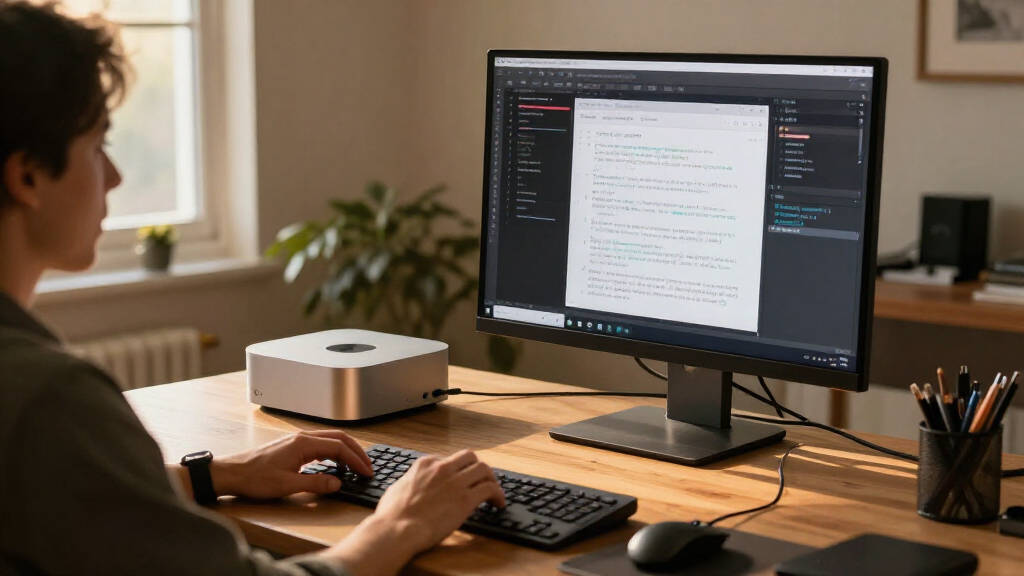
Apple is positioning the Mac mini for always-on AI agents, and published memory figures show that some open models can run locally on its configurations. The main limits are shared memory, model size, context length and speed; the source does not provide independent performance tests.
Apple is marketing the Mac mini as a desktop for always-on AI agents, but the machine’s usefulness for local AI depends on how much memory a model needs. Published requirements indicate that some smaller and mid-sized open models can fit on available configurations, while models sized for 80 GB GPUs exceed the top Mac mini’s 64 GB of unified memory.

Get business pricing on tech for your team
- Business-only prices and quantity discounts
- Tax-exempt purchasing
- Multiple users, one account, clear invoices
Apple’s August 25 announcement described the Mac mini as “the leading desktop for always-on agentic computing.” Earlier, on an April 30 earnings call, CEO Tim Cook said customer recognition of the Mac mini and Mac Studio as platforms for AI and agentic tools was growing faster than Apple had predicted, according to MacRumors. Those statements establish Apple’s positioning and reported demand; they do not measure how well particular models perform on the machine.
The central constraint is unified memory. Apple silicon gives the CPU and GPU access to the same pool, but that pool also serves macOS and other applications. Google lists 17.5 GB to load Gemma 4 31B at 4-bit precision and 34.9 GB at 8-bit. Google says those figures cover static model weights; a larger context window requires additional memory. A model that technically fits may therefore leave limited room for the operating system, other apps or longer inputs.
Apple’s listed Mac mini configurations range from 16 GB to 64 GB. The source reports U.S. prices on Apple’s site as of November 16: $899 for a 16 GB M6 configuration and $3,199 for a 64 GB M5 Pro configuration. OpenAI says gpt-oss-20b runs “within 16GB of memory,” while it sizes gpt-oss-120b for a single 80 GB GPU. These are model-maker specifications, not independent tests of speed or output quality on a Mac mini.

Memory Sets the Local AI Ceiling
Local operation can appeal to people who want data to stay on the device, offline access or fewer recurring charges tied to cloud usage. An always-on computer can also remain available for agent tasks. The source reports an idle power figure of 4 watts while an agent waits, but gives no test method or conditions for that figure.
The trade-off is that local access does not make every model practical. Memory capacity determines whether a model can load, and bandwidth and compute affect how quickly it responds. The source compares the M5 Pro’s 307 GB/s memory bandwidth with 3.35 TB/s for Nvidia’s H100, a data-center GPU. That is a specification comparison, not a direct benchmark of model response times; it nevertheless illustrates the different hardware classes involved.
For buyers, the implication is to match the computer to the intended model and workload. A base configuration may suit smaller models and modest prompts, while longer contexts or larger weights can push memory needs beyond what remains available after the system is running. The cited figures do not establish that local use will be cheaper overall, since electricity, purchase price and workload are not compared with cloud services.
Products Worth Considering

Samsung Galaxy Tab A11+ Kids Edition, 128GB, Royal Blue
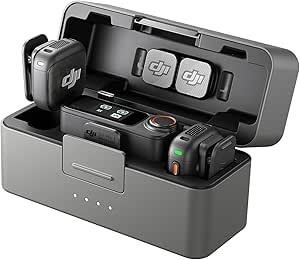
DJI Mic 3 (2 TX + 1 RX + Charging Case), Wireless Microphone

Bose Portable Smart Speaker with Alexa and Google Assistant, Black
As an affiliate, we earn on qualifying purchases.
Apple’s Shift Toward Agent Desktops
The Mac mini’s AI positioning follows increased interest in computers that can host models or agent software continuously. Cook’s April 30 comment, as reported by MacRumors, linked that interest to customer recognition of the Mac mini and Mac Studio. Apple’s August announcement then explicitly framed the new Mac mini around agentic computing. The source says Apple had warned four months earlier that it could not build enough units, but does not supply the wording or circumstances of that warning.
Apple’s shared-memory design differs from many PCs, where a graphics card has its own memory pool. MLX, Apple’s machine-learning framework, describes Apple silicon’s unified architecture as giving the CPU and GPU direct access to the same memory. This arrangement can let the GPU use a larger pool than a dedicated graphics card with less memory, though the pool is still finite and shared with the system.
Model size can be reduced through quantization, such as storing weights at 4-bit rather than 8-bit precision. That lowers memory needs, but can affect quality. The supplied source gives example memory requirements, not a comparative quality evaluation, so the effects depend on the model and task.
““the leading desktop for always-on agentic computing””
— Apple, in its August 25, 2026 Mac mini announcement
Real-World Speed Still Varies
The cited material does not include independent benchmarks comparing Mac mini configurations across model sizes, prompt lengths or agent tasks. It also does not quantify how much memory macOS and ordinary applications consume during those tests, or how much context a given setup can handle before performance changes.
Model makers’ published memory figures describe requirements under their stated assumptions; they do not guarantee a particular user experience. The source also does not establish how quantization affects answer quality for specific tasks, or whether local operation costs less than cloud use over a given period.
Match Configurations to Workloads
Anyone considering a Mac mini for local AI should compare the exact configuration’s available memory with the model’s published requirements, then account for context and other applications. Apple’s listed prices and configurations provide a purchasing snapshot dated November 16, 2026; future availability or pricing may differ.
More useful evidence would come from repeatable tests showing model load times, response speed, memory use and output quality across configurations and prompt lengths. Until those comparisons are available, the published figures support a clear capacity assessment but not a broad conclusion about how well the Mac mini performs as an AI workstation.
Key Questions
Can a Mac mini run AI models locally?
Yes. The cited model requirements indicate that some models can fit in the available memory, including OpenAI’s gpt-oss-20b, which OpenAI says runs “within 16GB of memory.” Actual performance depends on configuration, context length and other memory use.
Can the 64 GB Mac mini run gpt-oss-120b?
OpenAI sizes gpt-oss-120b for a single 80 GB GPU. The Mac mini configuration described here has 64 GB of unified memory, so it does not meet that published memory size; the source provides no evidence of a supported workaround.
Why does context length affect local AI?
Context adds memory needs on top of model weights. Google says its Gemma figures cover static weights and that larger context windows require significantly more memory.
Does running a model locally guarantee lower costs?
No cost comparison is provided. Local use may avoid per-token cloud charges, but the source does not compare purchase price, electricity and usage against cloud services.
Source: Thorsten Meyer AI