
📊 Full opportunity report: Software-Defined Warfare: How Ukraine’s Delta Turned The Battlefield Into A Shared, Real-Time Map on ThorstenMeyerAI.com — validation score, market gap, and execution plan.
TL;DR
Ukraine’s Delta system, a cloud-native battlefield management platform, enables real-time fusion of intelligence feeds accessible via standard devices. This innovation shifts military advantage toward data and software, with significant implications for modern warfare.
Ukraine has officially deployed the Delta system, a cloud-native, browser-based battlefield management platform, to improve real-time situational awareness. This development marks a significant shift toward software-defined warfare, emphasizing data, software, and rapid iteration over traditional hardware platforms, and is considered a major advancement in modern military operations.
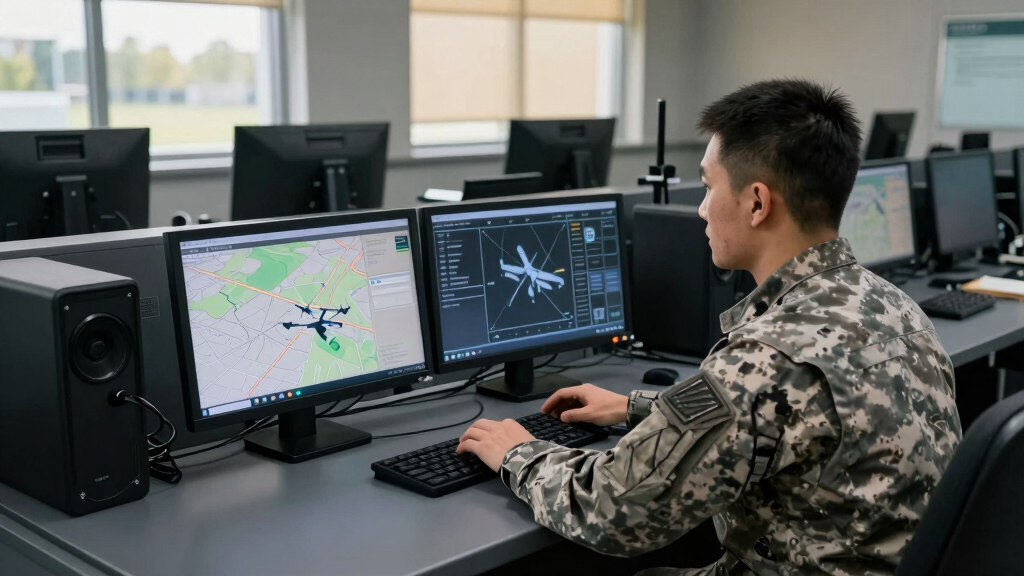
Delta is a collaborative effort by Ukraine’s military, NGO Aerorozvidka, the Defense Ministry’s innovation center, and the Ministry of Digital Transformation. It aggregates data from diverse sources, including drones, satellites, sensors, and intelligence agencies, into a unified, geolocated map accessible through any device with a browser. The system supports operational planning, coordination, and secure sharing of enemy positions, effectively creating a live, shared operational picture.
What makes Delta notable is its use of commodity hardware—ordinary PCs, tablets, and phones—connected to a cloud backend hosted outside Ukraine to safeguard against cyber and missile attacks. This approach contrasts sharply with traditional defense IT, which relies on proprietary, hardware-locked systems. Since its deployment, Ukrainian officials claim Delta has helped identify approximately 1,500 enemy targets daily during recent counteroffensives, though these figures are self-reported and unverified independently.
Software-defined warfare: how Ukraine’s Delta turned the battlefield into a shared, real-time map
A soldier opens a browser and sees the fused war — drones, satellites, sensors and vetted reports on one live map. The backend is a cloud deliberately hosted abroad so a missile can’t take it down. The clearest case yet of treating warfare as software.
Optical sensors go blind in cloud & dark; an all-weather SAR radar layer — the kind VigilSAR produces — slots into a picture like this as one resilient, sovereign input. vigilsar.com · And note the paradox: to survive missiles & cyberattack, Ukraine hosted its crown-jewel cloud outside its own borders — trading physical sovereignty for operational survivability. Resilience through distribution.
Delta’s lasting lesson isn’t a piece of software — it’s a model of how to build: commodity clients, cloud backend, open standards, relentless iteration, fusion over hardware, and resilience through distribution. It’s why a wartime NGO out-shipped procurement bureaucracies on a fraction of the budget. The platform mattered less than the picture — and the picture is software. Own the fusion layer, own the sovereign feeds into it, and get it to the edge.
Implications of Ukraine’s Software-Defined Warfare Shift
The deployment of Delta demonstrates a strategic shift in military advantage from hardware platforms to software, data, and rapid iteration. Its cloud-based, browser-accessible design enables wider frontline access, increasing battlefield responsiveness and coordination. This approach could influence other militaries to adopt more agile, resilient, and interoperable systems, challenging the traditional, siloed defense IT models. The emphasis on fusion and real-time data processing enhances Ukraine’s operational effectiveness amid ongoing conflict, potentially setting a new standard for modern warfare.
browser-based battlefield management software
As an affiliate, we earn on qualifying purchases.
As an affiliate, we earn on qualifying purchases.
Evolution Toward Cloud-Enabled, Data-Driven Warfare
Since 2017, NATO initiatives have aimed to break down information silos inherited from Soviet-era military structures, promoting interoperability and horizontal data sharing. Ukraine’s Delta system builds on this trend, integrating civilian and military sources into a unified operational picture. Its development was accelerated amid ongoing conflict, with a focus on resilience and rapid deployment. The decision in February 2023 to host Delta’s cloud outside Ukraine reflects a strategic move to protect sensitive data from cyber and missile threats, illustrating a new approach to sovereignty in digital warfare.
“Delta is a game-changer in how we see and respond to the battlefield. It brings together all our intelligence sources into one accessible platform, enabling faster decision-making.”
— Mykhailo Fedorov, Ukrainian Minister of Digital Transformation
cloud-native military mapping system
As an affiliate, we earn on qualifying purchases.
As an affiliate, we earn on qualifying purchases.
Unverified Claims and Operational Confidentiality
While Ukrainian officials report high target identification rates and operational success, independent verification of these figures remains unavailable. Details about Delta’s integration with drone operations and the full scope of its capabilities are classified, and the specifics of its resilience against cyber and missile attacks are still emerging. The extent of its deployment across the frontlines and its impact on overall battlefield outcomes are also not yet fully confirmed.
real-time situational awareness tools
As an affiliate, we earn on qualifying purchases.
As an affiliate, we earn on qualifying purchases.
Future Developments and Broader Adoption of Delta
Ukraine is expected to expand Delta’s deployment further and refine its integration with drone swarms and sensor networks. International military analysts will closely monitor its impact on battlefield coordination and resilience. Other nations may explore similar cloud-native, software-driven systems, potentially reshaping defense procurement and operational models globally. Ongoing updates on Delta’s performance and security features are anticipated as the system matures.
drone and satellite data fusion software
As an affiliate, we earn on qualifying purchases.
As an affiliate, we earn on qualifying purchases.
Key Questions
How does Delta improve Ukraine’s battlefield operations?
Delta provides a real-time, fused view of the battlefield accessible via any device, enabling faster decision-making, better coordination, and more effective targeting of enemy assets.
Why is hosting Delta’s cloud outside Ukraine significant?
Hosting the system abroad enhances its resilience against cyberattacks and missile strikes, protecting Ukraine’s most sensitive command and control capabilities.
Can other militaries adopt similar systems?
Yes, Delta’s cloud-native, commodity hardware approach offers a template for other nations seeking agile, resilient battlefield management systems, though adaptation depends on specific operational needs and security considerations.
What are the main challenges facing Delta’s deployment?
Operational security, data sovereignty, and ensuring secure, reliable communications in contested environments remain key challenges, alongside verifying the system’s effectiveness in diverse combat scenarios.
Will Delta influence future military technology development?
It is likely, as the system exemplifies a shift toward software-driven, cloud-based battlefield management, encouraging innovation and interoperability in modern military forces.
Source: ThorstenMeyerAI.com