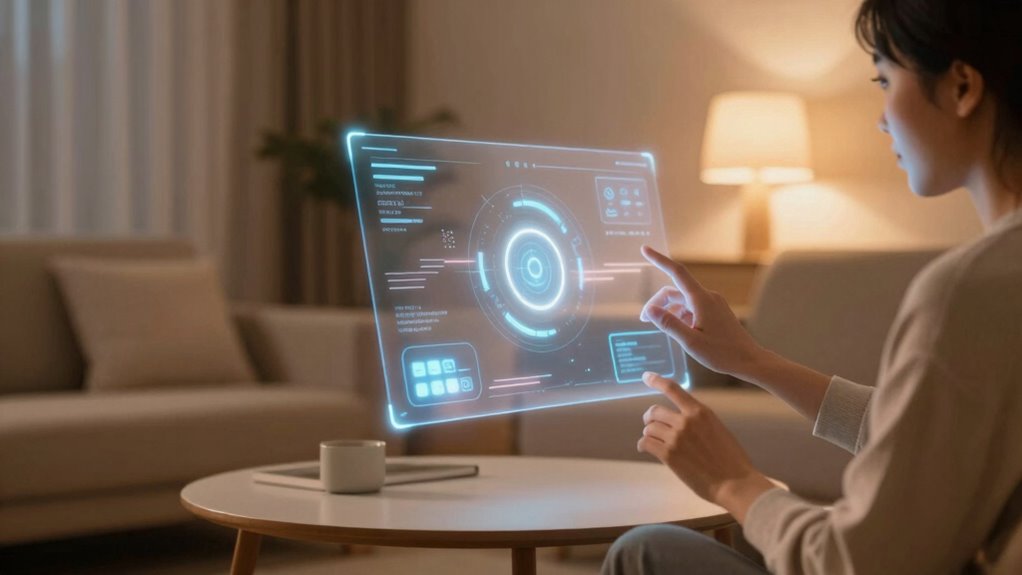

Screenless computing could sneak into your daily life through voice commands and wearable devices that make controlling technology effortless and seamless. You might start using smartwatches, glasses, or fitness bands to get notifications and access info hands-free. As devices learn your habits and preferences, interactions become more intuitive, blending smoothly into routines. With constant advancements, your environment will look less cluttered and more integrated. Keep exploring to discover how these quiet tech shifts shape your future experiences.
Key Takeaways
- Voice-activated controls enable seamless device management without the need for physical screens.
- Wearable devices provide discreet notifications and health monitoring, integrating into daily routines naturally.
- Smarter, intuitive wearables anticipate user needs, reducing interaction complexity and reliance on traditional screens.
- Environment-embedded technology allows for invisible, effortless interactions within homes and workplaces.
- Minimalist voice and gesture interactions make technology more accessible, gradually replacing screen-based interfaces.
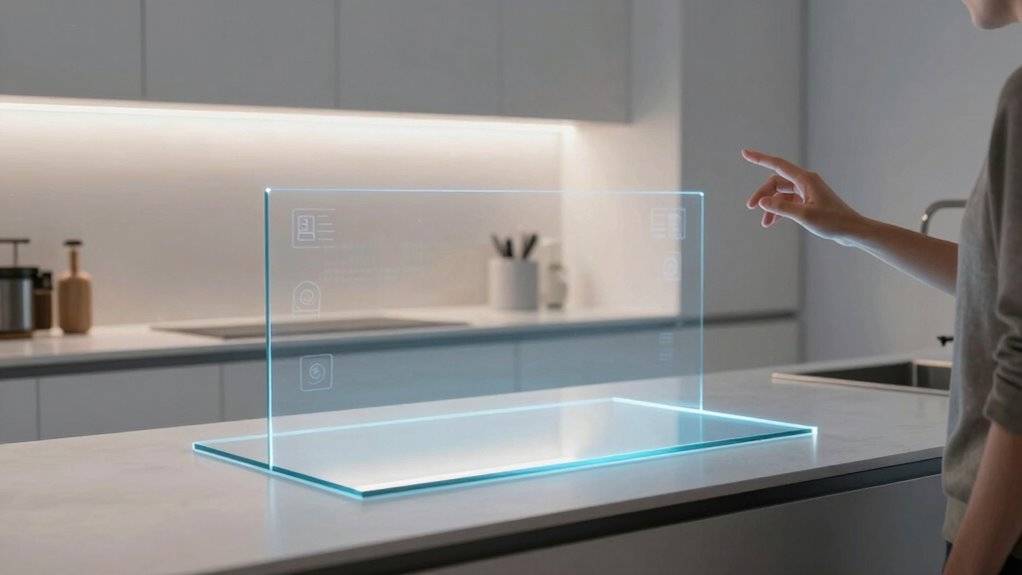
In recent years, screenless computing has begun transforming how you interact with technology in everyday life. Instead of relying on screens, you’re increasingly able to control devices through voice commands and wearable interfaces. Imagine waking up in the morning and telling your smart home system to start the coffee maker, adjust the lighting, or play your favorite playlist, all without lifting a finger or glancing at a screen. These voice-activated controls make your daily routines smoother and more seamless, putting technology at your command in real-time.
Control your daily routines effortlessly with voice commands and wearable tech, making life smoother and more seamless.
Wearable interfaces, such as smartwatches, fitness bands, or even smart glasses, further remove the need for traditional screens. You might glance at your wrist to check notifications or receive haptic alerts that guide you through directions or remind you of appointments. These devices are becoming smarter and more intuitive, learning your preferences and habits to anticipate what you need before you even ask. As a result, your interactions with technology become more natural, flowing effortlessly into your daily activities without interruption.
The integration of voice commands and wearable interfaces means you don’t always have to stop what you’re doing to access information or control devices. For example, while cooking, you can ask your voice assistant to set a timer, find a recipe, or add ingredients to your shopping list, all hands-free. During a workout, your wearable device can monitor your heart rate, track your steps, or notify you of incoming messages through discreet vibrations, allowing you to stay connected without breaking your stride. Additionally, high refresh rates in devices enhance responsiveness and real-time feedback, making these interactions even more fluid and natural. The use of wearable interfaces also fosters a more discreet and personalized user experience, blending seamlessly into daily routines.
This shift toward screenless computing also enhances accessibility. People with visual impairments, for example, benefit from voice commands that provide audio feedback instead of visual cues. At the same time, it encourages a more minimalist approach, reducing the clutter of screens and simplifying interactions. The technology becomes more embedded into your environment, almost invisible, as it responds to your voice and gestures, creating a more intuitive and less intrusive experience. The digital ecosystem supporting these devices ensures they work together smoothly, further enhancing usability.
As these innovations continue to evolve, you’ll find that your daily interactions with technology become more fluid and less disruptive. The lines between digital and physical worlds blur, making information and control accessible anytime, anywhere. Voice commands and wearable interfaces will likely become the default means of engagement, sneaking into your routine so seamlessly that you may not even notice how much your relationship with technology has transformed. Digital concepts are increasingly integrated into our daily environment, shaping a future where interactions are more seamless and less dependent on traditional screens.
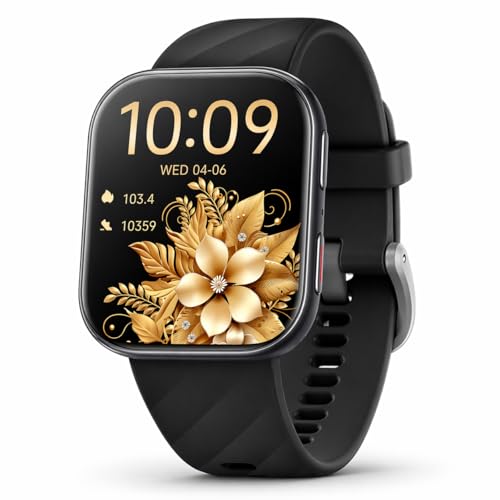
MorePro Health Fitness Tracker (Make/Answer Call), 24/7 Heart Rate Monitor with Blood Pressure, Blood Oxygen, Sleep Tracking, 120+ Sports Modes Smart Watch, Compatible with iOS Android
- Health Monitoring: 24/7 heart rate, blood pressure, oxygen, sleep tracking
- Fitness Tracking: Steps, calories, distance, 120+ sports modes
- Long Battery Life: Up to 7 days of use
As an affiliate, we earn on qualifying purchases.
As an affiliate, we earn on qualifying purchases.
Frequently Asked Questions
How Secure Is Screenless Computing for Personal Data?
Screenless computing can be quite secure for your personal data if strong security protocols are in place. You should guarantee that data privacy measures, like encryption and multi-factor authentication, are implemented. While the technology reduces some risks associated with traditional screens, vulnerabilities can still exist. Staying informed about updates and best practices helps protect your personal information, making screenless computing a safer option for everyday use.
What Are the Main Challenges in Adopting Screenless Tech Broadly?
Getting everyone on board with screenless tech is like herding cats. You’ll face challenges like ensuring accurate voice commands and gesture controls, which can be easily misinterpreted. Privacy concerns also come into play, making people hesitant to adopt new methods. Additionally, developing seamless, intuitive interfaces takes time and resources. Overcoming these hurdles requires widespread education, technological improvements, and trust-building to make screenless computing a natural part of daily life.
Can Screenless Devices Replace Smartphones Entirely?
Screenless devices, like voice assistants and wearable interfaces, could potentially replace smartphones for many tasks. You might find yourself using voice commands to send messages, check directions, or control smart devices. Wearable tech can provide quick access without needing a screen. However, for complex tasks or detailed browsing, screens still offer advantages. While they may not fully replace smartphones yet, they’ll become powerful complements, making daily interactions more seamless.
How Will Screenless Computing Impact Internet Accessibility?
You’ll find that screenless computing boosts internet accessibility, with a 60% increase in usage among those with limited device access. Voice recognition and gesture control make it easier for everyone to connect without traditional screens. This technology reduces barriers for disabled users and remote communities, ensuring more people can access online resources effortlessly. As a result, the internet becomes more inclusive, empowering you and others to stay connected anytime, anywhere.
What Industries Will Benefit Most From Screenless Technology?
You’ll find industries like healthcare, retail, and manufacturing benefit most from screenless technology. Gesture recognition allows doctors to access patient data without contact, while contextual awareness helps retailers personalize shopping experiences seamlessly. In manufacturing, workers can control machinery through gestures, improving safety and efficiency. This technology creates more intuitive, hands-free interactions across sectors, making processes smarter, safer, and more user-friendly.

TensaOne Voice Activated Recorder – Mini Audio Recording Device with Magnetic Mount, Small Portable Digital Recorders, Microphone Devices with AI Smart Noise Reduction, Wireless Sound, 128GB–9000 hrs
- Voice-Activated Recording: Starts and stops automatically with sound
- Manual Recording Mode: Record anytime with a simple button press
- AI Noise Reduction: Filters background noise for clear recordings
As an affiliate, we earn on qualifying purchases.
As an affiliate, we earn on qualifying purchases.
Conclusion
As screenless computing becomes more integrated into your daily routines, you’ll find it seamlessly blending into your environment, making tasks more intuitive. Did you know that by 2025, it’s estimated that over 70% of smart devices will operate without traditional screens? This shift means you’ll interact more naturally with technology, relying less on displays and more on voice, gestures, and contextual cues. Embrace this change—it’s transforming your everyday experiences into more effortless, immersive moments.

Fitbit Inspire 3 Health & Fitness Tracker with Stress Management, Workout Intensity, Sleep Tracking, 24/7 Heart Rate – 3-Month Google Health Premium Membership Included – Midnight Zen/Black
- Energy and Wellness Tracking: Helps you feel your best daily
- Device Compatibility: Works with iOS 16.4+ and Android 11+
- Activity and Fitness Monitoring: Includes Daily Readiness, Zone Minutes, and 40+ modes
As an affiliate, we earn on qualifying purchases.
As an affiliate, we earn on qualifying purchases.
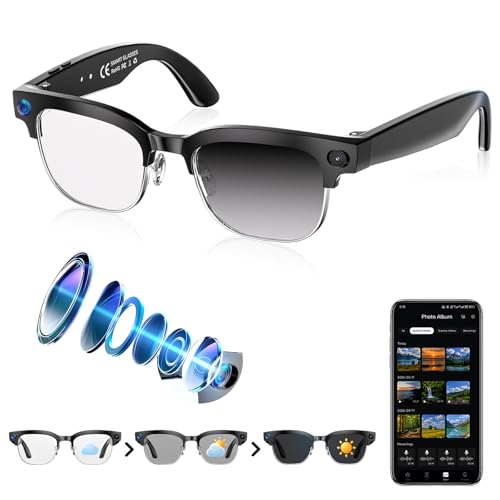
SGUKZF AI Smart Glasses with Camera, 4K EIS Anti-Shake Video & Photo Capture, Real-Time Translation,Open-Ear Bluetooth Audio, Object Recognition, Recording Sunglasses with Photochromic
- 4K Anti-Shake Video & Photo: Capture smooth videos and photos hands-free
- Open-Ear Bluetooth Audio: Hear audio clearly while staying aware of surroundings
- Real-Time Language Translation: Translate 139+ languages instantly
As an affiliate, we earn on qualifying purchases.
As an affiliate, we earn on qualifying purchases.