
Battery Recycling 2.0 uses closed-loop systems that recover up to 95% of lithium and other critical metals directly from used batteries. This process converts unsorted black mass into high-purity precursor materials without needing chemical processing or pre-sorting by chemistry. It’s efficient, scalable, and eco-friendly, reducing reliance on virgin resources. If you want to understand how these innovative systems maximize recovery and support sustainable battery production, keep exploring the details behind this advanced technology.
Key Takeaways
- Closed-loop recycling processes recover up to 95% of lithium directly from spent batteries without chemical separation.
- Modular technology converts unsorted black mass into high-purity precursor cathode materials suitable for new batteries.
- Active discharging methods improve safety and enable more efficient lithium recovery compared to passive techniques.
- The system reconditions spent cathodes, maintaining performance and avoiding material loss during recycling.
- This approach supports a circular economy, reducing reliance on virgin lithium and lowering environmental impacts.
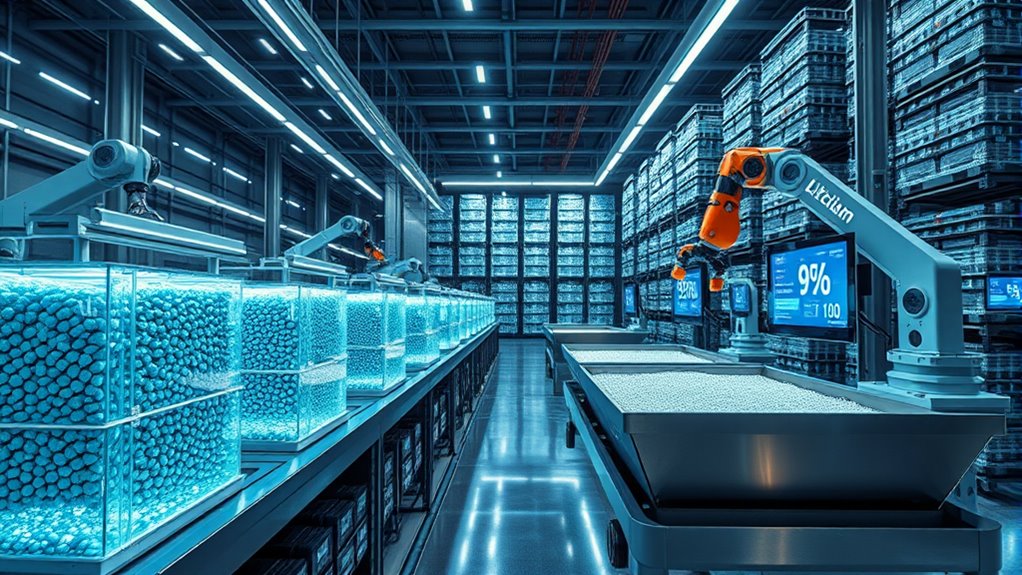
Battery Recycling 2.0 is transforming how we recover and reuse critical materials from used batteries. This innovative approach, known as closed-loop recycling, allows you to recover valuable materials like lithium, cobalt, and nickel directly from spent batteries and reuse them in new ones within the same process cycle. Unlike traditional methods that produce “black mass,” which then requires off-site chemical processing, closed-loop systems streamline the entire process, reducing costs, delays, and environmental impact. This cycle aligns with circular economy principles, helping you keep materials within the battery value chain continuously. As demand for batteries skyrockets, especially for electric vehicles, adopting this technology offers a strategic advantage by securing supply chains and mitigating raw material shortages.
Battery Recycling 2.0 enables seamless, sustainable recovery of critical materials, transforming the battery supply chain for a greener future.
The core of this advancement lies in cutting-edge technological processes. Systems like Green Li-ion’s modular technology can convert unsorted black mass into 99% pure precursor cathode active materials (pCAM) suitable for direct use in manufacturing. This means you no longer need to pre-sort batteries by chemistry or shape, saving time and resources. The process can accommodate any shape, size, or chemistry of Li-ion batteries, making it flexible and scalable. You can even synthesize cathode powders like LiNi1/3Mn1/3Co1/3O2, with customizable ratios of nickel, manganese, and cobalt to meet specific performance goals. New regeneration techniques are also emerging to recondition spent cathodes industrially, supporting reuse without sacrificing electrochemical performance. These advancements ensure you recover high-quality materials efficiently. This process also benefits from recent innovations in active discharging methods, which improve safety and material recovery efficiency.
The efficiency of closed-loop systems is impressive. You can recover up to 95% or more of lithium and other critical metals, with purity levels approaching 99% for precursor cathode materials. This high level of purity ensures that recycled materials are suitable for manufacturing new batteries, reducing reliance on virgin resources. Recovery extends beyond lithium to include cobalt, nickel, steel, copper, and aluminum, boosting overall resource circularity. Internal recycling within your manufacturing ecosystem diminishes dependence on external suppliers and safeguards against raw material shortages. Moreover, implementing closed-loop technologies can significantly enhance your company’s sustainability profile and compliance with environmental regulations. Not only does this approach support sustainability by reducing environmental impacts, but it also helps stabilize prices and improve the resilience of your supply chains against geopolitical risks.
Economically, closed-loop recycling proves to be more cost-effective and energy-efficient than traditional mining and processing. It lowers carbon footprints by minimizing transportation and chemical processing steps off-site. Additionally, it enhances your ability to produce batteries in a more sustainable manner, aligning with global environmental goals. By promoting urban mining—extracting valuable elements from end-of-life batteries within your manufacturing ecosystem—you can improve the cost-efficiency and security of your material supplies. Safety considerations, such as active discharging before recycling to prevent hazards, are integral to these systems. Although passive methods like salt baths are still evaluated, active discharging is gaining traction for its safety and potential to increase material value. Overall, Battery Recycling 2.0 offers you a smarter, greener way to meet the growing demand for batteries while safeguarding resources and reducing environmental impact.

QIXZOCV MWE 32 Inch Digital Signage Display, Portable LCD Digital Kiosk, Advertising Display Poster, Android Kiosk with Auto Media Player, HDMI/USB
【High-Quality Display】This MWE-QIXZOCV digital signage kiosk features an IPS display screen with FHD image and video quality, offering...
As an affiliate, we earn on qualifying purchases.
Frequently Asked Questions
What Are the Environmental Benefits of Closed-Loop Lithium Recycling?
The environmental benefits of closed-loop lithium recycling are impressive. You reduce greenhouse gas emissions by over half compared to mining, cut water and energy use dramatically, and prevent toxic waste from polluting land and water. Recycling also preserves critical minerals, minimizes habitat destruction, and extends resource lifespan. By choosing this system, you help lower pollution, conserve natural resources, and support a more sustainable, circular economy for batteries.
How Does the Cost of Recycling Compare to Mining New Lithium?
You might wonder how recycling costs stack up against mining new lithium. Recycling typically costs about $90 per metric ton, which is lower than the expenses of extraction. Plus, it recovers up to 95% of lithium, reducing the need for new mining. As metal prices rise, recycling becomes even more economically attractive, especially considering environmental benefits and high recovery rates that cut costs and conserve resources.
What Challenges Exist in Scaling up Battery Recycling Facilities?
You face many challenges when scaling up battery recycling facilities. You must deal with technical complexities like sorting diverse chemistries and disassembling non-standardized batteries safely. Infrastructure gaps, including underdeveloped facilities and costly construction delays, slow progress. Safety risks during transportation and manual labor increase costs. Economic barriers, such as high recycling costs versus material value, and market uncertainties further hinder growth. Overcoming these hurdles requires technological innovation, better standards, and streamlined supply chains.
How Secure Is the Recovered Lithium for Industrial Use?
They say safety first, and it couldn’t be truer here. Your recovered lithium is quite secure for industrial use when proper safety measures are in place. High purity levels, often between 90-100%, guarantee it meets industry standards. With effective dust control, handling protocols, and quality controls, you can confidently integrate recovered lithium into manufacturing processes, reducing reliance on raw materials and supporting sustainable, safe energy storage solutions.
What Policies Support the Adoption of Closed-Loop Recycling Systems?
You’re curious about policies supporting closed-loop recycling systems. You’ll find that EU policies set strict recycling efficiency targets and harmonized standards, encouraging companies to upgrade processes. In the US, regulations clarify legal pathways and safety requirements, making recycling more feasible. State laws promote collection and recycling networks, while incentives boost technology investments. Together, these policies create a supportive framework that drives the adoption and effectiveness of closed-loop battery recycling systems.

Amazon Signage Stick – Professional Digital Signage 4K Media Player – Designed for Businesses of All Sizes, Easy Setup with free Mobile App, and CMS Compatibility
Professional digital signage: The Amazon Signage Stick auto-launches your CMS in kiosk mode for seamless, unattended operation.
As an affiliate, we earn on qualifying purchases.
Conclusion
Now, imagine a world where your old phone battery moonlights as a superhero, swooping in to save the planet by recycling 95% of its lithium. Thanks to closed-loop systems, you don’t have to worry about mining more or tossing batteries in the trash. Instead, you get to enjoy the thrill of being eco-friendly, all while batteries do a magic trick—disappearing and reappearing, greener and cleaner, with a wink and a nod. Recycling just got a superhero upgrade!

Canlarriz Digital Signage Display 50 inch Wall Mount Digital Menu Board for Restaurants and Stores Advertising Screen 1000 nits Ultra-High Brightness 4K UHD Free Web Content Editor Android 4GB + 32GB
【Ultra-thin ultra-narrow bezels】Digital signage with a 6.8mm ultra-narrow bezel delivers a seamless visual experience. Paired with a 3.5cm...
As an affiliate, we earn on qualifying purchases.

Canlarriz Digital Menu Board 18.5 inch Desktop Digital Signage Display Advertising Screen for Stores Restaurants and Commercial Display 700 nits Ultra-High Brightness Free Web Content Editor Android
【Remote Management】: The electronic menu board supports cross-platform remote control via smartphones, computers, and tablets, and can intelligently...
As an affiliate, we earn on qualifying purchases.