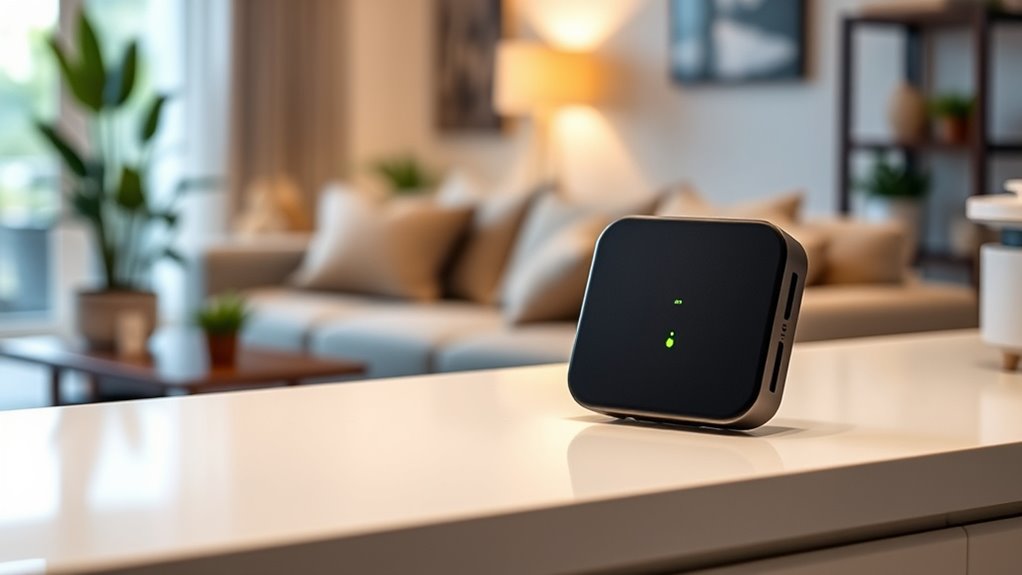

A smart leak detector with temperature alerts can warn you about water and freezing conditions before they cause costly damage. I’d choose the Resideo L1 as the best overall fit for buyers who want both leak and freeze alerts in one Wi-Fi device. For broader coverage, YoLink’s four-sensor kit stands out for its included hub and multiple sensors, while Eve Water Guard suits Apple HomeKit households that need a sensing cable for hard-to-reach areas. The main tradeoffs are temperature monitoring, sensor coverage, connectivity, and how much setup a system requires. Read on for the full comparison and advice on matching a detector to your home.

Get business pricing on tech for your team
- Business-only prices and quantity discounts
- Tax-exempt purchasing
- Multiple users, one account, clear invoices
Key Takeaways
- Resideo L1 is the clearest all-round match for this search because its product description combines Wi-Fi leak detection and freeze alerts in a single device.
- YoLink kits prioritize coverage: the four-sensor and six-sensor bundles include a hub, which can suit buyers monitoring several vulnerable spots.
- Eve Water Guard takes a different approach with a 6.5-foot sensing cable, making it a better fit for tracing water along an appliance or utility area than placing only a point sensor.
- Several listings do not clearly establish temperature alerts. Buyers should verify that function in the specific model details instead of assuming every leak detector also monitors freezing conditions.
- System fit matters as much as sensor count: Wi-Fi, hub-based connectivity, and Apple HomeKit support lead to different setup and compatibility choices.
| Resideo L1 WiFi Water Leak and Freeze Detector |  | Best for Extended Coverage | Connectivity: WiFi | Monitoring: Water leaks, temperature, and humidity | Alerts: Mobile push and email notifications | VIEW ON AMAZON | See Our Full Breakdown |
| MySpool P5 Multi-Sensor for Power, Internet, Temperature, Water, and Continuity Alerts |  | Best for Whole-Home Status Monitoring | Temperature range: -30°C to +105°C | Measurement accuracy: ±0.5°C | Temperature response time: 3 minutes | VIEW ON AMAZON | See Our Full Breakdown |
| YoLink Water Leak Sensor 4 Alarm Kit, 4 Sensors and Hub |  | Best for Multi-Room Coverage | Kit contents: 1 hub and 4 sensors | Wireless protocol: LoRa | Maximum range: Up to 1/4 mile in open air | VIEW ON AMAZON | See Our Full Breakdown |
| Kidde WiFi Water Leak and Freeze Detector with App Alerts |  | Best for Simple Smart-Home Setup | Power: 2 AA batteries (included) | Connectivity: WiFi | Freeze detection: Triggers at 37°F or with a rapid temperature drop | VIEW ON AMAZON | See Our Full Breakdown |
| X-Sense Wi-Fi Water Leak Detector & Freeze Alarm (1-Pack) |  | Best Compact WiFi Pick | Connectivity: 2.4 GHz WiFi; no hub required | Detection sensitivity: 0.4 mm water depth | Freeze alarm threshold: Below 39°F (4°C) | VIEW ON AMAZON | See Our Full Breakdown |
| Eve Water Guard Smart Home Water Leak Detector with 6.5 ft Sensing Cable, 100 dB Siren, Apple HomeKit, Bluetooth & Thread |  | Best for Apple HomeKit | Sensing cable: 6.5 ft / 2 m; extendable up to 490 ft / 150 m | Siren: 100 dB | Connectivity: Bluetooth, Thread, Apple HomeKit | VIEW ON AMAZON | See Our Full Breakdown |
| GoveeLife Upgraded Smart Water Leak Detector with High Alarm, 5-Pack |  | Best for Long-Range Coverage | Pack size: 5 detectors | Wireless range: Up to 1,804 ft / approximately 550 m | Alarm: 105 dB | VIEW ON AMAZON | See Our Full Breakdown |
| YoLink Water Leak Sensor 4 Kit with Hub, 6 Sensors |  | Best for Multi-Room Leak Monitoring | Included: 1 YoLink Hub and 6 Leak Sensor 4 units | Wireless technology: LoRa | Open-air range: Up to 2,034 ft | VIEW ON AMAZON | See Our Full Breakdown |
| WiFi Water Leak Detector for Home with App Alert – 2.4 GHz Gateway and 6 Sensors |  | Best for Customizable Audible Alerts | Included: 2.4 GHz gateway and 6 sensors | Sensor capacity: Up to 24 WD61 sensors | Transmission range: Approximately 300–328 ft | VIEW ON AMAZON | See Our Full Breakdown |
| Smart Leak Detection Sensor |  | Best for Simple Local Alerts | Alert type: Built-in audible alarm | Installation: No wiring or app required | Power: Battery powered | VIEW ON AMAZON | See Our Full Breakdown |
| smart leak detector with temperature alert | Power |
|---|---|
| Resideo L1 WiFi Water Leak and | Battery-operated |
| MySpool P5 Multi-Sensor for Po | A/C power with internal battery backup |
| YoLink Water Leak Sensor 4 Ala | — |
| Kidde WiFi Water Leak and Free | 2 AA batteries (included) |
| X-Sense Wi-Fi Water Leak Detec | — |
| Eve Water Guard Smart Home Wat | — |
| GoveeLife Upgraded Smart Water | — |
| YoLink Water Leak Sensor 4 Kit | — |
| WiFi Water Leak Detector for H | AAA batteries; 12 included |
| Smart Leak Detection Sensor | Battery powered |
More Details on Our Top Picks
Resideo L1 WiFi Water Leak and Freeze Detector
The Resideo L1 suits homeowners who need to watch a long or hard-to-reach area, such as a basement perimeter or utility space. Its included 5-foot sensing cable can extend up to 500 feet, giving it more placement flexibility than the compact, self-contained Kidde detector. It also monitors humidity alongside leaks and temperature, so it covers more conditions than a basic leak alarm. Push and email alerts keep you informed remotely, while the 100 dB alarm can warn people at home. The cable is reusable after drying, and a compatible Resideo shutoff valve can add automatic water control. That valve is sold separately, though, and remote alerts depend on WiFi; buyers seeking coverage across several separate rooms may prefer a multi-sensor kit such as YoLink’s four-sensor kit.
Pros:- Extendable sensing cable reaches up to 500 feet for long or awkward spaces
- Monitors leaks, temperature, and humidity
- Sends push and email alerts and sounds a 100 dB alarm
- Sensor cable can be reused after it dries
Cons:- Remote notifications require WiFi
- Compatible shutoff valve is sold separately
Best for: Homeowners who need to monitor long runs, basement edges, or other hard-to-reach areas and want optional compatibility with a Resideo shutoff valve
Not ideal for: Buyers who need monitoring in several separate rooms without installing a long cable, or who need remote alerts where WiFi is unreliable
- Connectivity:WiFi
- Monitoring:Water leaks, temperature, and humidity
- Alerts:Mobile push and email notifications
- Alarm volume:100 dB
- Included sensor cable:5 ft
- Maximum cable length:500 ft
- Power:Battery-operated
Our verdict“Choose the Resideo L1 if one extended sensing run and optional shutoff-valve pairing matter more than having several separate sensors.”
MySpool P5 Multi-Sensor for Power, Internet, Temperature, Water, and Continuity Alerts
The MySpool P5 is the broadest monitor in this group: it tracks water and temperature alongside power, internet, and a configurable continuity sensor. That makes it a stronger fit than the leak-focused X-Sense detector for owners who also want to know when a freezer or network connection loses power. Alerts can arrive by text, email, or push notification, with separate settings and notices when conditions return to normal; it needs no hub or subscription. Its temperature sensor covers a wide range, though the stated three-minute response time is less suited to fast changes than a dedicated freeze alarm. The P5 also relies on A/C power with battery backup, and power-off alerts omit an audible alarm to conserve the batteries. Buyers wanting a loud local leak warning may prefer YoLink’s sensor alarms.
Pros:- Monitors water, temperature, power, internet, and continuity
- Sends text, email, and push alerts with separate settings
- Can notify when a monitored condition returns to normal
- Requires no hub or subscription
Cons:- Three-minute temperature response time may not suit rapid freeze changes
- Uses A/C power, with backup batteries for outages
- Omits audible alarms for power-off alerts to conserve backup batteries
Best for: Homeowners managing a freezer, network equipment, or other critical systems who want water and temperature alerts alongside power and internet status
Not ideal for: Buyers who need a self-contained, battery-powered leak alarm with a loud audible warning during power outages
- Temperature range:-30°C to +105°C
- Measurement accuracy:±0.5°C
- Temperature response time:3 minutes
- Alert channels:Text, email, and push notifications
- Power:A/C power with internal battery backup
- Temperature sensor:Waterproof
- Dimensions:5 × 3.5 × 1.75 inches
Our verdict“Pick the MySpool P5 if you want leak and temperature alerts as part of a wider system-status monitor and can accept its slower temperature response.”
YoLink Water Leak Sensor 4 Alarm Kit, 4 Sensors and Hub
With four sensors and a hub, this YoLink kit makes more sense for spreading leak detection across a home than buying one compact unit such as the X-Sense. Each sensor has a built-in 105 dB alarm, so a leak can be heard nearby even when someone is not checking the app. LoRa connects the sensors to the hub, which supports app, email, and text alerts, and the system can trigger compatible devices locally during internet outages. That local response gives it an advantage over WiFi-only options when the connection drops. The tradeoff is the required hub, and the advertised range of up to a quarter mile applies in open air; walls and other obstacles can reduce it. Despite its strong leak coverage, the supplied details do not specify temperature monitoring, so the Resideo L1 is a clearer match if temperature alerts are essential.
Pros:- Includes four sensors and a hub for coverage in multiple locations
- Built-in 105 dB alarms provide local warnings
- Supports app, email, and text notifications
- Can trigger compatible devices locally during internet outages
Cons:- Requires the included hub for connected features
- Open-air range can be reduced by walls and obstacles
- Provided product details do not specify temperature monitoring
Best for: Homeowners who want to place several leak alarms around appliances, bathrooms, and basement areas, especially where internet outages are a concern
Not ideal for: Buyers whose main requirement is documented temperature alerts, or who want sensors that connect without a hub
- Kit contents:1 hub and 4 sensors
- Wireless protocol:LoRa
- Maximum range:Up to 1/4 mile in open air
- Alarm volume:105 dB
- Battery:2 AAA batteries per sensor; 8 included
- Typical battery life:Up to 5 years
- Water resistance:IP67
- Hub capacity:300+ YoLink devices
Our verdict“Choose this YoLink kit for multi-room leak detection and local outage response, but choose a temperature-specific detector if freeze alerts are a must.”
Kidde WiFi Water Leak and Freeze Detector with App Alerts
The Kidde WiFi detector keeps the job straightforward: place it near a likely leak, connect it to WiFi, and receive app alerts for water or freezing conditions. Its freeze warning triggers at 37°F or after a rapid temperature drop, a concrete threshold that helps buyers judge whether it fits a vulnerable pipe area. It also works with Alexa and Google Home and lets users share notifications with friends and family. That makes it easier to add to a familiar smart-home setup than the hub-based YoLink kit, although YoLink provides four sensors and local alarms for broader coverage. Kidde’s compact form fits under sinks or near appliances, but the supplied information does not list a local alarm volume or cable extension. The one-year limited warranty applies to the alarm only, and remote alerts rely on WiFi and the Kidde app.
Pros:- Detects water and freezing conditions
- Freeze warning triggers at 37°F or after a rapid temperature drop
- Notifications can be shared with friends and family
- Works with Amazon Alexa and Google Home
Cons:- Smartphone alerts require WiFi and the Kidde app
- Supplied details do not specify a local alarm volume
- One-year limited warranty applies to the alarm only
Best for: Smart-home owners who want a compact leak and freeze detector with app alerts, household sharing, and Alexa or Google Home compatibility
Not ideal for: Buyers who need an audible alarm with a specified volume, coverage across several rooms from one kit, or monitoring without WiFi
- Power:2 AA batteries (included)
- Connectivity:WiFi
- Freeze detection:Triggers at 37°F or with a rapid temperature drop
- Alerts:Smartphone notifications; can notify friends and family
- Compatibility:Amazon Alexa, Google Home, iPhone, and Android
- Warranty:1-year limited manufacturer warranty on alarm
Our verdict“Pick Kidde for a compact detector that fits a familiar Alexa or Google Home setup, provided WiFi and app alerts suit your home.”
X-Sense Wi-Fi Water Leak Detector & Freeze Alarm (1-Pack)
The X-Sense 1-Pack is a compact choice for a single leak-prone spot where both water and cold temperatures matter. Six probes detect water as shallow as 0.4 mm, while freeze monitoring activates below 39°F; together, those thresholds make it a more explicitly specified leak-and-freeze option than the multi-sensor YoLink kit. It connects directly to 2.4 GHz WiFi without a hub and pairs app alerts with a 110 dB local alarm. That loud alarm is a useful advantage over the Kidde, whose supplied details do not state an alarm volume. The tradeoff is coverage: this is one sensor, so protecting several rooms means adding more units, and it will not join a 5 GHz-only network. Its replaceable CR123A battery is rated for up to two years, shorter than YoLink’s stated typical battery life.
Pros:- Detects shallow leaks at 0.4 mm water depth
- Monitors for freezing temperatures below 39°F
- 110 dB local alarm plus app notifications
- Connects to 2.4 GHz WiFi without a hub
Cons:- Single-unit pack may require additional detectors for broader coverage
- Does not support 5 GHz WiFi
- Battery life is rated up to two years, shorter than YoLink’s stated typical life
Best for: People who want one compact, hub-free detector under a sink, beside a washing machine, or near a vulnerable pipe on a 2.4 GHz WiFi network
Not ideal for: Households needing several sensors from one kit or using only a 5 GHz WiFi network
- Connectivity:2.4 GHz WiFi; no hub required
- Detection sensitivity:0.4 mm water depth
- Freeze alarm threshold:Below 39°F (4°C)
- Alarm volume:110 dB
- Water resistance:IP66
- Battery:Replaceable CR123A
- Battery life:Up to 2 years
- User sharing:Up to 12 users
Our verdict“Choose the X-Sense for one sensitive, hub-free leak and freeze alarm, as long as your WiFi network supports 2.4 GHz.”
Eve Water Guard Smart Home Water Leak Detector with 6.5 ft Sensing Cable, 100 dB Siren, Apple HomeKit, Bluetooth & Thread
Apple HomeKit users who want a leak alert paired with temperature monitoring elsewhere in their smart home may favor Eve’s direct HomeKit integration and local processing. Its 6.5-foot sensing cable can be extended up to 490 feet, letting one detector cover a long path around appliances or along a basement wall. Compared with the YoLink Water Leak Sensor 4 Kit, Eve avoids a separate hub, while YoLink offers a built-in 105 dB alarm on each sensor and a multi-sensor kit. Eve’s own 100 dB siren and flashing light provide an on-site warning, and Thread support can strengthen a compatible network. The tradeoff is a narrower ecosystem: setup and notifications require a recent Apple device, and the supplied details do not list temperature sensing in this detector.
Pros:- Sensing cable extends from 6.5 feet up to 490 feet for long or awkward coverage areas
- 100 dB siren and flashing light provide local alerts
- Connects through Bluetooth and Thread without a bridge
- Local processing keeps data off the cloud
Cons:- Setup and notifications require a recent iPhone or iPad
- No temperature sensing is specified in the supplied product data
- One detector is less suited to multi-room coverage than the six-sensor YoLink kit
Best for: Apple households that want a long sensing cable, local HomeKit alerts, and an audible warning near a likely leak
Not ideal for: Android households or buyers who need temperature alerts from the leak detector itself
- Sensing cable:6.5 ft / 2 m; extendable up to 490 ft / 150 m
- Siren:100 dB
- Connectivity:Bluetooth, Thread, Apple HomeKit
- Thread capability:Router node
- Data handling:Local processing
- Bridge requirement:No bridge required
Our verdict“Choose Eve for extended-cable leak coverage in an Apple HomeKit setup, but look elsewhere if the detector itself must report temperature.”
GoveeLife Upgraded Smart Water Leak Detector with High Alarm, 5-Pack
For a large property where sensors need to reach a distant gateway, this five-pack’s Sub-1 GHz range of up to 1,804 feet is its clearest advantage. The included description lists SMS, email, and push alerts alongside a 105 dB alarm, giving buyers both remote and on-site warning paths. Compared with the TUYA Smart gateway kit, GoveeLife claims substantially longer range, though the TUYA kit supports up to 24 sensors and offers adjustable tones. GoveeLife adds IP67 protection and four alarm volume levels, useful around damp utility areas. Its tradeoffs are the required compatible 2.4 GHz gateway and ten AAA batteries across the sensors. The supplied product data does not list temperature sensing, so this is a water coverage choice rather than a temperature-alert solution.
Pros:- Sub-1 GHz wireless range is listed up to 1,804 feet
- SMS, email, push, and audible alarm alert options
- IP67 waterproof protection
- Four adjustable volume levels and one-tap app silence
Cons:- Requires a compatible dedicated 2.4 GHz gateway
- Ten AAA batteries are included across the sensors, creating replacement upkeep
- Temperature detection is not listed in the supplied product data
Best for: Owners of large homes or outbuildings who need several leak sensors to communicate over long distances
Not ideal for: Buyers seeking temperature monitoring, minimal battery upkeep, or a detector system without a dedicated gateway
- Pack size:5 detectors
- Wireless range:Up to 1,804 ft / approximately 550 m
- Alarm:105 dB
- Alerts:SMS, email, push notifications, audible alarm
- Water protection:IP67
- Battery:10 AAA alkaline batteries included
- Listed battery life:Up to 5 years
- Wi-Fi compatibility:2.4 GHz gateway only
Our verdict“Pick GoveeLife when long-range, multi-sensor leak coverage matters more than temperature alerts or avoiding a gateway.”
YoLink Water Leak Sensor 4 Kit with Hub, 6 Sensors
This kit is the strongest fit here for buyers who want to cover several leak-prone rooms at once: it includes six sensors and a hub, with a built-in 105 dB alarm on every sensor. Its LoRa connection reaches up to 2,034 feet in open air, and the system can trigger compatible YoLink devices locally during internet outages. That outage behavior gives it an edge over the TUYA Smart gateway kit, whose supplied details focus on app alerts and a shorter stated range. Each YoLink sensor uses two AAA batteries, fewer per unit than the GoveeLife five-pack described here. The tradeoffs are the required hub and a separate battery in every sensor. Temperature alerts are not listed, so this kit handles distributed leak detection rather than combined leak-and-temperature sensing.
Pros:- Six sensors are included for coverage across multiple rooms
- Each sensor has a built-in 105 dB alarm
- LoRa open-air range is listed up to 2,034 feet
- Can trigger compatible YoLink devices locally during internet outages
Cons:- Requires the included YoLink Hub
- Each sensor needs two AAA batteries that require periodic replacement
- Temperature detection is not listed in the supplied product data
Best for: Households that want to monitor multiple kitchens, bathrooms, and utility areas with local leak alarms
Not ideal for: Buyers who want a hub-free setup or need temperature alerts from the sensors
- Included:1 YoLink Hub and 6 Leak Sensor 4 units
- Wireless technology:LoRa
- Open-air range:Up to 2,034 ft
- Sensor alarm:105 dB
- Battery per sensor:2 AAA batteries
- Typical battery life:Up to 5 years
- Hub capacity:300+ YoLink devices
- Remote alerts:App, email, and text
Our verdict“Choose this kit for broad, outage-resilient leak coverage across several rooms, provided temperature alerts are not a requirement.”
WiFi Water Leak Detector for Home with App Alert – 2.4 GHz Gateway and 6 Sensors
The standout here is control over the sound: the gateway offers adjustable volume and 32 ringtones, which can help distinguish a leak warning from other household alarms. The kit pairs a 2.4 GHz gateway with six sensors and supports up to 24 WD61 sensors, giving it room to expand beyond the included set. Compared with the GoveeLife five-pack, it lists a shorter 300-foot range but more selectable alarm tones; compared with YoLink’s six-sensor kit, it lacks the stated local device-triggering feature during internet outages. TUYA Smart push alerts work on iOS and Android. The 2.4 GHz-only connection and possible extra charges for SMS or calls add friction, and temperature alerts are not listed in the supplied data.
Pros:- Six sensors are included, with support for up to 24 WD61 sensors
- Adjustable volume and 32 selectable ringtones
- TUYA Smart push alerts support iOS and Android
- Installation-free, battery-powered sensor design
Cons:- Works with 2.4 GHz Wi-Fi only
- SMS and call alerts may incur third-party charges
- Gateway supports WD61 sensors and cannot expand WD60 models
- Temperature detection is not listed in the supplied product data
Best for: iOS or Android users who want several leak sensors and the ability to customize the household alarm sound
Not ideal for: Homes relying on 5 GHz Wi-Fi or buyers who need temperature sensing and outage-triggered automations
- Included:2.4 GHz gateway and 6 sensors
- Sensor capacity:Up to 24 WD61 sensors
- Transmission range:Approximately 300–328 ft
- Wi-Fi band:2.4 GHz only
- App:TUYA Smart for iOS and Android
- Alarm:120 dB; adjustable volume
- Sound options:32 selectable ringtones
- Power:AAA batteries; 12 included
Our verdict“Pick the TUYA kit if customizable alarm sounds and sensor expansion matter more than long range or temperature monitoring.”
Smart Leak Detection Sensor
For someone who wants a detector that works without a phone, app, or wiring, this basic sensor keeps setup to a minimum: place it in a basement, under a sink, or near office equipment and rely on its built-in audible alarm. That simplicity can suit a single high-risk spot better than the Eve Water Guard, which is aimed at Apple HomeKit households and supports extended cable coverage. It also avoids the gateway required by the YoLink kit. The cost of that simplicity is limited reach: there are no mobile notifications, and the battery needs periodic replacement. The supplied details describe leak detection only; they do not establish temperature sensing or temperature alerts, so buyers shopping specifically for both functions should choose a documented alternative.
Pros:- Audible leak alert works without a phone connection
- No wiring or app setup is required
- Designed to detect small leaks
- Can be placed in common risk areas such as basements and under sinks
Cons:- No app or remote monitoring is available
- Battery requires periodic replacement
- Temperature detection is not specified in the supplied product data
Best for: People who want a standalone leak alarm for one location and do not need remote notifications
Not ideal for: Travelers, property managers, or anyone who needs app-based alerts, multiple monitored locations, or temperature warnings
- Alert type:Built-in audible alarm
- Installation:No wiring or app required
- Power:Battery powered
- Sensitivity:High; detects small leaks
- Listed coverage areas:Homes, offices, basements, under sinks
- Durability:Designed for long-term use with high-quality materials
Our verdict“Choose this sensor for straightforward local warning in one spot, but skip it if you need remote or temperature alerts.”
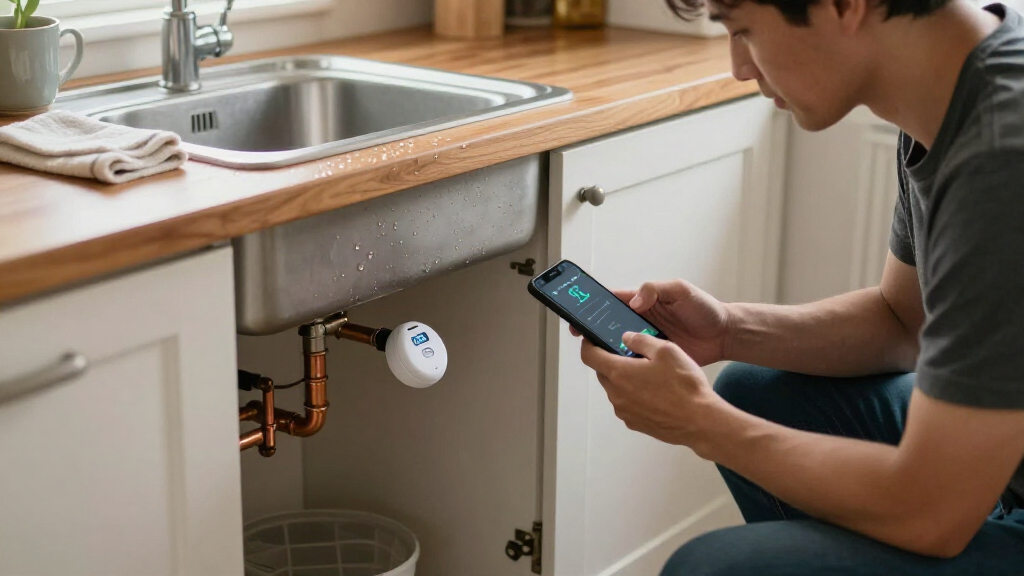
How We Picked
I ranked these detectors by how directly their listed capabilities answer the combined need for water leak detection and temperature alerts. I also weighed the practical reach of each package: a single sensor can suit one vulnerable spot, while multi-sensor kits can cover more locations, and a sensing cable can follow a longer edge or appliance footprint. Connectivity and ecosystem support matter because alerts are only useful if the device fits the buyer’s home network and smart-home setup.
Products with an explicit leak-and-freeze description lead this roundup, followed by options whose included hubs, sensor counts, cable design, or app and smart-home support offer a distinct advantage. Where a listing emphasizes leak detection without clearly naming temperature monitoring, I treat that as a limitation for this specific search rather than assuming a feature is present. I also considered setup complexity and package scope, so a larger bundle ranks well for coverage but does not automatically outrank a simpler detector that more clearly meets both alert needs.
Factors to Consider When Choosing Smart Leak Detector With Temperature Alerts
Before choosing a model, I’d map the places where water and cold create different risks. A basement pipe may need freeze alerts, while a washing machine may need a sensor positioned to catch a shallow leak. These factors help avoid paying for coverage or connectivity that does not fit the job.
Confirm That Temperature Alerts Are Explicit
Leak detection and freeze detection solve related but separate problems, and a product name may mention only one. Check the model’s specifications and app features for a clear temperature threshold or freeze alert function. If the listing only promises water sensing, do not assume it will warn you about a cold room. This matters most in seasonal homes, garages, crawl spaces, and areas with exposed pipes. A detector without temperature alerts can still help near appliances, but it leaves the cold-weather risk uncovered. Match the feature to the hazard you actually need to monitor.
Choose Sensor Placement Before Sensor Count
Count the vulnerable locations in your home before deciding between a single detector and a multi-sensor bundle. Typical candidates include the water heater, washing machine, sink cabinet, sump pump, and pipes near exterior walls. A larger kit helps only if its sensors can be placed where water would reach them early. Point sensors are straightforward for a known low spot, while a sensing cable can cover a longer edge or perimeter. Avoid placing a sensor where routine condensation or cleaning water could trigger nuisance alerts. A simple placement sketch can keep a bundle from leaving the highest-risk area unmonitored.
Check How the Device Reaches Your Phone
Wi-Fi models and hub-based systems can differ in setup, network demands, and how devices communicate around the home. Check whether a gateway is included, whether it needs a particular Wi-Fi band, and whether the sensor depends on that gateway to send notifications. Thick walls, distant utility rooms, and outbuildings can affect reliability, so think about signal paths as well as the router location. A hub adds another device to install, but it can support multiple sensors in one system. Smart-home compatibility also matters if you want alerts alongside other household automations. Choose the connection method that fits your network and the place you need to monitor.
Decide What an Alert Needs to Do
A phone notification is useful when someone can respond quickly, but it may not help if the household is asleep or away from home. Consider whether you also need an audible alarm, shared access for other household members, or an alert route that fits your existing smart-home setup. Check which features work locally and which depend on an internet connection or an app account. If a detector includes a siren, decide whether its location will make the sound audible where people are likely to be. Temperature alerts should be actionable too: a warning is most useful when you know who will check the pipe or room. Plan the response before relying on notifications for damage prevention.
Account for Maintenance and Long-Term Use
Battery-powered sensors need periodic checks, and a forgotten low battery can leave a vulnerable location unmonitored. Before buying, find out how the device reports battery status and what kind of replacement or recharging routine it requires. Cables and sensors placed near appliances can collect dust or get shifted during cleaning, so include them in occasional household checks. Larger systems may mean more batteries and more devices to keep track of, even when they simplify initial coverage. Think about who will maintain the system if you travel or share responsibility for the home. A manageable routine is more useful than a setup that is extensive but easy to neglect.
Frequently Asked Questions
Do all smart leak detectors also send temperature alerts?
No. Some products explicitly combine leak and freeze detection, while others are described mainly as water sensors. I’d check the exact model’s feature list for temperature monitoring and app alerts before buying. This is especially important when the detector will protect pipes in an unheated space. If freeze warnings are central to your choice, prioritize a listing that clearly names them.
Should I choose a multi-sensor kit or start with one detector?
Start with one if you have a single clear risk point and want to learn how the alerts and app fit your routine. A multi-sensor kit makes more sense when you can name several separate locations that need monitoring, such as a water heater and washing machine. Confirm the kit includes any gateway it requires and that each sensor can reach its intended spot. More sensors increase potential coverage, but they also add placement and battery checks. Choose based on the number of real hazards rather than the largest bundle available.
When is a sensing cable more useful than a point sensor?
A cable can be useful when a leak might spread along a longer edge, such as beside an appliance or around equipment in a utility area. A point sensor is often simpler when water will pool in one predictable low spot. Consider where the first water is likely to appear and whether the cable can sit in that path without being disturbed. Also check the cable’s length and whether the detector’s other features meet your needs, including temperature alerts. The right shape of sensor can matter more than adding another point sensor nearby.
Can I rely on app alerts if my home internet goes down?
That depends on the specific detector and its communication design. Check whether it has a local siren and whether notifications require internet access, a hub, or an active app connection. A local alarm may still make noise nearby even when remote alerts cannot reach your phone, but that behavior varies by model. For an unoccupied property, consider what backup response is available if connectivity fails. Do not treat a phone notification as the only warning path without checking its dependencies.
What should I prioritize for a seasonal home with freezing pipes?
Give explicit temperature or freeze alerts priority, then check whether the device can stay connected and send alerts while the home is empty. A sensor near exposed pipes or in a cold utility space may be more useful than one placed only beside an appliance. Confirm how the system reports battery problems and what happens if the Wi-Fi or hub connection drops. Multi-sensor coverage can help when vulnerable pipes are spread across several rooms, provided the kit reaches those locations. Make a response plan so someone can act on a warning before a small issue becomes damage.
Conclusion
Best overall: I’d start with the Resideo L1 for a straightforward combination of Wi-Fi leak and freeze detection. Best value for broad coverage: the YoLink four-sensor kit offers a hub and several sensors in one package; choose the six-sensor version if you have more locations to cover. Best premium fit for Apple households: Eve Water Guard pairs HomeKit support with a long sensing cable, though buyers should confirm temperature alert capability for their needs. Best for beginners: a clearly specified single-sensor Wi-Fi option such as the Kidde or X-Sense can be a sensible starting point, provided the chosen model’s details confirm the temperature feature you need. For hard-to-cover appliance edges, consider the cable design; for several distant risk points, favor a hub kit. My recommendation is to choose first by alert type and placement, then by ecosystem and sensor count.
Evergreen bestsellers Picks
bestsellers
As an affiliate, we earn on qualifying purchases.