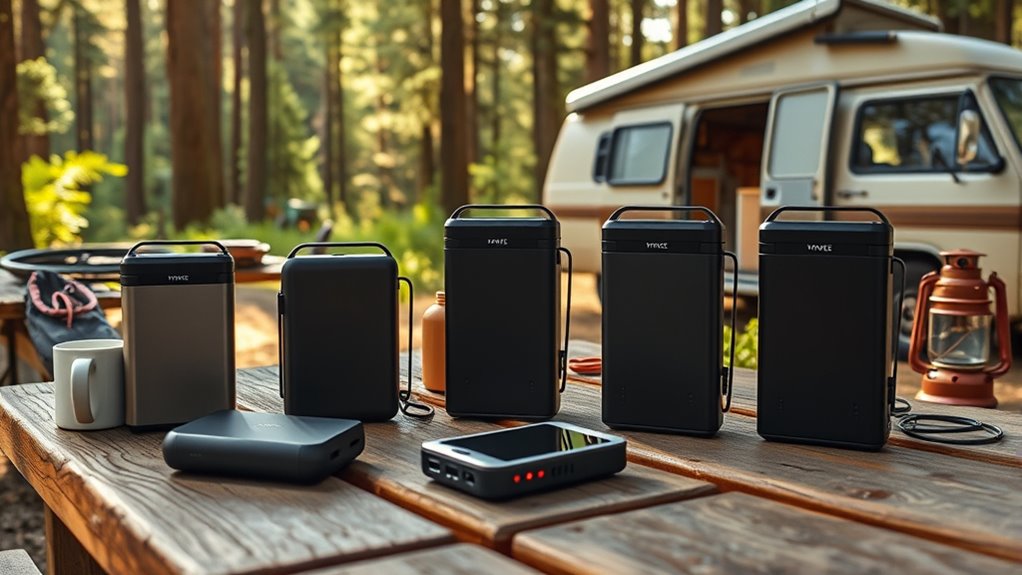

When it comes to car camping, having reliable portable power can transform your outdoor experience. The Librids Portable Power Station stands out for its fast charging and high cycle life, making it a solid choice for longer trips. The Jackery Explorer 1000 v2 offers a high capacity with quick recharge times, ideal for extended stays. Meanwhile, the UDPOWER S1200 combines high wattage with safety features for emergency back-up. Each of these options balances power, portability, and safety, but they also come with specific tradeoffs that influence who they suit best.

Get business pricing on tech for your team
- Business-only prices and quantity discounts
- Tax-exempt purchasing
- Multiple users, one account, clear invoices
Complete the kit


Key Takeaways
- Capacity varies significantly, from lightweight 292Wh models to high-capacity 1070Wh units, affecting run time for devices.
- Weight and portability are key; lighter models excel for frequent mobility, while heavier ones offer more power for extended use.
- Fast recharge times and multiple ports are common, but solar compatibility and included accessories differ among models.
- Battery longevity varies with cycles; LiFePO₄ batteries generally last longer and are safer for repeated use.
- Price and safety certifications influence suitability, especially for outdoor and indoor use.


| portable power stations for car camping | Capacity | Weight |
|---|---|---|
| Librids Portable Power Station | 640Wh | — |
| Jackery Explorer 300 Portable | 292Wh | 7.5 lbs |
| UDPOWER S1200 Portable Power S | — | 25.8 lbs |
| EnginStar Portable Power Stati | 296Wh | 6.5 lbs |
| Jackery Explorer 1000 v2 Porta | 1070Wh | — |
More Details on Our Top Picks
Librids Portable Power Station 640Wh, 1200W Surge, Solar Generator with 4 AC Outlets
The Librids Portable Power Station offers a balanced mix of capacity and safety features, making it ideal for those who need reliable backup power during longer trips. With 640Wh and a 1200W surge capacity, it supports multiple devices simultaneously, including sensitive electronics thanks to its pure sine wave inverter. Compared with smaller models, it provides more sustained power, but it’s limited to indoor or dry environments, which could be a drawback for outdoor use. Its quick 1.5-hour charging makes it convenient, though its size and indoor-only design mean it’s not suited for wet or rugged conditions.
Pros:- Fast charging in 1.5 hours
- Multiple output ports for varied devices
- Long cycle life with 4000+ cycles
- Pure sine wave inverter for sensitive electronics
Cons:- Indoor use only
- Limited to dry environments
- No specific price info
Best for: Campers who prioritize reliable, long-lasting power for indoor use or well-ventilated outdoor setups.
Not ideal for: Those needing compact, lightweight units or outdoor wet conditions.
- Capacity:640Wh
- Surge Power:1200W
- Charging Time:1.5 hours
- Output Ports:4 AC outlets, USB ports
- Battery Type:LiFePO₄
- Battery Cycles:4000+
Our verdict“A dependable choice for indoor/garage setups or dry camping, but less suited for rugged outdoor adventures.”
Jackery Explorer 300 Portable Power Station, 292Wh
The Jackery Explorer 300 is the lightest among these options at just 7.5 pounds, making it a practical choice for quick, short-term camping or outdoor activities. Its 292Wh capacity supports basic charging needs, with multiple outlets including a USB-C PD port—helpful for fast device charging. The LiFePO₄ battery ensures over 4,000 cycles, promising long-term reliability. However, its limited capacity and 300W maximum output mean it’s not suitable for high-demand devices or extended power needs. Solar charging is supported but requires an additional panel purchase.
Pros:- Extremely portable and lightweight
- Multiple charging options
- Long-lasting LiFePO₄ battery
- Supports fast solar charging
Cons:- Solar panel not included
- Limited to 300W output
- Small capacity for extended use
Best for: Car campers who need a portable, multi-device charger for short trips or emergency use.
Not ideal for: Those requiring high power output or running multiple high-demand appliances for extended periods.
- Capacity:292Wh
- Weight:7.5 lbs
- Outlets:2 AC, USB-C, USB-A, car port
- Charge Cycles:Over 4,000
- Charging Time:Approximately 2.8 hours with 100W solar panel
Our verdict“A lightweight, versatile option best suited for quick trips or emergency backup rather than extended camping stays.”
UDPOWER S1200 Portable Power Station 1200W (Surge 1800W), Max 400W Solar Input, UPS, UL2743, for Home RV Emergency, Pure Sine Wave
The UDPOWER S1200 combines high wattage with safety certifications, making it suitable for both emergency backup and outdoor camping. Its 1200W pure sine wave power supports a wide range of devices, and the surge capacity of 1800W offers extra headroom for startup surges. The lithium battery is rated for over 4,000 cycles, promising durability. The unit includes features like a digital display, overload protection, and quiet operation, which make it a reliable choice for those who need dependable power in critical situations. Its weight of 25.8 pounds, however, makes it less convenient for frequent transport.
Pros:- High-capacity 1200W power with surge support
- Durable safety features
- Multiple charging ports including USB-C PD
- Quiet operation
Cons:- Heavy at 25.8 lbs
- Limited to 1200W output
- Higher price point
Best for: Campers who need high power for multiple devices or emergency backup capability, especially in more rugged environments.
Not ideal for: Those prioritizing ultra-lightweight gear or extended off-grid camping with very high wattage demands.
- Wattage:1200W
- Surge Capacity:1800W
- Battery Cycles:Over 4,000
- Input Power:Max 400W solar
- Weight:25.8 lbs
Our verdict“A robust, high-capacity power station ideal for emergency preparedness and high-demand outdoor use, though less portable.”
EnginStar Portable Power Station 300W 296Wh Solar Generator
The EnginStar 300W offers a compact, lightweight design weighing just 6.5 pounds, making it highly portable for quick trips or emergency needs. Its 296Wh capacity supports essential devices, and with 300W AC output, it can handle small appliances or chargers. Multiple charging methods, including solar, wall, and car, add flexibility, though it’s limited in power and capacity. It’s a practical choice for those who prioritize ease of transport over extended power demands, but it may fall short for longer outdoor stays or high-power devices.
Pros:- Extremely portable
- Multiple charging options
- Pure sine wave outlets
- Affordable
Cons:- Limited capacity and wattage
- Solar panel not included
- Not suitable for high power devices
Best for: Casual campers or emergency prep enthusiasts needing lightweight, simple power support.
Not ideal for: Long-term camping or powering high-demand appliances.
- Capacity:296Wh
- Wattage:300W
- Weight:6.5 lbs
- Charging Methods:Solar, wall, car
- Output Ports:Multiple including AC and USB
Our verdict“Ideal for short trips or emergency use where portability and quick setup are more important than extended power capacity.”
Jackery Explorer 1000 v2 Portable Power Station, 1070Wh, 1500W
The Jackery Explorer 1000 v2 offers a substantial 1070Wh capacity and 1500W output, making it suitable for long-term camping, road trips, or backup power for larger devices. Its fast charging feature reduces downtime, and with multiple ports including USB-C PD, it supports diverse device charging. The durable LFP battery promises over 10 years of use, though the unit weighs almost 24 pounds, which could be a concern for frequent transport. It’s especially well-suited for those who require a blend of capacity and reliability, but it comes at a higher price point.
Pros:- High capacity for extended use
- Fast recharge in 1 hour
- Long-lasting battery with 10+ years lifespan
- Multiple ports including USB-C PD
Cons:- Heavy at nearly 24 lbs
- Solar panel not included
- Higher cost
Best for: Campers with high power needs, long trips, or who want a durable, high-capacity unit for versatile device charging.
Not ideal for: Casual campers or those needing ultra-light gear for quick trips.
- Capacity:1070Wh
- AC Output:1500W
- Surge Peak:3000W
- Charge Time:1 hour (fast)
- Battery Type:LFP
Our verdict“A reliable, high-capacity power station suited for serious campers and long-term use, though its weight and price may deter casual users.”
How We Picked
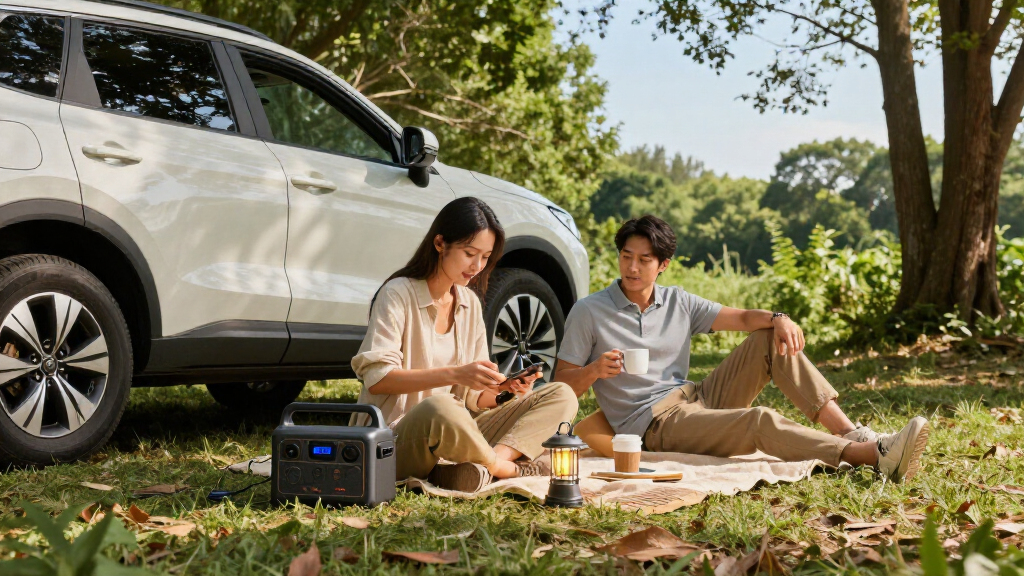
To select these products, I prioritized models designed explicitly for outdoor and car camping, focusing on battery capacity, portability, safety features, and charging versatility. I looked at the quality of batteries—favoring LiFePO₄ for longevity—and considered user-relevant outputs like AC and USB ports. I also balanced performance with tradeoffs such as weight and price, ensuring each pick fills a distinct role for different camping needs. Safety certifications and compatibility with renewable energy sources were additional factors in my evaluations, aiming to recommend options that combine reliability with practicality.
Factors to Consider When Choosing Portable Power Stations For Car Camping
Selecting the right portable power station for car camping hinges on balancing capacity, weight, and features tailored to your trip’s demands. Understanding your power needs, whether for light device charging or running multiple appliances, guides your choice. Additionally, consider portability—lighter units are easier to carry but may lack capacity—and whether you want features like fast solar charging or emergency backup. The right model should match your typical camping duration, device array, and environment.
Assess Your Power Needs
Start by listing essential devices—phones, lights, small appliances—and estimating their power consumption. This helps determine the minimum capacity required. For longer trips or multiple devices, a higher-capacity unit like the Jackery Explorer 1000 v2 could be necessary, whereas short outings might be fine with smaller models like the EnginStar or Jackery Explorer 300.
Weight and Portability
If you plan to move your setup frequently or hike to your campsite, a lightweight model such as the Jackery Explorer 300 or EnginStar will be easier to handle. For stationary use or vehicle-based setups, heavier units like the UDPOWER S1200 or Jackery Explorer 1000 v2 offer more power at the expense of portability.
Charging Options and Speed
Fast recharging via AC or solar can significantly reduce downtime. Models like the Librids and Jackery Explorer 1000 v2 support rapid charging, which is helpful after long days of outdoor activity. Solar compatibility is a bonus, but check if panels are included or need to be purchased separately.
Safety and Durability
Look for certifications like UL2743 and features like overload protection, especially if you plan to run sensitive electronics or high-demand devices. Battery chemistry also matters; LiFePO₄ batteries are safer and last longer, making them preferable for repeated outdoor use.
Frequently Asked Questions
How long can a portable power station run my devices?
The runtime depends on the capacity (Wh) and the power draw of your devices. For example, a 640Wh unit can run a 50W device for around 12 hours, while a 1070Wh model like the Jackery Explorer 1000 could power similar devices for over 20 hours. Always check the wattage ratings of your devices against the station’s output to estimate runtime accurately.
Can I use a portable power station in the rain or wet conditions?
Most power stations are designed for dry environments, and using them in rain or wet conditions can be risky unless they are specifically rated for outdoor weather resistance. The Librids model, for example, is indoor-only, so it should be kept dry at all times. For outdoor use in wet conditions, look for units with an IP rating or weatherproof design.
How many devices can I charge simultaneously?
This varies by model. The UDPOWER S1200 offers multiple AC and USB ports, supporting several devices at once, ideal for group camping. The Jackery Explorer 1000 v2 also provides multiple ports, including USB-C, USB-A, and AC outlets. Always verify the total wattage capacity to avoid overload when connecting multiple devices.
How does solar charging work with these stations?
Most stations support solar input, but the wattage limit varies—some, like the UDPOWER S1200, support up to 400W solar input, enabling faster recharging if you have compatible panels. However, solar panels are usually sold separately. Using solar can extend your off-grid time but depends on sunlight availability and panel compatibility.
Are these power stations safe for sensitive electronics?
Yes, units with pure sine wave inverters, like the Librids and Jackery Explorer models, provide clean power that is safe for sensitive electronics such as laptops and cameras. Safety features like overload protection and certification standards further ensure safe operation, reducing risk of damage during use.
Conclusion
For frequent travelers or those who prioritize lightweight gear, smaller models like the Jackery Explorer 300 or EnginStar are most suitable. If you need high capacity for longer trips or to power larger devices, the Jackery Explorer 1000 v2 or UDPOWER S1200 will meet those needs, though at the cost of added weight. The Librids is best for users who want a reliable indoor or dry environment backup, while the UDPOWER stands out for emergency preparedness. Matching your camping style, device requirements, and environment will help you choose the best power station for your adventures in 2026.
Fall Picks
fall essentials
As an affiliate, we earn on qualifying purchases.