
When the power goes out, a standard electric space heater becomes a paperweight — which is why the real question is whether a propane or kerosene heater rated for indoor use fits your home and your risk tolerance. For most households, the Mr. Heater Portable Buddy (9,000 BTU) is the best overall choice: it hits the sweet spot of output for a single room, carries dual safety shutoffs, and runs on widely available 1-pound propane cylinders. If you need to heat a larger space or a whole floor, the Mr. Heater Big Buddy PRO (18,000 BTU) doubles the output and can run on two cylinders or a bulk tank, while budget-conscious buyers can get genuine indoor-rated warmth from the 2-in-1 Portable Kerosene Heater and Stove, which also lets you cook or boil water mid-outage. The main tradeoffs in this category come down to fuel type (propane burns cleaner but kerosene stores longer and doubles as a cooking fuel), ventilation requirements, and whether built-in oxygen depletion and tip-over sensors are worth paying more for. Read on for the full breakdown, including who each model is for and who should skip it.

Get business pricing on tech for your team
- Business-only prices and quantity discounts
- Tax-exempt purchasing
- Multiple users, one account, clear invoices
Key Takeaways
- The Mr. Heater Portable Buddy (9,000 BTU) earned best overall because its oxygen depletion sensor plus tip-over shutoff pairing, moderate output, and 1-pound cylinder compatibility make it the safest, simplest choice for heating one room during an outage.
- Kerosene models consistently cost less per unit of heat and store fuel indefinitely, but every one of them demands more ventilation discipline and more maintenance than the propane options — a tradeoff that shaped the entire ranking.
- The Little Buddy (3,800 BTU) is the only true personal-space option here; it cannot warm a room, but its pint-size footprint and ultra-low fuel use make it the right emergency pick for apartments, tents, and bathrooms.
- The Comfort Glow KW-24J (23,800 BTU) is the runaway output winner and the only whole-floor option in the lineup, but its size, convection design, and kerosene fueling mean it belongs in houses with space and ventilation, not in tight rooms.
- The 2-in-1 kerosene heater-and-stove models are the only picks that also cook — a genuinely valuable capability in a multi-day outage — but their smaller radiant burners heat less space than the Mr. Heater propane units at similar BTU ratings.
| Mr. Heater Portable Buddy Radiant Propane Heater, 9,000 BTU |  | Best Overall Propane Pick | BTU output: 4,000–9,000 BTU/hr | Heating coverage: Up to 225 sq ft | Fuel: Propane | VIEW ON AMAZON | See Our Full Breakdown |
| Mr. Heater Big Buddy PRO Series Portable Heater, 18,000 BTU |  | Best for Large Rooms | BTU output: 4,000 / 9,000 / 18,000 | Coverage area: Up to 450 sq ft | Fuel: Propane | VIEW ON AMAZON | See Our Full Breakdown |
| Mr. Heater Little Buddy Portable Radiant Propane Heater (3,800 BTU) | 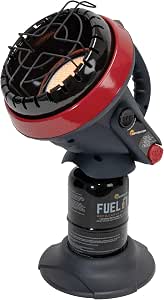 | Best Compact Pick | BTU output: 3,800 BTU/hr | Coverage area: Up to 95 sq ft | Fuel: Propane | VIEW ON AMAZON | See Our Full Breakdown |
| 10,000 BTU Portable Kerosene Heater & Stove for Indoor and Outdoor Use |  | Best Long-Running Kerosene Pick | BTU output: 9,000–10,000 BTU | Coverage area: 200–500 sq ft | Fuel: Kerosene | VIEW ON AMAZON | See Our Full Breakdown |
| 2-in-1 Portable Kerosene Heater and Stove, 9000 BTU, Green |  | Best Portable Kerosene Value | Heat output: 9,000 BTU | Coverage area: 107–161 sq ft | Fuel: Kerosene | VIEW ON AMAZON | See Our Full Breakdown |
| Garvee 9000 BTU Portable Radiant Propane Heater with ODS & Tip-over Protection |  | Best Propane Alternative to the Big Names | Heat Output: 9,000 BTU | Fuel Type: Propane | Heating Method: Radiant, gas-powered | VIEW ON AMAZON | See Our Full Breakdown |
| Comfort Glow Indoor Kerosene Convection Heater, 23,800 BTUs, Grey – KW-24J |  | Best for Whole-Floor Emergency Heating | BTU Output: 23,800 BTUs | Coverage Area: Up to 1,000 sq ft | Fuel Type: Kerosene (no electricity required) | VIEW ON AMAZON | See Our Full Breakdown |
| indoor safe heater for power outage | BTU output | Fuel | Safety features | Coverage area |
|---|---|---|---|---|
| Mr. Heater Portable Buddy Radi | 4,000–9,000 BTU/hr | Propane | Low-oxygen safety system, tip-over switch, thermal shut-down | — |
| Mr. Heater Big Buddy PRO Serie | 4,000 / 9,000 / 18,000 | Propane | — | Up to 450 sq ft |
| Mr. Heater Little Buddy Portab | 3,800 BTU/hr | Propane | Tip-over shut-off, low-oxygen sensor, cross-thread protection | Up to 95 sq ft |
| 10,000 BTU Portable Kerosene H | 9,000–10,000 BTU | Kerosene | Adjustable height, protective safety net, anti-tip base | 200–500 sq ft |
| 2-in-1 Portable Kerosene Heate | — | Kerosene | — | 107–161 sq ft |
| Garvee 9000 BTU Portable Radia | — | — | Oxygen Depletion Sensor (ODS), tip-over protection | — |
| Comfort Glow Indoor Kerosene C | 23,800 BTUs | — | Tip-over emergency shut-off, no-lift burner system | Up to 1,000 sq ft |
More Details on Our Top Picks
Mr. Heater Portable Buddy Radiant Propane Heater, 9,000 BTU
For a power outage, I’d put the Portable Buddy first among these propane options for its balance of room coverage and straightforward controls. Its 4,000–9,000 BTU output is rated for spaces up to 225 square feet, more reach than the Little Buddy, while its one-pound cylinder connection is easier to manage than the Big Buddy’s larger setup. The tradeoff is fuel time: the supplied data lists about 2.4 hours on high per one-pound cylinder, so keeping a safe supply on hand matters. Low-oxygen shutoff, tip-over protection, and thermal shut-down add safeguards, but do not remove the need to follow the manufacturer’s indoor-use directions and ventilation guidance. I’d choose it for a modest room, not as a whole-home solution.
Pros:- Rated to heat spaces up to 225 square feet
- Two heat settings allow a lower-output option
- Low-oxygen, tip-over, and thermal shut-down protections
- Connects to standard one-pound propane cylinders
Cons:- Runtime is about 2.4 hours per one-pound cylinder on high
- Requires a continuing supply of propane cylinders
- Unauthorized accessories can void the warranty and create safety risks
Best for: People who want portable propane heat for a modest room and can store and replace one-pound cylinders safely
Not ideal for: Households seeking long unattended runtime or heat across a large open area; the one-pound cylinder runs briefly on high
- BTU output:4,000–9,000 BTU/hr
- Heating coverage:Up to 225 sq ft
- Fuel:Propane
- Runtime on 1 lb cylinder:5.4 hours on low; 2.4 hours on high
- Safety features:Low-oxygen safety system, tip-over switch, thermal shut-down
- Mounting:Floor mount
- Usage:Indoor and outdoor
Our verdict“Choose the Portable Buddy for adaptable propane heat in a modest room if you can manage its short high-setting runtime.”
Mr. Heater Big Buddy PRO Series Portable Heater, 18,000 BTU
When the outage leaves a large room cold, the Big Buddy PRO has the strongest case in this group: its 18,000 BTU maximum and 450-square-foot stated coverage exceed the Portable Buddy’s reach. Three heat settings make it easier to scale output, and its fan helps move warmth beyond the immediate radiant zone. That broader heating capacity brings a more involved fuel setup. The listing’s longest runtime assumes two 20-pound tanks on low, so this is less convenient than the Little Buddy’s compact one-pound-cylinder format and requires planning for tank storage and connection. The supplied specifications list no safety-feature details, so I would check the manual for approved indoor use, ventilation, and safeguards before relying on it during an outage.
Pros:- Rated to cover spaces up to 450 square feet
- Three heat settings from 4,000 to 18,000 BTU
- Radiant and convection heating with a built-in fan
- Listed runtime of up to 216 hours on low with two 20-pound tanks
Cons:- The extended runtime depends on two large tanks and the low setting
- Requires propane tanks and a more substantial fuel setup
- Supplied product data does not specify safety features
Best for: Households with a large room to heat, space for propane tanks, and a need for multiple output settings
Not ideal for: People who need a lightweight, simple heater for a small room or cannot accommodate larger propane tanks
- BTU output:4,000 / 9,000 / 18,000
- Coverage area:Up to 450 sq ft
- Fuel:Propane
- Listed runtime:Up to 216 hours on low with two 20 lb tanks
- Heating system:Radiant and convection
- Fan:Built-in
- Heat settings:Three
Our verdict“Choose the Big Buddy PRO for a large outage-affected room if you can safely manage its larger propane supply.”
Mr. Heater Little Buddy Portable Radiant Propane Heater (3,800 BTU)
The Little Buddy is the small-space choice: at 3,800 BTU and a stated coverage of up to 95 square feet, it suits a compact area where the Portable Buddy’s greater output may be unnecessary. Its one-button ignition and one-pound cylinder connection keep operation simple, while the tip-over shut-off and low-oxygen sensor are useful safeguards. The small format has a clear cost in autonomy: the product data gives no runtime figure, and the one-pound fuel capacity means more frequent cylinder changes than a larger tank setup. Compared with the Big Buddy PRO, it cannot serve a large room; compared with the Portable Buddy, it gives up heat output and coverage for a smaller footprint. I’d pick it for a small, designated space, after confirming indoor-use instructions.
Pros:- Compact floor stand takes up little space
- One-button ignition
- Tip-over shut-off and low-oxygen sensor
- Uses a standard one-pound propane cylinder
Cons:- Coverage is limited to up to 95 square feet
- Small cylinder capacity calls for frequent changes
- Product data does not provide a runtime figure
Best for: People who need a compact propane heater for a small room or defined area and value simple ignition
Not ideal for: Anyone trying to heat a large room or seeking long operation without cylinder changes
- BTU output:3,800 BTU/hr
- Coverage area:Up to 95 sq ft
- Fuel:Propane
- Cylinder size:1 lb
- Ignition:One-button
- Safety features:Tip-over shut-off, low-oxygen sensor, cross-thread protection
- Mounting:Floor stand
- Usage:Indoor and outdoor
Our verdict“Choose the Little Buddy for a compact space when ease of setup matters more than broad coverage or extended runtime.”
10,000 BTU Portable Kerosene Heater & Stove for Indoor and Outdoor Use
This kerosene model stands apart from the Mr. Heater propane options by running without electricity and offering a 1.4-gallon tank rated for up to 20 hours. That makes it a candidate for longer outage stretches, while the included funnel, siphon pump, gloves, and spare wicks support manual fueling and upkeep. Its stated coverage spans 200–500 square feet, a wide range that makes room fit less certain than the Big Buddy PRO’s 450-square-foot figure. The stove function adds practical value for boiling water or cooking, but the open flame and wick maintenance demand careful handling and attention to the instructions. I’d consider it where fuel-based heat and cooking are useful, but buyers who prefer a simpler cylinder connection may find the Portable Buddy easier to manage.
Pros:- Operates without electricity
- Listed runtime of up to 20 hours per tank
- Can heat and serve as a stove for boiling or cooking
- Includes a funnel, siphon pump, gloves, and extra wicks
Cons:- Requires manual fueling and wick maintenance
- Open-flame operation calls for careful handling
- Coverage range of 200–500 square feet gives limited guidance for a specific room
Best for: People preparing for extended outages who can safely store kerosene and handle manual fueling and wick care
Not ideal for: Buyers who want a low-maintenance heater or are uncomfortable operating an open-flame kerosene appliance indoors
- BTU output:9,000–10,000 BTU
- Coverage area:200–500 sq ft
- Fuel:Kerosene
- Tank capacity:1.4 gallons
- Runtime:Up to 20 hours
- Power requirement:No electricity needed
- Safety features:Adjustable height, protective safety net, anti-tip base
- Included accessories:Funnel, siphon pump, gloves, extra wicks
Our verdict“Choose this kerosene heater for longer off-grid operation and stove use if you are equipped to manage its fueling and open flame safely.”
2-in-1 Portable Kerosene Heater and Stove, 9000 BTU, Green
Among the two kerosene picks, this 9,000 BTU heater and stove is the more compactly specified option: its stated coverage is 107–161 square feet, compared with the other kerosene model’s broader 200–500-square-foot range. Its 4.6-liter tank is listed for 15–17 hours, which can bridge a long stretch without electricity, though it falls short of the other model’s stated 20-hour maximum. A carrying handle and adjustable height make it easier to move or position, and the protective mesh cover adds a physical barrier around the burner. Fuel is not included, and refilling is manual through a large port. I’d choose it for a small space and stove use; for wider coverage or longer stated runtime, the 10,000 BTU kerosene model has the stronger figures.
Pros:- Operates without electricity
- Listed runtime of 15–17 hours
- Combines heating with stove functionality
- Carrying handle, adjustable height, and protective mesh cover
Cons:- Fuel is not included
- Refueling is manual
- Stated coverage tops out at 161 square feet
Best for: People seeking portable kerosene heat and stove functionality for a small area, with time to source fuel and refill manually
Not ideal for: Buyers who need documented coverage beyond 161 square feet or the longest listed kerosene runtime
- Heat output:9,000 BTU
- Coverage area:107–161 sq ft
- Fuel:Kerosene
- Fuel capacity:4.6 L (1.22 gal)
- Runtime:15–17 hours
- Material:Galvanized steel
- Dimensions:12.4 × 13.98–16.14 in
- Usage:Indoor and outdoor
Our verdict“Choose this model for portable kerosene heat and stove use in a small area if its shorter coverage range fits your space.”
Garvee 9000 BTU Portable Radiant Propane Heater with ODS & Tip-over Protection
Buyers comparing this against the Mr. Heater Portable Buddy will find the same core formula: 9,000 BTU of radiant propane heat, an Oxygen Depletion Sensor, and tip-over shutoff for indoor-safe emergency use. Where the Garvee differs is its pedestal-style floor form factor and slightly bulkier footprint, which makes it a bit less glovebox-friendly than the Buddy but a bit more stable on uneven garage or patio surfaces. Compared with the Little Buddy, it delivers well over double the heat, enough to take the edge off a medium room during an outage rather than just warming one person. The tradeoff is weight — at 10.2 pounds, it is noticeably heavier than comparable radiant units, and like all propane heaters it depends entirely on having stocked 1 lb propane cylinders before the storm hits. This pick makes the most sense for shoppers who want Buddy-class output and safety at a different price point.
Pros:- Oxygen Depletion Sensor automatically shuts the unit down if indoor oxygen drops, enabling safe emergency use
- Tip-over protection cuts the flame immediately if knocked over
- 9,000 BTU output matches the Portable Buddy for heating medium rooms during outages
- Works both indoors and outdoors, doubling as a patio or garage heater year-round
Cons:- Depends on a propane cylinder supply you must buy and store before an outage
- At 10.2 pounds, it is one of the heaviest portable radiant units in its class
Best for: Households prepping for outages who want Buddy-level 9,000 BTU heat with ODS safety but prefer an alternative brand or pedestal-style stability on floors
Not ideal for: Anyone wanting a grab-and-go cabin or tent heater — at 10.2 pounds with a pedestal footprint, it is heavier and less packable than the Little Buddy or Buddy units
- Heat Output:9,000 BTU
- Fuel Type:Propane
- Heating Method:Radiant, gas-powered
- Safety Features:Oxygen Depletion Sensor (ODS), tip-over protection
- Indoor/Outdoor Use:Indoor and outdoor
- Dimensions:14.17″D x 13.39″W x 8.46″H
- Weight:10.2 lbs
Our verdict“A solid Buddy-style alternative for outage prep, best for buyers who prioritize indoor-safe propane heat over ultralight portability.”
Comfort Glow Indoor Kerosene Convection Heater, 23,800 BTUs, Grey – KW-24J
This is the heavy hitter of the lineup. While propane options like the Mr. Heater Big Buddy PRO top out around 18,000 BTU with limited runtime per cylinder, the Comfort Glow’s 23,800 BTU output and 1.9-gallon tank deliver up to 12 hours of continuous heat across roughly 1,000 square feet — enough to keep an entire main floor livable through a long outage. Because it runs entirely on kerosene with battery ignition, it needs no grid power or propane cylinder swaps, which is the key argument for it over every propane pick here. The tradeoffs are real: kerosene must be purchased, stored safely, and refilled; the burner produces some odor compared with propane radiant heat; and ventilation is required. Compared with the 10,000 BTU kerosene heater in this guide, the KW-24J trades compactness for far more coverage and runtime, plus UL Listing and a no-lift burner that reduces fumes.
Pros:- 23,800 BTU convection heat covers up to 1,000 sq ft, far beyond any propane heater in this guide
- Up to 12 hours of runtime on one 1.9-gallon tank — no cylinder swapping mid-outage
- Fully electricity-free operation with battery-powered ignition
- UL Listed with tip-over emergency shut-off and a no-lift burner system that reduces odor
Cons:- Requires buying, storing, and refilling kerosene, which is messier than propane cylinders
- Produces combustion fumes that demand window or door ventilation during use
- Battery ignition adds a maintenance item you must check before an emergency
Best for: Rural homeowners or families in outage-prone regions who need to heat a large open floor plan for hours without electricity or repeated fuel swaps
Not ideal for: Apartment dwellers or anyone sensitive to fuel odors or unable to store kerosene — smaller propane options like the Portable Buddy are cleaner and simpler indoors
- BTU Output:23,800 BTUs
- Coverage Area:Up to 1,000 sq ft
- Fuel Type:Kerosene (no electricity required)
- Fuel Capacity:1.9 gallons
- Runtime:Up to 12 hours per tank
- Ignition:Battery-powered
- Safety Features:Tip-over emergency shut-off, no-lift burner system
- Certification:UL Listed
- Warranty:2 years
Our verdict“The strongest choice here for keeping a whole house habitable through a multi-hour outage, provided you accept kerosene’s fuel-handling and ventilation demands.”

How We Picked
Because every product here is meant to run inside a home with the power off, I weighted safety systems above raw heating power. Models with an oxygen depletion sensor (ODS) and a tip-over or flame-failure shutoff ranked higher than those without, because during an outage you may be sleeping, distracted, or caring for kids while the heater runs. Heat output came next: a heater that is too small leaves you cold, but one that is oversized for a sealed room pushes ventilation requirements past what most people realistically manage.
From there I compared fuel practicality — how easy the fuel is to buy, store, and carry during an emergency — along with runtime per fuel load, portability, build quality, and how much maintenance each design demands after sitting idle for months. Propane units generally won on cleanliness and turnkey operation; kerosene units won on heating cost and cookability, and that tension drove the final order. Finally, I favored models whose output matches realistic outage scenarios (one to two rooms for a day or two) over maximum-BTU monsters that only make sense for specific situations.
| indoor safe heater for power outage | Fuel | Safety features |
|---|---|---|
| Mr. Heater Portable Buddy Radi | Propane | Low-oxygen safety system, tip-over switch, thermal shut-down |
| Mr. Heater Big Buddy PRO Serie | Propane | — |
| Mr. Heater Little Buddy Portab | Propane | Tip-over shut-off, low-oxygen sensor, cross-thread protection |
| 10,000 BTU Portable Kerosene H | Kerosene | Adjustable height, protective safety net, anti-tip base |
| 2-in-1 Portable Kerosene Heate | Kerosene | — |
| Garvee 9000 BTU Portable Radia | — | Oxygen Depletion Sensor (ODS), tip-over protection |
| Comfort Glow Indoor Kerosene C | — | Tip-over emergency shut-off, no-lift burner system |
Factors to Consider When Choosing Indoor Safe Heater For Power Outage
Choosing an indoor-safe heater for outages is less about finding the most powerful unit and more about matching the heater to your space, your fuel storage situation, and how honestly you will manage ventilation at 2 a.m. These are the factors that actually separate a good emergency heating plan from a dangerous one.Match BTUs to Room Size — Not to Your Worst Fears
The most common mistake in this category is buying maximum output for a minimum-size room. As a rough rule, 5,000 BTU suits a small bedroom, 9,000–10,000 BTU handles a living room, and 18,000+ BTU is whole-floor territory — assuming average insulation. Oversizing backfires twice: the heater forces you to open windows more for ventilation (dumping the heat you paid for), and radiant models at high settings create intense hot zones directly in front of the unit while the rest of the room stays cool. If your outage plan centers on the family gathering in one room, which is how most people actually ride out a storm, a mid-output heater does the job better than a big one cycling between scorching and off. Measure your realistic shelter room before you shop, not your whole house.
Safety Shutoffs Are Non-Negotiable
An indoor-rated heater without an oxygen depletion sensor and tip-over shutoff is asking for trouble in exactly the scenario you are buying it for — dark rooms, cluttered floors, sleeping occupants. The ODS measures ambient oxygen and extinguishes the flame before levels become dangerous, while tip-over protection matters because emergency setups often mean heaters on improvised surfaces near blankets and pets. This is the single biggest quality divide in this lineup: the Mr. Heater propane units and the Garvee carry these systems as standard, while basic kerosene stoves rely entirely on you placing and watching them correctly. If you have children, elderly family members, or pets, I would treat these sensors as a hard requirement rather than a nice-to-have. No heater feature matters if the unit itself creates the emergency.
Propane vs. Kerosene: The Fuel Decision That Shapes Everything
Propane burns cleaner, lights instantly with a push-button igniter, and 1-pound cylinders are available at nearly every hardware and grocery store — but cylinders cost more per hour of heat and you should not store large quantities indoors. Kerosene is cheaper per BTU, stores for years in proper containers, and powers the dual heater-stove models that let you cook during an outage, but it requires wick maintenance, produces a faint odor at lighting and shutdown, and demands more careful ventilation. Kerosene rewards prepared households; propane rewards households that want grab-and-go simplicity. Also factor in your region: after a major storm, the first fuel to sell out is usually whatever your neighbors use most, so having a heater that matches locally available fuel is a real advantage.
Ventilation Requirements You Can Actually Live With
Every fuel-burning indoor heater requires some fresh-air exchange, and manufacturers’ guidance typically means cracking a window an inch or so in the room being heated. The mistake to avoid is treating this as optional or as a one-time setup — a sealed modern home with a heater running for hours genuinely depletes oxygen and accumulates combustion byproducts. Plan your ventilation before the outage, not during it: decide which window gets cracked, who checks on it, and never run a fuel heater in a bedroom while everyone sleeps unless the model’s ODS is functioning and the window arrangement is proven. Kerosene convection heaters like the Comfort Glow move more air and thus more exhaust, so they need proportionally more airflow than a small radiant propane unit. If your shelter room has no operable window, none of these products are appropriate for it.
Runtime, Fuel Storage, and the Multi-Day Outage Math
A heater’s runtime per fuel load determines whether you stay warm for one night or three days on what you have on the shelf. Small radiant propane units sip fuel — the Little Buddy can run most of a day on a single 1-pound cylinder at its low setting — while 18,000 BTU models on high can drain two cylinders overnight. Calculate your expected runtime before buying, then buy fuel for twice your worst-case outage, because post-storm fuel runs are exactly when supply disappears. Kerosene wins the storage argument decisively: sealed kerosene stays usable for years, while propane cylinders are safe to store long-term but bulk quantities raise placement and safety questions in smaller homes. If your area routinely loses power for a week, favor the heater whose fuel you can stockpile cheaply and rotate easily.
Don’t Overlook Maintenance and Idle Reliability
An emergency heater that sits unused for eleven months has to work on the first try, and that is where design differences bite. Propane units with piezo igniters and no wicks are nearly maintenance-free — the main risk is a dead igniter, so keep matches stored with the unit. Kerosene heaters need their wicks inspected, trimmed, and eventually replaced, and old or contaminated kerosene causes hard starts and excess odor exactly when you cannot afford them. Run any emergency heater at least once or twice a year under calm conditions so problems surface before the storm does. Also check the details that fail quietly: heater safety grilles, hose connections on bulk-tank adapters, and whether replacement wicks and parts are easy to find for your specific model. Reliability after long storage is the true test of an emergency product, not features on the box.
Frequently Asked Questions
Are propane heaters actually safe to use indoors during a power outage?
The models in this roundup that are explicitly rated for indoor use — the Mr. Heater Buddy series and the Garvee — are designed for it, but ‘indoor safe’ is conditional, not absolute. Their oxygen depletion sensors shut the flame off automatically if room oxygen drops, and tip-over protection handles the physical accident scenario. You still need to crack a window for fresh air, keep the heater at least a couple of feet from fabrics and walls, and never run one in a fully sealed room or while everyone sleeps without monitoring. What makes a heater unsafe indoors is using an outdoor-only unit (like a patio heater or torch burner) inside, which lacks the ODS entirely. If you follow the placement and ventilation guidance, the indoor-rated propane models here are engineered specifically for this use case.
Kerosene or propane: which fuel is better for a power outage?
It depends on how you prepare. Propane is cleaner, lights instantly, and requires zero maintenance, which is why it dominates the top of my ranking for typical households — but 1-pound cylinders are expensive per hour of heat and stores sell out fast before storms. Kerosene costs less per BTU, stores for years without degrading, and powers heater-stove hybrids that let you boil water or cook when the power is out. Its downsides are wick maintenance, startup and shutdown odor, and less forgiving ventilation needs. If you are a preparedness-minded buyer willing to maintain the unit and stock fuel properly, kerosene is arguably the better long-game choice. If you want something you stash in a closet and trust to work instantly years later, propane wins.
Can I heat my whole house with one of these heaters?
Realistically, no — and trying to is the wrong plan. Even the biggest option here, the Comfort Glow KW-24J at 23,800 BTU, is designed to warm an open floor area or large room, not push heat through closed doors and hallways into bedrooms. The proven outage strategy is to designate one shelter room, gather the household there, and size the heater to that space — a 9,000 BTU unit does this well for a typical living room. Spreading heat through a whole house means opening interior doors, which drops the temperature everywhere and overwhelms the heater. A better investment than a bigger heater is insulating your shelter room: close it off, block drafts, and add blankets to windows. If whole-house backup heat is genuinely your goal, you are shopping for a generator or vented wall heater, not a portable emergency unit.
Is the Little Buddy’s 3,800 BTU output enough for anything useful?
It is, as long as you calibrate expectations to what it is: a personal radiant heater, not a room heater. At 3,800 BTU the Little Buddy will take the painful edge off a small sealed room — a bathroom, a bedroom corner, a tent — for one or two people sitting within a few feet of it. It will not raise a living room to comfortable temperatures the way the 9,000 BTU Portable Buddy will, and it is not trying to. What it offers instead is exceptional fuel economy, a tiny footprint, and the lowest barrier to safe use of anything in this lineup, which makes it a smart addition rather than a substitute. Many households actually pair the two: a bigger unit for the main shelter room and a Little Buddy for the bathroom or for one person working at a desk.
Do I need to crack a window even with an oxygen depletion sensor?
Yes. The ODS is a last-resort shutoff, not a substitute for fresh air — it reacts when oxygen has already dropped to a level where you want the flame out, and relying on it as your primary safety measure means your plan is ‘the heater saves me at the threshold.’ Manufacturers of every indoor-rated model here specify a minimum ventilation opening, typically a window cracked an inch or so in the heated space. Doing this costs you a little heat, but it also removes the combustion byproducts — including moisture and trace gases — that build up in a sealed modern home. Think of ventilation as part of the operating procedure, and the ODS as the airbag: you want both, and you only want the second one to activate if something has already gone wrong.
Conclusion
The right choice here comes down to your space and your fuel strategy. For best overall, the Mr. Heater Portable Buddy (9,000 BTU) is the pick I would point most households toward — its safety sensor pairing, manageable output, and easy 1-pound cylinder fueling make it the most reliable single-room outage heater in the lineup. For best premium, the Mr. Heater Big Buddy PRO (18,000 BTU) earns its spot with double the output and flexible fueling on two cylinders or a bulk tank — the right call for open floor plans or families sheltering in one large room. For best value, the 2-in-1 Kerosene Heater and Stove (9,000 BTU, Green) delivers genuine emergency heat plus cooking capability at the lowest operating cost of the group, as long as you accept the ventilation and maintenance obligations of kerosene.
For beginners and minimalists, the Mr. Heater Little Buddy is the gentlest entry point — simplest to operate, cheapest to fuel, and nearly impossible to misuse, though only for personal-space warmth. For specific needs: the Comfort Glow KW-24J is the choice for large open areas and long kerosene-based outages, the 10,000 BTU Kerosene Heater & Stove suits buyers who want a step up in cooking capability from the green 2-in-1, and the Garvee 9,000 BTU is a sensible lower-cost alternative to the Portable Buddy if ODS and tip-over protection are your must-haves and you are flexible on brand. Whatever you pick, buy the fuel now, test the heater before storm season, and plan your ventilation — the best emergency heater is the one that works the first time you actually need it.