For a high-end home espresso setup that balances control and convenience, I’d start with the Breville Barista Pro as my best overall pick: its built-in grinder and faster workflow suit regular espresso making without stepping up to a dual-boiler machine. The De’Longhi Dinamica Plus stands out for one-touch drinks, while the Rancilio Silvia Pro X is a stronger fit for experienced users who want more temperature and shot control. The main tradeoff is between hands-on preparation and convenience, with grinder integration, milk steaming, and counter space shaping the choice. Read on for how all 14 machines compare and which type of buyer each one suits.

Get business pricing on tech for your team
- Business-only prices and quantity discounts
- Tax-exempt purchasing
- Multiple users, one account, clear invoices
Complete the kit


Key Takeaways
- The Barista Pro is the strongest all-rounder in this lineup for buyers who want an integrated grinder and hands-on espresso workflow without a separate grinder purchase.
- Automatic convenience and espresso customization point to different machines: the Dinamica Plus and Accademia simplify drink preparation, while the Silvia Pro X favors control and skill.
- Compact machines can still make sense in a high-end shortlist: the Bambino and Bambino Plus save counter space, but they require a separate grinder for a complete espresso setup.
- The most versatile machines trade specialization for range: the Ninja Luxe Café combines espresso with drip coffee and cold brew, but buyers focused on espresso alone may prefer a dedicated machine.
- Choosing a machine by boiler capacity alone misses the daily-use tradeoff: grinder workflow, milk preparation, cleaning demands, and how many drinks are made back-to-back matter just as much.
| Breville Barista Express Espresso Machine, Black Truffle |  | Best Overall for Hands-On Home Baristas | Model: BES870BTR | Operation: Semi-automatic | Grinder: Integrated precision conical burr grinder | VIEW ON AMAZON | See Our Full Breakdown |
| De’Longhi La Specialista Arte Evo Espresso Machine with Coffee Grinder |  | Best for Cold-Brew Variety | Operation: Semi-automatic | Grinder: Built-in conical burr grinder with 15 settings | Beverage presets: Espresso, Americano, cold brew, and hot water | VIEW ON AMAZON | See Our Full Breakdown |
| De’Longhi Dinamica Plus Fully Automatic Espresso Machine |  | Best for One-Touch Convenience | Operation: Fully automatic | Drink recipes: 24+ | Grinder: Built-in conical burr grinder with 13 settings | VIEW ON AMAZON | See Our Full Breakdown |
| Breville Barista Touch Espresso Machine, Brushed Stainless Steel (BES880BSS) |  | Best Premium Guided Workflow | Model: BES880BSS | Operation: Fully automatic | Grinder: Integrated precision conical burr grinder | VIEW ON AMAZON | See Our Full Breakdown |
| Breville Barista Pro Espresso Machine with Grinder, Brushed Stainless Steel |  | Best for Fast Manual Espresso | Model: BES878BSS | Operation: Manual espresso machine | Grinder: Integrated precision conical burr grinder | VIEW ON AMAZON | See Our Full Breakdown |
| Breville BES840XL Infuser Espresso Machine, Brushed Stainless Steel |  | Best for Temperature Control Without an Integrated Grinder | Model: BES840XL | Operation: Manual | Wattage: 1650 W listed in specifications | VIEW ON AMAZON | See Our Full Breakdown |
| Gaggia Classic Evo Pro Espresso Machine, Brushed Stainless Steel | 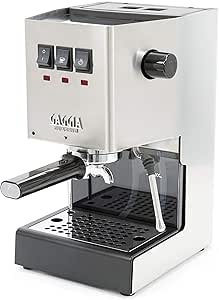 | Best for a Traditional, Repairable Setup | Model: RI9380/46 | Operation: Semi-automatic | Extraction pressure: 9 bar | VIEW ON AMAZON | See Our Full Breakdown |
| Ninja Luxe Café Premier 3-in-1 Espresso Machine, Drip Coffee Maker, and Cold Brew System |  | Best for Multi-Style Coffee Convenience | Coffee styles: 2 espresso, 3 drip coffee, and 2 cold brew styles | Operation: Fully automatic | Grinder: Built-in conical burr grinder with 25 settings | VIEW ON AMAZON | See Our Full Breakdown |
| Breville Barista Express Impress Espresso Machine, Brushed Stainless Steel |  | Best for Assisted Grinding and Tamping | Machine type: Semi-automatic espresso machine | Grinder: Integrated conical burr grinder with 25 settings | Water tank: 2 L | VIEW ON AMAZON | See Our Full Breakdown |
| Gaggia Accademia Fully Automatic Espresso Machine, Brushed Stainless Steel |  | Best for Customizable Automated Drinks | Model: RI9781/46 | Machine type: Super-automatic espresso machine | Beverage settings: 19 customizable settings | VIEW ON AMAZON | See Our Full Breakdown |
| Gemilai Owl G3006 Semi-Automatic Espresso Machine with Steam Wand, Ivory White |  | Best for Hands-On Brewing Control | Machine type: Semi-automatic espresso machine | Pump pressure: 15 bar | Power: 1500 W | VIEW ON AMAZON | See Our Full Breakdown |
| Breville Bambino Plus Semi-Automatic Espresso Machine, Brushed Stainless Steel |  | Best for Beginner-Friendly Milk Drinks | Model: BES500BSS | Operation mode: Semi-automatic | Heating system: ThermoJet | VIEW ON AMAZON | See Our Full Breakdown |
| Breville Bambino Espresso Machine, Brushed Stainless Steel |  | Best Compact Entry Point | Type: Semi-automatic espresso machine | Heating system: ThermoJet; reaches extraction temperature in 3 seconds | Temperature control: Digital PID | VIEW ON AMAZON | See Our Full Breakdown |
| Rancilio Silvia Pro X Espresso Machine |  | Best for Serious Home Baristas | Type: Semi-automatic espresso machine | Boiler capacity: 1-liter steam boiler and 300-milliliter brew boiler | Water tank capacity: 2 liters | VIEW ON AMAZON | See Our Full Breakdown |
| highend espresso machines under | Dimensions | Weight | Operation | Model |
|---|---|---|---|---|
| Breville Barista Express Espre | 13.8 × 12.5 × 15.9 in (D × W × H) | 22.1 lb | Semi-automatic | BES870BTR |
| De’Longhi La Specialista Arte | 14.4 × 11.2 × 15.9 in (D × W × H) | 25.8 lb | Semi-automatic | — |
| De’Longhi Dinamica Plus Fully | 16.9 × 9.3 × 13.7 in | 21.7 lb | Fully automatic | — |
| Breville Barista Touch Espress | 12.7 × 15.5 × 16 in (D × W × H) | — | Fully automatic | BES880BSS |
| Breville Barista Pro Espresso | 13 × 14 × 16 in (D × W × H) | 19.5 lb | Manual espresso machine | BES878BSS |
| Breville BES840XL Infuser Espr | 10.12 × 12.28 × 13.15 in | 17.4 lb | Manual | BES840XL |
| Gaggia Classic Evo Pro Espress | 8 × 9.5 × 14.2 in (D × W × H) | 20 lb | Semi-automatic | RI9380/46 |
| Ninja Luxe Café Premier 3-in-1 | 12.99 × 13.39 × 14.57 in (D × W × H) | — | Fully automatic | — |
| Breville Barista Express Impre | 12.5 × 14.5 × 16.5 in (D × W × H) | 23.7 lb | — | — |
| Gaggia Accademia Fully Automat | 16.5 × 11.1 × 15.2 in | 13.8 kg | — | RI9781/46 |
| Gemilai Owl G3006 Semi-Automat | 14.57 × 9.23 × 15.47 in (D × W × H) | — | — | — |
| Breville Bambino Plus Semi-Aut | 7.6 × 12.5 × 12.2 in (D × W × H) | — | — | BES500BSS |
| Breville Bambino Espresso Mach | 13.7 × 6.3 × 12 in | 10.9 lb | — | — |
| Rancilio Silvia Pro X Espresso | 16.5 × 10 × 15.2 in (D × W × H) | — | — | — |
More Details on Our Top Picks
Breville Barista Express Espresso Machine, Black Truffle
The Barista Express earns my all-around pick by combining an integrated grinder with the controls that make espresso preparation engaging rather than fully automated. Its low-pressure pre-infusion and PID temperature control support more consistent extraction, while the manual steam wand lets you shape milk for cappuccinos and latte art. Compared with the Barista Touch, it asks more of you at the grinder and steam wand, but it offers a more direct, hands-on routine without relying on a touchscreen. The tradeoff is time and practice: dialing in beans and texturing milk are part of the job, not steps the machine handles for you. Its 67-ounce tank also suits regular home use, though the 15.9-inch height calls for checking counter clearance.
Pros:- Integrated conical burr grinder delivers fresh grounds directly into the portafilter
- PID temperature control and low-pressure pre-infusion support controlled extraction
- Manual steam wand allows hands-on milk texture adjustment
- Includes portafilter, filter baskets, tamper, milk jug, and cleaning accessories
Cons:- Manual milk steaming takes practice and adds work to each milk drink
- The semi-automatic process requires hands-on grinding, dosing, and extraction
- Its 15.9-inch height may be awkward beneath low kitchen cabinets
Best for: Home espresso drinkers who want a built-in grinder and are willing to learn manual dosing, extraction, and milk texturing.
Not ideal for: Buyers who want one-touch milk drinks or a guided touchscreen workflow; the Barista Touch or Dinamica Plus is better suited to that routine.
- Model:BES870BTR
- Operation:Semi-automatic
- Grinder:Integrated precision conical burr grinder
- Water tank:67 fl oz
- Bean hopper:1/2 lb
- Power:1600 watts
- Dimensions:13.8 × 12.5 × 15.9 in (D × W × H)
- Weight:22.1 lb
Our verdict“Choose the Barista Express if you want an integrated grinder and meaningful manual control, and skip it if convenience matters more than learning the barista routine.”
De’Longhi La Specialista Arte Evo Espresso Machine with Coffee Grinder
The La Specialista Arte Evo is the most versatile choice here for someone who wants espresso and a quick cold coffee option from the same counter appliance. Its 15-setting grinder gives more adjustment points than the Dinamica Plus’s 13 settings, and cold extraction produces a cold-brew-style drink in under five minutes. That speed is useful for changing drink preferences without adding a separate brewer. Unlike the Barista Express, it also includes presets for espresso, Americano, cold brew, and hot water; it still requires hands-on preparation, though, so presets do not make it a one-touch fully automatic machine. The steam wand offers control for milk drinks, but users seeking effortless frothing should look at the Dinamica Plus or Barista Touch. At 25.8 pounds, it is also a less convenient machine to move.
Pros:- Built-in conical burr grinder has 15 settings
- Cold extraction makes a cold-brew-style drink in under five minutes
- Four presets cover espresso, Americano, cold brew, and hot water
- Steam wand supports microfoam for milk drinks
Cons:- Semi-automatic preparation still requires hands-on dosing and brewing
- Manual milk steaming takes practice
- At 25.8 pounds, it is cumbersome to move
Best for: Households that make both espresso and cold coffee and want grinder adjustments plus milk-steaming control.
Not ideal for: Buyers who want automatic drink preparation, minimal cleanup, or a machine they can easily move between counters.
- Operation:Semi-automatic
- Grinder:Built-in conical burr grinder with 15 settings
- Beverage presets:Espresso, Americano, cold brew, and hot water
- Cold extraction time:Under 5 minutes
- Pump pressure:15 bar
- Temperature settings:3
- Water tank:56 fl oz
- Dimensions:14.4 × 11.2 × 15.9 in (D × W × H)
- Weight:25.8 lb
Our verdict“Pick the La Specialista Arte Evo if cold-brew-style drinks and hands-on espresso both matter, but choose the Dinamica Plus for one-touch convenience.”
De’Longhi Dinamica Plus Fully Automatic Espresso Machine
For buyers who want a broad café-style menu without manually dosing or steaming milk, the Dinamica Plus is the clear convenience pick. It prepares 24-plus drinks, including iced coffee, and its automatic LatteCrema system offers three foam settings. Up to four user profiles let different household members save preferences, a feature that sets it apart from the more hands-on Barista Express. The tradeoff is less direct control over the espresso-making routine: this machine prioritizes repeatable, automated drinks over the tactile work of a portafilter and manual steam wand. Its 13-setting grinder provides adjustment, but fewer settings than the La Specialista Arte Evo’s 15. The stated 16.9-inch depth also deserves a countertop check, and the built-in grinder means whole beans are required.
Pros:- Prepares more than 24 one-touch or customizable drinks
- Automatic milk frothing offers three foam settings
- Up to four profiles can retain household drink preferences
- Dishwasher-safe parts simplify cleanup
Cons:- Automated workflow offers less hands-on control than the Barista Express
- Requires whole-bean coffee for its built-in grinder
- Its 16.9-inch depth can take substantial counter space
Best for: Busy households that want varied one-touch espresso and milk drinks, saved preferences for multiple users, and simplified cleanup.
Not ideal for: Espresso hobbyists who want hands-on control of dosing and milk texture, or buyers who prefer using pre-ground coffee.
- Operation:Fully automatic
- Drink recipes:24+
- Grinder:Built-in conical burr grinder with 13 settings
- Milk frothing:Automatic LatteCrema system with 3 settings
- User profiles:Up to 4
- Display:3.5-inch TFT touchscreen
- Dimensions:16.9 × 9.3 × 13.7 in
- Weight:21.7 lb
Our verdict“Choose the Dinamica Plus for a varied, personalized one-touch menu, not for the manual espresso practice offered by the Barista Express.”
Breville Barista Touch Espresso Machine, Brushed Stainless Steel (BES880BSS)
The Barista Touch is the premium choice for people who want a guided espresso process with less manual milk work. Its touchscreen supports five pre-programmed drinks and up to eight custom settings, while the automatic steam wand adjusts milk temperature and texture. The ThermoJet system reaches extraction temperature in three seconds, so making a quick drink does not require a long warm-up. Compared with the Barista Pro, which uses an LCD to show grinding and extraction progress, the Touch puts more of the drink selection and milk preparation into an automated interface. That convenience comes with less hands-on control of steaming, and it still requires whole beans and portafilter preparation. Its 16-inch height may limit placement under cabinets, so buyers should check clearance before choosing it.
Pros:- Touchscreen stores up to eight custom settings alongside five pre-programmed favorites
- Automatic steam wand adjusts milk temperature and texture
- ThermoJet reaches extraction temperature in three seconds
- PID control and low-pressure pre-infusion support controlled extraction
Cons:- Whole beans are needed for the integrated grinder
- Automatic milk preparation gives less direct steaming control than the Barista Pro
- The 16-inch height may not fit beneath low cabinets
Best for: Buyers who want an integrated grinder, guided touchscreen drink setup, and automatic milk texturing without moving to a fully automatic bean-to-cup machine.
Not ideal for: Manual espresso purists or kitchens with low overhead clearance; the Barista Pro offers a more manual workflow, while the Touch stands 16 inches tall.
- Model:BES880BSS
- Operation:Fully automatic
- Grinder:Integrated precision conical burr grinder
- Heating system:ThermoJet; 3-second heat-up
- Custom settings:Up to 8
- Pre-programmed favorites:5
- Bean hopper:1/2 lb
- Water tank:67 oz
- Dimensions:12.7 × 15.5 × 16 in (D × W × H)
Our verdict“Choose the Barista Touch if guided setup and automatic milk texturing are worth more to you than the Barista Pro’s more manual approach.”
Breville Barista Pro Espresso Machine with Grinder, Brushed Stainless Steel
The Barista Pro suits buyers who want to keep espresso preparation manual but reduce waiting between steps. Its ThermoJet heating system reaches temperature in three seconds, and the LCD shows grinding and extraction progress, giving a clearer workflow than the Barista Express’s less guided setup. PID control, specified at ±2°C, supports temperature consistency, while the integrated grinder handles fresh dosing at the machine. Unlike the Barista Touch, it leaves milk texturing to you, which means more control but also more practice for cappuccinos and latte art. That hands-on process is a real tradeoff, not a shortcut to one-touch drinks. The 67-ounce tank and half-pound hopper support routine home use, but this machine still requires portafilter preparation and a 120-volt outlet.
Pros:- ThermoJet system reaches extraction temperature in three seconds
- PID temperature control is specified at ±2°C
- LCD displays grinding and extraction progress
- Integrated conical burr grinder doses coffee on demand
Cons:- Manual extraction and milk steaming require practice
- Does not provide the Barista Touch’s automatic milk texturing
- Requires a 120-volt power supply
Best for: Home baristas who want a quick warm-up, visible grinding and extraction guidance, and manual control over espresso and milk.
Not ideal for: People seeking one-touch drinks or automatic milk frothing; the Barista Touch or Dinamica Plus better fits a low-effort routine.
- Model:BES878BSS
- Operation:Manual espresso machine
- Grinder:Integrated precision conical burr grinder
- Heating system:ThermoJet; 3-second heat-up
- Temperature control:PID, ±2°C
- Bean hopper:1/2 lb
- Water tank:67 oz (2 liters)
- Dimensions:13 × 14 × 16 in (D × W × H)
- Weight:19.5 lb
Our verdict“Choose the Barista Pro if you want a fast-starting, guided manual workflow, and choose the Barista Touch if automatic milk preparation is a priority.”
Breville BES840XL Infuser Espresso Machine, Brushed Stainless Steel
The Infuser makes sense for buyers who want hands-on espresso with help where it matters most: low-pressure pre-infusion wets the coffee gradually, while adjustable PID temperature control lets you tune extraction in small increments. Compared with the Gaggia Classic Evo Pro, it offers more built-in brewing adjustments and volumetric shot controls, but the Gaggia has a 58 mm commercial-style portafilter that may appeal to buyers building around standard café accessories. The Infuser’s steam wand handles milk drinks, and its larger listed tank capacity helps limit refills. The tradeoff is that it has no built-in grinder, so you’ll need a separate grinder and some practice to get repeatable shots. I’d rank it for control and approachable adjustment, not for all-in-one convenience.
Pros:- Low-pressure pre-infusion supports more even extraction.
- PID temperature can be adjusted in 2°F increments.
- Volumetric controls offer single- and double-shot options with manual override.
- Includes a milk jug, filter baskets, cleaning tools, and water filter.
Cons:- Manual preparation and dialing in take practice.
- A separate grinder is needed.
- The supplied product information lists two wattage figures, 1600 W and 1650 W.
Best for: Home espresso drinkers who already own a capable grinder and want PID temperature adjustments and shot-volume controls.
Not ideal for: Buyers seeking a grinder-and-espresso setup in one appliance or a push-button drink routine.
- Model:BES840XL
- Operation:Manual
- Wattage:1650 W listed in specifications
- Water tank:61 oz (1.7 L)
- Temperature control:Digital PID, adjustable in 2°F increments
- Controls:Single or double shot, volumetric control, manual override
- Dimensions:10.12 × 12.28 × 13.15 in
- Weight:17.4 lb
- Warranty:1-year limited
Our verdict“Choose the Infuser if you have a grinder and want more temperature and shot control than the Gaggia Classic Evo Pro offers.”
Gaggia Classic Evo Pro Espresso Machine, Brushed Stainless Steel
The Gaggia Classic Evo Pro is the most traditional choice here for buyers who want to manage grinding, dosing, and extraction themselves. Its 58 mm portafilter matches a common commercial size, giving it a more café-oriented accessory path than the Breville Infuser’s feature-led controls. The Gaggia is specified for 9-bar extraction and includes a steam wand for milk texturing; its self-serviceable design also suits owners who prefer a machine they can maintain rather than replace at the first fault. That simplicity comes with fewer built-in extraction adjustments than the Infuser, and it has no integrated grinder to streamline preparation. At 20 pounds, it is sturdy but not especially easy to move. This is a focused espresso machine, not a one-touch drink station.
Pros:- Commercial-style 58 mm portafilter supports widely used accessories.
- Specified 9-bar extraction pressure.
- Steam wand allows manual milk texturing and latte art practice.
- Self-serviceable design and included single, double, and pressurized baskets.
Cons:- Hands-on preparation demands a separate grinder and practice.
- Offers fewer built-in temperature and shot adjustments than the Breville Infuser.
- At 20 pounds, it is less convenient to move around the kitchen.
Best for: Espresso hobbyists who want a 58 mm portafilter, hands-on control, and a machine designed for self-service.
Not ideal for: Beginners who want guided dosing or buyers who need an integrated grinder and automated milk drinks.
- Model:RI9380/46
- Operation:Semi-automatic
- Extraction pressure:9 bar
- Water capacity:2.1 L
- Portafilter:58 mm
- Wattage:1200 W
- Dimensions:8 × 9.5 × 14.2 in (D × W × H)
- Weight:20 lb
- Made in:Italy
Our verdict“Pick the Gaggia Classic Evo Pro if a traditional 58 mm setup and serviceability matter more than guided controls or automation.”
Ninja Luxe Café Premier 3-in-1 Espresso Machine, Drip Coffee Maker, and Cold Brew System
The Ninja Luxe Café Premier stands apart from the espresso-focused Breville and Gaggia models by covering espresso, drip coffee, and cold brew in one appliance. Its Barista Assist guidance helps with grinding, dosing, tamping, and brewing, so it asks less of the user than the manual Breville Infuser. The 25-setting conical burr grinder and automatic hot-or-cold frothing add useful flexibility for households with different routines. That breadth is also the compromise: buyers focused on learning traditional espresso technique may prefer the dedicated controls and portafilter experience of the Gaggia Classic Evo Pro. The Ninja’s approximately 13-inch depth and width also claim substantial counter space, and its 120 V requirement narrows where it can be used. I’d choose it for variety and guided workflow, rather than for a purist espresso setup.
Pros:- Makes espresso, drip coffee, and cold brew in one appliance.
- Guided grinding, dosing, tamping, and brewing reduce manual steps.
- Built-in conical burr grinder offers 25 settings.
- Automatic frothing supports hot and cold foam.
Cons:- Its multi-function design takes up a sizable countertop footprint.
- Guided automation offers less traditional hands-on control than the Gaggia Classic Evo Pro.
- Requires 120 V power.
Best for: Households that want guided espresso, drip coffee, cold brew, and automatic hot or cold foam from one machine.
Not ideal for: Espresso purists who want a traditional manual workflow, or owners with limited counter space.
- Coffee styles:2 espresso, 3 drip coffee, and 2 cold brew styles
- Operation:Fully automatic
- Grinder:Built-in conical burr grinder with 25 settings
- Frother:Dual Froth System with automatic steamer and magnetic whisk
- Water reservoir:70 oz, removable
- Wattage:1650 W
- Voltage:120 V
- Dimensions:12.99 × 13.39 × 14.57 in (D × W × H)
Our verdict“Choose the Ninja Luxe Café Premier if drink variety and guided preparation matter more than a dedicated, traditional espresso workflow.”
Breville Barista Express Impress Espresso Machine, Brushed Stainless Steel
The Barista Express Impress is for buyers who want to make espresso themselves but would rather not manage every dose and tamp unaided. Its integrated 25-setting grinder and assisted dosing and tamping shorten the path from beans to a prepared puck, while PID-controlled heating supports steadier extraction. Unlike the Breville Infuser, it includes the grinder, so it can serve as a more self-contained setup; unlike the Ninja Luxe Café Premier, it keeps the focus on espresso rather than adding drip and cold brew modes. A steam wand and hot-water function cover milk drinks and Americanos. The tradeoff is that this remains a semi-automatic machine: guided preparation does not remove the need to learn extraction, and its 23.7-pound weight and 16.5-inch height call for a stable, roomy counter.
Pros:- Integrated conical burr grinder has 25 settings.
- Assisted dosing and tamping simplify puck preparation.
- PID-controlled heating helps regulate extraction temperature.
- Steam wand and hot-water function support milk drinks and Americanos.
Cons:- Semi-automatic brewing still requires practice and hands-on steps.
- At 23.7 pounds, it is heavy to reposition.
- Its 16.5-inch height and integrated grinder make it a substantial counter commitment.
Best for: Home baristas who want an integrated grinder and help with dosing and tamping while keeping control over espresso preparation.
Not ideal for: Buyers who want fully automatic drinks, a lightweight machine, or a compact appliance for low-clearance counters.
- Machine type:Semi-automatic espresso machine
- Grinder:Integrated conical burr grinder with 25 settings
- Water tank:2 L
- Bean hopper:250 g
- Power:1600 W
- Voltage:120 V
- Dimensions:12.5 × 14.5 × 16.5 in (D × W × H)
- Weight:23.7 lb
- Portafilter:54 mm
Our verdict“Choose the Barista Express Impress if you want a grinder-equipped espresso setup with more preparation help than the Infuser provides.”
Gaggia Accademia Fully Automatic Espresso Machine, Brushed Stainless Steel
The Accademia is the convenience-led pick in this group: its integrated grinder, touchscreen, and 19 customizable beverage settings reduce the work between choosing a drink and serving it. It also gives milk-focused households two routes: an automatic frothing carafe for repeatable preparation and a commercial steam wand for more direct control. That makes it more versatile for automated milk drinks than the semi-automatic Breville Barista Express Impress, though it gives up that model’s assisted, portafilter-based preparation for a more automated routine. The Accademia’s 1.6-liter capacity and roughly 16.5-inch depth require counter planning, and its feature-rich system is more involved than a simple manual machine. The supplied details do not specify a warranty or a full list of beverage names, so buyers should confirm those points before choosing.
Pros:- Offers 19 customizable beverage settings through a touchscreen.
- Integrated grinder supports grinder-to-cup preparation.
- Includes both an automatic milk carafe and a commercial steam wand.
- Auto-clean function and removable tank support routine care.
Cons:- Automated preparation offers less direct shot-by-shot control than the Barista Express Impress.
- Its 16.5-inch depth and 1.6-liter capacity may not suit every kitchen.
- The supplied product information does not specify a warranty or name each beverage setting.
Best for: Busy households that want customizable, grinder-to-cup drinks and both automatic and manual milk frothing options.
Not ideal for: Hands-on espresso learners who want to control each shot, or buyers seeking a compact machine with a simple interface.
- Model:RI9781/46
- Machine type:Super-automatic espresso machine
- Beverage settings:19 customizable settings
- Wattage:1400 W
- Voltage:120 V
- Capacity:1.6 L
- Dimensions:16.5 × 11.1 × 15.2 in
- Weight:13.8 kg
- Controls and cleaning:Touchscreen, programmable settings, auto-clean function
Our verdict“Pick the Accademia if you want customizable one-touch drinks and flexible milk preparation more than a hands-on portafilter routine.”
Gemilai Owl G3006 Semi-Automatic Espresso Machine with Steam Wand, Ivory White
The Gemilai Owl G3006 gives hands-on espresso makers more room to tune a shot than the simpler Breville Bambino: brewing temperature, pre-infusion, and extraction time are adjustable, with PID control and a thermal-balanced brewing head supporting repeatable results. Its 57-ounce water tank also means fewer refills than the Bambino’s 47-ounce tank, a practical plus when making several drinks. The swivel steam wand lets you prepare milk drinks, though it leaves texture and technique in your hands rather than automating the process as the Bambino Plus does. This machine suits buyers who want adjustable settings without moving to a dual-boiler setup. The tradeoff is a larger footprint and a learning curve: good shots depend on preheating and correctly ground, dosed, and tamped coffee.
Pros:- Adjustable brewing temperature, pre-infusion, and extraction time provide meaningful shot control.
- PID temperature control and a thermal-balanced brewing head support steadier extraction.
- Swivel steam wand with a dual-hole nozzle accommodates manual milk steaming.
- Removable 57-ounce water tank and drip tray make routine cleaning and refilling easier.
Cons:- Requires careful preheating and properly ground and tamped coffee for good extraction.
- Larger than the compact Bambino models, so it needs more counter space.
- The supplied description does not clarify the stated 3.6-pound capacity measurement.
Best for: Home espresso hobbyists who want to adjust extraction settings and manually steam milk, with room for a mid-size machine on the counter.
Not ideal for: Beginners seeking quick, low-effort milk drinks; the Bambino Plus offers automatic milk texturing and heats up in three seconds.
- Machine type:Semi-automatic espresso machine
- Pump pressure:15 bar
- Power:1500 W
- Water tank capacity:57 oz
- Brewing temperature range:176–215°F
- Pre-infusion time:0–30 seconds
- Brewing time:10–120 seconds
- Interface:Touchscreen dual display
- Dimensions:14.57 × 9.23 × 15.47 in (D × W × H)
Our verdict“Choose the Gemilai if you want adjustable shot parameters and manual steaming, but pick the Bambino Plus for a smaller footprint and easier milk preparation.”
Breville Bambino Plus Semi-Automatic Espresso Machine, Brushed Stainless Steel
The Breville Bambino Plus is the easiest fit here for buyers who want milk drinks without learning to texture milk entirely by hand. Its automatic steam wand adjusts milk temperature and texture, while the three-second ThermoJet heat-up cuts the wait before a morning shot. Compared with the standard Breville Bambino, the Plus adds that automatic milk assistance; both are compact, semi-automatic machines with PID temperature control and low-pressure pre-infusion. That convenience comes with less direct control over steaming and a narrower routine: the machine is specified for one- or two-cup settings, and coffee preparation still requires ground coffee and hands-on work. I’d choose it over the Gemilai G3006 for compactness and milk ease, but not for the Gemilai’s broader adjustable brewing settings.
Pros:- Automatic steam wand adjusts milk temperature and texture for more accessible milk drinks.
- Three-second ThermoJet heat-up shortens the wait before brewing.
- Compact dimensions suit kitchens with limited counter space.
- PID temperature control and low-pressure pre-infusion support more consistent extraction.
Cons:- Still requires ground coffee and hands-on preparation.
- Limited to one- or two-cup settings.
- Offers less adjustable brewing control than the Gemilai Owl G3006.
Best for: New home baristas in smaller kitchens who make lattes or cappuccinos regularly and want automatic help with milk texture.
Not ideal for: Espresso hobbyists who want extensive shot-setting adjustments or buyers who want a fully automated bean-to-cup workflow.
- Model:BES500BSS
- Operation mode:Semi-automatic
- Heating system:ThermoJet
- Heat-up time:3 seconds
- Portafilter size:54 mm
- Coffee dose:19 g
- Wattage:1560 W
- Dimensions:7.6 × 12.5 × 12.2 in (D × W × H)
- Milk frothing:Automatic steam wand with adjustable temperature and texture
Our verdict“Pick the Bambino Plus if compact size and guided milk steaming matter more than extensive shot adjustments or fully automatic operation.”
Breville Bambino Espresso Machine, Brushed Stainless Steel
The standard Breville Bambino keeps the fast, compact foundation of the Bambino Plus while leaving out its automatic milk-texturing feature. Its three-second ThermoJet warm-up, PID temperature control, and low-pressure pre-infusion give beginners useful support for brewing without demanding a large machine. Against the Bambino Plus, the standard model makes more sense for buyers comfortable steaming milk themselves and less interested in automated texture settings. Its 47-ounce tank is smaller than the Gemilai Owl G3006’s 57-ounce reservoir, but the Bambino’s narrow 6.3-inch width is easier to accommodate on a crowded counter. This is still a semi-automatic machine, not a shortcut around grinding, dosing, and tamping. Choose it for a compact setup and basic control; skip it if automatic milk help or a larger refill interval matters more.
Pros:- Three-second heat-up makes spontaneous brewing more convenient.
- Narrow 6.3-inch width fits tight counter spaces.
- PID control and low-pressure pre-infusion support steadier shots.
- Includes filter baskets, a milk jug, portafilter, tamper, and cleaning tools.
Cons:- Semi-automatic brewing requires hands-on coffee preparation.
- Manual steam wand requires practice to texture milk consistently.
- The 47-ounce tank is smaller than the Gemilai Owl G3006’s 57-ounce reservoir.
Best for: Apartment dwellers and first-time espresso makers who want a narrow machine, quick warm-up, and manual control over milk steaming.
Not ideal for: Frequent latte drinkers who want assisted milk texturing, or households that prefer a larger tank and fewer refills.
- Type:Semi-automatic espresso machine
- Heating system:ThermoJet; reaches extraction temperature in 3 seconds
- Temperature control:Digital PID
- Pre-infusion:Low-pressure
- Portafilter:54 mm
- Power:1560 W
- Water capacity:47 fl oz
- Dimensions:13.7 × 6.3 × 12 in
- Weight:10.9 lb
Our verdict“Choose the standard Bambino for a compact, quick-heating espresso setup with manual milk steaming, and step up to the Plus for automatic milk texture control.”
Rancilio Silvia Pro X Espresso Machine
The Rancilio Silvia Pro X is the most capable choice here for a home barista who makes espresso and milk drinks back-to-back. Its separate 300-milliliter brew boiler and 1-liter steam boiler allow brewing and steaming at the same time, unlike the single-machine format of the Bambino models. Dual PID controls, adjustable soft preinfusion, and a shot timer give the operator more control over repeatable preparation than the compact Bambino or the Gemilai Owl G3006. This added capacity and control come with a different rhythm: the Silvia Pro X takes about 15 minutes to warm up, compared with the Bambino’s three seconds, and its 16.5-inch depth needs substantial counter space. I’d favor it for practiced users who value simultaneous brew-and-steam workflow, not for someone prioritizing speed, simplicity, or a compact kitchen.
Pros:- Separate brew and steam boilers allow simultaneous brewing and milk steaming.
- Dual PID controls support precise temperature management.
- Adjustable soft preinfusion and a shot timer add hands-on brewing control.
- Programmable wake-up and a removable 2-liter tank support planned daily use.
Cons:- Approximately 15-minute warm-up is slow beside the Bambino models’ three-second heat-up.
- At 16.5 inches deep, it requires substantial counter space.
- The feature set and manual workflow are a poor match for buyers seeking simple, automatic drinks.
Best for: Experienced home baristas who regularly prepare espresso and steamed-milk drinks in sequence and have room for a deeper, dual-boiler machine.
Not ideal for: Small-kitchen buyers or anyone who wants an almost immediate first shot; the Bambino models heat up much faster and take less counter space.
- Type:Semi-automatic espresso machine
- Boiler capacity:1-liter steam boiler and 300-milliliter brew boiler
- Water tank capacity:2 liters
- Temperature control:Dual PID
- Preinfusion:Adjustable low-pressure
- Warm-up time:15 minutes
- Wattage:1000 watts
- Dimensions:16.5 × 10 × 15.2 in (D × W × H)
- Cup clearance:4 inches
Our verdict“Choose the Silvia Pro X for dual-boiler workflow and advanced control, but favor a Bambino if quick heat-up and a compact footprint matter more.”

How We Picked
I ranked these machines around the decisions that shape everyday espresso use: how much control the user has, whether grinding is built in, how milk drinks are prepared, and how much setup and cleanup the workflow asks for. I also weighed versatility, build and service considerations, and whether a machine’s feature set suits its likely owner. A machine earns a higher place when its strengths serve a clear buyer need without asking that buyer to accept avoidable complexity.
The ranking separates integrated semi-automatic machines from fully automatic models, compact espresso makers, and specialist options. That means a machine designed for one-touch drinks is not judged as though it were built for manual shot practice. The Barista Pro leads for its balance of integrated preparation and control; automatic models rank well for convenience, while the Silvia Pro X earns its place for enthusiast-focused brewing capability. Compact, entry-oriented, or multi-drink machines rank lower for this specific high-end espresso brief when their compromises matter to espresso-first buyers.
| highend espresso machines under | Operation | Grinder |
|---|---|---|
| Breville Barista Express Espre | Semi-automatic | Integrated precision conical burr grinder |
| De’Longhi La Specialista Arte | Semi-automatic | Built-in conical burr grinder with 15 settings |
| De’Longhi Dinamica Plus Fully | Fully automatic | Built-in conical burr grinder with 13 settings |
| Breville Barista Touch Espress | Fully automatic | Integrated precision conical burr grinder |
| Breville Barista Pro Espresso | Manual espresso machine | Integrated precision conical burr grinder |
| Breville BES840XL Infuser Espr | Manual | — |
| Gaggia Classic Evo Pro Espress | Semi-automatic | — |
| Ninja Luxe Café Premier 3-in-1 | Fully automatic | Built-in conical burr grinder with 25 settings |
| Breville Barista Express Impre | — | Integrated conical burr grinder with 25 settings |
| Gaggia Accademia Fully Automat | — | — |
| Gemilai Owl G3006 Semi-Automat | — | — |
| Breville Bambino Plus Semi-Aut | — | — |
| Breville Bambino Espresso Mach | — | — |
| Rancilio Silvia Pro X Espresso | — | — |
Factors to Consider When Choosing Highend Espresso Machines Under
Before choosing a machine, I’d decide what “high-end” needs to mean in your kitchen: more control, less effort, better milk workflow, or more kinds of drinks. These broader tradeoffs can matter more than a long feature list, especially when the grinder and upkeep affect the whole routine.
Decide How Much of the Process You Want to Control
A semi-automatic machine asks you to dose, tamp, and manage the shot, giving you room to adjust as beans and preferences change. A fully automatic machine shifts much of that work to presets and internal systems, which can make daily drinks easier to repeat. Neither approach is inherently better; the right choice depends on whether making espresso is part of the pleasure or simply the route to a drink. A common mistake is buying a manual machine for its potential and then resenting the time it takes each morning. I’d choose for the routine you expect to keep, not an imagined future hobby.
Treat the Grinder as Part of the Machine Choice
Espresso depends on grind size, so a machine without an integrated grinder still needs a capable espresso grinder beside it. That separate purchase can improve flexibility, but it adds cost, space, noise, and another set of adjustments. An integrated grinder keeps the station compact and links grinding closely to the machine’s workflow, though it offers less freedom to change grinders later. Buyers often compare machine features while forgetting that grinder quality and dial-in time shape the cup just as much. Before choosing, decide whether you value a single all-in-one setup or the ability to upgrade components separately.
Match Milk Workflow to the Drinks You Actually Make
Milk steaming changes the pace of a coffee routine, especially when several cappuccinos or lattes are made back-to-back. A manual steam wand offers hands-on control and can reward practice, while assisted or automatic milk functions reduce technique demands. Convenience features matter less to someone who drinks straight espresso, so paying extra for them may not improve that person’s daily use. Buyers should also account for time spent rinsing milk pathways and wiping wands, not just the minutes saved during preparation. If household members have different skill levels, simpler milk controls can make the machine more usable for everyone.
Plan for Counter Space and the Full Setup
The machine’s footprint is only part of the space it needs: allow room for a grinder, tamper, cups, knock box, and access to the water tank. A compact machine can fit a small kitchen but may require separate equipment that takes back some of the saved space. Larger all-in-one or automatic machines can reduce accessory clutter while claiming more counter area themselves. Check how you will refill water and empty grounds before committing, since awkward access can turn routine maintenance into a chore. Measure the usable work area, including the clearance needed above and beside the machine.
Choose Versatility Only If You Will Use It
A machine that also makes drip coffee or cold brew can serve households with different preferences, but extra modes do not automatically improve espresso. Each added function can bring more controls, cleaning steps, or compromises compared with a dedicated appliance. Conversely, an espresso-only machine may be a poor fit if most people at home prefer larger brewed coffees. Think about which drinks are made on ordinary weekdays, not just what sounds appealing in a feature list. I’d pay for broader capability when it replaces another appliance or solves a real household need.
Account for Maintenance and Long-Term Ownership
Daily rinsing, drip-tray emptying, descaling, and cleaning milk components are part of owning an espresso machine, not occasional extras. Automatic models can reduce hands-on preparation but may have internal pathways and programs that also need regular attention. Manual machines often make the brew process more visible, while upkeep still depends on water quality and the maker’s care instructions. A frequent mistake is choosing for the first cup and ignoring the repeated cleaning that follows a week of use. Review the maintenance routine and service options before deciding, particularly for a machine you plan to keep for years.
Frequently Asked Questions
Should I choose the Barista Pro or the Dinamica Plus for everyday coffee?
I’d choose the Barista Pro if you want to take part in grinding and preparing espresso, and prefer a machine that keeps those steps in one setup. The Dinamica Plus makes more sense if speed and preset drink preparation matter more than manual control. Think about who will make the drinks, since a household with mixed skill levels may value automation more than an enthusiast working alone. Also compare the cleaning routine and milk workflow, not just the number of available drink options. Your preferred preparation style is the clearest deciding factor between them.
Is a machine with a built-in grinder the better choice for a first espresso setup?
An integrated grinder can make the first setup simpler by combining two essential pieces of equipment and reducing counter clutter. It is not automatically the better long-term choice, since a separate grinder can be replaced or upgraded without changing the espresso machine. Buyers should also consider how comfortable they are adjusting grind settings and whether they want to learn espresso preparation. If simplicity and a unified footprint lead your priorities, an all-in-one model is a practical starting point. If component flexibility matters more, plan for the extra space and setup work of a separate grinder.
Is the Rancilio Silvia Pro X excessive if I only make espresso on weekends?
It may be more machine than a weekend espresso drinker needs if the main goal is a quick, low-effort cup. Its enthusiast-focused controls make more sense for someone who wants to develop technique or prepare drinks in a deliberate routine. For occasional use, setup time, learning, and maintenance can matter more than the extra control. A simpler compact machine may fit better if storage and ease of use are priorities. I’d choose the Silvia Pro X when its control is part of the appeal, not just because it sits at the premium end of the lineup.
Can the Bambino or Bambino Plus work as a high-end espresso setup?
They can be a good fit when counter space and a compact machine matter more than having an integrated grinder. The key decision is whether you are prepared to select and maintain a separate grinder, since the machine alone is not a complete espresso station. The Bambino Plus suits buyers who value assisted milk preparation, while the Bambino keeps the setup more straightforward. Neither is the closest match for someone seeking an all-in-one premium workflow. Compare the complete setup you will own, rather than judging the machine body on its own.
Should I buy the Ninja Luxe Café if my household drinks both espresso and brewed coffee?
The Ninja Luxe Café is worth considering when a single appliance serving several coffee styles would simplify a shared kitchen. Its range is less compelling if everyone wants espresso and you would rather focus on a dedicated espresso workflow. Before choosing it, think about how often each mode will be used and whether the extra functions justify the controls and cleaning they bring. A machine with broader drink options can reduce the need for multiple appliances, but it may not satisfy buyers who prioritize espresso control above all else. The best fit depends on the household’s routine, not the widest feature list.
Conclusion
For most buyers seeking one machine to cover regular espresso preparation with an integrated grinder, I’d choose the Breville Barista Pro as best overall. For best value in a compact setup, the Bambino is a sensible choice when you already own—or are ready to buy—a separate grinder. Beginners who want more guidance can look at the Barista Express Impress, while the Dinamica Plus is my pick for people who put one-touch convenience first. For the best premium, enthusiast-focused option, the Rancilio Silvia Pro X makes the strongest case for buyers who want hands-on control. Choose the Ninja Luxe Café for varied drink styles, or the Gaggia Accademia for an automated setup with a more premium focus; the right machine is the one that fits your daily routine, space, and preferred level of involvement.
Halloween Picks
halloween
As an affiliate, we earn on qualifying purchases.