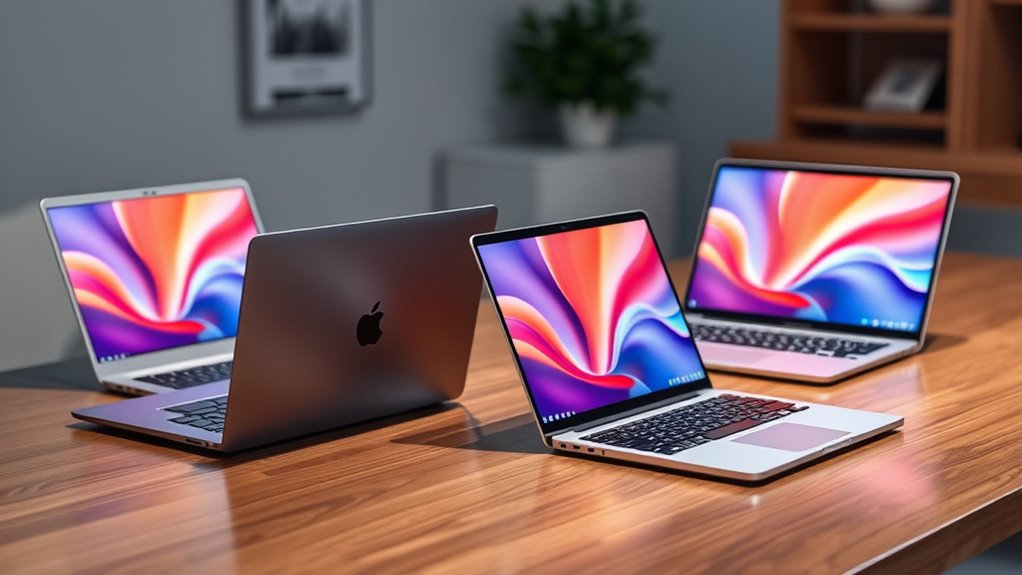

High end ultrabooks offer a compelling mix of power, portability, and premium build quality, making them ideal for professionals and power users. The Samsung Galaxy Book5 Pro 14 stands out for its sleek design and robust performance, while the Samsung Galaxy Book6 Ultra offers high-end gaming capabilities with its NVIDIA GeForce RTX 5060. Buyers often face tradeoffs between raw power, battery life, and price, especially when aiming for ultraportability without sacrificing performance. Continue reading for a detailed breakdown of the top options and what makes each one unique.
Key Takeaways
- Top ultrabooks balance CPU performance, weight, and battery life, with premium models often sacrificing portability for power.
- Many high end ultrabooks now feature OLED screens and touch capabilities, but these can impact battery longevity.
- The most expensive models tend to include advanced features like dual screens or dedicated graphics, appealing to niche professional use cases.
- Value in high end ultrabooks is often found in models that combine high performance with reasonable price points, avoiding the ultra-premium price tags.
- Build quality and durability are consistent priorities, but some models focus more on sleek design while others emphasize ruggedness or expandability.
| Samsung Galaxy Book5 Pro 14″ Laptop – Core i7 Ultra, 16GB RAM, 512GB Storage, Gray |  | Best Overall Ultrabook for Versatility and Portability | Display: 14 inches AMOLED | Processor: Intel Core i7 Ultra | RAM: 16GB | VIEW ON AMAZON | See Our Full Breakdown |
| ASUS ExpertBook Ultra B9406CAA-XSP76T Business Laptop |  | Best for Power Users and Business Professionals | Display: 14″ 3K OLED Touch (2880×1800) | Processor: Intel Core Ultra X7 358H (16 cores) | Graphics: Intel Arc B390 | VIEW ON AMAZON | See Our Full Breakdown |
| HP Elite x360 1040 G11 14″ 2-in-1 Laptop, 32GB DDR5, 512GB SSD |  | Best for Business Professionals and Creators Seeking Versatility | Display: 14″ 2.8K OLED IPS Touch | Processor: Intel Core Ultra 7 155H | Graphics: Intel Arc | VIEW ON AMAZON | See Our Full Breakdown |
| ASUS Zenbook Duo 14″ OLED Dual Screen Laptop with Intel Core Ultra 9, 32GB RAM, 1TB SSD, Intel Arc Graphics |  | Best for Multitasking and Creative Work with Dual Screens | Display: 14-inch OLED, 2880×1800, 120Hz | Processor: Intel Core Ultra 9-185H | Graphics: Intel Arc | VIEW ON AMAZON | See Our Full Breakdown |
| ASUS Zenbook 14 OLED Touch Laptop with 16GB RAM and 2TB SSD |  | Best for Creators Needing Large Storage and Vibrant Display | Display: 14-inch WUXGA OLED Touch | Processor: Intel 16-core Ultra 7 255H | Graphics: Intel Arc 140T | VIEW ON AMAZON | See Our Full Breakdown |
| Samsung Galaxy Book6 Ultra 16-inch Laptop, NVIDIA GeForce RTX 5060, 32GB RAM, 1TB SSD, Dynamic AMOLED 2X Display, Gray |  | Best for Creatives and Multimedia Professionals | Processor: Intel | Graphics Card: NVIDIA GeForce RTX 5060 | RAM: 32GB | VIEW ON AMAZON | See Our Full Breakdown |
| Dell Latitude 5450 Laptop, 14″ FHD, Intel Ultra 7 155U, 32GB DDR5, 1TB SSD |  | Best for Business and Remote Work | Display: 14″ FHD (1920 x 1080) IPS | Processor: Intel Ultra 7 155U | RAM: 32GB DDR5 | VIEW ON AMAZON | See Our Full Breakdown |
| Lenovo ThinkBook 16 Gen 8 Laptop, Intel Core Ultra 7, 32GB DDR5, 1TB SSD |  | Best for Power Users and Professionals | Processor: Intel Core Ultra 7 255H | Display: 16-inch WUXGA IPS (1920×1200) | Graphics: Intel Arc 140T | VIEW ON AMAZON | See Our Full Breakdown |
| ASUS Zenbook Duo Laptop with Dual 14” OLED Touch Displays, Intel Core Ultra 9, 32GB RAM, 1TB SSD, Windows 11 |  | Best for Multitasking and Creative Productivity | Display: Dual 14” OLED Touch, 2880 x 1800, 120Hz | Processor: Intel Core Ultra 9 285H | Graphics: Intel Arc | VIEW ON AMAZON | See Our Full Breakdown |
| ASUS Zenbook 14 OLED Laptop with Touchscreen, Intel Core i7, 16GB RAM, 1TB SSD, Wi-Fi 7, Windows 11 |  | Best for Productivity and Entertainment | Display: 14″ WUXGA OLED Touch (1920 x 1200), 500 nits | Processor: Intel Core i7 | Graphics: Intel Arc | VIEW ON AMAZON | See Our Full Breakdown |
| ASUS Zenbook 14 OLED Touchscreen AI PC Laptop, 14″ FHD+, Intel Core Ultra 7 255H, 16GB DDR5 RAM, 512GB/1TB/2TB SSD, Windows 11 Pro |  | Best Overall Ultrabook for Versatile Power and Portability | Display: 14″ FHD+ OLED touchscreen (1920×1200, 100% DCI-P3, 500 nits) | Processor: Intel Core Ultra 7 255H (16 cores) | RAM: 16GB DDR5 | VIEW ON AMAZON | See Our Full Breakdown |
| Dell Latitude 7480 Laptop Notebook, 14-inch FHD, Intel Core i7-6600, 16GB RAM, 512GB SSD, Windows 11 Pro (Renewed) |  | Best for Business Reliability on a Budget | Processor: Intel Core i7-6600 (2.60GHz up to 3.40GHz) | Display: 14-inch FHD (1920×1080) IPS | RAM: 16GB | VIEW ON AMAZON | See Our Full Breakdown |
| ASUS Zenbook 14 OLED Laptop with Touchscreen, Intel Core Ultra 9 285H, 32GB DDR5, 1TB SSD |  | Best for Power Users and Creatives Needing Top Display and Performance | Display: 14″ WUXGA OLED (1920 x 1200) | Processor: Intel Core Ultra 9 285H (16 cores) | RAM: 32GB DDR5 | VIEW ON AMAZON | See Our Full Breakdown |
| MSI Prestige 13 AI+ Evo (2024) 13.3” 2.8K OLED Business Laptop | 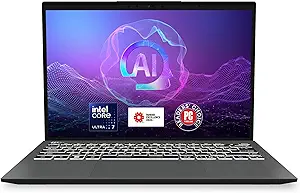 | Best Compact High-Performance Business Ultrabook | Display: 13.3-inch 2.8K OLED | Processor: Intel Core Ultra 7-258V | RAM: 32GB LPDDR5x | VIEW ON AMAZON | See Our Full Breakdown |
| high end ultrabook | Display | Processor | RAM | Storage |
|---|---|---|---|---|
| Samsung Galaxy Book5 Pro 14" L | 14 inches AMOLED | Intel Core i7 Ultra | 16GB | 512GB SSD |
| ASUS ExpertBook Ultra B9406CAA | 14" 3K OLED Touch (2880×1800) | Intel Core Ultra X7 358H (16 cores) | 32GB LPDDR5X | 1TB PCIe 4.0 NVMe SSD |
| HP Elite x360 1040 G11 14" 2-i | 14" 2.8K OLED IPS Touch | Intel Core Ultra 7 155H | 32GB LPDDR5x | 512GB PCIe NVMe SSD |
| ASUS Zenbook Duo 14" OLED Dual | 14-inch OLED, 2880×1800, 120Hz | Intel Core Ultra 9-185H | 32GB LPDDR5x | 1TB SSD |
| ASUS Zenbook 14 OLED Touch Lap | 14-inch WUXGA OLED Touch | Intel 16-core Ultra 7 255H | 16GB | 2TB SSD |
| Samsung Galaxy Book6 Ultra 16- | 16-inch Dynamic AMOLED 2X, 120Hz | Intel | 32GB | 1TB SSD |
| Dell Latitude 5450 Laptop | 14" FHD (1920 x 1080) IPS | Intel Ultra 7 155U | 32GB DDR5 | 1TB SSD |
| Lenovo ThinkBook 16 Gen 8 Lapt | 16-inch WUXGA IPS (1920×1200) | Intel Core Ultra 7 255H | 32GB DDR5 | 1TB PCIe NVMe SSD |
| ASUS Zenbook Duo Laptop with D | Dual 14” OLED Touch, 2880 x 1800, 120Hz | Intel Core Ultra 9 285H | 32GB LPDDR5x | 1TB SSD |
| ASUS Zenbook 14 OLED Laptop wi | 14" WUXGA OLED Touch (1920 x 1200), 500 nits | Intel Core i7 | 16GB DDR5 | 1TB SSD |
| ASUS Zenbook 14 OLED Touchscre | 14" FHD+ OLED touchscreen (1920×1200, 100% DCI-P3, 500 nits) | Intel Core Ultra 7 255H (16 cores) | 16GB DDR5 | Configurable with 256GB to 2TB M.2 NVMe PCIe SSD |
| Dell Latitude 7480 Laptop Note | 14-inch FHD (1920×1080) IPS | Intel Core i7-6600 (2.60GHz up to 3.40GHz) | 16GB | 512GB SSD |
| ASUS Zenbook 14 OLED Laptop wi | 14" WUXGA OLED (1920 x 1200) | Intel Core Ultra 9 285H (16 cores) | 32GB DDR5 | 1TB PCIe NVMe SSD |
| MSI Prestige 13 AI+ Evo | 13.3-inch 2.8K OLED | Intel Core Ultra 7-258V | 32GB LPDDR5x | 2TB NVMe SSD |
More Details on Our Top Picks
Samsung Galaxy Book5 Pro 14″ Laptop – Core i7 Ultra, 16GB RAM, 512GB Storage, Gray
The Samsung Galaxy Book5 Pro excels as a well-rounded ultrabook, combining a vibrant AMOLED display with a sleek, lightweight profile. Its Core i7 Ultra processor ensures smooth multitasking, surpassing many competitors like the ASUS Zenbook 14 OLED in raw power, while its long-lasting battery makes it a strong choice for on-the-go use. However, its 512GB storage could be limiting for users with large media libraries, unlike the ASUS Zenbook 14 OLED, which offers more storage options. Compared to the ASUS Zenbook Duo, it lacks the dual-screen versatility but makes up for it with a thinner, more portable design. This model is ideal for professionals who value a bright display and mobility, but those needing extensive storage or creative multitasking may want to consider larger options.
Pros:- Vivid AMOLED display with deep contrast and excellent color accuracy
- Lightweight and stylish design for portability
- All-day battery life with fast charging capabilities
Cons:- Limited to 512GB storage, which may be restrictive for heavy media users
- Lacks dedicated GPU for intensive creative tasks
Best for: Travelers and remote workers needing a powerful, portable machine with excellent screen quality
Not ideal for: Content creators with large files or storage-heavy workflows who require more space
- Display:14 inches AMOLED
- Processor:Intel Core i7 Ultra
- RAM:16GB
- Storage:512GB SSD
- Color:Gray
- Battery Life:All-day with fast charging
Our verdict“A versatile ultrabook that balances performance, display quality, and portability for most on-the-go professionals.”
ASUS ExpertBook Ultra B9406CAA-XSP76T Business Laptop
The ASUS ExpertBook Ultra B9406CAA-XSP76T stands out for its 3K OLED touchscreen display and a formidable Core Ultra X7 processor with 16 cores, making it ideal for intensive multitasking and creative work. Its 32GB RAM and 1TB NVMe SSD ensure rapid data handling and ample storage, a step above many ultrabooks like the Samsung Galaxy Book5 Pro, which offers less RAM and storage. Its extended warranty and protection features cater specifically to business users, but the premium price and focus on professional productivity make it less suitable for casual or gaming use. Compared to the HP Elite x360, it offers superior performance and a larger storage capacity, though at a higher cost. This model makes the most sense for high-demand professionals who need robust performance in a portable form factor.
Pros:- Vivid, vibrant 3K OLED touchscreen with 120Hz refresh rate
- Powerful 16-core Core Ultra X7 processor for demanding tasks
- Large 32GB RAM and 1TB SSD for seamless multitasking and storage
- Extended warranty and accidental damage coverage
Cons:- High price point may be prohibitive for some users
- Designed primarily for professional use, less suited for gaming or casual tasks
Best for: Business users and power professionals needing high performance and durability
Not ideal for: Casual users or gamers who prioritize affordability or entertainment features
- Display:14″ 3K OLED Touch (2880×1800)
- Processor:Intel Core Ultra X7 358H (16 cores)
- Graphics:Intel Arc B390
- RAM:32GB LPDDR5X
- Storage:1TB PCIe 4.0 NVMe SSD
- Warranty:3 Years USA + 1 Year Global + 1-Year Accidental Damage
Our verdict“A premium, high-performance ultrabook tailored for demanding business environments with extensive multitasking needs.”
HP Elite x360 1040 G11 14″ 2-in-1 Laptop, 32GB DDR5, 512GB SSD
The HP Elite x360 1040 G11 offers a flexible form factor with its 2-in-1 design, complemented by a 2.8K OLED touchscreen that delivers exceptional visuals. Its Core Ultra 7 processor, paired with 32GB RAM, ensures robust performance for professional multitasking, surpassing standard ultrabooks like the ASUS Zenbook 14 OLED in connectivity options and security features. The resealed SSD upgrade process raises some eyebrows, but the extensive port selection and AI-enhanced features make it suitable for creators and business users alike. However, battery life remains uncertain, and the premium price might deter casual buyers. Compared to the ASUS Zenbook Duo, it provides a more traditional laptop experience with high-end features, making it ideal for those needing a convertible device with high performance.
Pros:- High-resolution 14″ 2.8K OLED touchscreen with vibrant colors
- Powerful Core Ultra 7 processor and 32GB RAM for demanding tasks
- Extensive connectivity including Thunderbolt 4 and HDMI
- AI-enhanced features for optimized productivity
Cons:- Resealed SSD upgrade may concern some users
- Battery life details are not specified, which could impact portability
Best for: Business users and creators who need versatility and high-performance in a convertible design
Not ideal for: Casual users or those on a tight budget who do not require extensive connectivity or security features
- Display:14″ 2.8K OLED IPS Touch
- Processor:Intel Core Ultra 7 155H
- Graphics:Intel Arc
- RAM:32GB LPDDR5x
- Storage:512GB PCIe NVMe SSD
- Connectivity:Wi-Fi 7, Bluetooth 5.4
Our verdict“A versatile convertible ultrabook designed for professionals who value high performance and connectivity in a flexible form factor.”
ASUS Zenbook Duo 14″ OLED Dual Screen Laptop with Intel Core Ultra 9, 32GB RAM, 1TB SSD, Intel Arc Graphics
The ASUS Zenbook Duo shines as a multitasking powerhouse, featuring dual 14-inch OLED touch displays that facilitate seamless workflows for creators and professionals. Its Core Ultra 9 processor and 32GB RAM deliver exceptional performance, especially compared to single-screen ultrabooks like the Samsung Galaxy Book5 Pro. The lightweight, durable build makes it portable, but its dual screens reduce battery life, which can vary significantly based on usage. The premium price is justified for users who need the extra screen real estate but may be overkill for those who prefer traditional laptops. Its versatility makes it highly suitable for multitaskers, designers, and video editors, yet it may be too niche for casual or budget-conscious buyers.
Pros:- Dual 14-inch OLED touch screens with vibrant, color-accurate visuals
- High-performance Intel Core Ultra 9 and 32GB RAM
- Lightweight and durable design for portability
- Versatile multi-screen modes for increased productivity
Cons:- Limited battery life with dual screens active
- High price point may be prohibitive for some users
Best for: Creatives and multitaskers needing multiple screens in a portable, high-performance package
Not ideal for: Users prioritizing battery life or seeking a simple, single-screen device
- Display:14-inch OLED, 2880×1800, 120Hz
- Processor:Intel Core Ultra 9-185H
- Graphics:Intel Arc
- RAM:32GB LPDDR5x
- Storage:1TB SSD
- Weight:3.64 lbs
- Battery:75Wh, up to 13.5 hours
Our verdict“An excellent choice for professionals who need multiple screens and high-end performance in a portable form.”
ASUS Zenbook 14 OLED Touch Laptop with 16GB RAM and 2TB SSD
The ASUS Zenbook 14 OLED Touch offers a stunning visual experience with its HDR OLED display covering 100% DCI-P3, perfect for photo and video editing. Its Intel 16-core Ultra 7 processor provides powerful performance for demanding workflows, surpassing models with fewer cores in tasks like rendering or multitasking. The 2TB SSD ensures ample storage for large media files, making it well-suited for creators. However, the high price might be a barrier for some, and the glossy display could cause reflections in bright environments. Compared to the ASUS Zenbook Duo, it lacks the dual-screen feature but offers a more traditional, sleek design with equally high-end capabilities. This ultrabook is best for professionals who prioritize visual fidelity and storage capacity.
Pros:- Vivid OLED HDR display with wide color coverage
- Powerful 16-core Ultra 7 processor for demanding tasks
- Large 2TB SSD for substantial media storage
- Modern, sleek design with high-end connectivity
Cons:- Premium price may limit accessibility
- Glossy display may cause reflections in bright settings
Best for: Creative professionals and content producers requiring large storage and high-quality visuals
Not ideal for: Budget-conscious users or those who prefer a dual-screen setup
- Display:14-inch WUXGA OLED Touch
- Processor:Intel 16-core Ultra 7 255H
- Graphics:Intel Arc 140T
- RAM:16GB
- Storage:2TB SSD
- Connectivity:Thunderbolt 4, USB-A, HDMI
Our verdict“Ideal for creators needing a high-performance machine with stunning visuals and large storage capacity.”
Samsung Galaxy Book6 Ultra 16-inch Laptop, NVIDIA GeForce RTX 5060, 32GB RAM, 1TB SSD, Dynamic AMOLED 2X Display, Gray
The Samsung Galaxy Book6 Ultra stands out for its impressive GPU, making it ideal for GPU-intensive tasks like 3D rendering or AI projects, unlike the Dell Latitude 5450 which prioritizes portability over graphics power. Its 16-inch Dynamic AMOLED 2X display with 120Hz refresh rate delivers vibrant, smooth visuals that appeal to creators, though the premium price may limit accessibility for budget-conscious users. Seamless integration with Galaxy devices enhances productivity, but this ecosystem lock-in might restrict full feature access to Galaxy owners. Compared with the ASUS Zenbook Duo, which offers dual screens for multitasking, this model emphasizes raw graphics performance and display quality. The lightweight build enhances portability, yet the cost and ecosystem dependency are tradeoffs.
Pros:- Powerful NVIDIA GeForce RTX 5060 GPU suitable for demanding creative work
- Vivid, high-refresh-rate 16-inch Dynamic AMOLED 2X display
- Seamless integration with Galaxy devices for calls and file sharing
- Slim, portable design for mobility
Cons:- Premium price point may be prohibitive for some buyers
- Potential ecosystem lock-in limits full functionality outside Galaxy devices
Best for: Creative professionals who prioritize high-end graphics and vibrant displays, especially those within the Galaxy ecosystem.
Not ideal for: Budget-conscious users or those not invested in Galaxy devices, due to the high price and ecosystem lock-in.
- Processor:Intel
- Graphics Card:NVIDIA GeForce RTX 5060
- RAM:32GB
- Storage:1TB SSD
- Display:16-inch Dynamic AMOLED 2X, 120Hz
- Color:Gray
Our verdict“This ultrabook is best suited for creative professionals who want top-tier graphics and vibrant displays, and are willing to pay a premium for ecosystem integration.”
Dell Latitude 5450 Laptop, 14″ FHD, Intel Ultra 7 155U, 32GB DDR5, 1TB SSD
The Dell Latitude 5450 offers a balanced mix of performance and portability, with a focus on professional workflows, contrasting with the Lenovo ThinkBook 16 Gen 8’s larger display and more advanced security features. Its 14-inch FHD display provides sharp visuals suitable for daily tasks, while the Intel Ultra 7 155U processor and 32GB DDR5 RAM ensure smooth multitasking. The long 11-hour battery life and versatile connectivity make it ideal for remote professionals, although its weight at 3.1 pounds makes it slightly less portable than smaller ultrabooks like the ASUS Zenbook 14 OLED. It’s a strong choice for those prioritizing performance and battery longevity over ultra-light design, but it doesn’t excel in graphics-intensive tasks.
Pros:- Powerful performance with Intel Ultra 7 155U and 32GB DDR5 RAM
- Long battery life of up to 11 hours for all-day productivity
- Versatile connectivity including Thunderbolt 4 and HDMI
- Compact and lightweight for a 14-inch business laptop
Cons:- Relatively heavy compared to ultra-light ultrabooks
- Lacks dedicated GPU for graphics-intensive tasks
- No optical drive included
Best for: Business users or remote workers needing reliable, portable performance with long battery life.
Not ideal for: Creative professionals requiring high-end graphics or multimedia editing, due to the integrated graphics and focus on portability.
- Display:14″ FHD (1920 x 1080) IPS
- Processor:Intel Ultra 7 155U
- RAM:32GB DDR5
- Storage:1TB SSD
- Graphics:Intel Integrated Graphics
- Battery Life:11 hours
Our verdict“This device is well-suited for professionals seeking a reliable, portable workhorse with long battery life, but not for high-end creative workloads.”
Lenovo ThinkBook 16 Gen 8 Laptop, Intel Core Ultra 7, 32GB DDR5, 1TB SSD
The Lenovo ThinkBook 16 Gen 8 appeals to users who need more screen real estate and AI-enhanced processing, surpassing the ASUS Zenbook 14 OLED in multitasking capacity with its 16-inch display and powerful Intel Core Ultra 7 255H. Its high-resolution WUXGA display delivers vibrant, detailed visuals, though its weight of 3.75 pounds makes it somewhat less portable than smaller ultrabooks. The inclusion of AI features and security options like TPM 2.0 and fingerprint reader make it suitable for security-conscious professionals, but the higher price and limited GPU performance may deter some users seeking gaming or intensive GPU tasks. Overall, it balances performance and security in a larger, more capable chassis.
Pros:- AI-optimized performance with Intel Core Ultra 7 255H
- Large 16-inch WUXGA display with accurate colors
- Enhanced security features including TPM 2.0 and fingerprint reader
- Fast storage and extensive connectivity options
Cons:- Heavier and bulkier than smaller ultrabooks
- Limited GPU performance for gaming or GPU-accelerated tasks
- Higher price point reflects premium features
Best for: Power users and professionals needing a large display, AI capabilities, and robust security features.
Not ideal for: Travel-heavy users who prioritize lightweight design and gaming enthusiasts needing dedicated GPU power.
- Processor:Intel Core Ultra 7 255H
- Display:16-inch WUXGA IPS (1920×1200)
- Graphics:Intel Arc 140T
- RAM:32GB DDR5
- Storage:1TB PCIe NVMe SSD
- Weight:3.75 lbs
Our verdict“Ideal for professionals seeking a large, secure, and high-performance ultrabook with AI enhancements, at the expense of portability.”
ASUS Zenbook Duo Laptop with Dual 14” OLED Touch Displays, Intel Core Ultra 9, 32GB RAM, 1TB SSD, Windows 11
The ASUS Zenbook Duo excels for users who thrive on multitasking, thanks to its dual 14-inch OLED touchscreens with 3K resolution, unlike the single-screen ASUS Zenbook 14 OLED. Its lightweight, detachable keyboard boosts portability, and the latest Intel Core Ultra 9 processor paired with 32GB RAM ensures high performance for demanding creative workflows. The vibrant OLED displays provide stunning visuals, though the integrated design limits upgrade options and the battery life can fluctuate depending on usage modes. While premium-priced, this ultrabook caters to creative professionals and multitaskers who need flexible workspace solutions without sacrificing portability.
Pros:- Dual 14-inch OLED touchscreens with high-resolution visuals
- Lightweight and portable for on-the-move productivity
- Powerful Intel Core Ultra 9 processor and 32GB RAM
- Flexible detachable keyboard for versatile use
Cons:- Premium price limits accessibility for some users
- Battery life varies significantly depending on multitasking load
- Limited upgrade options due to integrated design
Best for: Creative professionals and multitaskers who need multiple high-quality screens for productivity on the go.
Not ideal for: Users seeking a traditional single-screen ultrabook or those on a tight budget, due to high cost and limited upgradeability.
- Display:Dual 14” OLED Touch, 2880 x 1800, 120Hz
- Processor:Intel Core Ultra 9 285H
- Graphics:Intel Arc
- RAM:32GB LPDDR5x
- Storage:1TB SSD
- Weight:3.64 lbs
Our verdict“This ultrabook is ideal for creative users who need dual screens and high performance, accepting some limitations in upgradeability and battery life.”
ASUS Zenbook 14 OLED Laptop with Touchscreen, Intel Core i7, 16GB RAM, 1TB SSD, Wi-Fi 7, Windows 11
The ASUS Zenbook 14 OLED offers a compelling balance of performance and portability, with its stunning OLED touchscreen providing vibrant visuals that surpass many traditional screens, unlike the larger Lenovo ThinkBook or Dell Latitude models. Its compact design paired with an Intel Core i7 processor and 16GB RAM makes it suitable for everyday productivity and media consumption, though the shorter battery life of around 6 hours under heavy use may be a limitation for on-the-go users. The extensive port selection, including Thunderbolt 4, makes it versatile for modern workflows, but the premium price remains a consideration for cost-sensitive buyers.
Pros:- Vivid OLED touchscreen with high brightness and color accuracy
- Powerful Intel Core i7 processor with ample RAM and fast SSD
- Multiple modern ports including Thunderbolt 4 and Wi-Fi 7
- Lightweight and highly portable design
Cons:- Battery life limited to approximately 6 hours
- Premium pricing for high-end OLED technology
- Limited upgrade options due to integrated components
Best for: Productivity-focused users who prioritize high-quality displays, portability, and versatile connectivity for daily tasks.
Not ideal for: Power users requiring dedicated GPU power for creative or gaming tasks, due to its integrated graphics.
- Display:14″ WUXGA OLED Touch (1920 x 1200), 500 nits
- Processor:Intel Core i7
- Graphics:Intel Arc
- RAM:16GB DDR5
- Storage:1TB SSD
- Weight:2.82 lbs
Our verdict“This ultrabook is best suited for users who want a high-quality display and portability for daily work and media consumption, accepting shorter battery life.”
ASUS Zenbook 14 OLED Touchscreen AI PC Laptop, 14″ FHD+, Intel Core Ultra 7 255H, 16GB DDR5 RAM, 512GB/1TB/2TB SSD, Windows 11 Pro
The ASUS Zenbook 14 OLED Touch stands out as a well-rounded choice for those seeking a balance of performance, display quality, and portability. Its vivid OLED touchscreen with 100% DCI-P3 and 500 nits ensures stunning visuals, which makes it ideal for creative professionals or media enthusiasts. The latest Intel Core Ultra 7 255H processor provides robust multitasking capabilities, outperforming many older models like the Dell Latitude 7480, which relies on an outdated CPU. However, its premium features, such as the resealed upgradeable design, come with a higher price, and the standard 16GB RAM may limit future expandability. Compared to the ASUS Zenbook with Core Ultra 9, it offers slightly less raw power but better display quality at a more accessible price point.
Pros:- Vivid OLED touchscreen with 100% DCI-P3 coverage for accurate colors
- Powerful Intel Core Ultra 7 processor with AI enhancements
- Lightweight and portable with long battery life
- Versatile connectivity including Thunderbolt 4 and HDMI
Cons:- Resealed design may raise concerns about warranty and repairability
- Premium features lead to a higher price point
- Limited to 16GB RAM in standard configuration, restricting future upgrades
Best for: Creative professionals and remote workers needing a colorful display and portable design
Not ideal for: Power users requiring maximum RAM or advanced upgradeability, or budget-conscious buyers
- Display:14″ FHD+ OLED touchscreen (1920×1200, 100% DCI-P3, 500 nits)
- Processor:Intel Core Ultra 7 255H (16 cores)
- RAM:16GB DDR5
- Storage:Configurable with 256GB to 2TB M.2 NVMe PCIe SSD
- Ports:2x Thunderbolt 4, HDMI 2.1, USB-A
- Connectivity:Wi-Fi 7, Bluetooth 5.4
- Camera:FHD IR with physical shutter
- Battery:Long-lasting
Our verdict“This ultrabook is ideal for those prioritizing display quality and portability with balanced performance needs.”
Dell Latitude 7480 Laptop Notebook, 14-inch FHD, Intel Core i7-6600, 16GB RAM, 512GB SSD, Windows 11 Pro (Renewed)
The Dell Latitude 7480 offers dependable performance for professional environments, especially when compared to newer models like the ASUS Zenbook 14 OLED with Core Ultra 7. Its older but still capable Intel Core i7-6600 processor handles demanding business applications, and the 16GB RAM ensures smooth multitasking. The 14″ FHD IPS display provides clear visuals, though it lacks the vibrant OLED quality of higher-end options. As a renewed unit, it’s a cost-effective choice, but this also means limited warranty and the risk of hidden wear. Its reliable build and familiar Windows 11 Pro environment make it suitable for users needing a proven workhorse without the latest specs.
Pros:- Reliable performance with an Intel Core i7-6600 processor
- Ample 16GB RAM for multitasking
- Fast 512GB SSD for quick access to data
- IPS Full HD display with wide viewing angles
Cons:- Renewed unit may have limited warranty and uncertain longevity
- Older CPU limits performance with the latest software and multitasking demands
- Design and features are dated compared to modern ultrabooks
Best for: Small business owners or professionals seeking a budget-friendly, proven ultrabook for daily tasks
Not ideal for: Creative users needing vibrant displays or gamers requiring high-end graphics, due to older CPU and display tech
- Processor:Intel Core i7-6600 (2.60GHz up to 3.40GHz)
- Display:14-inch FHD (1920×1080) IPS
- RAM:16GB
- Storage:512GB SSD
- Operating System:Windows 11 Pro
- Connectivity:Wi-Fi, Bluetooth
Our verdict“This ultraportable offers solid performance for business users at a budget-conscious price, with some limitations due to its age.”
ASUS Zenbook 14 OLED Laptop with Touchscreen, Intel Core Ultra 9 285H, 32GB DDR5, 1TB SSD
The ASUS Zenbook 14 OLED with Core Ultra 9 excels for demanding users who need serious power packed into a portable design. Its 14″ WUXGA OLED display delivers stunning colors and deep blacks, rivaling the Dell XPS for media quality. The Intel Core Ultra 9 285H and 32GB DDR5 RAM provide exceptional multitasking and performance for creative workflows or intensive productivity. Compared to the Core Ultra 7 models, this offers a significant boost in processing and multitasking capacity, making it better suited for content creators or heavy multitaskers. The main tradeoff involves its resealed packaging, which might concern buyers about its newness and the premium price.
Pros:- Stunning OLED display with 100% DCI-P3 and true blacks
- High-end Intel Core Ultra 9 processor with AI support
- Ample 32GB DDR5 RAM for heavy multitasking
- Lightweight, portable, with versatile connectivity
Cons:- Resealed packaging may imply used or refurbished status
- Premium price point limits accessibility for some buyers
- Limited info on battery life, which could impact portability
Best for: Creative professionals, students, or power users needing high performance and superior display quality
Not ideal for: Budget-conscious buyers or those seeking a more affordable ultrabook, due to its high price and premium features
- Display:14″ WUXGA OLED (1920 x 1200)
- Processor:Intel Core Ultra 9 285H (16 cores)
- RAM:32GB DDR5
- Storage:1TB PCIe NVMe SSD
- Graphics:Intel Arc
- Connectivity:Wi-Fi 7, Thunderbolt 4
Our verdict“This ultrabook is tailored for users demanding top-tier display and processing power in a portable form factor.”
MSI Prestige 13 AI+ Evo (2024) 13.3” 2.8K OLED Business Laptop
The MSI Prestige 13 AI+ Evo (2024) presents a compelling choice for business users who need a highly portable yet powerful device. Its 13.3-inch 2.8K OLED display offers exceptional clarity and true blacks, making it ideal for multimedia presentations or content review. The combination of an Intel Core Ultra 7-258V processor and 32GB LPDDR5x RAM ensures smooth multitasking and efficient workflow management, outperforming larger, bulkier options like the ASUS Zenbook 14 OLED with Core Ultra 9 in portability. The 2TB SSD provides ample storage for professional files, but the pre-installed Windows 11 Home may require customization for enterprise use. Its AI-enhanced webcam and Wi-Fi 7 connectivity support modern remote work demands.
Pros:- Stunning 2.8K OLED display with excellent contrast and color accuracy
- Powerful Intel Core Ultra 7 with AI support boosts productivity
- Compact, lightweight design ideal for travel
- Large 2TB SSD for extensive storage
Cons:- Pre-installed with Windows 11 Home, less suited for enterprise environments
- Premium price may be prohibitive for some budgets
- Limited information on battery longevity for extended use
Best for: Business professionals needing a compact, portable, and powerful device for on-the-go productivity
Not ideal for: Creative professionals seeking the brightest display or gamers needing dedicated graphics, due to its focus on portability and business features
- Display:13.3-inch 2.8K OLED
- Processor:Intel Core Ultra 7-258V
- RAM:32GB LPDDR5x
- Storage:2TB NVMe SSD
- Graphics:Arc Graphics
- Connectivity:WiFi 7, Thunderbolt 4
Our verdict“This ultrabook is perfect for business users who prioritize portability without sacrificing high-end display quality and performance.”

How We Picked
Our evaluation process focused on core factors that matter most to buyers of high end ultrabooks: performance, build quality, display quality, battery life, and portability. We prioritized devices with recent high-performance CPUs, preferably Intel Core Ultra series or equivalent, coupled with ample RAM and fast SSD storage. We also considered usability features such as touchscreens, dual displays, and connectivity options. Price was a secondary factor, with a preference for models offering the best value relative to their specifications. Devices were ranked based on a balanced assessment of these factors, aiming to highlight options suitable for demanding users who require both power and portability.| high end ultrabook | Graphics |
|---|---|
| Samsung Galaxy Book5 Pro 14" L | — |
| ASUS ExpertBook Ultra B9406CAA | Intel Arc B390 |
| HP Elite x360 1040 G11 14" 2-i | Intel Arc |
| ASUS Zenbook Duo 14" OLED Dual | Intel Arc |
| ASUS Zenbook 14 OLED Touch Lap | Intel Arc 140T |
| Samsung Galaxy Book6 Ultra 16- | — |
| Dell Latitude 5450 Laptop | Intel Integrated Graphics |
| Lenovo ThinkBook 16 Gen 8 Lapt | Intel Arc 140T |
| ASUS Zenbook Duo Laptop with D | Intel Arc |
| ASUS Zenbook 14 OLED Laptop wi | Intel Arc |
| ASUS Zenbook 14 OLED Touchscre | — |
| Dell Latitude 7480 Laptop Note | — |
| ASUS Zenbook 14 OLED Laptop wi | Intel Arc |
| MSI Prestige 13 AI+ Evo | Arc Graphics |
Factors to Consider When Choosing High End Ultrabooks
When selecting a high end ultrabook, it’s important to consider several key factors that influence your overall experience and long-term satisfaction. The right balance of power, portability, and display quality can make a significant difference in daily use. Understanding these factors will help you avoid common pitfalls such as overpaying for features you don’t need or choosing a device that doesn’t meet your usage demands.Performance and Processor Choice
High end ultrabooks should feature the latest processors, such as Intel Core Ultra series or equivalents, which provide the necessary power for multitasking, creative work, and demanding applications. A model with insufficient CPU performance can bottleneck your workflow, especially when running intensive software. While higher-end CPUs tend to consume more power, many ultrabooks now incorporate efficient chipsets that balance performance and battery life. Be wary of models with older processors or lower-tier chips if you need maximum power for professional tasks.
Display Quality and Size
OLED screens and high-resolution displays are common in premium ultrabooks, offering stunning visuals for content creation, media consumption, and professional work. However, these displays can consume more power, impacting battery life. Size is also a factor—14-inch models strike a good balance between portability and workspace, but some users may prefer larger screens for extended use or smaller sizes for easier portability. Consider whether touch or dual-screen features are worth the potential battery tradeoff for your specific needs.
Build Quality and Design
Durability and premium feel are hallmarks of high end ultrabooks. Materials like aluminum and magnesium alloys not only look sleek but also withstand daily wear better than plastic counterparts. Thin bezels and lightweight designs contribute to portability, but sometimes at the expense of ports or upgradeability. Think about whether you prioritize a rugged build for travel or a sleek aesthetic for professional environments. Some models also offer water resistance or reinforced chassis for added durability.
Battery Life
Battery performance varies widely among high end ultrabooks, especially those with OLED screens or dedicated graphics. While some models can last a full workday on a single charge, others may need frequent recharging during intensive tasks. If portability and all-day use are priorities, look for models with larger batteries or energy-efficient components. Keep in mind that high-resolution displays and powerful CPUs tend to drain batteries faster, so balancing these factors is key.
Connectivity and Ports
Premium ultrabooks increasingly favor slim profiles, which can limit port options. USB-C, Thunderbolt 4, and Wi-Fi 7 are common in high-end models, supporting fast data transfer and latest wireless standards. However, some users might find the lack of traditional ports inconvenient, especially for connecting peripherals. Consider how many ports you need for your workflow—if you require multiple external displays, SD card readers, or Ethernet, check if the ultrabook has adequate options or if you’ll need adapters.
Frequently Asked Questions
How do I choose between a touchscreen and non-touch ultrabook?
Choosing between a touchscreen and a non-touch ultrabook depends on your workflow. Touchscreens are beneficial for creative tasks, note-taking, and quick navigation, offering a more interactive experience. However, they can add to the device’s weight and may reduce battery life slightly. Non-touch models often have longer battery life and a cleaner aesthetic, making them ideal for users who prefer traditional input methods or do not need touch features for their daily tasks. Consider how often you’ll use touch and whether it justifies the potential tradeoffs.
Is it worth paying extra for a dual-screen ultrabook?
Dual-screen ultrabooks provide increased productivity and multitasking capabilities, making them appealing for creators, developers, and professionals who benefit from additional workspace. However, they are typically heavier, more expensive, and can have shorter battery life. If your work involves multiple applications or you prefer a more flexible workspace, investing in a dual-screen model can boost efficiency. For casual or travel use, a single high-quality display might be more practical and cost-effective.
How much should I expect to spend on a high end ultrabook in 2026?
High end ultrabooks generally range from about $1,500 to over $3,000, depending on features like premium displays, dedicated graphics, and dual screens. The top-tier models with the latest CPUs, OLED screens, and advanced connectivity can push toward the higher end of this spectrum. It’s worth investing more if your work requires high performance, durability, or cutting-edge features, but many mid-range models also offer excellent value by balancing cost with high-end specifications.
Should I prioritize weight or performance in a high end ultrabook?
Deciding between weight and performance depends on your primary use case. If portability is your main concern, look for models under 3 pounds with efficient components, even if it means slightly lower performance. Conversely, if your tasks demand maximum power—such as video editing or 3D rendering—you might accept a slightly heavier ultrabook that houses a more powerful CPU and dedicated graphics. Striking the right balance involves assessing how often you’ll carry the device versus how much performance you need daily.
Are refurbished high end ultrabooks a good option?
Refurbished high end ultrabooks can offer significant savings while still providing high-quality performance, especially from reputable sellers. However, they might lack the latest features or have limited warranties compared to new models. It’s important to verify the refurbisher’s credibility and warranty coverage before purchase. For those comfortable with second-hand devices, a refurbished ultrabook can be a smart way to access premium features at a lower price, but it’s wise to weigh the potential tradeoffs in warranty and longevity.
Conclusion
The best overall ultrabook for most users remains the Samsung Galaxy Book5 Pro 14 for its balance of performance, portability, and build quality. If you’re willing to spend more for top-tier features and the latest tech, the Samsung Galaxy Book6 Ultra offers exceptional power with dedicated graphics. Budget-conscious buyers seeking high performance without the ultra-premium price might prefer models like the HP Elite x360 or ASUS Zenbook 14 OLED. Beginners or those new to ultrabooks should prioritize ease of use and durability, while professionals needing specialized features may opt for dual-screen or convertible options. This guide aims to clarify choices based on your specific needs, helping you select the right high end ultrabook in 2026.