
Choosing the right GPU for VR is essential for smooth, immersive experiences. The best options balance raw performance with compatibility and price, but tradeoffs exist. The ASUS GeForce GTX 1060 6GB remains a reliable budget pick, while the ZOTAC RTX 5080 offers cutting-edge power for premium setups. Mid-range options like the ASUS RTX 5060 Ti provide strong performance without breaking the bank. Keep reading for the full breakdown of these options and what to look for in a VR-capable GPU.

Get business pricing on tech for your team
- Business-only prices and quantity discounts
- Tax-exempt purchasing
- Multiple users, one account, clear invoices
Key Takeaways
- High-end GPUs like the RTX 5080 deliver exceptional VR performance but come with a high price tag.
- Mid-range options such as the RTX 5060 Ti offer a good balance of performance and value for most gamers.
- Older models like the GTX 1060 are still capable but may struggle with the latest VR titles and higher resolutions.
- VR-specific features such as HDMI and DisplayPort compatibility are vital for seamless setup.
- Memory size (VRAM) is critical; 8GB or more helps ensure future-proofing and smooth gameplay.
| ASUS GeForce GTX 1060 6GB Dual-Fan OC Edition VR Ready Graphics Card |  | Best Budget VR-Ready Card | Boost Clock: 1809 MHz | Memory: 6GB GDDR5 | Cooling: Dual-fan | VIEW ON AMAZON | See Our Full Breakdown |
| ASRock Radeon RX 9060 XT Challenger 16GB OC Graphics Card |  | Best for 1440p High-Performance Gaming | GPU Architecture: RDNA 4 | Memory: 16GB GDDR6 | Boost Clock: 3290 MHz | VIEW ON AMAZON | See Our Full Breakdown |
| Radeon RX 580 8GB Graphics Card, VR Ready, DisplayPort HDMI Video Card for Gaming |  | Best for Entry-Level VR and Gaming | Chipset: AMD Radeon RX 580 | GPU Chip: Ellesmere | Video Memory: 8 GB GDDR5 | VIEW ON AMAZON | See Our Full Breakdown |
| ZOTAC Gaming GeForce RTX 5080 Solid CORE OC DLSS 4 16GB GDDR7 Graphics Card |  | Best for High-End 8K and VR Gaming | Architecture: NVIDIA Blackwell | Memory: 16GB GDDR7 | Memory Interface: 256-bit | VIEW ON AMAZON | See Our Full Breakdown |
| ASUS Dual GeForce RTX 5060 Ti 16GB GDDR7 OC Edition Gaming Graphics Card |  | Best for High-AI Performance & Quiet Operation | Memory: 16GB GDDR7 | Architecture: NVIDIA Blackwell | Clock Speed: 2632 MHz (OC), 2602 MHz (Default) | VIEW ON AMAZON | See Our Full Breakdown |
| ASUS Dual GeForce RTX 3050 6GB GDDR6 OC Edition Gaming Graphics Card | 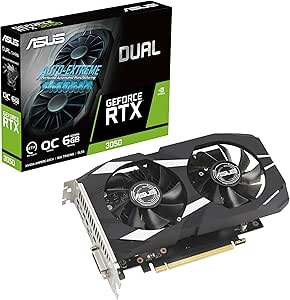 | Best Compact VR-Ready GPU for Entry-Level Gaming | GPU: GeForce RTX 3050 | Memory: 6GB GDDR6 | Boost Clock: 1500 MHz (OC Mode), 1470 MHz (Default) | VIEW ON AMAZON | See Our Full Breakdown |
| XFX Swift AMD Radeon RX 9060 XT OC Triple Fan Gaming Edition with 16GB GDDR6 |  | Best High-Performance VR GPU with Massive Memory Buffer | Chipset: AMD RX 9060 XT | Memory: 16 GB GDDR6 | Cooling: Triple Fan | VIEW ON AMAZON | See Our Full Breakdown |
| gpu for vr | Memory | Boost Clock | Cooling |
|---|---|---|---|
| ASUS GeForce GTX 1060 6GB Dual | 6GB GDDR5 | 1809 MHz | Dual-fan |
| ASRock Radeon RX 9060 XT Chall | 16GB GDDR6 | 3290 MHz | — |
| Radeon RX 580 8GB Graphics Car | — | — | — |
| ZOTAC Gaming GeForce RTX 5080 | 16GB GDDR7 | — | IceStorm 3.0 |
| ASUS Dual GeForce RTX 5060 Ti | 16GB GDDR7 | — | Axial-tech fans |
| ASUS Dual GeForce RTX 3050 6GB | 6GB GDDR6 | 1500 MHz (OC Mode), 1470 MHz (Default) | — |
| XFX Swift AMD Radeon RX 9060 X | 16 GB GDDR6 | up to 3320 MHz | Triple Fan |
More Details on Our Top Picks
ASUS GeForce GTX 1060 6GB Dual-Fan OC Edition VR Ready Graphics Card
This card stands out for delivering solid VR performance at a more accessible price point, especially compared to newer models like the ZOTAC RTX 5080. Its 1809 MHz boost clock and 6GB GDDR5 memory ensure decent VR experiences, but it falls short in raw power for demanding titles or high-fidelity virtual environments. The dual-fan cooling keeps operation relatively quiet, and the auto-extreme manufacturing process boosts reliability, yet being a renewed product can limit warranty coverage. It’s ideal for gamers on a tight budget who want a VR-ready GPU without the latest bells and whistles, but it’s less suitable for those seeking future-proofing or ultra-high-end VR performance.
Pros:- Decent boost clock for smooth VR gameplay
- Dual HDMI 2.0 ports for flexible connectivity
- Quiet operation thanks to dual-fan cooling
- Reliable build with auto-extreme manufacturing
Cons:- Renewed product may have limited warranty coverage
- Performance lags behind newer, more powerful models
Best for: Budget-conscious gamers who want reliable VR capability without spending on the latest hardware
Not ideal for: Enthusiasts or professionals requiring cutting-edge VR performance or maximum longevity
- Boost Clock:1809 MHz
- Memory:6GB GDDR5
- Cooling:Dual-fan
- VR Ready:Yes
- Ports:Dual HDMI 2.0
- Technology:Auto-extreme
Our verdict“A solid choice for entry-level VR gaming, especially if budget constraints are a priority.”
ASRock Radeon RX 9060 XT Challenger 16GB OC Graphics Card
This card is tailored for gamers aiming at 1440p resolution, offering a significant leap over entry-level options like the GTX 1060. Its RDNA 4 architecture and 16GB GDDR6 memory provide ample power for demanding VR applications and creative tasks. The 3290 MHz boost clock emphasizes its high-performance design, and support for DisplayPort 2.1a and HDMI 2.1b ensures compatibility with the latest displays. However, its size and power requirements demand a spacious case and a solid 550W power supply, making it less suitable for smaller builds. This card makes the most sense for users who want high-refresh-rate VR gaming or content creation without stepping into the ultra-premium price range, but it isn’t ideal for 4K gamers or those with limited case space.
Pros:- High boost clock of up to 3290 MHz for excellent performance
- Large 16GB GDDR6 memory supports demanding tasks
- Supports latest connectivity standards including DisplayPort 2.1a
- Quiet operation with dual fans and 0dB mode
Cons:- Requires a spacious case due to 249 mm length
- Needs a dedicated 8-pin power connector and a 550W PSU
- Primarily targeted at 1440p, not optimal for 4K
Best for: 1440p gamers and creators seeking high-performance VR and multimedia capabilities
Not ideal for: Small-form-factor PC builders or 4K enthusiasts with limited power supply headroom
- GPU Architecture:RDNA 4
- Memory:16GB GDDR6
- Boost Clock:3290 MHz
- Display Outputs:DisplayPort 2.1a, HDMI 2.1b
- Power Connector:1 x 8-pin
- Recommended Power Supply:550W
Our verdict“Ideal for gamers and creatives who prioritize high-frame-rate VR at 1440p without needing 4K support.”
Radeon RX 580 8GB Graphics Card, VR Ready, DisplayPort HDMI Video Card for Gaming
This card offers a reliable VR experience with 8GB of GDDR5 memory and straightforward PCIe 3.0 compatibility, making it a practical choice for those new to VR. Its 1284 MHz GPU clock delivers smooth visuals for less demanding titles, similar to the GTX 1060 but with slightly more memory. Compared to high-end options like the ZOTAC RTX 5080, it’s less powerful, but for casual VR use and older titles, it remains a budget-friendly solution. Some users report occasional gameplay instability, which can detract from immersive experiences. This makes it suitable for entry-level VR setups, but it isn’t suited for future-proofing or high-fidelity VR workloads.
Pros:- VR-ready with solid virtual reality performance
- 8GB GDDR5 memory supports multitasking and multimedia
- Easy to install with PCIe 3.0 support
- Reliable with a 2-year warranty
Cons:- Reported instability issues can affect VR experience
- Performance may be limited for more demanding VR titles
Best for: Beginners or casual VR users on a budget who want reliable basic performance
Not ideal for: Power users or those seeking smooth performance for demanding VR titles
- Chipset:AMD Radeon RX 580
- GPU Chip:Ellesmere
- Video Memory:8 GB GDDR5
- GPU Clock:1284 MHz
- Output:HDMI x 1, DisplayPort x 2
- PCIe:3.0
Our verdict“A practical entry-level VR GPU for newcomers, but with some stability caveats to consider.”
ZOTAC Gaming GeForce RTX 5080 Solid CORE OC DLSS 4 16GB GDDR7 Graphics Card
This flagship GPU is designed for the most demanding VR and high-resolution gaming, featuring NVIDIA Blackwell architecture with DLSS 4 and 16GB GDDR7 memory. Its advanced cooling system, including vapor chamber and multiple fans, keeps thermal performance in check even during extended sessions, outperforming many competitors like the ASUS RTX 5060 Ti. The support for 8K, multiple display outputs, and sophisticated RGB lighting appeal to enthusiasts seeking both power and aesthetics. However, its size and high power draw mean only large, well-equipped systems can handle it, and its premium price makes it less accessible for casual users. This card is best suited for those pushing the limits of VR resolution and demanding ultra-high-performance experiences.
Pros:- NVIDIA Blackwell architecture with DLSS 4 for cutting-edge performance
- Supports 8K VR and high-resolution displays
- Robust cooling with vapor chamber and multiple fans
- Customizable RGB lighting for aesthetic flair
Cons:- High power consumption requiring a strong PSU
- Large size incompatible with smaller cases
- Premium price limits accessibility
Best for: Enthusiasts and professionals aiming for maximum VR resolution at ultra-high fidelity
Not ideal for: Casual gamers or users with smaller cases or limited power capacity
- Architecture:NVIDIA Blackwell
- Memory:16GB GDDR7
- Memory Interface:256-bit
- Memory Speed:30 Gbps
- Cooling:IceStorm 3.0
- Features:8K Ready, VR Ready
Our verdict“A top-tier choice for those demanding the highest VR resolution and performance available today.”
ASUS Dual GeForce RTX 5060 Ti 16GB GDDR7 OC Edition Gaming Graphics Card
This GPU combines NVIDIA Blackwell architecture with DLSS 4, offering impressive AI processing power with 767 TOPS, surpassing many other options like the ASRock RX 9060 XT. Its 2.5-slot design improves cooling efficiency and compatibility, making it suitable for high-performance VR and gaming setups. The dual ball bearings and axial-tech fans ensure quieter operation, and the dual BIOS provides flexibility between performance and silence. However, its high power consumption may require a robust power supply, and limited details on price and availability could pose challenges for prospective buyers. This card is a smart pick for users needing both serious AI capabilities and a quieter experience, especially in smaller or mid-sized cases.
Pros:- High AI performance with 767 TOPS
- Effective cooling with axial-tech fan design
- Quiet operation thanks to 0dB technology
- Dual BIOS for flexible operation
Cons:- High power draw may necessitate a stronger PSU
- Limited info on pricing and availability
Best for: High-end VR gamers and AI-focused users who value quiet operation
Not ideal for: Budget-conscious buyers or those with limited power supply capacity
- Memory:16GB GDDR7
- Architecture:NVIDIA Blackwell
- Clock Speed:2632 MHz (OC), 2602 MHz (Default)
- Design:2.5-slot
- Cooling:Axial-tech fans
- Features:0dB tech, Dual BIOS
Our verdict“A strong choice for VR users who need superior AI processing and low noise levels in a compact form.”
ASUS Dual GeForce RTX 3050 6GB GDDR6 OC Edition Gaming Graphics Card
This GPU stands out for bringing NVIDIA’s Ampere architecture into a smaller form factor, making it ideal for those with limited space. Compared with the ZOTAC RTX 5080, it offers fewer ray-tracing cores and relies on 6GB VRAM, which could be a constraint for demanding VR titles. Its compact 2-slot design makes installation easier in small cases, while the durable stainless steel bracket and dust resistance (IP5X) boost longevity. However, the limited VRAM and absence of detailed connectivity specs mean it might struggle with future-proofing or complex setups. This pick makes the most sense for VR gamers on a budget or with tight chassis constraints who prioritize reliability over raw power.
Pros:- Compact 2-slot design fits small cases easily
- Enhanced ray-tracing and AI capabilities from Ampere architecture
- Durable stainless steel bracket and dust-resistant (IP5X)
Cons:- Limited to 6GB VRAM, which can impact performance in demanding VR applications
- No detailed info on HDMI or DisplayPort outputs, complicating multi-display setups
Best for: VR gamers with small cases or budget-conscious builds seeking a reliable entry-level GPU
Not ideal for: High-end VR users or those planning for future VR titles requiring more VRAM and advanced ray-tracing features
- GPU:GeForce RTX 3050
- Memory:6GB GDDR6
- Boost Clock:1500 MHz (OC Mode), 1470 MHz (Default)
- Fan Design:Axial-tech
- Design:2-slot
- Dust Resistance:IP5X
Our verdict“This GPU suits VR enthusiasts with space constraints and modest performance needs, but might fall short for high-demand VR experiences.”
XFX Swift AMD Radeon RX 9060 XT OC Triple Fan Gaming Edition with 16GB GDDR6
This card offers a significant upgrade in VR capability thanks to its 16GB GDDR6 memory and high boost clock of up to 3320 MHz, making it well-suited for demanding VR titles. Unlike the ASUS RTX 3050, which targets budget or space-constrained builds, this model is geared toward high-end setups where memory and thermal management matter most. Its triple fan cooling ensures better thermal performance during long VR sessions, but the high clock speeds could lead to increased power consumption and heat. The lack of specific compatibility info may concern users with complex or limited power supplies. This GPU makes the most sense for serious VR gamers who prioritize raw performance and have ample space and power capacity.
Pros:- Massive 16GB GDDR6 for demanding VR applications
- Triple fan cooling for effective thermal management
- High boost clock of up to 3320 MHz for peak performance
Cons:- Potentially high power consumption with high clock speeds
- No detailed compatibility or output specifications provided
Best for: Power users running demanding VR environments who need maximum VRAM and cooling efficiency
Not ideal for: Casual or space-limited VR setups where size, power, and cost are concerns
- Chipset:AMD RX 9060 XT
- Memory:16 GB GDDR6
- Cooling:Triple Fan
- Boost Clock:up to 3320 MHz
- Design:High-performance gaming edition
Our verdict“This GPU is ideal for high-end VR users with space and power capacity, seeking maximum VRAM and performance.”

How We Picked
I evaluated these GPUs based on their VR performance potential, compatibility with current headsets, price-to-performance ratio, build quality, and user reviews. Emphasis was placed on models that could handle demanding VR applications smoothly without bottlenecks. The ranking reflects a balance between cutting-edge power and value, ensuring options are available for different budgets and needs. I also considered factors like VR-ready certifications, connectivity options, and overall reliability to provide a well-rounded selection.| gpu for vr | Cooling |
|---|---|
| ASUS GeForce GTX 1060 6GB Dual | Dual-fan |
| ASRock Radeon RX 9060 XT Chall | — |
| Radeon RX 580 8GB Graphics Car | — |
| ZOTAC Gaming GeForce RTX 5080 | IceStorm 3.0 |
| ASUS Dual GeForce RTX 5060 Ti | Axial-tech fans |
| ASUS Dual GeForce RTX 3050 6GB | — |
| XFX Swift AMD Radeon RX 9060 X | Triple Fan |
Factors to Consider When Choosing Gpu For Vr
When selecting a GPU for VR, several factors influence the overall experience and longevity of your setup. Understanding these can help avoid common pitfalls like bottlenecking or compatibility issues. A good VR GPU should not only deliver high frame rates but also support the necessary ports and features to connect your headset easily. Considering future-proofing ensures your investment remains relevant as VR titles evolve. Let’s explore some key points to keep in mind during your decision process.Performance and Frame Rate
VR demands consistently high frame rates to prevent motion sickness and provide smooth visuals. Look for a GPU that can deliver at least 90 FPS in demanding titles, with some headsets requiring even higher. Higher-end cards like the RTX 5080 excel here, but mid-range options can also suffice if settings are optimized. Avoid GPUs that struggle to maintain stable frame rates, as this can ruin immersion and cause discomfort.
VR-Ready Certification and Compatibility
Not all graphics cards are optimized for VR. Ensure your GPU has a VR-Ready certification, indicating compatibility with most headsets and VR software. Check the supported ports—DisplayPort and HDMI are standard, but verify that your headset’s inputs match your GPU to avoid additional adapters. Compatibility issues can cause setup headaches or degraded performance, so choose a model with broad support for your VR hardware.
Memory (VRAM) and Future-Proofing
VR gaming is increasingly demanding, especially at higher resolutions and with detailed environments. A GPU with 8GB or more of VRAM offers better future-proofing and smoother gameplay. While 6GB may suffice for now, it could limit performance with upcoming titles or higher-quality settings. Investing in more VRAM can reduce stuttering and load times, making your VR experience more seamless over time.
Power Consumption and Cooling
High-performance GPUs often consume more power and generate more heat. Make sure your power supply can support your chosen card’s wattage requirements. Good cooling solutions extend the lifespan of your GPU and maintain consistent performance during extended VR sessions. Overheating can lead to throttling, which reduces frame rates and affects immersion.
Price and Value
VR-focused GPUs span a wide price range, and balancing cost against performance is key. Premium cards like the RTX 5080 offer top-tier performance but may be overkill for casual users or less demanding titles. Conversely, budget options like the GTX 1060 still handle basic VR but may struggle with newer, more demanding experiences. Consider your current needs and future plans to avoid overspending or underbuying.
Frequently Asked Questions
Can I use a mid-range GPU for VR gaming?
Yes, mid-range GPUs such as the RTX 3060 Ti or the RX 580 can handle many VR titles at decent settings. However, they may not deliver the highest frame rates or support the most demanding experiences comfortably. For casual or less graphically intense VR use, these cards offer good value. Keep in mind that as VR software advances, you might need to upgrade sooner if you want the best experience.
Is more VRAM necessary for VR gaming?
Higher VRAM helps manage larger textures and more complex environments, reducing stuttering and load times. For most VR applications today, 8GB of VRAM is a good baseline, especially at higher resolutions like 1440p or 4K. If you plan to future-proof your setup or run intensive titles, opting for a GPU with 10-16GB VRAM provides added headroom and smoother performance.
Do I need a special GPU for Oculus or HTC Vive?
Most modern VR headsets, including Oculus Rift and HTC Vive, are compatible with mainstream VR-Ready GPUs. The key is ensuring your graphics card meets the recommended specifications and has the right ports. Check the headset manufacturer’s requirements and verify that your GPU supports the necessary connections and performance levels. In many cases, a mid-range GPU is sufficient, but high-end cards can provide a more fluid experience at higher resolutions.
Should I prioritize raw power or price for VR?
This depends on your usage pattern. If you want the best possible visuals and smoothest gameplay, investing in a high-end GPU like the RTX 5080 makes sense. However, for casual or budget-conscious users, a mid-range card can deliver an acceptable experience while saving money. Keep in mind that the most expensive GPU isn’t always necessary for a satisfying VR experience, especially if your headsets or games are less demanding.
How do I upgrade my existing PC for VR?
Upgrading for VR usually involves replacing or adding a powerful GPU, along with ensuring your power supply and cooling can support it. Check your current system’s compatibility and consider upgrading your CPU and RAM if they are bottlenecks. A balanced approach prevents bottlenecks and ensures you get the most out of your new GPU. Also, update your drivers and software to ensure smooth integration with your VR headset.
Conclusion
For most users, the ASUS Dual GeForce RTX 5060 Ti offers a compelling mix of performance and value, making it ideal for gamers seeking high-quality VR experiences without overspending. Those who prioritize ultimate performance should consider the ZOTAC RTX 5080, especially if they want to push the highest resolutions and detail levels. Beginners or casual users will find the ASUS GTX 1060 still capable, though it may be limited for future titles. Budget-conscious buyers should weigh the tradeoffs between initial cost and long-term performance, always aiming for a balanced setup that matches their specific VR use case.
As an affiliate, we earn on qualifying purchases.Halloween Picks
halloween