For most home baristas, the Breville Barista Express is the strongest all-around espresso machine with a built-in grinder: it pairs hands-on brewing controls with an integrated workflow. The Meraki Dual Boiler stands out for buyers seeking more temperature and shot control, while the KitchenAid KF6 suits people who prefer automatic drink-making. The main tradeoff is how much work you want to do yourself: semi-automatic machines offer more control but ask for more practice, while fully automatic models favor convenience. Grinder adjustment, milk steaming, cleaning demands, and counter space also separate these options. Read on for the full breakdown and help matching a machine to your routine.

Get business pricing on tech for your team
- Business-only prices and quantity discounts
- Tax-exempt purchasing
- Multiple users, one account, clear invoices
Complete the kit


Key Takeaways
- The Breville Barista Express ranks as the best overall because its integrated grinder and hands-on espresso workflow strike a practical balance between control and convenience.
- The Meraki Dual Boiler is the control-focused standout; its dual-boiler design and built-in scales target buyers who value repeatable shots more than a simple learning curve.
- The KitchenAid KF6 and Epsilon prioritize automation, making them more suitable for people who want less manual preparation than the semi-automatic picks require.
- Milk features vary in purpose, not just presence: a steam wand asks for technique, while an automatic milk system reduces effort but offers a different level of hands-on control.
- The two AMZCHEF listings and two Breville Barista Express listings overlap heavily by name; check the exact model and configuration before treating them as distinct alternatives.
| AMZCHEF Semi-Automatic Espresso Machine with Built-In Grinder, Black |  | Best for Hands-On Control | Operation: Semi-automatic | Pump pressure: 20 bar | Grinder settings: 20 | VIEW ON AMAZON | See Our Full Breakdown |
| BYESHOP Espresso Machine with Grinder, 20 Bar, Black |  | Best for Simple One-Touch Brewing | Operation: Fully automatic | Coffee modes: Espresso Heating, Espresso Cool, Espresso, Espresso Large, Manual | Pressure: 20 bar | VIEW ON AMAZON | See Our Full Breakdown |
| Sorgente Espresso Machine with Grinder, Brushed Stainless Steel |  | Best for Grinder Adjustability | Material: Brushed stainless steel | Grind settings: 30 | Bean hopper capacity: 250 g | VIEW ON AMAZON | See Our Full Breakdown |
| SPACEKEY Espresso Machine with Grinder and Milk Frother |  | Best for Temperature Control and Drink Variety | Operation: Semi-automatic | Grinder: Built-in conical burr grinder | Grind settings: 30 | VIEW ON AMAZON | See Our Full Breakdown |
| Epsilon Fully Automatic Coffee Machine with Grinder and Milk Frother |  | Best for Automated Milk Drinks | Operation: Fully automatic | Brewing options: Espresso, Americano, cappuccino, latte | Milk frother: Built-in; 3 texture levels | VIEW ON AMAZON | See Our Full Breakdown |
| Gevi 20-Bar Espresso Machine with Built-In Grinder and Milk Frother |  | Best for a Large Water Tank | Type: Semi-automatic espresso machine | Grinder: Built-in, adjustable 0–30 gears | Pump pressure: 20 bar | VIEW ON AMAZON | See Our Full Breakdown |
| Breville Barista Express Espresso Machine with Built-In Grinder, Brushed Stainless Steel |  | Best for Guided Manual Brewing | Type: Manual espresso machine | Grinder: Integrated precision conical burr grinder | Bean hopper: 1/2 pound capacity | VIEW ON AMAZON | See Our Full Breakdown |
| XIXUBX Espresso Machine with Grinder, PID Temperature Control, and Programmable Settings |  | Best for Brewing Customization | Model: EM910 | Grinder: Integrated conical burr grinder | Portafilter: 51 mm | VIEW ON AMAZON | See Our Full Breakdown |
| Meraki Dual Boiler Espresso Machine with Grinder and Built-In Scales |  | Best for Precision and Milk-Drink Workflow | Boilers: Independent 350 ml brew boiler and 550 ml steam boiler | Grinder: 45 marked settings with micro-adjustment | Built-in scales: Dose and yield measurement within 0.2 g | VIEW ON AMAZON | See Our Full Breakdown |
| Hausmojo CM1620 Espresso Machine with Built-In Burr Grinder and Steam Wand |  | Best for Hot and Cold Drink Variety | Model: CM1620 | Type: Semi-automatic espresso machine | Grinder: Built-in conical burr grinder with 44 settings | VIEW ON AMAZON | See Our Full Breakdown |
| Canoly Fast Cold Brew Espresso Machine with Grinder and Capsule Handle |  | Best for Drink Variety | Grinder: Removable conical burr grinder; 44 settings | Brew options: Fresh beans, pre-ground coffee, or compatible capsules | Cold brew extraction time: 50–300 seconds | VIEW ON AMAZON | See Our Full Breakdown |
| AIRMSEN Espresso Machine with Grinder and Milk Frother |  | Best Compact Pick | Grinder: Conical burr; 10 settings | Operation: Semi-automatic | Pump pressure: 20 bar | VIEW ON AMAZON | See Our Full Breakdown |
| KitchenAid KF6 Fully Automatic Espresso Machine, Stainless Steel | 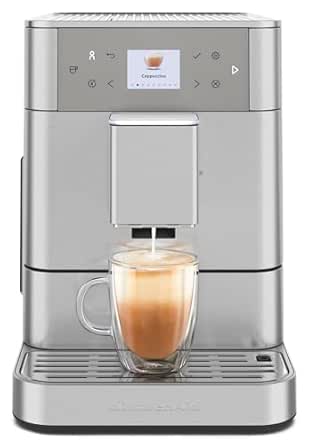 | Best for One-Touch Convenience | Type: Fully automatic espresso machine | Drink recipes: 15 | Grinder: Built-in with automatic smart dosing | VIEW ON AMAZON | See Our Full Breakdown |
| Breville Barista Express Espresso Machine, Black Truffle (BES870BTR) |  | Best for Hands-On Espresso Control | Type: Semi-automatic espresso machine | Grinder: Integrated precision conical burr grinder | Water tank: 67 fl oz | VIEW ON AMAZON | See Our Full Breakdown |
| AMZCHEF Semi-Automatic Espresso Machine with Built-In Grinder |  | Best for Fine Grind Adjustment | Model: CM1626 | Type: Semi-automatic espresso machine | Grind settings: 44 | VIEW ON AMAZON | See Our Full Breakdown |
| espresso machines with builtin grinder | Dimensions | Water tank | Grinder |
|---|---|---|---|
| AMZCHEF Semi-Automatic Espress | 11.2 × 9.1 × 14.2 in (D × W × H) | Removable | — |
| BYESHOP Espresso Machine with | 13.2 × 14.1 × 11.6 in (D × W × H) | — | — |
| Sorgente Espresso Machine with | — | — | — |
| SPACEKEY Espresso Machine with | 12 × 10 × 14 in | — | Built-in conical burr grinder |
| Epsilon Fully Automatic Coffee | 12.4 × 7.6 × 15.8 in | — | — |
| Gevi 20-Bar Espresso Machine w | 11.49 × 13.03 × 16.1 inches | 2.3 liters, removable | Built-in, adjustable 0–30 gears |
| Breville Barista Express Espre | 13.8 × 12.5 × 15.9 inches (D × W × H) | 67 ounces | Integrated precision conical burr grinder |
| XIXUBX Espresso Machine with G | 12.6 × 9.5 × 14.34 inches | 60 fluid ounces, removable | Integrated conical burr grinder |
| Meraki Dual Boiler Espresso Ma | — | — | 45 marked settings with micro-adjustment |
| Hausmojo CM1620 Espresso Machi | 11.02 × 9.53 × 14.72 inches (D × W × H) | 61 ounces (1.8 liters), removable | Built-in conical burr grinder with 44 settings |
| Canoly Fast Cold Brew Espresso | — | 1.8 L, removable | Removable conical burr grinder; 44 settings |
| AIRMSEN Espresso Machine with | 10.2 in D × 7.9 in W × 12 in H | 60 oz (1.8 L), removable | Conical burr; 10 settings |
| KitchenAid KF6 Fully Automatic | 18.5 × 10.2 × 14.3 in (D × W × H) | 2.2 L | Built-in with automatic smart dosing |
| Breville Barista Express Espre | 13.8 × 12.5 × 15.9 in | 67 fl oz | Integrated precision conical burr grinder |
| AMZCHEF Semi-Automatic Espress | 12.5 × 10.82 × 13.38 in | 60 oz | — |
More Details on Our Top Picks
AMZCHEF Semi-Automatic Espresso Machine with Built-In Grinder, Black
The AMZCHEF pairs a 20-setting built-in grinder with adjustable pre-infusion and three brew temperatures, giving home baristas more ways to tune a shot than a simpler one-touch machine like the BYESHOP. Its 3–10-second pre-infusion lets you adjust how the grounds are wetted before extraction, while the steam wand covers milk drinks. That flexibility comes with a hands-on routine: grinding, preparing the portafilter, and managing the shot are not reduced to a single button press. The removable tank helps with refilling, and the compact footprint suits a smaller counter. I’d pick it over the Epsilon for control, but skip it if convenience matters more than adjusting each drink. One listed capacity figure is unclear, so I would not rely on it when planning serving volume.
Pros:- Built-in grinder offers 20 settings for dialing in different beans.
- Three brew temperatures and adjustable pre-infusion provide useful shot controls.
- Steam wand supports lattes and cappuccinos.
- Removable water tank simplifies refilling.
Cons:- Semi-automatic workflow requires hands-on grinding, preparation, and brewing.
- The listed 3.8-pound capacity is not clearly identified.
Best for: Home espresso drinkers who want to adjust grind, temperature, and pre-infusion and are willing to prepare each shot manually.
Not ideal for: Buyers seeking one-touch drinks or a clearly specified high-capacity bean or water reservoir.
- Operation:Semi-automatic
- Pump pressure:20 bar
- Grinder settings:20
- Brew temperatures:197–205°F; 3 levels
- Pre-infusion:3–10 seconds
- Power:1350 W
- Water tank:Removable
- Dimensions:11.2 × 9.1 × 14.2 in (D × W × H)
Our verdict“Choose the AMZCHEF if you want more control over espresso extraction than the one-touch BYESHOP provides and accept a hands-on routine.”
BYESHOP Espresso Machine with Grinder, 20 Bar, Black
The BYESHOP is the straightforward pick for buyers who want a built-in grinder and automatic espresso brewing without managing each extraction. Its five modes include espresso, a larger espresso, and a manual option, giving it more drink-path flexibility than the AMZCHEF, which is oriented toward hands-on preparation. The 61-ounce removable tank and removable drip tray also make routine refilling and cleanup less awkward. Milk drinks take more involvement than the one-touch espresso modes suggest: frothing requires Manual mode, so this is not a fully automated latte station. The bean hopper holds 3.5 ounces, and the water supply may need attention when serving several people. I’d choose it for uncomplicated espresso, not for fine-grained control like the Sorgente’s 30 grind settings.
Pros:- Automatic brewing reduces the preparation steps required for espresso.
- Five coffee modes offer different serving options.
- Removable 61-ounce water tank and drip tray support easier upkeep.
- Built-in steam wand allows milk frothing.
Cons:- Frothing milk requires switching to Manual mode.
- The 3.5-ounce bean hopper and 61-ounce tank can require attention during frequent use.
Best for: People new to whole-bean espresso who want automatic brewing, several preset modes, and an occasional milk drink.
Not ideal for: Espresso hobbyists seeking extensive grind and extraction adjustments, or households making many drinks between refills.
- Operation:Fully automatic
- Coffee modes:Espresso Heating, Espresso Cool, Espresso, Espresso Large, Manual
- Pressure:20 bar
- Water tank capacity:61 oz (1.8 L)
- Bean hopper capacity:3.5 oz
- Power:1350 W
- Dimensions:13.2 × 14.1 × 11.6 in (D × W × H)
- Warranty:1 year
Our verdict“Pick the BYESHOP for convenient automatic espresso and varied modes, but choose the Sorgente if grinder adjustment matters more than simplicity.”
Sorgente Espresso Machine with Grinder, Brushed Stainless Steel
The Sorgente stands out for its 30 grind settings and adjustable grind time, giving a curious home barista more room to tailor a dose than the AMZCHEF’s 20-setting grinder. Its adjustable brew temperature adds another point of control, while the 2.6-liter removable tank is larger than the BYESHOP’s 1.8-liter reservoir and can mean fewer refills during a run of drinks. A steam wand supports milk texturing, and the large drip tray is useful when preparing drinks back-to-back. The tradeoff is that this is not a preset-driven shortcut: grind and brew adjustments call for user involvement and some patience. The one-year warranty is also limited. I’d favor it over the SPACEKEY for its larger stated tank, but choose the SPACEKEY if PID control and a cold brew function matter more.
Pros:- Thirty grind settings and adjustable grind time allow detailed grinder tuning.
- Adjustable brew temperature adds another way to shape extraction.
- 2.6-liter removable water tank supports longer use between refills.
- Steam wand and large drip tray suit milk drinks and repeated preparation.
Cons:- Manual grind and brew customization takes more effort than automatic machines such as the BYESHOP.
- Warranty coverage is limited to one year.
Best for: Home baristas who want many grinder adjustments, temperature control, and a roomy water tank for repeated manual brewing.
Not ideal for: Buyers who want one-touch drink preparation or do not want to spend time tuning grind and brew settings.
- Material:Brushed stainless steel
- Grind settings:30
- Bean hopper capacity:250 g
- Pump pressure:20 bar
- Water tank capacity:2.6 L
- Grind adjustment:Adjustable grind time
- Milk preparation:Steam wand
- Warranty:1 year
Our verdict“Choose the Sorgente for broad grinder adjustment and a larger tank, unless you prefer the SPACEKEY’s stated PID control and cold brew option.”
SPACEKEY Espresso Machine with Grinder and Milk Frother
The SPACEKEY combines a 30-setting conical burr grinder with stated PID temperature control, making it a compelling semi-automatic option for buyers who want to tune shots but also want a clear temperature-control feature. Compared with the AMZCHEF, it adds a cold brew function and accepts either whole beans or ground coffee, though the AMZCHEF lists explicit brew-temperature levels and adjustable pre-infusion. The LCD display gives settings a visible home, and the removable 61-ounce tank suits regular household use. Its semi-automatic workflow still means preparing and managing drinks yourself; the grinder and controls do not make it a one-touch machine like the BYESHOP. At 15 pounds, it is also not especially light to move around. I’d choose it for drink variety and temperature management, not for minimal effort.
Pros:- Conical burr grinder offers 30 settings.
- PID temperature control supports more deliberate shot preparation.
- Cold brew function and ground-coffee compatibility expand drink options.
- Removable 61-ounce water tank and cleanable components support routine maintenance.
Cons:- Semi-automatic brewing requires hands-on preparation rather than BYESHOP-style one-touch operation.
- The 15-pound body is less convenient to move than a lighter countertop appliance.
- Warranty coverage is limited to one year.
Best for: Home or office users who want a semi-automatic grinder machine with temperature control, milk steaming, and a cold brew option.
Not ideal for: Buyers who prioritize automatic drink preparation, a lightweight machine, or a fully hands-off milk workflow.
- Operation:Semi-automatic
- Grinder:Built-in conical burr grinder
- Grind settings:30
- Temperature control:PID
- Pump pressure:20 bar
- Water tank capacity:61 oz
- Dimensions:12 × 10 × 14 in
- Weight:15 lb
Our verdict“Pick the SPACEKEY for a control-focused semi-automatic setup with cold brew, but choose the BYESHOP if you want simpler automatic espresso.”
Epsilon Fully Automatic Coffee Machine with Grinder and Milk Frother
The Epsilon is the most hands-off drink maker in this group: it offers one-touch espresso, Americano, cappuccino, and latte, plus adjustable brew strength and three milk-texture levels. That makes it a better match for households that regularly want milk drinks than the BYESHOP, whose frothing requires Manual mode. Its OLED touchscreen and self-clean function also reduce routine interaction, and the detachable grinder burr is a practical help when cleaning the grinding area. The compromise is capacity: its 1.2-liter reservoir is smaller than the BYESHOP’s 1.8-liter tank and the Sorgente’s 2.6-liter tank, so frequent multi-drink use will mean more refills. At 24 pounds, it is also a machine to give a settled spot rather than move often. I’d pick it for convenience, not manual espresso experimentation.
Pros:- One-touch brewing covers espresso, Americano, cappuccino, and latte.
- Adjustable brew strength and three milk texture levels allow drink personalization.
- Automatic self-clean function reduces routine cleanup steps.
- Detachable grinder burr makes grinder maintenance easier.
Cons:- The 1.2-liter reservoir is smaller than those of the BYESHOP and Sorgente.
- At 24 pounds, it is less convenient to move or store between uses.
Best for: Busy households that want one-touch bean-to-cup espresso and milk drinks with adjustable strength and texture.
Not ideal for: People who make many drinks between refills, move appliances often, or want manual grinder and extraction controls.
- Operation:Fully automatic
- Brewing options:Espresso, Americano, cappuccino, latte
- Milk frother:Built-in; 3 texture levels
- Water reservoir capacity:1.2 L
- Output pressure:19 bar
- Controls:OLED touchscreen
- Cleaning:Automatic self-clean function
- Dimensions:12.4 × 7.6 × 15.8 in
Our verdict“Choose the Epsilon for one-touch milk drinks and automated cleaning, but select the larger-tank Sorgente for frequent manual brewing.”
Gevi 20-Bar Espresso Machine with Built-In Grinder and Milk Frother
The Gevi’s 2.3-liter removable tank is the standout here: it holds more water than the Hausmojo CM1620’s 61-ounce tank, so it can mean fewer refills in a busy household. Its built-in grinder offers 30 adjustment steps, and pre-infusion and adjustable shot volume give hands-on brewers some control without a particularly complicated feature set. The 58 mm portafilter is also a larger format than the 51 mm portafilters on the Hausmojo and XIXUBX, which may appeal to buyers who want that more familiar size.
The tradeoff is that this remains a semi-automatic machine: grinding, brewing, and steaming call for user involvement, and the listed features provide less temperature customization than the XIXUBX. I’d choose the Gevi for tank capacity and a 58 mm setup, not for the most detailed brewing controls.
Pros:- Large, removable 2.3-liter water tank can reduce refill frequency.
- Built-in grinder has 30 adjustment steps.
- 58 mm portafilter and dual-wall single- and double-cup filters are included.
- Pre-infusion and adjustable shot volume allow some control over brewing.
Cons:- Semi-automatic brewing and a manual steam wand require hands-on work.
- Does not list the adjustable PID temperature controls offered by the XIXUBX.
- At 16.1 inches tall, it may be a tight fit beneath some kitchen cabinets.
Best for: Households making several milk-based drinks a day that want a large removable tank and a 58 mm portafilter.
Not ideal for: Beginners seeking mostly hands-off drink preparation or brewers who want adjustable brewing temperature and programmable pre-infusion.
- Type:Semi-automatic espresso machine
- Grinder:Built-in, adjustable 0–30 gears
- Pump pressure:20 bar
- Water tank:2.3 liters, removable
- Portafilter:58 mm
- Dimensions:11.49 × 13.03 × 16.1 inches
- Weight:9.3 pounds
- Brewing features:Adjustable shot volume, pre-infusion, auto shut-off, and cup warmer
Our verdict“Choose the Gevi if you value a generous water tank and 58 mm portafilter more than extensive temperature controls or automatic drink making.”
Breville Barista Express Espresso Machine with Built-In Grinder, Brushed Stainless Steel
The Barista Express is a strong fit for buyers who want a built-in grinder but still want to shape the brewing process themselves. Its conical burr grinder doses into the portafilter, while PID temperature control and low-pressure pre-infusion target more repeatable extraction than the Gevi’s simpler listed controls. The included portafilter, baskets, tamper, milk jug, and cleaning accessories also give a new home barista a useful starting kit rather than requiring a separate accessory hunt.
Compared with the XIXUBX, the Breville’s listed strengths center on its established manual workflow and temperature control, while the XIXUBX provides programmable shot volumes and adjustable pre-infusion. The Breville’s manual preparation takes practice, and at 22.1 pounds it is far heavier than the 11.2-pound XIXUBX. I’d favor it for a dedicated counter space and a buyer interested in learning espresso technique, not for quick, low-effort drinks.
Pros:- Integrated conical burr grinder feeds fresh grounds directly into the portafilter.
- PID temperature control and low-pressure pre-infusion support controlled extraction.
- Steam wand can texture milk for lattes and cappuccinos.
- Includes portafilter, baskets, tamper, milk jug, and cleaning accessories.
Cons:- Manual grinding, dosing, tamping, and steaming take time and practice.
- At 22.1 pounds, it is substantially heavier than the XIXUBX and less convenient to move.
- The one-year limited warranty is specified.
Best for: Home baristas who want an integrated grinder, temperature control, and a substantial accessory set for learning manual espresso.
Not ideal for: People who want lightweight equipment, minimal preparation, or programmable brewing controls instead of a hands-on routine.
- Type:Manual espresso machine
- Grinder:Integrated precision conical burr grinder
- Bean hopper:1/2 pound capacity
- Water tank:67 ounces
- Wattage:1600 watts
- Dimensions:13.8 × 12.5 × 15.9 inches (D × W × H)
- Weight:22.1 pounds
- Warranty:1-year limited
Our verdict“Pick the Barista Express if you want a hands-on machine with integrated grinding and temperature control and have room for its heavier build.”
XIXUBX Espresso Machine with Grinder, PID Temperature Control, and Programmable Settings
The XIXUBX makes the most sense for buyers who want to adjust more than grind size. Its PID temperature range of 194°F–203°F, programmable one-to-five-second pre-infusion, and adjustable shot volumes offer more stated brewing control than the Gevi. A pressure gauge adds a visible reference during extraction, while the integrated conical burr grinder keeps the workflow compact. The machine also heats to brewing temperature in under 30 seconds, a practical plus when you want a quick cup before work.
Compared with the Hausmojo CM1620, the XIXUBX lists more detailed temperature and pre-infusion settings, while both offer a built-in grinder and manual milk steaming. Its 51 mm portafilter is smaller than the 58 mm Gevi’s, and the number of adjustable settings may feel like extra work to a beginner who just wants a straightforward espresso routine. I’d choose it for experimentation, not simplicity.
Pros:- PID temperature adjustment and programmable pre-infusion provide detailed brewing control.
- Integrated conical burr grinder has adjustable grind size and programmable grinding times.
- Heats to brewing temperature in under 30 seconds according to the product specifications.
- Removable 60-ounce tank, hot-water function, and adjustable steam wand support varied drinks.
Cons:- The 51 mm portafilter is smaller than the 58 mm portafilter on the Gevi and Meraki.
- Multiple programmable settings may add setup work for buyers seeking simple operation.
- Semi-automatic brewing and milk steaming still require hands-on technique.
Best for: Curious home brewers who want to tune temperature, pre-infusion, grind timing, and shot volume on a compact semi-automatic machine.
Not ideal for: Buyers who prefer a simpler routine, want a 58 mm portafilter, or expect fully automatic milk drinks.
- Model:EM910
- Grinder:Integrated conical burr grinder
- Portafilter:51 mm
- Brewing temperature:194°F–203°F
- Pre-infusion:Programmable, 1–5 seconds
- Water tank:60 fluid ounces, removable
- Heating system:Thermoblock; reaches brewing temperature in under 30 seconds
- Dimensions:12.6 × 9.5 × 14.34 inches
- Warranty:1 year, with lifetime tech support
Our verdict“Choose the XIXUBX if brewing adjustments matter more to you than a larger portafilter or a simpler, less involved workflow.”
Meraki Dual Boiler Espresso Machine with Grinder and Built-In Scales
The Meraki stands apart from the Gevi, Breville, and other machines here by pairing a 45-setting grinder with built-in scales that track both coffee dose and espresso yield. That measurement-first setup can make it easier to repeat a recipe than relying on shot volume alone. Its independent brew and steam boilers let you brew espresso while texturing milk, a clear workflow advantage for people making several cappuccinos or lattes in a row. A heated grouphead, PID control, controlled pre-infusion, and a 9-bar extraction pressure round out a specification set aimed at precise brewing.
It asks more of the buyer than the Hausmojo CM1620, which lists a more basic semi-automatic setup and a larger water tank. The Meraki’s dual boilers and built-in scales are compelling, but they also make this the choice for buyers who will use those controls rather than simply wanting an integrated grinder. The supplied details don’t give dimensions, weight, tank capacity, or warranty, so fit and ownership planning are less clear.
Pros:- Built-in scales measure coffee dose and espresso yield to within 0.2 g.
- Independent brew and steam boilers allow simultaneous extraction and milk texturing.
- 45 marked grinder settings with micro-adjustment support fine grind tuning.
- PID control, heated grouphead, and controlled pre-infusion support repeatable brewing.
Cons:- Its measurement and adjustment features may be unnecessary for buyers who prefer a simple routine.
- The provided product data does not specify water-tank capacity, dimensions, or weight.
- No warranty details are provided in the supplied product information.
Best for: Experienced home baristas who weigh doses and yields and regularly make espresso drinks with steamed milk.
Not ideal for: Casual users seeking a simple, well-documented setup or buyers who need listed dimensions and water-tank capacity before choosing.
- Boilers:Independent 350 ml brew boiler and 550 ml steam boiler
- Grinder:45 marked settings with micro-adjustment
- Built-in scales:Dose and yield measurement within 0.2 g
- Extraction pressure:9 bar
- Portafilter:58 mm, E61-compatible
- Temperature control:PID control and heated grouphead
- Pre-infusion:Controlled pre-infusion
- Grinder design:Anti-static, near-zero-retention grinder
Our verdict“Choose the Meraki if you want integrated weighing and simultaneous brewing and steaming, and are comfortable with a more technical workflow.”
Hausmojo CM1620 Espresso Machine with Built-In Burr Grinder and Steam Wand
The Hausmojo CM1620 suits buyers who want a built-in grinder for more than a conventional hot espresso routine. Its 44-setting conical burr grinder, manual steam wand, and support for iced coffee and cold brew give it broader stated drink options than the Gevi, whose listed focus is espresso and milk drinks. A removable 61-ounce water tank and included 51 mm accessory kit also make it a practical starter package for someone setting up a home coffee station.
The tradeoff is control and technique: although the Hausmojo lists pre-infusion, its specifications don’t describe the temperature adjustments available on the XIXUBX. Its manual wand also requires practice to texture milk, and the semi-automatic workflow means it isn’t a push-button alternative to the Epsilon fully automatic model in the wider roundup. I’d pick it for drink variety and grind adjustment, not for effortless milk drinks or the most detailed brew tuning.
Pros:- Built-in conical burr grinder offers 44 settings for adjusting grind size.
- Supports hot and cold coffee drinks, including the stated iced coffee and cold brew options.
- Removable 61-ounce water tank reduces the need for frequent refills.
- Includes a 51 mm portafilter, baskets, tamper, dosing funnel, and cleaning brush.
Cons:- Semi-automatic brewing requires hands-on grinding, preparation, and extraction.
- Manual steam wand takes technique to produce textured milk.
- Product specifications do not list PID temperature adjustment like the XIXUBX.
Best for: Home coffee drinkers who want one grinder-equipped machine for espresso, milk drinks, and stated iced or cold-brew options.
Not ideal for: People who want automatic milk preparation, minimal hands-on brewing, or extensive temperature programming.
- Model:CM1620
- Type:Semi-automatic espresso machine
- Grinder:Built-in conical burr grinder with 44 settings
- Output pressure:20 bar
- Water tank:61 ounces (1.8 liters), removable
- Steam wand:Manual
- Dimensions:11.02 × 9.53 × 14.72 inches (D × W × H)
- Power:1350 watts, 110 volts
- Warranty:1-year limited
Our verdict“Pick the Hausmojo if you want a versatile grinder-equipped machine with cold-drink options and accept manual brewing and milk steaming.”
Canoly Fast Cold Brew Espresso Machine with Grinder and Capsule Handle
The Canoly is the most flexible choice here for households that alternate between espresso and other coffee styles. Its 44-setting conical burr grinder gives more room to adjust grind size than the AIRMSEN’s 10 settings, while the Canoly also accepts beans, pre-ground coffee, and compatible capsules. It adds cold brew and several hot drink modes, so one machine can cover varied routines. The removable burrs are useful for cleaning, and the steam wand supports milk drinks without requiring a separate frother.
The tradeoff is that its many options may take more trial and adjustment than a simpler setup, and capsule compatibility is not specified. Choose the KitchenAid KF6 instead if you want one-touch recipes and automatic milk frothing; the Canoly is better suited to people willing to handle more of the preparation themselves.
Pros:- 44 grind settings provide a wide adjustment range
- Supports beans, pre-ground coffee, and compatible capsules
- Includes cold brew and multiple hot drink modes
- Removable grinder burrs and included barista accessories support cleaning and preparation
Cons:- Capsule compatibility is not specified
- The many adjustable settings may take time to dial in
- Milk frothing and espresso preparation require hands-on work
Best for: Households that switch between espresso, cold brew, milk drinks, and different coffee formats, and are comfortable adjusting settings.
Not ideal for: Buyers who want a clearly specified capsule system or fully automatic drink preparation with minimal dialing in.
- Grinder:Removable conical burr grinder; 44 settings
- Brew options:Fresh beans, pre-ground coffee, or compatible capsules
- Cold brew extraction time:50–300 seconds
- Pump pressure:20 bar
- Brew temperature:187°F–209°F
- Water tank:1.8 L, removable
- Heating system:Thermoblock; ready in about 30 seconds
- Width:9.6 inches
Our verdict“Choose the Canoly if you want an adaptable built-in grinder machine that handles several coffee formats and drink styles.”
AIRMSEN Espresso Machine with Grinder and Milk Frother
At 7.9 inches wide, the AIRMSEN is a useful fit for a narrow counter where a larger machine would be awkward. Its built-in conical burr grinder has 10 settings, enough for basic adjustments without the broader range found on the Canoly or AMZCHEF. A 60-ounce removable tank also gives it more water capacity than its compact footprint might suggest, and the touchscreen keeps the controls straightforward to access.
This is still a semi-automatic machine, not a push-button milk-drink system: the manual steam wand calls for hands-on frothing, unlike the KitchenAid KF6’s automatic milk system. The limited grind range also offers less room to fine-tune than those 44-setting alternatives. I’d pick the AIRMSEN for counter space and straightforward espresso routines, but not for buyers who want extensive grind control or effortless cappuccinos.
Pros:- Compact 7.9-inch width suits narrow counters
- Conical burr grinder provides 10 grind settings
- Removable 60-ounce water tank simplifies refilling
- Touchscreen controls and manual steam wand support espresso and milk drinks
Cons:- Manual milk frothing takes practice and hands-on effort
- Ten grind settings offer less adjustment than the Canoly and AMZCHEF
- Product information gives conflicting machine-height figures
Best for: Apartment dwellers or coffee drinkers with narrow counters who want an integrated grinder and a removable, high-capacity water tank.
Not ideal for: Beginners seeking automatic milk drinks or enthusiasts who want a wide range of grind adjustments.
- Grinder:Conical burr; 10 settings
- Operation:Semi-automatic
- Pump pressure:20 bar
- Water tank:60 oz (1.8 L), removable
- Controls:Touchscreen
- Power:1350 W
- Dimensions:10.2 in D × 7.9 in W × 12 in H
- Weight:15 lb
Our verdict“Pick the AIRMSEN when a narrow footprint matters more than extensive grinder control or automatic milk preparation.”
KitchenAid KF6 Fully Automatic Espresso Machine, Stainless Steel
The KF6 is the clear fit for buyers who want a built-in grinder without the manual workflow typical of semi-automatic machines. Its automatic smart dosing and 15 one-touch recipes handle more of the process than the Breville Barista Express, which asks the user to grind into a portafilter and texture milk by hand. Customizable drink strength, length, and temperature add some control without requiring the same level of barista involvement.
The automatic milk frothing is another point of difference, though a separate milk container is required. That convenience comes with a substantial footprint: at 18.5 inches deep, it needs more counter space than the AIRMSEN or Canoly. I’d favor it for a routine built around quick, repeatable milk drinks, but skip it if compact size or hands-on control is a priority.
Pros:- 15 one-touch drink recipes cover common espresso and milk drinks
- Built-in grinder uses automatic smart dosing
- Customizable drink strength, length, and temperature
- Automatic milk frothing reduces hands-on preparation
Cons:- 18.5-inch depth takes substantial counter space
- A separate milk container is required
- Automatic workflow offers less direct preparation control than the Breville Barista Express
Best for: Busy households that want one-touch espresso and milk drinks with automatic grinding, dosing, and frothing.
Not ideal for: Small-kitchen owners or espresso hobbyists who prefer manual milk texturing and direct control over each step.
- Type:Fully automatic espresso machine
- Drink recipes:15
- Grinder:Built-in with automatic smart dosing
- Milk system:Automatic frothing and heating with milk tube
- Water tank:2.2 L
- Power:1450 W
- Dimensions:18.5 × 10.2 × 14.3 in (D × W × H)
- Material and color:Metal; stainless steel
Our verdict“Choose the KF6 if hands-off, customizable drinks matter more than a compact footprint or manual espresso technique.”
Breville Barista Express Espresso Machine, Black Truffle (BES870BTR)
The Barista Express is the strongest fit in this group for buyers who want the built-in grinder to feed a hands-on espresso routine, not replace it. It grinds directly into the portafilter, while PID temperature control and low-pressure pre-infusion support more controlled extraction. Compared with the KitchenAid KF6, this Breville requires more manual work, especially for milk drinks, but gives the user a more direct role in dosing, pulling shots, and texturing milk.
That control is also the main cost in effort: it is not a one-touch option for a quick latte, and the manual steam wand takes practice. Its 67-ounce tank and half-pound bean hopper support regular use, though the machine is heavier and larger than the AIRMSEN. I’d choose it for skill-building and manual control, not for a low-effort coffee routine.
Pros:- Integrated conical burr grinder doses coffee into the portafilter
- PID temperature control and low-pressure pre-infusion support controlled extraction
- Manual steam wand allows milk texturing and latte art
- 67-ounce water tank and half-pound bean hopper support regular use
Cons:- Espresso preparation and milk texturing require hands-on work
- Larger and heavier than compact choices such as the AIRMSEN
- One-year limited warranty
Best for: Espresso drinkers who want an integrated grinder, adjustable hands-on preparation, and the chance to practice milk texturing.
Not ideal for: People who prioritize one-touch drinks, automatic milk frothing, or minimal daily cleanup and preparation.
- Type:Semi-automatic espresso machine
- Grinder:Integrated precision conical burr grinder
- Water tank:67 fl oz
- Bean hopper:1/2 lb
- Power:1600 W
- Dimensions:13.8 × 12.5 × 15.9 in
- Weight:22.1 lb
- Warranty:1-year limited
Our verdict“Choose the Barista Express if you want to control the espresso-making process rather than delegate it to an automatic machine.”
AMZCHEF Semi-Automatic Espresso Machine with Built-In Grinder
The AMZCHEF is a good match for buyers who want many grinder adjustments without moving to an automatic machine. Its 44 grind settings match the Canoly’s range and exceed the AIRMSEN’s 10, giving more scope to adjust for different beans and brewing preferences. It also offers adjustable brew temperature, a touchscreen, and a one-touch cold brew mode, while the stainless steel steam wand keeps milk drinks in the picture.
Compared with the Canoly, the AMZCHEF lists a narrower brew-temperature range and does not specify support for capsules or pre-ground coffee. Both require hands-on preparation, so neither is a substitute for the KitchenAid KF6’s one-touch automatic workflow. The product data also lists a 6-ounce capacity despite the 60-ounce water tank, making that figure unclear. I’d shortlist it for grinder flexibility, but verify capacity details before buying.
Pros:- 44 grind settings offer broad adjustment
- Adjustable brewing temperature supports changes to extraction preferences
- One-touch cold brew mode adds an alternative to espresso
- Touchscreen and stainless steel steam wand support drink preparation
Cons:- Semi-automatic operation requires hands-on preparation
- Product information lists a 6-ounce capacity alongside a 60-ounce water tank
- Does not specify capsule or pre-ground coffee support
Best for: Coffee drinkers who want a broad grind range, adjustable brew temperature, and cold brew in a semi-automatic machine.
Not ideal for: Buyers who want fully automatic drinks, clearly documented serving capacity, or confirmed capsule compatibility.
- Model:CM1626
- Type:Semi-automatic espresso machine
- Grind settings:44
- Brewing temperature:190°F–201°F
- Water tank:60 oz
- Steam wand:8 mm stainless steel
- Power:1500 W
- Dimensions:12.5 × 10.82 × 13.38 in
- Weight:13.9 lb
Our verdict“Choose the AMZCHEF if grinder adjustability and cold brew appeal, but confirm the conflicting capacity details before purchase.”

How We Picked
I ranked these machines around the decisions that matter when a grinder is built into the espresso maker: how much control the brewing workflow offers, how easily a buyer can adjust the grind, and whether milk preparation suits the intended routine. I also weighed usability, stated temperature or boiler features, cleaning needs, countertop demands, and the flexibility to make different drinks. A built-in grinder can save space, but it also ties grinder choice and machine maintenance together, so convenience alone did not determine placement.
The ranking favors machines that appear to balance espresso control with a workable day-to-day routine. That puts the Breville Barista Express first as a broadly appealing semi-automatic option, while the Meraki ranks higher for buyers who specifically want more advanced control. Fully automatic machines earn consideration for reduced effort, but they are not treated as direct replacements for hands-on portafilter brewing. Products with overlapping names are called out rather than presented as clearly different machines without evidence of distinct configurations.
Factors to Consider When Choosing Espresso Machines With Builtin Grinder
Before choosing a machine, decide what you want the built-in grinder to simplify. It can reduce counter clutter and streamline the path from beans to espresso, but it also means grinder performance, cleaning, and machine workflow come as one package. These broader tradeoffs can matter more than a headline feature.
Choose Your Workflow Before Comparing Features
A semi-automatic machine gives you control over grinding, dosing, tamping, and shot timing, but you will need to learn how those steps affect the cup. A fully automatic machine handles more of the process, which can make busy mornings easier at the cost of fewer hands-on decisions. Avoid buying a manual-style model just because it has more controls if you would rather press a button and move on. Think about who will make drinks and how much preparation they will tolerate on an ordinary weekday. A shared household may value a simpler routine more than one enthusiast values extra control. Workflow fit is often a better guide than the length of a feature list.
Check How Much Grinder Adjustment You Can Make
Espresso extraction changes with grind size, bean freshness, dose, and brewing conditions, so grinder adjustment matters even when the grinder is built in. A machine that offers limited adjustment may be harder to tune when you switch beans or find a shot running too quickly or slowly. Do not assume that an integrated grinder automatically matches every roast or brewing preference. Buyers who like experimenting should look for clear control over grind settings and dosing, while casual drinkers may prefer a simpler interface. Also consider whether the grinder is easy to clean; retained grounds can affect freshness and add upkeep. If you expect to change beans often, flexibility deserves more weight than a compact all-in-one design.
Match Milk Preparation to Your Skill and Routine
A steam wand gives you a hands-on way to texture milk, but producing consistent foam takes practice and adds a cleaning step after each use. Automatic milk systems reduce the technique involved, though they may give you less direct control over texture. If you mostly drink straight espresso or americanos, a more elaborate milk setup may add cost, space, and maintenance without helping your routine. For frequent cappuccinos and lattes, think about both the steaming process and the time needed to rinse or clean milk-contact parts. A common mistake is choosing based on the presence of a frother alone rather than how it works. Pick the milk workflow you are willing to repeat every day.
Treat Boiler and Temperature Features as Workflow Choices
Temperature control and boiler design can help buyers who want to manage espresso extraction more deliberately, while dual-boiler setups can support brewing and steaming with less waiting between tasks. Those features matter less if you mainly want a straightforward drink and do not plan to adjust recipes. Advanced controls can also add complexity, so paying for them makes sense only when you will use them. Consider how often you make milk drinks back to back and whether waiting between brewing and steaming would bother you. Do not confuse a high-pressure number in a product name with a complete measure of espresso quality. Look for a coherent set of controls that suits your habits, not one specification in isolation.
Budget for Cleaning, Space, and Long-Term Ownership
All-in-one machines save space compared with separate grinders and espresso makers, but they still need room for the bean hopper, portafilter work, and milk steaming. Measure the area where you plan to use the machine, including clearance for filling water and accessing removable parts. Grinder chutes, drip trays, brew components, and milk systems each add cleaning tasks, and the routine can influence whether the machine gets used regularly. Before choosing, check which parts are removable and how the manufacturer directs owners to clean them. A cheaper or simpler setup can be the better value if it fits your routine and is easier to maintain. Paying more is most defensible when a specific feature solves a recurring problem, such as limited counter space or frequent drink preparation.
Frequently Asked Questions
Is a built-in grinder a good choice if I am new to making espresso?
It can be, especially if you want one compact setup instead of buying a grinder and espresso machine separately. The main learning curve remains: semi-automatic machines still require practice with grind adjustment, dosing, tamping, and shot timing. If you want fewer manual steps, a fully automatic model may suit you better than a machine with a portafilter and steam wand. Decide whether learning the process sounds enjoyable or like extra work. A built-in grinder simplifies the equipment list, but it does not make every espresso step automatic.
Should I choose a fully automatic machine or a semi-automatic machine with a built-in grinder?
Choose based on the experience you want, not just the drinks you plan to make. A fully automatic machine is a stronger fit if convenience and repeatable button-led preparation matter most. A semi-automatic model suits someone who wants to control the shot and is willing to practice. Automatic brewing can limit how much you adjust each step, while manual brewing asks for time and attention. If multiple people will use the machine, ask whether everyone wants the same level of involvement. That household preference may settle the choice more quickly than comparing feature lists.
Does a dual-boiler machine make sense if I mostly drink milk-based espresso drinks?
It may help if you regularly make several drinks in a row and want to move between brewing and steaming with fewer pauses. For occasional lattes, a more elaborate boiler setup may not change your daily routine enough to justify the added complexity. Milk technique, steaming power, and cleanup still matter even when a machine has two boilers. Consider how often you prepare drinks for other people, not only what you make for yourself. Buyers who mainly drink straight espresso may get more value from grind control and shot consistency than from simultaneous brew-and-steam capability.
Can I use pre-ground coffee in an espresso machine with a built-in grinder?
That depends on the specific machine and its brewing design; a built-in grinder does not automatically mean there is a bypass for pre-ground coffee. Check the product instructions for a dedicated ground-coffee chute or mode before buying, especially if anyone in your household uses decaf. Feeding grounds through a bean hopper can cause mess and may interfere with the grinder. If you switch between regular and decaf often, a supported bypass can be more useful than extra grinder settings. If it is not listed, plan to use the integrated grinder or confirm compatibility with the manufacturer.
What should I check when two listings appear to describe the same espresso machine?
Compare the exact model number, finish, included accessories, and control layout rather than relying on a similar product name. This roundup includes repeated AMZCHEF and Breville Barista Express names, so the listings should not be treated as distinct upgrades without evidence of a configuration difference. Confirm details such as grinder controls, milk equipment, and included portafilter parts on the specific listing you plan to buy. A different color or wording may not indicate a different brewing system. If the specifications conflict or remain unclear, check the manufacturer’s model documentation before deciding.
Conclusion
For most buyers, I recommend the Breville Barista Express as the best overall because it combines an integrated grinder with a hands-on workflow without centering the choice on advanced controls. For best value, compare the simpler semi-automatic options—including AMZCHEF, BYESHOP, Gevi, and SPACEKEY—against the controls and accessories each exact listing includes; the right fit depends on which features you will use. For a premium, control-oriented setup, choose the Meraki Dual Boiler if its more involved workflow matches your interest in dialing in shots. For beginners who prioritize convenience, the KitchenAid KF6 or Epsilon is the better direction than a manual machine with a learning curve. For compact all-in-one needs, focus on dimensions and cleaning access; for frequent milk drinks, choose the steaming system you will actually use. Check exact model details where listings overlap, then let your preferred daily workflow make the final call.
Fall Picks
fall essentials
As an affiliate, we earn on qualifying purchases.