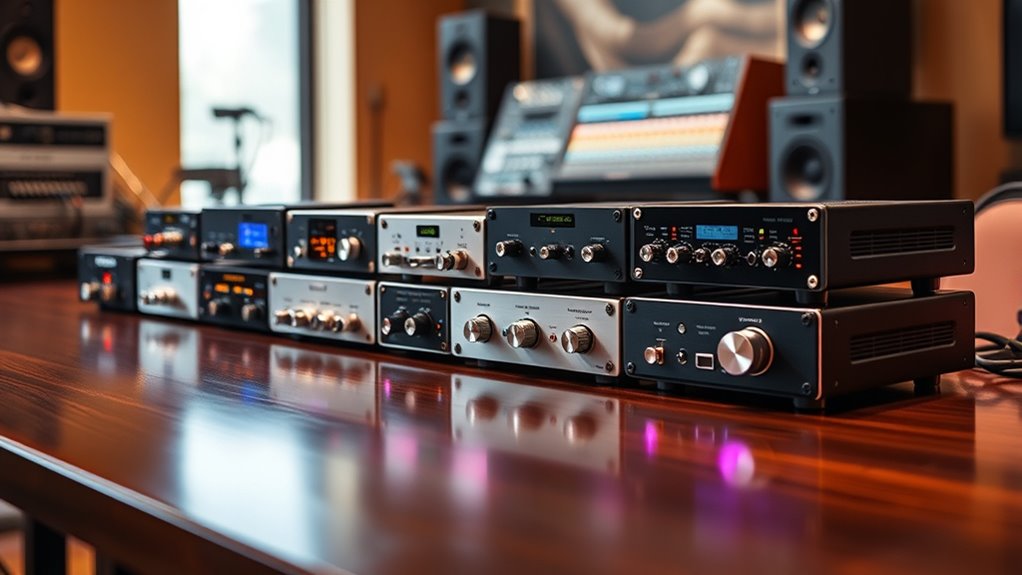

A desk headphone amp sits between your computer or source and your headphones, and the right one can transform how your setup sounds at your desk. The Aveek DAC-200 takes the top spot for combining a capable DAC, a flexible preamp output, and enough power for demanding headphones in one tidy desktop box. If balanced connections matter to you, the Fosi Audio ZH3 brings genuine balanced architecture, while the Fosi Audio K5 Pro remains the smart pick for gamers who want plug-and-play simplicity. The main tradeoff in this category is between do-everything DAC-amp combos and pure analog amps like the Douk U3 models, which trade inputs and features for warmth and simplicity. Read on for the full breakdown of all seven picks and who each one suits best.

Get business pricing on tech for your team
- Business-only prices and quantity discounts
- Tax-exempt purchasing
- Multiple users, one account, clear invoices
Complete the kit



Key Takeaways
- The Aveek DAC-200 ranks first because it is the only pick that handles DAC, headphone amplification, and preamp duties without a meaningful weak spot — every other model forces at least one compromise.
- Balanced connectivity separates the Fosi Audio ZH3 from the rest of the lineup; if your headphones have a 4.4mm or XLR cable, none of the single-ended alternatives can match its channel separation.
- The two Douk Class A amps prove that raw analog warmth still has a place on a desk, but they lack DACs entirely — you need an existing digital source to use them at all.
- Gamers get the best fit from the Aveek DAC-200 and Fosi Audio K5 Pro, both of which handle microphone routing and low-latency audio in ways the audiophile-focused picks ignore.
- The Neoteck and Douk U3 Mini anchor the budget end, and the comparison shows where the savings come from: less power for hard-to-drive headphones and fewer input options, not necessarily worse sound for easy loads.
| Aveek DAC-200 Gaming DAC, Headphone Amplifier and Audio Preamp |  | Best for Gaming Setups | Inputs: Bluetooth, USB, optical, coaxial, RCA | EQ: 3-band: bass, mid, treble | Headphone impedance range: 16–100Ω | VIEW ON AMAZON | See Our Full Breakdown |
| Fosi Audio ZH3 Balanced DAC and Headphone Amplifier |  | Best Overall | DAC chip: AKM4493SEQ | Processor: XMOS XU316 | Max format: PCM 768 kHz/32-bit; DSD512 | VIEW ON AMAZON | See Our Full Breakdown |
| Fosi Audio K5 Pro Gaming DAC and Headphone Amplifier |  | Best Value | Inputs: USB-C, optical, coaxial | Outputs: RCA, 3.5 mm AUX | USB-C sampling rate: Up to 24-bit/96 kHz | VIEW ON AMAZON | See Our Full Breakdown |
| Douk Audio U3 PRO HiFi Mini Class A Headphone Amplifier |  | Best Power per Dollar | Output power: 1500 mW at 32Ω | Impedance range: 18–600Ω | Inputs: Stereo RCA, 3.5 mm AUX | VIEW ON AMAZON | See Our Full Breakdown |
| Douk Audio U3 Mini Class A Headphone Amplifier |  | Best Minimalist Analog Amp | Maximum output power: 1300 mW | Amplifier class: Class A | Input: RCA | VIEW ON AMAZON | See Our Full Breakdown |
| Neoteck 3.5mm HiFi Headphone Amplifier with Bass Boost |  | Best Budget Portable Pick | Impedance range: 16–600 Ω | Input/output: 3.5mm AUX | Signal-to-noise ratio: >100 dB | VIEW ON AMAZON | See Our Full Breakdown |
| FiiO JadeAudio GIGAS 1 Desktop Headphone Amplifier |  | Best Powerhouse for Demanding Headphones | Model: GIGAS 1 | Amplifier type: Class AB Discrete | Transistors: ON Semiconductor MJE243G/MJE253G | VIEW ON AMAZON | See Our Full Breakdown |
| deskheadphone amp | Inputs | Outputs | Impedance range |
|---|---|---|---|
| Aveek DAC-200 Gaming DAC | Bluetooth, USB, optical, coaxial, RCA | — | — |
| Fosi Audio ZH3 Balanced DAC an | USB, optical, coaxial, RCA | 4.4 mm, 6.35 mm, RCA, XLR | 16–300Ω |
| Fosi Audio K5 Pro Gaming DAC a | USB-C, optical, coaxial | RCA, 3.5 mm AUX | 16–300 ohms |
| Douk Audio U3 PRO HiFi Mini Cl | Stereo RCA, 3.5 mm AUX | 3.5 mm, 6.35 mm | 18–600Ω |
| Douk Audio U3 Mini Class A Hea | — | — | — |
| Neoteck 3.5mm HiFi Headphone A | — | — | 16–600 Ω |
| FiiO JadeAudio GIGAS 1 Desktop | RCA, 3.5mm | 4.4mm Balanced, 3.5mm Single-ended (CTIA mic support) | — |
More Details on Our Top Picks
Aveek DAC-200 Gaming DAC, Headphone Amplifier and Audio Preamp
The Aveek DAC-200 stands out as the most gamer-focused option in this lineup. Unlike the Fosi Audio K5 Pro, which shares the gaming-DAC role, the DAC-200 adds a dedicated microphone input plus Bluetooth, giving it five input types where the K5 Pro offers three. The independent bass, mid and treble controls let you tune footsteps and dialogue separately from explosions — a real advantage for competitive play. The tradeoff is raw capability: its 16–100Ω impedance range and 24-bit/96 kHz ceiling are narrower than the K5 Pro’s 16–300Ω handling or the Fosi ZH3‘s high-res support. If your headphones are demanding planars or high-impedance studio cans, this amp runs out of headroom where the others don’t.
Pros:- Combines DAC, headphone amp, preamp and mic input in one unit
- Five input types including Bluetooth and optical
- Independent three-band EQ for game-audio tuning
- Ships with all needed cables plus a headset splitter
Cons:- Headphone support tops out at 100Ω, well below rivals that handle 300Ω+
- Maxes out at 24-bit/96 kHz, behind the K5 Pro’s optical resolution
- Vague battery requirement in the listing raises questions
Best for: PC and console gamers who want chat audio, Bluetooth and EQ tuning in one desktop box
Not ideal for: Owners of high-impedance headphones above 100Ω — the power output isn’t designed for them
- Inputs:Bluetooth, USB, optical, coaxial, RCA
- EQ:3-band: bass, mid, treble
- Headphone impedance range:16–100Ω
- Audio processing:24-bit/96 kHz
- Signal-to-noise ratio:113 dB
- Total harmonic distortion:Below 0.003%
- Output:3.5 mm
- Dimensions:4.65 × 2.6 × 1.18 inches
Our verdict“A smart pick for gamers who prioritize chat integration and EQ flexibility over pure audiophile power.”
Fosi Audio ZH3 Balanced DAC and Headphone Amplifier
This is the pick that makes the most sense for a buyer who wants one box to grow into. The Fosi Audio ZH3 pairs an AKM4493SEQ DAC with XMOS processing for PCM 768 kHz/32-bit and DSD512 — formats far beyond anything else here. Compared with the Aveek DAC-200 or K5 Pro, its balanced 4.4 mm output delivers substantially more power (2570 mW per channel at 32Ω), comfortably driving headphones that would strain the smaller units. The swappable op-amps mirror the Douk U3 PRO‘s tweakability, but with digital inputs the Douk lacks. Two gripes keep it from perfection: the tone controls only work on the headphone output, and RCA versus XLR output levels differ enough to complicate monitor matching.
Pros:- High-resolution PCM 768 kHz/32-bit and DSD512 support
- Both balanced 4.4 mm and single-ended 6.35 mm outputs
- Powerful enough for demanding 16–300Ω headphones
- Swappable op-amps and six digital filters for tuning
Cons:- EQ applies only to the headphone output, not RCA/XLR outs
- RCA and XLR output levels differ noticeably
- Heavier and pricier-feeling commitment than simpler rivals
Best for: Audio enthusiasts with balanced headphones who want a do-everything desktop hub
Not ideal for: Buyers who mainly need tone shaping on speakers — the EQ bypasses line outputs
- DAC chip:AKM4493SEQ
- Processor:XMOS XU316
- Max format:PCM 768 kHz/32-bit; DSD512
- Headphone outputs:6.35 mm single-ended; 4.4 mm balanced
- Output power:640 mW @ 32Ω (6.35 mm); 2570 mW @ 32Ω (4.4 mm)
- Inputs:USB, optical, coaxial, RCA
- Outputs:4.4 mm, 6.35 mm, RCA, XLR
- Impedance range:16–300Ω
- Warranty:24 months
Our verdict“The most complete desktop solution here — buy it if balanced drive and hi-res sources are part of your future.”
Fosi Audio K5 Pro Gaming DAC and Headphone Amplifier
The Fosi Audio K5 Pro hits the sweet spot between price and capability. It out-specs the Aveek DAC-200 where it counts for headphone owners — a 16–300Ω impedance range versus 100Ω — while still offering microphone support and bass/treble controls for gaming. Optical and coaxial inputs handle 24-bit/192 kHz, matching the resolution most people actually own. It can’t touch the Fosi ZH3‘s balanced output or DSD support, but it covers the inputs and power a typical desk setup needs without the extra bulk. The compromises are real but small: USB-C tops out at 96 kHz, and phone connection means occupying the USB-A/C port rather than a dedicated input. For most first-time buyers, those are tradeoffs worth accepting.
Pros:- Drives headphones from 16 to 300Ω
- Optical and coaxial support up to 24-bit/192 kHz
- Mic support plus bass and treble controls
- Includes splitter, USB and optical cables in the box
Cons:- USB-C input limited to 24-bit/96 kHz
- Phone use ties up the USB-A/C port
- No balanced headphone output unlike the ZH3
Best for: First-time buyers wanting one affordable box that handles gaming, music and 300Ω headphones
Not ideal for: Owners of balanced 4.4 mm headphone cables — there’s no balanced output at all
- Inputs:USB-C, optical, coaxial
- Outputs:RCA, 3.5 mm AUX
- USB-C sampling rate:Up to 24-bit/96 kHz
- Optical/coaxial sampling rate:Up to 24-bit/192 kHz
- Signal-to-noise ratio:≥110 dB
- Total harmonic distortion:≤0.003%
- Impedance range:16–300 ohms
- Op-amp chip:Texas Instruments NE5532
Our verdict“The smart default choice — nearly the ZH3’s usefulness for basic setups at a friendlier commitment level.”
Douk Audio U3 PRO HiFi Mini Class A Headphone Amplifier
If you already own a DAC or your source is analog, the Douk U3 PRO is the muscle option. Its 1500 mW output and 18–600Ω impedance range cover even 600Ω Beyerdynamic-style headphones that would leave the Aveek DAC-200 and K5 Pro gasping. The replaceable op-amp architecture invites the same tinkering culture as the Fosi ZH3, but here it’s the whole product rather than a bonus. That focus is also the limitation: there’s no USB, optical or Bluetooth input — it’s RCA and 3.5 mm analog only, so your source has to do the digital work. It also needs an external 5V DC supply rather than drawing bus power. What you get in exchange is genuine high-impedance drive in a box that barely weighs six ounces.
Pros:- 1500 mW output drives headphones up to 600Ω
- Replaceable op-amps for sound customization
- Compact, attractive chassis for tight desks
- Both RCA and 3.5 mm inputs for flexible analog sources
Cons:- Analog-only — no USB, optical or coaxial inputs
- Requires a separate external 5V DC power supply
- No volume-independent tone controls
Best for: Owners of 300–600Ω headphones who already have a DAC or analog source
Not ideal for: Anyone wanting an all-in-one — there are no digital inputs of any kind
- Output power:1500 mW at 32Ω
- Impedance range:18–600Ω
- Inputs:Stereo RCA, 3.5 mm AUX
- Outputs:3.5 mm, 6.35 mm
- Amplifier architecture:OP+BUF Class A with replaceable op-amps
- Power input:DC 5V external
- Weight:5.76 ounces
- Warranty:18-month limited
Our verdict“A pure power stage for hard-to-drive headphones — pair it with a DAC and skip it if you need one-box simplicity.”
Douk Audio U3 Mini Class A Headphone Amplifier
The Douk U3 Mini is the stripped-down sibling of the U3 PRO. Both share the Class A circuit and pluggable op-amp socket, but the Mini keeps things to a single RCA input with 3.5 mm and 6.35 mm outputs — no AUX input, no frills, just amplification. Its 1300 mW output sits just under the PRO’s 1500 mW, which in practice means most high-impedance headphones sound fine on either. Unlike every DAC-equipped model here — the K5 Pro, ZH3 and DAC-200 — it does nothing digital, so it suits desks where a turntable, CD player or existing DAC already handles sources. The flexible 5–20 V DC input is a nice touch for tinkerers who want to experiment with power supplies. The tradeoff is obvious: this is half a system, not a complete one.
Pros:- Class A circuit for low-distortion listening
- 1300 mW output handles many high-impedance headphones
- Pluggable op-amp socket supports upgrades
- Accepts 5–20 V DC, allowing power supply experimentation
Cons:- Single RCA input only — fewer source options than the U3 PRO
- Requires an external DC power supply
- No digital connectivity at all
Best for: Minimalists with an existing analog source who want clean Class A amplification on a small desk
Not ideal for: Anyone starting from scratch — you’ll still need a DAC or analog source to feed it
- Maximum output power:1300 mW
- Amplifier class:Class A
- Input:RCA
- Headphone connections:3.5 mm and 6.35 mm
- Input voltage:5–20 V DC
- Channels:2
- Mounting:Freestanding
Our verdict“Choose it over the U3 PRO only if you value simplicity and already have a single analog source; otherwise step up.”
Neoteck 3.5mm HiFi Headphone Amplifier with Bass Boost
Where most entries in this roundup, like the FiiO JadeAudio GIGAS 1 or the Douk Audio U3 PRO, are built to live on a desk permanently, this little amp earns its spot by refusing to stay put. The aluminum body and pocketable footprint make it a natural companion for a laptop bag, and the internal battery rated for over 8 hours means it works untethered from a wall outlet entirely — something none of the desktop units here can claim.
The 16–600 Ω impedance range is surprisingly broad at this tier, though buyers should temper expectations: a tiny portable amp won’t drive demanding planars with the authority the GIGAS 1 does. The real party trick is the bass boost switch, which flatters lean-sounding headphones. The catch: it shouldn’t be used while charging, so it isn’t a true desk-and-travel hybrid.
Pros:- Genuine portability with over 8 hours of internal battery life
- Broad 16–600 Ω impedance support handles most consumer headphones
- Bass boost switch adds low-end warmth on demand
- Solid aluminum build that outclasses typical plastic pocket amps
Cons:- Cannot be safely used while charging, interrupting long listening sessions
- 3.5mm-only input and output limits connectivity versus balanced-capable rivals
Best for: Commuters and travelers who want louder, bass-forward sound from a phone or laptop without carrying desk gear
Not ideal for: Owners of power-hungry planar magnetic headphones — a small battery-powered amp can’t deliver the current they need
- Impedance range:16–600 Ω
- Input/output:3.5mm AUX
- Signal-to-noise ratio:>100 dB
- THD+N:0.0005%
- Battery life:More than 8 hours
- Material:Aluminum
Our verdict“Buy this if you need an affordable, battery-powered volume and bass boost for headphones on the go; skip it if your headphones need serious desktop power.”
FiiO JadeAudio GIGAS 1 Desktop Headphone Amplifier
This is the brute of the lineup. With 4600mW per channel through the balanced 4.4mm output, the GIGAS 1 outmuscles everything else here — the Fosi Audio ZH3 and Douk Audio U3 PRO are fine partners for typical dynamic headphones, but planar magnetic models that crave current are where this amp justifies itself. The Class AB discrete circuit with ON Semiconductor transistor pairs gives it a warmer, more textured character than the cleaner but more utilitarian gaming-oriented Fosi Audio K5 Pro.
The dual gain modes are a thoughtful touch, keeping sensitive IEMs quiet and hiss-free at low gain while high gain feeds hungry cans. Note the strings attached: maximum output requires a PD 12V USB-C source, so buyers will likely need to add one, and the chassis is strictly a desk citizen — unlike the pocketable Neoteck, it isn’t going anywhere.
Pros:- 4600mW balanced output drives demanding planar and high-impedance headphones effortlessly
- Class AB discrete circuit delivers a smooth, natural, engaging sound signature
- Both 4.4mm balanced and 3.5mm single-ended outputs, plus mic pass-through for headsets
- Flexible USB-C power with PD 12V support for extra headroom
Cons:- Needs a specific PD 12V power source to reach full output capability
- Desktop-only form factor with no battery option for portable use
Best for: Listeners with hard-to-drive planar magnetic or high-impedance headphones who also want IEM-friendly gain switching
Not ideal for: Anyone wanting a portable or travel amp — and casual listeners who’d never tap a fraction of this power
- Model:GIGAS 1
- Amplifier type:Class AB Discrete
- Transistors:ON Semiconductor MJE243G/MJE253G
- Max output power:4600mW + 4600mW (Balanced)
- Outputs:4.4mm Balanced, 3.5mm Single-ended (CTIA mic support)
- Inputs:RCA, 3.5mm
- Power input:USB-C (5V standard, PD 12V supported)
- Gain modes:Dual (Low/High)
Our verdict“If your headphones are known power hogs and other amps leave them sounding flat, this is the muscle you need — just budget for the right power supply.”

How We Picked
My ranking rests on four buyer-facing criteria: power and headphone compatibility, input flexibility, everyday desk usability, and value relative to what you give up. Power matters most because desk setups range from sensitive IEMs to power-hungry planars — an amp that drives only easy headphones limits your future upgrades. Input flexibility determined whether a product could serve as a full desktop hub (USB, line in, preamp out) or only as one link in a chain. Usability covered volume knob feel, switching between outputs, and how forgiving each unit is with different sources.
The ranking logic follows a simple principle: versatility with fewer compromises ranks higher. That is why the Aveek DAC-200 leads — it competes with dedicated DACs on detail, with dedicated amps on power, and adds preamp functionality none of the pure amps offer. Analog-only models like the Douk pair rank lower not because they sound worse, but because they demand you already own a DAC. Budget picks earned their positions by being honest about their limits rather than by pretending to compete with the full-featured units.
| deskheadphone amp | Inputs |
|---|---|
| Aveek DAC-200 Gaming DAC | Bluetooth, USB, optical, coaxial, RCA |
| Fosi Audio ZH3 Balanced DAC an | USB, optical, coaxial, RCA |
| Fosi Audio K5 Pro Gaming DAC a | USB-C, optical, coaxial |
| Douk Audio U3 PRO HiFi Mini Cl | Stereo RCA, 3.5 mm AUX |
| Douk Audio U3 Mini Class A Hea | — |
| Neoteck 3.5mm HiFi Headphone A | — |
| FiiO JadeAudio GIGAS 1 Desktop | RCA, 3.5mm |
Factors to Consider When Choosing Deskheadphone Amps
Choosing a desk headphone amp is easier once you know which questions actually change your decision. The factors below go beyond the individual reviews to explain the category-level tradeoffs that catch buyers off guard.
Know Your Headphones Before You Pick an Amp
The single most common mistake is buying an amp before understanding what your headphones need. Sensitive headphones and IEMs (roughly above 100 dB sensitivity) are driven loudly by almost anything, including the Neoteck mini, which means paying for raw power is wasted money. Low-sensitivity planars and high-impedance dynamics are the opposite case: they need voltage swing and current that only fuller-size units like the Aveek DAC-200 or FiiO GIGAS 1 can supply without audible strain. If an amp clips or distorts at your normal listening volume, the problem is the pairing, not the headphones. Check your headphone’s impedance and sensitivity specs first, then work backward to the amp. Buyers who skip this step often end up with either an underpowered amp that sounds flat or an overpowered one that spends most of its volume range unusable. A useful rule: if your headphones came with a balanced cable, they probably deserve an amp that can use it.
DAC-Amp Combo or Pure Amp?
The biggest structural decision is whether the box on your desk handles digital-to-analog conversion itself or only amplifies an existing signal. Combo units like the Aveek DAC-200, Fosi ZH3, and K5 Pro simplify your desk, reduce cable clutter, and usually cost less than buying separates. The tradeoff is upgrade friction: if you later buy a better DAC, the amp section of your combo may become redundant. Pure analog amps like the Douk U3 models pair with any source you already own and let you upgrade each link independently, but they do nothing on their own. Buyers who already own a good DAC or interface should almost never buy a combo. Buyers starting from a laptop headphone jack should almost always buy one. This is also why the ranking favors combos at the top — most desk setups start from a digital source.
Single-Ended vs Balanced Connections
Balanced architecture is not marketing fluff, but it matters less than forums suggest. A 4.4mm or XLR balanced output effectively doubles available power and improves channel separation, which is why the Fosi ZH3 earns the premium slot. However, balanced only helps if the entire chain supports it — your headphones need a balanced cable, and the amp needs a true balanced circuit, not just a balanced jack wired single-ended. If your headphones terminate in a 3.5mm or 6.35mm plug, a balanced amp gives you nothing extra, and a well-designed single-ended amp like the Douk U3 PRO will sound just as engaging. The practical advice: buy balanced only when your current headphones support it or you plan to upgrade to headphones that do. Otherwise you are paying for headroom you cannot use.
Class A Warmth and the Heat Tradeoff
The Douk amps in this lineup run Class A, and that design choice shapes the whole ownership experience. Class A circuits deliver a smooth, harmonically rich sound with no crossover distortion, which many listeners describe as warmer and more musical than typical Class D combos. The cost is heat and inefficiency: a Class A mini-amp runs warm to the touch continuously and draws power even when idle. For a desk that is occupied for hours, that constant warmth is usually a non-issue; for occasional listeners it is wasted electricity. Class A amps also tend to have fewer features — no DAC, no USB, no fancy filters — because the design philosophy prioritizes the amplification path over convenience. Decide whether you value character or capability before choosing this path.
Desk Footprint and Daily Ergonomics
A desk amp is something you touch dozens of times a day, and physical design affects satisfaction more than spec sheets suggest. A front-facing volume knob with good weight, clearly labeled inputs, and a headphone jack you can find blind are small things that compound over months of use. Compact units like the Neoteck and Douk U3 Mini fit under monitors or beside keyboards where full-width units cannot, but tiny enclosures often mean cramped rear panels and stiff cable connections. Units with preamp outputs, like the Aveek DAC-200, let you switch between headphones and powered speakers without replugging anything — a quality-of-life feature that is easy to underestimate until you live without it. Measure your desk space honestly before ordering, and picture where cables will route.
When to Pay More and When to Stop
Spending more in this category buys three things: power for difficult headphones, balanced circuitry, and better DAC chips. It does not automatically buy better sound for easy headphones — a sensitive pair driven from the K5 Pro may sound nearly identical to the same pair on a flagship unit. The sensible spending tiers are clear from this lineup: under the budget picks for IEMs and portables, mid-tier combos like the K5 Pro for typical headphones and gaming, and the Aveek or ZH3 tier only when you need preamp routing or balanced drive. Beyond that, diminishing returns arrive quickly at desk listening distances with typical background noise. Match the amp to your headphones’ actual demands, and put the savings into better headphones — that upgrade path almost always improves sound more than a more expensive amp driving the same pair.
Frequently Asked Questions
Can a desk headphone amp improve sound from my laptop, or do I need a DAC too?
It depends on what your laptop’s built-in audio is doing wrong. If your laptop outputs audible hiss, electrical whine, or interference from its own components, the problem lives in the DAC stage, and only a combo unit like the Fosi Audio K5 Pro or Aveek DAC-200 will fix it by bypassing the internal DAC entirely. If the laptop sounds clean but simply runs out of volume with demanding headphones, a pure analog amp like the Douk U3 is enough. Many buyers misdiagnose low volume as a DAC problem when it is purely an amplification shortfall. A quick test: plug your headphones into a phone. If they get loud and clean there, the issue is power, not conversion, and a standalone amp is the cheaper fix.
Is the balanced output on the Fosi ZH3 worth it if my headphones only have a 3.5mm plug?
No — and this is one of the most common wasted purchases in the category. A balanced output only delivers its benefits (extra power, better channel separation) when the headphones themselves are wired with a balanced cable ending in 4.4mm, 4-pin XLR, or 2.5mm. With a standard single-ended plug, you will hear the ZH3’s DAC quality but none of its balanced advantages, and a cheaper single-ended combo like the K5 Pro will get you a similar experience for less. The ZH3 makes sense if your current headphones have a detachable cable you can replace with a balanced one, or if you plan to buy balanced-capable headphones soon. Otherwise, treat balanced as a future-proofing feature you are paying for today and using never.
Do the Class A Douk amps sound better than DAC-amp combos like the Aveek?
Better is the wrong word — different is more accurate. The Douk U3 and U3 PRO run Class A circuits that produce a characteristically warm, smooth, forgiving presentation, which flatters vocal-heavy music and long listening sessions. The Aveek DAC-200 aims for accuracy and detail retrieval, which reveals more of the recording but can also expose harsh masters. Neither approach is objectively superior; it depends on what you enjoy. The practical difference is bigger than sound, though: the Douk units need an existing DAC or analog source, run warm continuously, and offer no USB input. If your entire library lives on a computer and you want one box, the combo wins on convenience even if the Class A character appeals to you.
Which of these amps can drive power-hungry planar headphones?
Planars are the stress test of this lineup because they demand current rather than voltage, and weak amps make them sound thin and lifeless. The Aveek DAC-200, Fosi Audio ZH3 (via its balanced output), and FiiO GIGAS 1 have the power reserves to drive most desktop planars properly. The K5 Pro handles efficient planars adequately but is better matched to easy-to-moderate loads. The Neoteck and Douk U3 Mini should be considered IEM-and-easy-headphone amps only — they will get loud with planars but lack the current to control the drivers, which shows up as mushy bass and compressed dynamics. If planars are in your present or future, buy toward the top of this list; underamping them wastes the money you spent on the headphones.
Can I use a desk headphone amp with powered desk speakers too?
Yes, if the amp has a preamp or line output — and this feature separates the Aveek DAC-200 from most of the pack. Its preamp output lets you run powered speakers from the same box, switching between headphones and speakers with a flick or knob turn instead of swapping cables. The Fosi ZH3 and GIGAS 1 offer similar flexibility at their outputs. Pure headphone amps like the Douk models generally lack this, so your speakers would need their own volume control and a separate connection to the source. If your desk pairs headphones with monitors, treat preamp output as a must-have feature rather than a bonus — it is the difference between an integrated desktop hub and a collection of boxes fighting for the same source.
Conclusion
The right desk headphone amp depends entirely on what sits on either side of it. For most desks, the Aveek DAC-200 is the best overall pick — it drives demanding headphones, handles DAC and preamp duties, and eliminates the need for anything else on your desk. The Fosi Audio K5 Pro is the best value for gamers and anyone with easy-to-drive headphones who just wants clean, loud, hassle-free sound. At the premium end, the Fosi Audio ZH3 earns its slot through genuine balanced architecture that rewards headphones with balanced cables.
For beginners, the Neoteck is the least intimidating entry point — small, cheap, and adequate for IEMs and sensitive headphones. For listeners chasing analog warmth rather than features, the Douk Audio U3 PRO (with the U3 Mini as its budget sibling) is the best pure-amp choice, provided you already own a DAC. And for a straightforward, well-built desktop amp without gaming extras, the FiiO JadeAudio GIGAS 1 fills that gap cleanly. Match the pick to your headphones, your sources, and your desk space — in that order — and you will not go wrong.
Halloween Picks
halloween
As an affiliate, we earn on qualifying purchases.