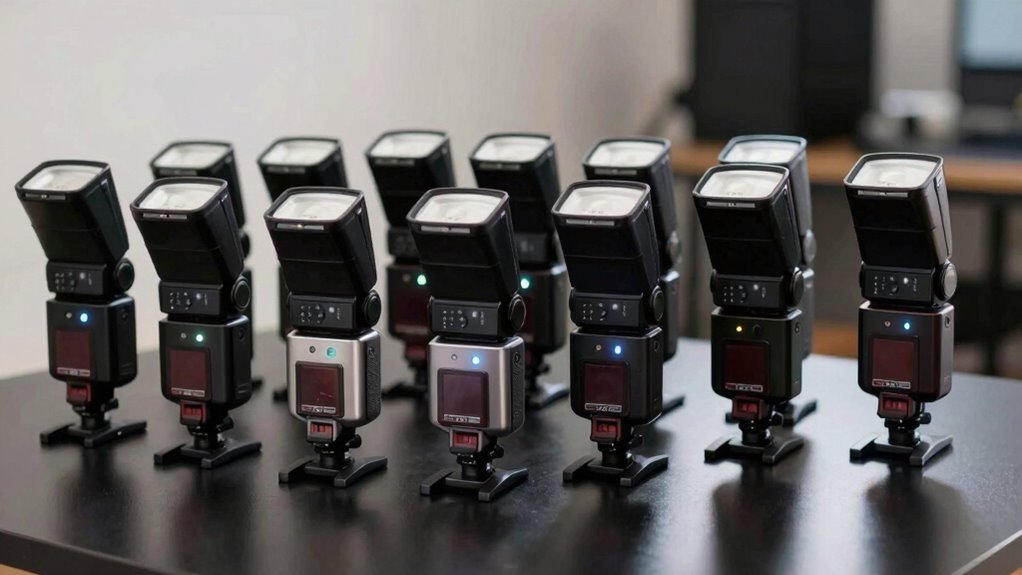

When choosing camera flashes speedlights, the key factors are power, versatility, and ease of use. The Godox TT685II-S stands out as the best overall due to its reliable TTL capabilities and fast recycle times. For budget-conscious photographers, the Neewer TT560 offers solid performance at a lower price, while the Godox V860III-S provides impressive power and wireless control for serious shooters. Readers face tradeoffs between features, price, and compatibility, making it essential to weigh what matters most for their photography style. Continue reading for a detailed breakdown of each option and how to choose the right flash for your needs.

Get business pricing on tech for your team
- Business-only prices and quantity discounts
- Tax-exempt purchasing
- Multiple users, one account, clear invoices
Key Takeaways
- High-end models like the Godox TT685II-S excel in TTL and wireless features, making them ideal for professional use.
- Budget options such as the Neewer TT560 deliver basic functionality but may lack advanced controls and power.
- Compatibility is crucial—choose a flash that works seamlessly with your camera brand and system.
- Power output and recycle time significantly impact usability, especially in fast-paced shooting scenarios.
- Ease of use and interface vary; models with LCD screens and manual controls are better for beginners, while more advanced units suit experienced photographers.


More Details on Our Top Picks
Godox Wireless 433MHz GN33 Camera Flash Speedlite with Built-in Receiver and RT Transmitter for DSLR Cameras
This Godox TT520II stands out primarily for its wireless capabilities, offering 433MHz transmission with 16 channels, making it ideal for complex lighting setups. Compared to the Godox TT600S, it provides more reliable remote control with auto-protections, but it requires familiarity with wireless flash systems, which can be a hurdle for beginners. Its multiple flash modes and adjustable output allow for creative lighting, while the included diffuser, filters, and remote transmitter enhance usability. However, it is limited to DSLR cameras and doesn’t support mirrorless or smartphone integration without additional gear, which narrows its appeal for casual or hybrid shooters.
Pros:- Wireless control with multiple channels for flexible setups
- Versatile flash modes and adjustable output for creativity
- Includes diffuser, filters, and remote transmitter for enhanced usability
- Auto-protections for durable, safe operation
Cons:- Requires familiarity with wireless flash systems for optimal use
- Limited to DSLR cameras, not compatible with mirrorless or smartphones
Best for: Professional photographers or advanced hobbyists needing reliable wireless control for DSLR setups.
Not ideal for: Casual shooters or those using mirrorless or smartphone cameras, due to compatibility restrictions.
- Wireless Transmission:433MHz
- Channels:16
- Flash Duration:1/300s-1/20000s
- Flash Modes:M, S1, S2
- Flash Output:1/128 to full
- Sync Socket:Yes
Our verdict“This pick suits photographers seeking reliable wireless control with extensive customization, especially in DSLR environments.”
Godox TT600S Thinklite GN60 Wireless Camera Flash Speedlite for Sony
The Godox TT600S is a strong choice for Sony users, offering a GN60 guide number and a built-in 2.4G wireless system that facilitates seamless remote control. It outperforms basic manual flashes like the Neewer TT560 by providing high-speed sync up to 1/8000s, making it ideal for fast-paced environments like weddings or events. Its tilt and rotation features allow bounce lighting, but it lacks a built-in LED modeling light, which can make previewing lighting harder in low-light conditions. Unlike the Godox TT685II-S, which offers TTL and broader compatibility, the TT600S is more straightforward but less versatile for advanced TTL users.
Pros:- High guide number for strong illumination
- Built-in 2.4G wireless system for remote control
- Fast recycle times and high-speed sync
- Flexible bounce and swivel options
Cons:- Requires 4 AA batteries (not included), adding to initial cost
- No built-in LED modeling light for previewing in low light
Best for: Sony photographers looking for a reliable, high-power flash with remote capabilities for event and portrait work.
Not ideal for: Photographers needing TTL or advanced features, since it is primarily manual with limited controls.
- Guide Number:GN60 (ISO 100)
- Wireless System:Godox 2.4G
- Sync Speed:Up to 1/8000s
- Tilt Range:-7° to 90°
- Rotation:360°
- Compatibility:Sony hot shoe
Our verdict“This flash is excellent for Sony shooters prioritizing power and straightforward remote control over advanced TTL features.”
Photoolex Camera Flash Speedlite FK310 GN33 LCD Display Manual S1/S2
The Photoolex FK310 offers a compact yet powerful solution, with a guide number of 33 and a clear LCD display for precise manual adjustments. It distinguishes itself from TTL-based flashes like the Godox TT685II-S by emphasizing manual control, making it perfect for photographers who prefer fine-tuning their lighting ratios. Its multi-stroboscopic modes and adjustable power from 1/128 to 1/4 unlock creative possibilities, but the relatively modest guide number limits its effectiveness on large or distant subjects. Compared with the Godox TT600S, it provides more detailed control and multiple flash modes, but requires more familiarity with flash settings, which may pose a learning curve for beginners.
Pros:- Powerful flash with precise manual control
- LCD display for easy monitoring and adjustment
- Multi-stroboscopic flash modes for creative effects
- Includes accessories like filters and a protective pouch
Cons:- Requires familiarity with flash settings for optimal results
- Limited guide number for large or distant subjects
Best for: Photographers who want detailed manual control and creative multi-strobe effects, especially in studio or portrait settings.
Not ideal for: Beginners or those needing a very high guide number for large or distant subjects, due to its limited power.
- Guide Number:GN33
- Display:LCD
- Flash Modes:Manual, Multi, S1, S2
- Power Adjustment:22 levels from 1/128 to 1/4
- Color Temperature:5500K
- Sync Port:3.5mm
Our verdict“Ideal for photographers seeking detailed manual control and creative flash effects over convenience or TTL automation.”
Godox TT685II-S TTL Flash for Sony, 1/8000s HSS, 2.4G Wireless
The Godox TT685II-S is an upgraded TTL flash that excels in fast-paced shooting, offering a maximum sync speed of 1/8000s and integrated 2.4G wireless control. It surpasses manual-only options like the TT600S by providing seamless TTL automation, simplifying complex lighting setups. Its wide zoom range (20-200mm) and quick setup make it versatile for a variety of shooting scenarios, but it is limited exclusively to Sony cameras, and lacks a built-in LED light, which can hinder live previewing. Compared to the slightly more basic TT600S, the TT685II-S offers more advanced features, but only within Sony’s ecosystem, which could restrict flexibility for multi-brand shooters.
Pros:- High-speed sync up to 1/8000s for sharp images
- Seamless TTL operation with Sony cameras
- Wide zoom range from 20-200mm
- Fast setup and reliable wireless control
Cons:- Limited to Sony compatibility, restricting multi-brand use
- No built-in LED modeling light for previewing
Best for: Sony photographers who want reliable TTL exposure with high-speed sync for portrait, wedding, and event photography.
Not ideal for: Users with different camera systems or those preferring manual flashes, as it’s tailored specifically for Sony models.
- Max Sync Speed:1/8000s
- Wireless System:Godox 2.4G Wireless X
- Zoom Range:20-200mm
- Compatibility:Sony
- Functions:TTL, HSS, TCM, Manual
Our verdict“This flash offers Sony shooters a reliable, high-performance TTL solution with fast sync capabilities for demanding environments.”
Godox TT600 2.4G Wireless Flash Speedlite for Canon, Nikon, Pentax, Olympus, Fujifilm, Panasonic
The Godox TT600 provides broad compatibility across multiple camera brands, making it a flexible choice for photographers working with different systems. It offers approximately 230 full-power flashes per battery charge, with a stable 2.4G wireless system that allows remote triggering up to 100 meters. While it lacks high-speed sync and TTL capabilities, this model excels in straightforward wireless control and portability. Compared to the TTL-capable TT685II-S, it trades advanced automation for simplicity and cross-brand flexibility, which many shooters find valuable for casual or hybrid workflows. However, the absence of HSS limits its effectiveness in bright conditions or fast shutter speeds, requiring additional gear for more advanced lighting needs.
Pros:- Wide compatibility with multiple camera brands
- Long-lasting with approximately 230 full-power flashes
- Stable wireless transmission up to 100 meters
- Large LCD panel for easy operation
Cons:- Cannot do high-speed sync (HSS) on camera hot shoe
- Requires 4 AA batteries (not included), adding to initial cost
Best for: Photographers seeking a versatile, budget-friendly wireless flash with broad compatibility and easy operation.
Not ideal for: Professionals needing high-speed sync or TTL automation, as it focuses on manual and basic wireless functions.
- Wireless System:2.4G X system
- Compatibility:Canon, Nikon, Pentax, Olympus, Fujifilm, Panasonic
- Guide Number:GN60 (ISO 100)
- Recycling Time:0.1-2.6 seconds
- Display:Large LCD panel
- Number of Flashes:Approx. 230 full power
Our verdict“This flash offers reliable wireless performance across many systems, ideal for those prioritizing compatibility and portability over advanced features.”
Godox TT520III Universal Bounce Flash Kit with Diffuser for Canon, Nikon, Fuji, Olympus, and More
The Godox TT520III stands out for its compatibility across multiple camera brands and hot shoe systems, making it a flexible choice for photographers who own different gear or shoot for clients with varied equipment. Compared to the Nikon SB-700, it lacks TTL and advanced features but compensates with broader compatibility and manual control. Its 8-stop power adjustment allows precise exposure control, though reliance on 4 AAA batteries may be less convenient than rechargeable options. The tilt and swivel capabilities provide creative lighting angles, and the included diffuser broadens its versatility. However, its incompatibility with Sony ZV-1F limits its use for Sony mirrorless shooters. This model is ideal for hobbyists or professionals needing a simple, adaptable flash without high-end TTL features. The tradeoff: less convenience in power source and no TTL auto-exposure.
Specs: {“Wireless System”:”433MHz”,”Guide Number”:”GN33″,”Power Adjustment”:”8-stop (1/128 to full)”,”Recycle Time”:”1.8 seconds”,”Number of Flashes”:”400″,”Tilt Adjustment”:”330° horizontal, 120° vertical”,”Batteries”:”4 AAA batteries (sold separately)”,”Compatibility”:”Canon, Nikon, Fuji, Olympus, Panasonic, Pentax, Leica, Ricoh”,”Modes”:”M, S1, S2″,”Includes”:”RT transmitter, diffuser kit”}Our verdict“Best Budget-Friendly Versatile Manual Flash — a strong pick in this lineup.”
Nikon SB-700 AF Speedlight Flash for Nikon Digital SLR Cameras
The Nikon SB-700 is tailored specifically for Nikon DSLR users who want reliable TTL auto-exposure with a compact, portable form. Compared to the Godox V860III-S for Sony, it offers seamless integration with Nikon cameras and precise i-TTL control, making it well-suited for fast-paced or studio work. Its flexible head positioning and wireless controls add creative lighting options, though it’s limited solely to Nikon bodies and lacks built-in rechargeable batteries. The basic packaging might omit accessories that some users prefer, but for Nikon shooters, this flash delivers consistent performance. It’s best suited for enthusiasts or professionals who prioritize Nikon compatibility and straightforward operation over advanced wireless features or multi-brand versatility. The main tradeoff: restricted to Nikon systems and fewer external features.
Specs: {“Compatibility”:”Nikon Digital SLR Cameras”,”Features”:”i-TTL Flash Control, Wireless Flash Control, Hot Shoe Mount, Wireless Operation”}Our verdict“Best for Nikon DSLR Photographers Seeking Reliable TTL — a strong pick in this lineup.”
Godox V860III-S Camera Flash for Sony
The Godox V860III-S appeals to Sony users who need quick recycling times and reliable wireless operation. It outperforms manual-only options like the NEWEAR Z160 SE by offering a built-in 2.4G wireless system, which simplifies off-camera lighting setups. The 1.5-second recycle time and 480 full-power flashes reduce downtime, ideal for dynamic shooting environments. The dimmable modeling light enhances pre-visualization, and the quick-lock system speeds up setup. Its exclusive Sony compatibility makes it less suitable for photographers working with multiple brands. The complexity of the wireless features might challenge beginners, but experienced Sony shooters will find it a dependable tool for rapid, creative lighting. The main tradeoff: higher cost and limited compatibility.
Specs: {“Recycling Time”:”1.5 seconds”,”Full-Power Flashes”:”480″,”Modeling Light”:”Yes, 10-level dimmable”,”Wireless System”:”Godox 2.4G X system”,”Compatibility”:”Sony cameras”,”Locking Mechanism”:”Quick-release lock with quick lever”}Our verdict“Best for Sony Shooters Needing Fast Recycling and Wireless Control — a strong pick in this lineup.”
NEEWER Z160 SE Camera Flash, 20Ws GN15 Speedlight, Manual Power, 6000K, 1200mAh Battery
The NEEWER Z160 SE is a lightweight, manual flash ideal for street, travel, or casual studio work. Compared with the Godox TT520III, it offers a smaller size and simpler manual controls, making it perfect for photographers needing a portable lighting solution. Its 20Ws output and GN15 guide number serve basic lighting needs, but it lacks TTL, HSS, or automatic exposure, limiting its use in fast-paced or complex lighting setups. The built-in lithium battery supports up to 650 flashes, providing decent power for extended shoots without external power sources. However, it’s less suitable for users who require automatic functions or advanced wireless control. This flash is best for enthusiasts who prioritize portability and manual control over sophisticated features or TTL automation. The main tradeoff is limited functionality for more demanding environments.
Specs: {“Guide Number”:”GN15″,”Flash Power”:”20Ws”,”Color Temperature”:”6000K ±200K”,”Battery Capacity”:”1200mAh”,”Recycle Time”:”2.8 seconds”,”Focal Length”:”35mm”,”Weight”:”150g”,”Compatibility”:”Canon, Nikon, Sony, Fuji, Olympus with single contact hot shoe”,”Modes”:”Manual, optical slave (S1/S2)”}Our verdict“Best Compact Manual Flash for On-the-Go Shooting — a strong pick in this lineup.”
Godox TT685II-C E-TTL Flash for Canon Cameras with 2.4G Wireless
The Godox TT685II-C caters to Canon shooters who want a versatile flash with seamless TTL auto-exposure and wireless capabilities. Compared to the Nikon SB-700, it provides similar auto functions but with the added benefit of 2.4G wireless control, making it easier to manage multiple off-camera flashes. Its zoom range from 20-200mm offers flexible coverage, suitable for everything from portraits to wide landscapes. The quick-release lock speeds setup, and the TCM mode allows easy transition from TTL to manual. However, it’s restricted to Canon systems and doesn’t specify battery life or power output, which could be limiting for demanding professional work. This flash makes the most sense for Canon shooters who want a reliable all-in-one solution with wireless control. Its main tradeoff: limited compatibility and missing detailed power specifications.
Specs: {“Wireless System”:”Godox 2.4G Wireless X System”,”Zoom Range”:”20-200mm”,”Compatibility”:”Canon cameras”,”Functions”:”E-TTL, TCM (TTL to Manual conversion)”}Our verdict“Best for Canon Users Needing Versatile TTL and Wireless Control — a strong pick in this lineup.”
Neewer TT560 Camera Flash Speedlite Compatible with Canon Sony Nikon Panasonic Fuji DSLR
The Neewer TT560 stands out for its affordability and universal hot shoe compatibility, making it a practical choice for photographers who want manual control without extra cost. Compared to the Godox V1-N, which offers automatic features and a round Fresnel head, the TT560 sticks to basic manual operation, requiring more hands-on adjustments. While this means fewer advanced features like TTL or HSS, it provides reliable, straightforward lighting for those comfortable with manual settings. Its adjustable power levels and optical slave modes support off-camera setups, but the lack of TTL limits quick exposure adjustments in fast-paced shooting. The tradeoff is a steeper learning curve for beginners but a cost-effective tool for creative control.
Pros:- Universal hot shoe compatibility with many camera brands
- Adjustable manual power levels for precise control
- Supports off-camera lighting with optical slave modes
- Very affordable for basic flash needs
Cons:- No TTL, HSS, or automatic exposure features
- Requires manual adjustment for each shot
- Limited to manual operation, which can be cumbersome for fast shooting
Best for: Beginners or budget-conscious photographers who want simple, manual lighting options.
Not ideal for: Professionals needing automatic exposure, TTL, or fast-paced event shooters relying on quick adjustments.
- Guide Number:38 (ISO 100)
- Power Levels:8 (1/128-1/1)
- Color Temperature:5600K ±200K
- Recycle Time:0.1-5 seconds
- Flash Duration:1/300-1/20000 seconds
- Tilt Range:0°-90°
- Rotation Range:0°-270°
- Battery:4 AA batteries (not included)
Our verdict“This manual flash is ideal for beginners or hobbyists seeking affordable, reliable lighting with full control.”
Godox V1-N Camera Flash for Nikon
The Godox V1-N excels in delivering a natural, soft light thanks to its round Fresnel head, making it a standout among dedicated Nikon flashes like the Nikon SB-700. Its high guide number of 76Ws and zoom range of 28-105mm provide ample power and versatility for both studio and on-location shoots. Unlike the Neewer TT560, which is manual-only, the V1-N offers TTL, HSS, and a range of creative controls, but this complexity may be overwhelming for casual shooters. The magnetic mount and 330° rotation add convenience and flexibility, especially for dynamic setups. However, it lacks an included stand or softbox, and its advanced features come with a learning curve. Overall, it offers professional-grade light quality with modern controls, but at a higher price and complexity.
Pros:- Compatible with a wide range of Nikon cameras
- Fast recycling time and high flash power
- Flexible zoom, tilt, and rotation for creative lighting
- Magnetic rim for quick modifier changes
Cons:- No included stand or softbox
- Limited to Nikon system only
- Requires time to learn advanced features for full benefit
Best for: Nikon photographers seeking a versatile, high-power flash with soft-light capability and creative control.
Not ideal for: Casual shooters or those on a tight budget who prefer simple manual flashes or do not use Nikon cameras.
- Compatibility:Nikon cameras (D800, D750, D700, etc.)
- Guide Number:76Ws
- Color Temperature:5600±200K
- Zoom Range:28-105mm
- Recycling Time:1.5 seconds
- Flash Power Levels:1/256 to full in 1/3 stops
- Flash Duration:1/300 to 1/20,000 seconds
- Model Features:Magnetic rim, 330° rotation, 120° tilt, LED lamp, backlit LCD, AF assist
Our verdict“This flash suits serious Nikon users who need high power, soft light, and flexible positioning despite its complexity and higher price point.”

How We Picked
These products were selected based on a combination of performance, feature set, build quality, and value. Priority was given to compatibility with major camera brands, light output, and wireless capabilities, as these are often decisive factors for photographers. We also considered user reviews and brand reputation to ensure reliability. The ranking reflects a balance between professional-grade features and affordability, helping both amateurs and advanced users find suitable options. Products with more versatile functions and better ease of use ranked higher, but tradeoffs in price and complexity were acknowledged in the process.Factors to Consider When Choosing Camera Flashes Speedlights
Choosing the right camera flash speedlight involves understanding several key factors that influence performance and usability. While features like power and wireless control are important, considering your specific shooting style and camera compatibility will help narrow down options. A good flash should seamlessly integrate into your workflow, provide consistent results, and be durable enough for your environment. Here are some essential considerations to keep in mind before making your purchase:Power and Guide Number
The power of a flash, often indicated by its Guide Number (GN), determines how far it can effectively illuminate a subject. Higher GN values mean more light output, which is crucial for outdoor or large-group shots. However, more powerful flashes tend to be larger and more expensive, so balancing portability and output is key. Consider your typical shooting scenarios—if you often shoot in challenging lighting, prioritize higher GN options.
Compatibility and System Integration
Not all flashes work with every camera brand or system. Some brands offer proprietary wireless and TTL systems, which can limit your options or require adapters. Always verify that the flash supports your camera’s hot shoe and wireless protocols. This compatibility ensures seamless operation and reduces frustration during shoots, especially when working with multiple flashes.
Wireless Features and Ease of Use
Wireless control, via radio or optical signals, significantly enhances flexibility, allowing off-camera placement and creative lighting setups. Some models include built-in receivers and transmitters, simplifying setup. However, more advanced wireless systems can add complexity and cost. Consider your comfort level with technology—beginners might prefer simple, manual controls without wireless, whereas pros benefit from robust wireless options for speed and convenience.
Recycle Time and Reliability
How quickly a flash recycles after firing affects your ability to shoot rapidly. Faster recycle times are essential for event or action photography, while slower times may suffice for studio work. Also, assess the build quality and brand reputation to avoid unreliable flashes that frequently malfunction or have inconsistent output. Investing in a reliable power source and durable construction can save frustration and money in the long run.
Ease of Use and Controls
Intuitive controls, clear displays, and straightforward menus make a big difference, especially for beginners or when working under pressure. LCD screens with manual dials or buttons allow quick adjustments, while overly complex interfaces can slow down workflow. Assess your comfort with technical settings—more advanced users might prefer full manual control, while newcomers may prioritize simplicity and automatic modes.
Frequently Asked Questions
Is a more powerful flash always better?
Not necessarily. While higher Guide Numbers provide more light, they also tend to be larger, heavier, and more expensive. For most indoor or casual shooting, a moderate power flash is sufficient and easier to handle. Consider your typical shooting environment and whether you need that extra power for outdoor or large group photography. Overpaying for excessive power can also mean unnecessary size and complexity.
Should I choose a TTL or manual flash?
TTL (Through-The-Lens) flashes automatically adjust exposure, making them ideal for dynamic scenarios or if you’re still learning the basics of flash photography. Manual flashes require adjusting power settings manually but offer more control for creative lighting and consistent results once dialed in. Think about your experience level and shooting style—beginners often benefit from TTL, while professionals may prefer manual for precision.
How important is wireless connectivity in a flash?
Wireless connectivity greatly expands creative possibilities by allowing off-camera lighting and more flexible setups. If you frequently shoot events, portraits, or require quick changes, built-in wireless features can be a game-changer. However, they add complexity and cost, so assess whether your workflow benefits from remote control or if a simple, wired setup suffices. For casual shooting, wireless may be a nice-to-have rather than a necessity.
Can I use a studio strobe as a speedlight?
Studio strobes and speedlights serve different purposes. Speedlights are compact, portable, and designed for on-the-go use, while studio strobes are larger and require a power source but provide higher output and more consistent light. Some studio strobes can be used with speedlight triggers, but compatibility and power levels matter. For portable, on-location work, speedlights are generally more practical, whereas studio strobes excel in controlled environments.
Is it worth investing in high-end flashes?
High-end flashes typically offer advanced features like faster recycle times, more accurate TTL, and better build quality, which can improve your results and workflow. If you regularly shoot professionally or require reliable performance in demanding situations, investing in premium options pays off. For casual or hobbyist photographers, mid-range models often provide sufficient features without the premium price. Consider your specific needs and budget before splurging.
Conclusion
For casual shooters or those new to flash photography, the Neewer TT560 offers a straightforward, affordable option that covers basic needs. Professionals or experienced photographers aiming for maximum control and reliability should consider the Godox TT685II-S or Godox V860III-S, which combine high output with wireless versatility. If budget isn’t a concern and you want top-tier features, the Godox V1-N presents a premium experience. Ultimately, your choice should align with your shooting style, experience level, and whether you prioritize simplicity or advanced features.
Fall Picks
fall essentials
As an affiliate, we earn on qualifying purchases.