
Bone conduction headphones keep your ears uncovered, which can suit running and other activities where hearing your surroundings matters. I rank the Shokz OpenRun Pro 2 as the best overall pick in this lineup, while the OpenRun Pro 2 Mini offers a shorter fit and the CXK Swimming Headphones add onboard MP3 playback for swimming. The main tradeoffs are fit and stability, water resistance, and whether you need Bluetooth streaming or built-in music storage. Open-ear designs also sound different from sealed earbuds, so expectations for bass and isolation matter. Read on for the full comparison and guidance on choosing the right style for your routine.

Get business pricing on tech for your team
- Business-only prices and quantity discounts
- Tax-exempt purchasing
- Multiple users, one account, clear invoices
Complete the kit


Key Takeaways
- The Shokz OpenRun Pro 2 is my best overall pick for a sport-focused option; its Mini counterpart is the better fit to compare if a shorter band suits your head.
- The CXK Swimming Headphones stand apart by pairing an IPX8 rating with an MP3 player, a combination aimed at swimming where Bluetooth streaming may not work underwater.
- Several generic models advertise Bluetooth 6.0, but a connection version alone does not tell you how secure the fit is, how controls work, or whether the sound suits your activity.
- Waterproofing is not one-size-fits-all: swimming calls for a model explicitly rated for immersion, while sweat or rain protection may be enough for land workouts.
- The lineup spans recognizable Shokz models and less-documented alternatives; buyers comparing the latter should check exact fit, included storage, and water-use specifications before choosing.
| Shokz OpenRun Pro 2 Bone Conduction Bluetooth Sport Headphones, Black |  | Best Overall | Audio technology: Bone conduction and air conduction drivers | Battery life: Up to 12 hours | Design: Open-ear | VIEW ON AMAZON | See Our Full Breakdown |
| Psier Bone Conduction Open-Ear Headphones |  | Best for App-Based EQ | Technology: Bone conduction | Connectivity: Bluetooth 6.0 | Driver size: 13 mm | VIEW ON AMAZON | See Our Full Breakdown |
| Uear L5 Bone Conduction Open-Ear Bluetooth Headphones |  | Best for Sweat and Light Rain | Model: L5 (UU) | Connectivity: Bluetooth 5.3 | Wireless range: 33 ft | VIEW ON AMAZON | See Our Full Breakdown |
| Open-Ear Bone Conduction Bluetooth 6.0 Sports Headphones |  | Best Lightweight 12-Hour Option | Technology: Bone conduction | Design: Open-ear, wraparound | Bluetooth: Version 6.0 | VIEW ON AMAZON | See Our Full Breakdown |
| SHOKZ OpenRun Pro 2 Mini Bone Conduction Bluetooth Sport Headphones, Black | 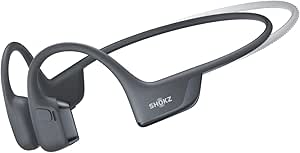 | Best for Smaller Fits | Audio technology: Bone conduction and air conduction | Battery life: Up to 12 hours | Design: Open-ear | VIEW ON AMAZON | See Our Full Breakdown |
| Bluetooth 6.0 Bone Conduction Open-Ear Headphones |  | Best for Longer Listening | Design: Open-ear bone and air conduction | Bluetooth: 6.0 | Weight: 29 g | VIEW ON AMAZON | See Our Full Breakdown |
| MRYTKY S1 Bone Conduction Open-Ear Headphones |  | Best for First-Time Buyers | Model: S1 | Design: Bone conduction, open-ear headphones | Bluetooth: 5.4 | VIEW ON AMAZON | See Our Full Breakdown |
| Waterproof Open-Ear Bone Conduction Headphones |  | Best for Buyers Who Need Verified Specs | Connectivity: Bluetooth 6.0 | Design: Open-ear bone conduction | Weight description: Lightweight; exact weight not provided | VIEW ON AMAZON | See Our Full Breakdown |
| Shokz OpenRun Air 2 Bone Conduction Open-Ear Bluetooth Headphones, Black |  | Best for Workout Controls | Model: OpenRun Air 2 (S610BK) | Audio technology: Bone conduction | Bluetooth: 6.0 | VIEW ON AMAZON | See Our Full Breakdown |
| Raycon Bone Conduction Open-Ear Headphones |  | Best for Wet-Weather Workouts | Model number: RBB842-24E | Design: Open-ear bone conduction | Water resistance: IP68 | VIEW ON AMAZON | See Our Full Breakdown |
| CXK Bone Conduction Swimming Headphones, IPX8 Waterproof, Bluetooth 6.0, MP3 Player |  | Best for Swimming | Connectivity: Bluetooth 6.0 | Playback modes: Bluetooth and MP3 | Storage: Up to 8,000 songs | VIEW ON AMAZON | See Our Full Breakdown |
| boneconduction headphone | Battery life | Design | Water resistance |
|---|---|---|---|
| Shokz OpenRun Pro 2 Bone Condu | Up to 12 hours | Open-ear | — |
| Psier Bone Conduction Open-Ear | Up to 10 hours | — | IPX5; not suitable for underwater use |
| Uear L5 Bone Conduction Open-E | Up to 10 hours | — | IP55; protection against sweat and light rain |
| Open-Ear Bone Conduction Bluet | Up to 12 hours | Open-ear, wraparound | IP54; not suitable for swimming |
| SHOKZ OpenRun Pro 2 Mini Bone | Up to 12 hours | Open-ear | — |
| Bluetooth 6.0 Bone Conduction | Up to 12 hours | Open-ear bone and air conduction | IPX7 |
| MRYTKY S1 Bone Conduction Open | Up to 10 hours | Bone conduction, open-ear headphones | IPX5 |
| Waterproof Open-Ear Bone Condu | — | Open-ear bone conduction | — |
| Shokz OpenRun Air 2 Bone Condu | Up to 10 hours | — | IP67; not for swimming or underwater use |
| Raycon Bone Conduction Open-Ea | — | Open-ear bone conduction | IP68 |
| CXK Bone Conduction Swimming H | Up to 12 hours | Open-ear bone conduction with adjustable headband | — |
More Details on Our Top Picks
Shokz OpenRun Pro 2 Bone Conduction Bluetooth Sport Headphones, Black
The OpenRun Pro 2 is the strongest all-round pick here for workouts that call for open-ear awareness and more adaptable sound. Its bone and air conduction drivers pair with two EQ modes, giving it a fuller listening approach than the bone-conduction-only Psier and Uear L5. The unibody frame, memory wire, and ergonomic hooks are designed to stay put while running, while the dual wind-resistant microphones make calls a more credible part of the package. Its stated 12-hour battery life also matches the Mini version. The tradeoff is that open-ear listening offers little isolation or privacy, and its fit may not suit every head. I’d choose it over the simpler options for mixed training and calls, but skip it if blocking surrounding sound matters most.
Pros:- Bone and air conduction drivers with two EQ modes offer more listening flexibility than bone-conduction-only models in this group
- Up to 12 hours of playback supports longer training days
- Memory-wire frame and ergonomic hooks are designed for a secure workout fit
- Dual wind-resistant microphones support calls in breezy conditions
Cons:- Open-ear design provides little isolation and less listening privacy
- The frame and hooks may not fit every wearer comfortably
Best for: Runners and gym-goers who want an open-ear fit, workout security, and frequent call support in one headset
Not ideal for: Commuters seeking noise isolation or private listening, since the open-ear design leaves sound less contained
- Audio technology:Bone conduction and air conduction drivers
- Battery life:Up to 12 hours
- Design:Open-ear
- Frame:Unibody frame with Ni-Ti alloy memory wire and ergonomic ear hooks
- EQ modes:Classic Mode and Volume Boost Mode; customizable through the Shokz app
- Microphones:Dual wind-resistant microphones
- Background noise reduction:Filters out 96.5% of background noise
- Wind resistance for calls:Up to 15 mph
- Color:Black
Our verdict“Choose the OpenRun Pro 2 for an open-ear workout headset with a strong mix of battery life, fit features, and call support.”
Psier Bone Conduction Open-Ear Headphones
The Psier suits buyers who want a lightweight bone-conduction headset with a few useful fit and sound adjustments. At 23 g, it is the lightest of these five by the listed specs, and its app-based EQ gives listeners a way to tune sound that the Uear L5’s supplied details do not mention. Bluetooth 6.0 and a 33-foot range cover everyday phone use, while the adjustable strap may help keep the frame secure during activity. Battery life reaches 10 hours, two hours short of the Shokz OpenRun Pro 2 and its Mini sibling. The IPX5 rating is not for swimming, and charging still takes about two hours. I’d pick Psier for low weight and app tuning; choose a Shokz model if longer playback and its listed call-focused microphones matter more.
Pros:- Listed weight of 23 g is lower than the other four products in this batch
- App-based EQ allows sound adjustments
- Bluetooth 6.0 and a 33-foot range suit everyday wireless phone use
- Adjustable strap offers another way to secure the fit
Cons:- IPX5 protection does not make it suitable for underwater use
- Up to 10 hours of playback is shorter than the 12 hours listed for both Shokz models
- A full charge takes about two hours
Best for: Active listeners who prioritize a very light frame and want to adjust EQ through an app
Not ideal for: Swimmers or buyers who need more than 10 hours of stated playback between charges
- Technology:Bone conduction
- Connectivity:Bluetooth 6.0
- Driver size:13 mm
- Weight:23 g
- Battery life:Up to 10 hours
- Charging time:About 2 hours
- Water resistance:IPX5; not suitable for underwater use
- Charging port:USB-C
- Included accessory:Adjustable strap
Our verdict“Pick Psier if low weight and app-based EQ matter more to you than longer battery life or swimming protection.”
Uear L5 Bone Conduction Open-Ear Bluetooth Headphones
The Uear L5 is a straightforward choice for buyers who want sweat and light-rain protection alongside open-ear listening. Its IP55 rating is a useful distinction from the Psier’s IPX5 listing, though neither spec indicates swimming suitability. At 30 g, it is heavier than Psier’s 23 g frame and slightly heavier than the 28 g Open-Ear Bone Conduction Bluetooth 6.0 Sports Headphones. The L5 provides up to 10 hours of playback and a built-in microphone for calls, but its listed specs don’t include the dual wind-resistant microphones or hybrid drivers offered by the Shokz OpenRun Pro 2. Bluetooth 5.3 and a 33-foot range cover basic phone listening. I’d favor it for routine outdoor exercise in damp conditions; choose the OpenRun Pro 2 for longer playback and more detailed call features.
Pros:- IP55 protection is specified for sweat and light rain
- Up to 10 hours of playback suits many everyday workouts
- Built-in microphone supports calls from a connected cellphone
- USB-C charging is widely compatible
Cons:- Water-resistance details do not indicate suitability for submersion
- At 30 g, it weighs more than Psier and the 28 g Bluetooth 6.0 sports model
- A full charge takes about two hours
Best for: Walkers and casual runners who want an open-ear headset for sweaty sessions and light rain
Not ideal for: Swimmers or people who need extended playback and specified wind-resistant call microphones
- Model:L5 (UU)
- Connectivity:Bluetooth 5.3
- Wireless range:33 ft
- Battery life:Up to 10 hours
- Charging:USB-C; full charge in 2 hours
- Weight:30 g
- Water resistance:IP55; protection against sweat and light rain
- Microphone:Built-in
- Warranty:120-day quality warranty
Our verdict“Choose the Uear L5 for everyday exercise in sweat or light rain, but look elsewhere for swimming or longer battery life.”
Open-Ear Bone Conduction Bluetooth 6.0 Sports Headphones
This wraparound model is a good fit for active buyers who want 12 hours of stated playback without moving up to the hybrid-driver Shokz OpenRun Pro 2. At 28 g, it is lighter than the Uear L5, while its 13 mm bone-conduction drivers and Bluetooth 6.0 provide a compact, open-ear setup for exercise. The IP54 rating covers sweat and light splashes, so it makes more sense for runs and gym sessions than swimming or prolonged water exposure. Compared with the Psier, it offers two additional stated hours of battery life but lacks the listed app-based EQ. The open fit also means less privacy and no meaningful sound isolation. I’d pick it for a light wraparound frame and longer listed playback, and choose Shokz if call microphone features are a priority.
Pros:- Up to 12 hours of playback, matching the Shokz models in this batch
- At 28 g, it is lighter than the Uear L5
- Bluetooth 6.0 and a 33-foot range support everyday wireless use
- IP54 protection covers sweat and light splashes
Cons:- Not suitable for swimming or prolonged water immersion
- Open-ear listening offers less privacy than sealed earbuds
- The supplied specs do not list app-based EQ or wind-resistant microphones
Best for: Runners and gym users who want a lightweight wraparound fit and up to 12 hours of playback
Not ideal for: Swimmers, listeners seeking sound isolation, or buyers who want listed app-based EQ and call-noise reduction
- Technology:Bone conduction
- Design:Open-ear, wraparound
- Bluetooth:Version 6.0
- Driver size:13 mm
- Battery life:Up to 12 hours
- Charging time:About 2 hours
- Wireless range:Up to 33 ft
- Weight:28 g
- Water resistance:IP54; not suitable for swimming
Our verdict“Choose this model for a light wraparound fit and 12-hour listed battery life if you do not need swimming protection or Shokz’s specified call features.”
SHOKZ OpenRun Pro 2 Mini Bone Conduction Bluetooth Sport Headphones, Black
The OpenRun Pro 2 Mini keeps the hybrid bone and air conduction drivers, 12-hour playback claim, and call features of the OpenRun Pro 2 in a model aimed at buyers who prefer a smaller fit. Its Ni-Ti alloy memory wire and ergonomic hooks are designed to stay secure during workouts, while two EQ modes allow listening adjustments. Those features make it more fully equipped for calls and training than the Psier or Uear L5, whose listed specifications do not include wind-resistant dual microphones. The tradeoff is that the supplied description gives no size measurements, so buyers cannot confirm how much smaller the fit is before choosing. It also shares the open-ear privacy limits of the standard Pro 2. I’d select the Mini for a smaller-fit preference; otherwise, the standard OpenRun Pro 2 is the clearer all-round choice.
Pros:- Hybrid bone and air conduction drivers pair with two EQ modes
- Up to 12 hours of playback matches the standard OpenRun Pro 2
- Ergonomic hooks and memory wire are designed for a secure workout fit
- Dual wind-resistant microphones and AI noise reduction support calls
Cons:- The supplied product data gives no measurements to compare the Mini fit with the standard model
- Open-ear design provides little isolation or listening privacy
Best for: Runners and fitness users who want Shokz’s hybrid drivers and call features in a model designated for a smaller fit
Not ideal for: Buyers who need fit dimensions before ordering, or listeners who want isolation and private audio
- Audio technology:Bone conduction and air conduction
- Battery life:Up to 12 hours
- Design:Open-ear
- Fit:Ergonomic ear hooks with Ni-Ti alloy memory wire
- EQ modes:Classic Mode and Volume Boost Mode
- Microphones:Dual wind-resistant microphones
- Background noise reduction:Filters out 96.5% of background noise
- Wind resistance for calls:Up to 15 mph
- Color:Black
Our verdict“Choose the Mini if you want the OpenRun Pro 2 feature set and prefer a smaller-fit version; otherwise, the standard model is the simpler pick.”
Bluetooth 6.0 Bone Conduction Open-Ear Headphones
Up to 12 hours of playback gives this model the longest stated battery life among these five picks, making it a practical fit for extended outings without a midday charge. Its 29 g titanium frame and open-ear design aim to keep the fit light while letting outside sounds through. Compared with the Shokz OpenRun Air 2, it offers two more hours of stated playback, while the Shokz lists more detailed controls, EQ options, and a faster charge. This model adds Bluetooth 6.0 Game Mode for lower-latency viewing or play and an LED battery display, but the listing gives little detail about sound tuning or call quality. IPX7 protection suits sweaty workouts and wet conditions; open-ear listening still offers little isolation in noisy places.
Pros:- Up to 12 hours of stated playback
- Lightweight 29 g frame with flexible titanium
- IPX7 water resistance for workouts and outdoor use
- Game Mode and an LED battery-level display
Cons:- Open-ear fit provides limited noise isolation
- Listing does not detail sound tuning or microphone performance
Best for: Runners and commuters who want an open-ear fit and the longest stated battery life in this batch.
Not ideal for: Listeners who need strong noise isolation or detailed information about call and sound performance before choosing.
- Design:Open-ear bone and air conduction
- Bluetooth:6.0
- Weight:29 g
- Frame:Flexible titanium
- Battery life:Up to 12 hours
- Charging time:2 hours
- Water resistance:IPX7
- Listening modes:Bluetooth mode and Game Mode
- Display:LED battery-level display
Our verdict“Choose this model for extended open-ear listening and water-resistant workouts if its sparse audio details are acceptable.”
MRYTKY S1 Bone Conduction Open-Ear Headphones
The MRYTKY S1 covers the basic needs of a first pair of bone conduction headphones: a flexible titanium frame, built-in microphone, and an open-ear design that leaves the ear canal clear. Its 10-hour battery matches the stated runtime of the Shokz OpenRun Air 2, though the Shokz listing adds EQ presets, quick charging, and IP67 protection. The S1 instead offers a 1.5-hour charge time and a stated one-year warranty, which make the essentials easy to compare. The IPX5 rating is suited to sweat and rain, but it provides less water protection than the IP67 Shokz or IP68 Raycon. The listing names 16 mm drivers but gives no specific sound-performance claims, so buyers who want a detailed picture of audio or call quality should look elsewhere.
Pros:- Flexible titanium frame designed to stay secure during activity
- Built-in microphone for calls
- Up to 10 hours of stated battery life
- IPX5 protection against sweat and rain
Cons:- IPX5 offers less water protection than the IP67 Shokz OpenRun Air 2
- Listing gives little detail about sound performance
Best for: Newcomers seeking straightforward open-ear sports headphones with a built-in microphone and a flexible fit.
Not ideal for: Buyers who need stronger water protection or want specific information about sound and call performance.
- Model:S1
- Design:Bone conduction, open-ear headphones
- Bluetooth:5.4
- Driver size:16 mm
- Battery life:Up to 10 hours
- Charge time:1.5 hours
- Water resistance:IPX5
- Frame:Flexible titanium
- Warranty:1 year
Our verdict“Pick the S1 as a straightforward first pair for sports if IPX5 protection and limited audio detail meet your needs.”
Waterproof Open-Ear Bone Conduction Headphones
This listing is difficult to recommend for a specific listening routine because the available details stop at Bluetooth 6.0, a lightweight open-ear design, and an unspecified claim of waterproofing. Unlike the MRYTKY S1, which states battery life, charge time, and an IPX5 rating, this product supplies no battery figure or water-resistance level. That leaves buyers unable to tell whether it can handle a long run, heavy rain, or a particular workout. The listing also mentions a 30-pack quantity without clarifying what that means for a headphone purchase. Its open-ear format may appeal to people who want to hear surroundings, but the missing fit and performance information makes comparison with the Shokz OpenRun Air 2 especially hard. I would only shortlist it if the seller can clarify the pack contents and protection rating.
Pros:- Open-ear design keeps ears unobstructed
- Bluetooth 6.0 connectivity is specified
- Listing describes the design as lightweight
Cons:- Battery life and charging details are absent
- Waterproof claim has no stated rating
- The 30-pack quantity is unclear for a headphone product
Best for: Cautious shoppers willing to confirm the pack contents, battery life, and water-resistance rating with the seller before buying.
Not ideal for: Runners or swimmers who need a known battery runtime and a verified water-resistance level for their activity.
- Connectivity:Bluetooth 6.0
- Design:Open-ear bone conduction
- Weight description:Lightweight; exact weight not provided
- Waterproofing:Claimed; rating not specified
- Quantity:30 packs, 30 count total
Our verdict“Consider this only after confirming what the 30-pack listing contains and obtaining clear battery and water-resistance details.”
Shokz OpenRun Air 2 Bone Conduction Open-Ear Bluetooth Headphones, Black
Customizable EQ and physical push buttons make the Shokz OpenRun Air 2 the most control-focused workout option in this batch. Its four presets and two custom profiles give listeners more ways to tune playback than the basic details listed for the MRYTKY S1. At 26.4 g, it is also lighter than the 29 g Bluetooth 6.0 model, while its stated 10-hour runtime is shorter than that model’s 12 hours. The five-minute quick charge offers up to two hours of use, useful when a workout is imminent, and IP67 protection suits wet training. Shokz specifies that it is not for swimming or underwater use. It costs no editorial advantage in fit certainty here: buyers still need to judge whether the earhook shape suits them, and open-ear listening cannot block surrounding noise.
Pros:- Lightweight 26.4 g design with memory-alloy earhooks
- Four EQ presets and two custom profiles
- Five-minute quick charge provides up to two hours of use
- IP67 protection for wet training
Cons:- Not suitable for swimming or underwater use
- Up to 10 hours of playback is less than the 12 hours listed for the Bluetooth 6.0 model
- Open-ear design provides little noise isolation
Best for: Frequent exercisers who want physical controls, adjustable EQ, and quick charging in a lightweight open-ear headset.
Not ideal for: Swimmers or listeners who want to block noise, since this model is not for underwater use and has an open fit.
- Model:OpenRun Air 2 (S610BK)
- Audio technology:Bone conduction
- Bluetooth:6.0
- Weight:26.4 g
- Water resistance:IP67; not for swimming or underwater use
- Battery life:Up to 10 hours
- Quick charge:5 minutes provides up to 2 hours of use
- EQ profiles:4 presets and 2 custom profiles
- Warranty:2 years
Our verdict“Choose the OpenRun Air 2 for workout-friendly controls, EQ choices, and quick charging if you do not need underwater use.”
Raycon Bone Conduction Open-Ear Headphones
The Raycon’s IP68 sweat and water resistance is its clearest point of difference: the listing claims a higher protection level than the IP67 Shokz OpenRun Air 2 and IPX5 MRYTKY S1. That makes the Raycon a compelling option for buyers prioritizing wet-weather training, though the supplied details do not specify battery life or a swim-use rating. Its adjustable positioning lets listeners change the balance between volume and awareness, a useful fit adjustment for an open-ear design. The tradeoff is Bluetooth 5.3, an older version than the Bluetooth 6.0 models in this batch, plus a stated limitation in high-noise settings. The combination of button and touch controls may suit everyday use, but shoppers who want defined EQ, quick charging, or detailed runtime figures will find more concrete information on the Shokz.
Pros:- IP68 sweat and water-resistance rating
- Adjustable positioning can balance volume with awareness
- Lightweight ergonomic frame
- Microphone and button-and-touch controls
Cons:- May be less suitable in high-noise environments
- Battery life and charging time are not provided
- Bluetooth 5.3 is older than the Bluetooth 6.0 models in this batch
Best for: Outdoor exercisers who prioritize a high stated water-resistance rating and adjustable open-ear positioning.
Not ideal for: People training near loud traffic or seeking documented battery life and charging details.
- Model number:RBB842-24E
- Design:Open-ear bone conduction
- Water resistance:IP68
- Bluetooth:5.3
- Bluetooth range:33 feet
- Controls:Button and touch
- Charging:Magnetic cable
- Color:Gray
- Warranty:1 year
Our verdict“Choose the Raycon for adjustable fit and a high stated water-resistance rating if you can accept missing runtime details and weaker noisy-area suitability.”
CXK Bone Conduction Swimming Headphones, IPX8 Waterproof, Bluetooth 6.0, MP3 Player
For swimmers who want audio away from the pool deck, the CXK’s built-in MP3 player is its clearest advantage: stored tracks can play underwater, where Bluetooth cannot maintain a connection. Its IPX8 rating is specified for immersion up to 2 meters for 2 hours, and the adjustable open-ear headband is designed to stay usable during swims while leaving ears uncovered. Compared with the Shokz OpenRun Pro 2, this model prioritizes swimming and phone-free playback over an everyday sport-headphone focus. The tradeoffs are practical: underwater listening requires loading compatible files in advance, and storage supports only WMA, FLAC, WAV, and MP3. Bluetooth 6.0 and AI noise-canceling microphones may help on land, but the Bluetooth connection itself is not for underwater use.
Pros:- MP3 playback enables phone-free listening underwater
- IPX8 design is rated for immersion up to 2 meters for 2 hours
- Up to 12 hours of playback supports extended sessions
- Open-ear fit leaves ears uncovered
Cons:- Bluetooth mode cannot connect underwater, so swimming requires preloaded audio
- Built-in storage supports only WMA, FLAC, WAV, and MP3 files
- The provided data does not specify storage capacity in gigabytes
Best for: Swimmers who want to listen to stored music underwater without carrying or connecting a phone
Not ideal for: Listeners who rely on streaming apps in the water or want one-click Bluetooth listening while swimming
- Connectivity:Bluetooth 6.0
- Playback modes:Bluetooth and MP3
- Storage:Up to 8,000 songs
- Battery life:Up to 12 hours
- Supported audio formats:WMA, FLAC, WAV, MP3
- Charging:Magnetic
- Design:Open-ear bone conduction with adjustable headband
- Additional features:AI noise-canceling microphones; customizable EQ via Boean app
Our verdict“Choose the CXK if swimming with preloaded music is your priority; choose an everyday sport model such as the Shokz OpenRun Pro 2 if you do not need underwater MP3 playback.”

How We Picked
I ranked these headphones around the decisions that matter for open-ear use: fit and stability during movement, the intended water exposure, playback options, everyday usability, and how clearly the product information supports its claims. A swimming model needs more than an open-ear design; its immersion rating and onboard playback are central to whether it suits that job. For running and general sports, secure wear and a practical fit carry more weight than a Bluetooth version number alone.
The Shokz OpenRun Pro 2 leads as the clearest sport-focused all-rounder in this lineup, with the Mini ranked as a fit-specific alternative rather than a separate upgrade. The CXK earns a distinct place for swimming because it lists IPX8 protection and an MP3 player. Other models remain lower where their titles provide fewer verifiable distinctions, so I treat them as options to compare carefully rather than assuming that similar names indicate equivalent performance. This ranking reflects the product information provided; buyers should verify exact model specifications for their activity before purchase.
| boneconduction headphone | Battery life | Design |
|---|---|---|
| Shokz OpenRun Pro 2 Bone Condu | Up to 12 hours | Open-ear |
| Psier Bone Conduction Open-Ear | Up to 10 hours | — |
| Uear L5 Bone Conduction Open-E | Up to 10 hours | — |
| Open-Ear Bone Conduction Bluet | Up to 12 hours | Open-ear, wraparound |
| SHOKZ OpenRun Pro 2 Mini Bone | Up to 12 hours | Open-ear |
| Bluetooth 6.0 Bone Conduction | Up to 12 hours | Open-ear bone and air conduction |
| MRYTKY S1 Bone Conduction Open | Up to 10 hours | Bone conduction, open-ear headphones |
| Waterproof Open-Ear Bone Condu | — | Open-ear bone conduction |
| Shokz OpenRun Air 2 Bone Condu | Up to 10 hours | — |
| Raycon Bone Conduction Open-Ea | — | Open-ear bone conduction |
| CXK Bone Conduction Swimming H | Up to 12 hours | Open-ear bone conduction with adjustable headband |
Factors to Consider When Choosing Boneconduction Headphones
Before choosing, match the headphone to where and how you plan to listen. Open-ear models can share a broad design while differing in fit, water protection, storage and ease of use. These factors help avoid paying for features that do not solve your actual problem.
Match Water Protection to the Activity
Waterproof labels do not all mean the same thing, and a model suited to a sweaty run may not be suitable for swimming. Check the stated IP rating and the maker’s guidance for immersion, rinsing and drying rather than relying on words such as “waterproof” in a product title. For pool use, look for an explicit swimming rating and confirm that the controls and charging method fit that use. A common mistake is to assume Bluetooth will stream reliably underwater; the signal may not reach the headphones once submerged. Onboard MP3 storage can solve that limitation, but it changes how you load and manage music. If your workouts stay on land, a swim-specific build may add complexity without helping your routine.
Treat Fit as a Personal Measurement
Bone conduction headphones rest around the head and position transducers near the temples, so band length and contact point affect comfort. A smaller version may reduce excess movement for some people, while others may find the standard size sits better. Product names rarely tell you enough to predict fit from head size alone, so check dimensions, return terms and user guidance where available. If you wear glasses, hats or a helmet, consider how the band will share space with them. A fit that feels secure while standing can shift during running or repeated head movement. Choose the model with the clearest fit information instead of assuming all open-ear frames feel alike.
Set Expectations for Sound and Privacy
Open-ear listening trades isolation for awareness of nearby sounds, which can be useful outdoors but makes music more exposed to traffic and wind noise. Bone conduction models also tend to deliver a different sense of bass and fullness from sealed in-ear headphones. Raising the volume to compensate for a noisy setting can make listening less comfortable and less considerate to people nearby. If strong low-end impact or quiet listening in a shared space is your priority, this category may not match that need. For podcasts, navigation prompts and steady workout music, awareness may matter more than immersive sound. Decide which compromise fits your routine before comparing feature lists.
Choose Bluetooth or Onboard Playback Deliberately
Bluetooth is convenient when your phone stays with you, but it adds another device to carry and depends on a stable wireless connection. Built-in MP3 playback can be useful for swimming or phone-free workouts, though it requires transferring audio and managing storage. Do not treat a newer Bluetooth version as proof of better sound, stronger range or simpler controls; the full implementation matters. Check whether the headphones support the phone or music source you actually use and how pairing and button controls work. If you alternate between phone streaming and stored tracks, confirm that switching modes is straightforward. A feature only earns its place when it removes friction from your normal use.
Weigh Build and Support Alongside the Feature List
A long feature list can distract from the practical details that shape daily ownership: charging connection, included accessories, controls, warranty and replacement support. These details matter especially when products have similar names or sparse specifications. Check the exact model number and package contents before ordering, since a title may not clarify storage capacity, charging accessories or fit dimensions. For regular training, a robust frame and clear care instructions can matter more over time than a headline wireless version. Consider how easily you can clean and dry the device after workouts. When information is thin, favor the option whose specifications and support terms are easiest to verify.
Frequently Asked Questions
Can I use Bluetooth bone conduction headphones while swimming?
Bluetooth usually has difficulty maintaining a connection when the headphones and phone are separated by water, so a phone on the pool deck may not provide dependable streaming underwater. For swimming, look for a model rated for immersion and with onboard MP3 playback, such as the CXK listed here. Check the maker’s instructions for supported audio files, storage and water care before relying on it for laps. A water-resistant rating intended for sweat is not a substitute for a swimming rating. If you only need audio before and after a swim, a land-focused Bluetooth model may be simpler.
Are bone conduction headphones a good choice for running near traffic?
They leave the ear canals uncovered, which can help you hear some sounds around you while listening. That does not make them a replacement for attention to traffic, and music or wind can still mask important cues. Keep volume at a level that lets you stay aware and follow local rules for headphones. Fit matters too: a frame that shifts can distract you even if the design is open-ear. If situational awareness is your reason for choosing this category, prioritize stable wear and simple controls.
Should I choose the standard OpenRun Pro 2 or the Mini?
The main distinction to investigate is fit: the Mini has a shorter band and may suit someone who finds standard frames too loose or long. A smaller model is not automatically more comfortable, since head shape and where the transducers sit also affect wear. Compare the maker’s sizing advice and measurements, then check return options in case the frame does not sit securely. If you already know the standard size fits, the Mini is not inherently a sound upgrade. Choose based on how the band sits during the movement you do most.
Will bone conduction headphones work well for calls and podcasts?
They can be convenient for spoken audio because your ears stay uncovered and you can hear nearby activity. Call quality depends on microphone placement, wind handling and the connection, so a product title alone cannot confirm performance. If calls matter, look for clear microphone details and controls that let you answer or adjust volume without reaching for your phone. Podcasts are less demanding than music in noisy conditions, but open-ear designs still let environmental sound compete. For frequent calls outdoors, check independent details specific to the exact model.
Do bone conduction headphones replace hearing protection or hearing aids?
No. Open-ear headphones are designed to play audio, and they should not be treated as certified hearing protection or as a substitute for a prescribed hearing aid. Their uncovered-ear design may help some listeners remain aware of surroundings, but it does not guarantee safe sound exposure or clear hearing in every setting. Follow workplace protection requirements and your hearing-care professional’s advice. If you have hearing loss or discomfort, ask a qualified clinician whether this style suits your needs. Keep listening volume moderate, especially during long sessions.
Conclusion
For most sport-focused buyers, I recommend the Shokz OpenRun Pro 2 as the best overall choice in this comparison. The OpenRun Pro 2 Mini is the fit-led alternative, while the CXK Swimming Headphones make the most sense for swimmers who need immersion-rated construction and stored music. For best value, compare the Psier, Uear L5 and other Bluetooth 6.0 options by checking their exact specifications, included accessories and support; the available names alone do not establish a clear value winner. Beginners may prefer a product with straightforward controls, transparent sizing and clearly documented water guidance, rather than choosing by Bluetooth version. For a premium sport-oriented pick, start with the Shokz OpenRun Pro 2; for swimming, start with CXK; and for an uncertain fit, compare the standard and Mini sizes before deciding.
Halloween Picks
halloween
As an affiliate, we earn on qualifying purchases.