
For a smoke alarm with voice alerts, my best overall pick is the First Alert Hardwired Smoke Alarm with Voice Alerts, which suits homes that need a direct voice warning and a hardwired setup. The Kidde 20SD10-V is a simpler choice for buyers who want a sealed 10-year battery and smoke-only detection, while the Kidde Smart Smoke and CO Detector with Ring adds connected alerts. The main tradeoffs are whether you need carbon monoxide detection, want hardwiring or battery power, and value app features enough to take on a more involved setup. These 15 options also include alarms without voice alerts, which may fit a specific wiring or replacement need but do not match the roundup’s central feature as closely. Read on for the full breakdown and guidance on choosing the right type for your home.

Get business pricing on tech for your team
- Business-only prices and quantity discounts
- Tax-exempt purchasing
- Multiple users, one account, clear invoices
Key Takeaways
- Voice alerts are not universal across this lineup: the Kidde 20SD10-V and selected First Alert models explicitly offer them, while several basic battery and hardwired alarms do not.
- Smoke-only and combination alarms solve different problems: the Kidde 20SD10-V focuses on smoke detection, while models such as the Kidde 30CUD10-V add carbon monoxide detection in one device.
- A sealed 10-year battery trades routine battery changes for a full-unit replacement at the end of its service life; replaceable-battery models may allow battery changes but require ongoing upkeep.
- Hardwired models make the most sense as replacements for compatible existing wiring; battery-powered picks are easier to place where wiring is absent, but they do not provide the same wired connection.
- Multipacks can simplify fitting several rooms with the same alarm type, but buyers should check each included model’s detection, voice, and power features instead of assuming pack size means broader protection.
| Kidde Smoke and Carbon Monoxide Detector, 10-Year Battery, Model 30CUD10-V, 3-Pack |  | Best for Whole-Home Coverage | Model: 30CUD10-V | Pack size: 3 | Detection: Smoke and carbon monoxide | VIEW ON AMAZON | See Our Full Breakdown |
| First Alert 10-Year Battery Combination Smoke and Carbon Monoxide Alarm |  | Best for Location-Specific Voice Alerts | Model: SMCO210V | Alarm types: Smoke and carbon monoxide | Battery: Sealed, 10-year | VIEW ON AMAZON | See Our Full Breakdown |
| First Alert Hardwired Smoke Alarm with Voice Alerts |  | Best for Replacing a Hardwired Smoke Alarm | Power: Hardwired with battery backup | Detection: Smoke | Alerts: Voice and location alerts | VIEW ON AMAZON | See Our Full Breakdown |
| Kidde Hardwired Smoke and Carbon Monoxide Detector with 10-Year Battery Backup |  | Best for Hardwired Smoke and CO Coverage | Model: 30CUA10-V | Power: 120V AC | Battery backup: Built-in, 10-year | VIEW ON AMAZON | See Our Full Breakdown |
| Kidde Smoke and Carbon Monoxide Detector with 10-Year Battery, Model 30CUD10-V, 1 Pack |  | Best Single-Unit Replacement | Model: 30CUD10-V | Pack size: 1 | Detection: Smoke and carbon monoxide | VIEW ON AMAZON | See Our Full Breakdown |
| Kidde 20SD10-V Smoke Detector with 10-Year Battery and Voice Alerts, 1-Pack |  | Best for Long-Term Battery Convenience | Model: 20SD10-V | Battery life: 10 years | Alarm volume: 85 dB | VIEW ON AMAZON | See Our Full Breakdown |
| First Alert Hardwired Smoke and Carbon Monoxide Alarm with Voice Alerts |  | Best for Smoke and CO Location Alerts | Model: SMCO100V-AC | Power: Hardwired with AA battery backup | Detection: Smoke and carbon monoxide | VIEW ON AMAZON | See Our Full Breakdown |
| First Alert Hardwired Smoke Alarm with Voice Alerts, Battery Backup, 3-Pack |  | Best for Multi-Room Voice Coverage | Model: SM100V-AC | Pack size: 3 alarms | Power source: Corded electric | VIEW ON AMAZON | See Our Full Breakdown |
| Kidde Smart Smoke and CO Detector with Ring, AA Battery, RGCUDR-RW |  | Best for App-Based Monitoring | Model: RGCUDR-RW | Detection: Smoke and carbon monoxide | Power: 2 included AA alkaline batteries | VIEW ON AMAZON | See Our Full Breakdown |
| First Alert Hardwired Smoke Alarm |  | Best for Wired Interconnect Upgrades | Power: Hardwired with battery backup | Detection technology: Precision Detection | Interconnect: Compatible alarms sound together | VIEW ON AMAZON | See Our Full Breakdown |
| Kidde 20SD10-V Smoke Detector with Voice Alerts, 10-Year Battery, 3-Pack |  | Best for Multi-Room Coverage | Model: 20SD10-V | Pack size: 3 | Battery life: 10 years, built in | VIEW ON AMAZON | See Our Full Breakdown |
| First Alert Battery-Powered Smoke Alarm | 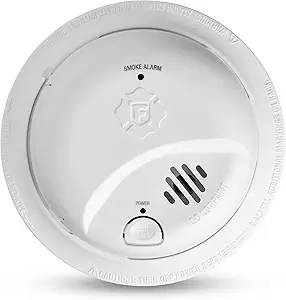 | Best for Straightforward Maintenance | Power source: Battery-operated | Sensing technology: Precision Detection | Battery access: Front-access compartment | VIEW ON AMAZON | See Our Full Breakdown |
| First Alert Battery-Operated Smoke Alarm |  | Best for Easy Installation | Power source: Battery-operated | Sensing technology: Precision Detection | Installation: Easy installation | VIEW ON AMAZON | See Our Full Breakdown |
| Kidde Smoke and Carbon Monoxide Detector, Battery Powered, 30CUDR-V, 1 Pack |  | Best for Voice-Identified Smoke and CO Alerts | Model: 30CUDR-V | Detection: Smoke and carbon monoxide | Power: 2 AA alkaline batteries, included | VIEW ON AMAZON | See Our Full Breakdown |
| First Alert SMI100-AC Hardwired Interconnect Smoke Alarm with Battery Backup |  | Best for Hardwired Whole-Home Alerts | Model: SMI100-AC | Alarm type: Hardwired interconnect smoke alarm | Battery backup: 9V alkaline battery | VIEW ON AMAZON | See Our Full Breakdown |
| advanced smoke alarms with voice alert | Model | Detection | Alerts |
|---|---|---|---|
| Kidde Smoke and Carbon Monoxid | 30CUD10-V | Smoke and carbon monoxide | — |
| First Alert 10-Year Battery Co | SMCO210V | — | Voice and location alerts |
| First Alert Hardwired Smoke Al | — | Smoke | Voice and location alerts |
| Kidde Hardwired Smoke and Carb | 30CUA10-V | Smoke and carbon monoxide | Voice messages and red LED |
| Kidde Smoke and Carbon Monoxid | 30CUD10-V | Smoke and carbon monoxide | Voice alerts and red LED indicator |
| Kidde 20SD10-V Smoke Detector | 20SD10-V | — | Voice alerts and red LED |
| First Alert Hardwired Smoke an | SMCO100V-AC | Smoke and carbon monoxide | Voice and location alerts |
| First Alert Hardwired Smoke Al | SM100V-AC | — | — |
| Kidde Smart Smoke and CO Detec | RGCUDR-RW | Smoke and carbon monoxide | — |
| First Alert Hardwired Smoke Al | — | — | — |
| Kidde 20SD10-V Smoke Detector | 20SD10-V | — | Voice alerts and red LED |
| First Alert Battery-Powered Sm | — | Smoke | — |
| First Alert Battery-Operated S | — | Smoke | — |
| Kidde Smoke and Carbon Monoxid | 30CUDR-V | Smoke and carbon monoxide | Voice messages and red LED indicator |
| First Alert SMI100-AC Hardwire | SMI100-AC | — | — |
More Details on Our Top Picks
Kidde Smoke and Carbon Monoxide Detector, 10-Year Battery, Model 30CUD10-V, 3-Pack
I’d choose this three-pack when the goal is to add smoke and carbon monoxide voice alerts in several rooms at once. Each alarm names the hazard, giving occupants more information than a general siren, while the built-in 10-year battery avoids scheduled battery changes. The red LED and 85 dB alarm add visual and audible cues, and the sensing technology is designed to reduce cooking or steam nuisance alarms. Compared with the single-pack Kidde 30CUD10-V, this bundle suits multi-room coverage; the Kidde 30CUA10-V is a better fit if existing hardwired power and interconnection matter. The tradeoff is that this model is battery powered, so it doesn’t provide the hardwired setup or compatible-alarm interconnection listed for the 30CUA10-V.
Pros:- Three alarms help cover multiple rooms in one purchase
- Detects both smoke and carbon monoxide and identifies the hazard by voice
- Built-in 10-year battery avoids routine battery changes
- Red LED and 85 dB alarm provide additional warning cues
Cons:- Battery powered rather than a hardwired, interconnected setup
- Built-in battery is not presented as replaceable
Best for: Households adding smoke and carbon monoxide voice alerts to several rooms without relying on hardwired installation
Not ideal for: Homeowners who need alarms interconnected with compatible hardwired units or want to replace batteries during the alarm’s service life
- Model:30CUD10-V
- Pack size:3
- Detection:Smoke and carbon monoxide
- Battery:Built-in, 10-year
- Alarm volume:85 dB
- Voice alerts:“Fire” and “Warning, Carbon Monoxide”
- Indicator:Red LED
- Standards:UL 217 10th Edition, UL 2034 5th Edition, FCC
- Warranty:10-year limited
Our verdict“Choose this three-pack for multi-room smoke and CO coverage with voice alerts and no routine battery changes.”
First Alert 10-Year Battery Combination Smoke and Carbon Monoxide Alarm
The voice and location alerts are the deciding feature here: identifying both the hazard and its location can help occupants respond more directly than an alarm that only names smoke or carbon monoxide. Its slim profile, described as half the depth of a standard alarm, also suits buyers who want a less bulky-looking unit. Like the Kidde 30CUD10-V, it combines smoke and CO detection with a sealed 10-year battery and cooking nuisance-alarm reduction. The First Alert adds location information, while the Kidde three-pack covers more rooms per purchase. The main compromise is the sealed battery: there are no routine replacements, but you can’t replace it during the alarm’s service life. This is a single alarm, so wider coverage means planning for additional units.
Pros:- Voice alerts identify the hazard and its location
- Combination smoke and carbon monoxide detection
- Sealed 10-year battery avoids routine changes and low-battery chirps
- Slim profile is half the depth of a standard alarm, according to the supplied product data
Cons:- Sealed battery cannot be routinely replaced
- Single unit offers less immediate multi-room coverage than the Kidde 30CUD10-V three-pack
Best for: Buyers replacing a single alarm who want voice alerts that identify the detected hazard and its location
Not ideal for: Households seeking multi-room coverage in one package or a unit with a routinely replaceable battery
- Model:SMCO210V
- Alarm types:Smoke and carbon monoxide
- Battery:Sealed, 10-year
- Alerts:Voice and location alerts
- Detection technology:Precision Detection
- Design:Slim profile, half the depth of a standard alarm
- Unit count:1
Our verdict“Pick this First Alert for one slim combination alarm whose voice alerts also identify the location of danger.”
First Alert Hardwired Smoke Alarm with Voice Alerts
For a home with compatible existing wiring, this hardwired smoke alarm adds voice and location alerts without switching to a battery-only installation. Its battery backup keeps it operating during a power outage, and the latching indicator can show which unit initiated an alarm or low-battery alert—a useful clue in a system with multiple alarms. The up-to-eight-hour test/silence function also gives buyers a defined way to test or quiet the alarm. Unlike the Kidde 30CUA10-V, this model’s listed detection is smoke only, so it does not add carbon monoxide detection. Compared with the First Alert SMCO210V, it depends on wiring but offers battery backup and unit identification. Installation may require existing wiring or an electrician.
Pros:- Voice and location alerts identify where smoke is detected
- Battery backup provides operation during power outages
- Latching indicator identifies the unit that initiated an alarm or low-battery alert
- Test and silence function can silence the alarm for up to eight hours
Cons:- Hardwired installation may require existing wiring or electrical work
- Listed detection covers smoke, not carbon monoxide
- Product details do not specify the battery backup’s duration or type
Best for: Homeowners replacing a hardwired smoke alarm who want voice location alerts and backup power
Not ideal for: Buyers needing carbon monoxide detection in the same unit or lacking suitable hardwired connections
- Power:Hardwired with battery backup
- Detection:Smoke
- Alerts:Voice and location alerts
- Detection technology:Precision Detection
- Indicator:Latching indicator identifies the unit that initiated an alarm or low-battery alert
- Test/silence function:Tests the alarm and silences it for up to 8 hours
Our verdict“Choose this model to add voice location alerts to a compatible hardwired smoke-alarm setup with battery backup.”
Kidde Hardwired Smoke and Carbon Monoxide Detector with 10-Year Battery Backup
This Kidde suits buyers who want smoke and carbon monoxide detection on a hardwired alarm, with a built-in 10-year battery backup for power interruptions. Voice messages name the hazard, while the 85 dB alarm and red LED add audible and visual signals. It can also interconnect with compatible Kidde alarms, so a detected hazard can prompt connected units to sound together. That makes it a stronger fit for an existing compatible setup than the First Alert hardwired smoke-only voice alarm, which offers voice location alerts and a latching indicator but lists no CO detection. Compared with the battery-powered Kidde 30CUD10-V three-pack, this one needs 120V AC and is designed for compatible interconnection. The tradeoff is installation dependence: wiring and compatibility shape where it can be used.
Pros:- Detects both smoke and carbon monoxide
- Voice messages identify the hazard
- Built-in 10-year battery backup supports operation during power interruptions
- Can interconnect with compatible Kidde alarms
Cons:- Requires 120V AC hardwired power
- Interconnection depends on model compatibility
- The built-in backup battery is not described as replaceable
Best for: Homeowners with 120V AC wiring and compatible Kidde alarms who want voice alerts for both smoke and carbon monoxide
Not ideal for: Renters or households without suitable hardwiring, and buyers whose existing alarms are not compatible for interconnection
- Model:30CUA10-V
- Power:120V AC
- Battery backup:Built-in, 10-year
- Detection:Smoke and carbon monoxide
- Alarm volume:85 dB
- Alerts:Voice messages and red LED
- Interconnection:Connects with compatible Kidde alarms
- Standards:UL 217 10th Edition, UL 2034 5th Edition, FCC
- Warranty:10-year limited
Our verdict“Choose this Kidde for hardwired smoke and CO detection with hazard-naming voice alerts and compatible alarm interconnection.”
Kidde Smoke and Carbon Monoxide Detector with 10-Year Battery, Model 30CUD10-V, 1 Pack
This single Kidde 30CUD10-V is the straightforward choice when one room needs a replacement alarm with smoke and CO detection. It names the hazard through voice alerts, backs them with an 85 dB alarm and red LED, and has a built-in 10-year battery to avoid regular battery changes. Its sensing technology is designed to reduce false alarms from cooking or steam, a practical fit near everyday kitchen activity. The feature set matches the Kidde 30CUD10-V three-pack; the difference is coverage, with this one suited to replacing a single unit rather than equipping several rooms at once. Buyers who need a hardwired setup can look to the Kidde 30CUA10-V, which adds 120V AC power and compatible interconnection. This battery-powered model does not list those capabilities.
Pros:- Combines smoke and carbon monoxide detection
- Voice alerts identify the hazard
- Built-in 10-year battery avoids routine changes
- Red LED and 85 dB alarm provide additional warning signals
Cons:- One alarm provides less immediate coverage than the Kidde 30CUD10-V three-pack
- Does not provide the 120V AC power and compatible interconnection listed for the Kidde 30CUA10-V
Best for: Homeowners replacing one battery-powered alarm with a smoke and CO model that names hazards by voice
Not ideal for: Buyers outfitting several rooms at once or needing 120V AC hardwiring and compatible interconnection
- Model:30CUD10-V
- Pack size:1
- Detection:Smoke and carbon monoxide
- Battery:Built-in, 10-year
- Alarm volume:85 dB
- Alerts:Voice alerts and red LED indicator
- Standards:UL 217 10th Edition, UL 2034 5th Edition, FCC
- Warranty:10-year limited
Our verdict“Choose this single unit to replace one battery-powered alarm with voice alerts for smoke and carbon monoxide.”
Kidde 20SD10-V Smoke Detector with 10-Year Battery and Voice Alerts, 1-Pack
The Kidde 20SD10-V suits buyers who want voice warnings without adding battery changes to their routine. Its built-in 10-year battery, 85 dB alarm, and red LED provide several ways to notice a smoke alert, while its sensing technology is designed to reduce alarms triggered by cooking or steam. Compared with the First Alert Hardwired Smoke and Carbon Monoxide Alarm with Voice Alerts, this Kidde avoids hardwired installation but detects smoke only, so it cannot warn about carbon monoxide. The sealed battery also brings a tradeoff: the product data does not describe it as replaceable, so the unit is not a fit for someone who wants to swap batteries and keep the same alarm. I’d choose it for a standalone smoke alarm where long battery life and voice alerts matter most.
Pros:- Built-in 10-year battery avoids routine battery replacement
- Voice alerts, an 85 dB alarm, and red LED offer multiple alert cues
- Sensing technology is designed to reduce cooking- and steam-related false alarms
- Tested to UL 217 10th Edition and FCC standards
Cons:- Detects smoke only, unlike the First Alert hardwired combination alarm
- Battery is built in and is not described as replaceable
- Single alarm does not provide the multi-unit coverage of a pack
Best for: Homeowners seeking a standalone smoke alarm with voice alerts and a long-life built-in battery
Not ideal for: Buyers who need carbon monoxide detection, hardwired interconnection, or a replaceable battery
- Model:20SD10-V
- Battery life:10 years
- Alarm volume:85 dB
- Alerts:Voice alerts and red LED
- Sensing:Designed to distinguish smoke from cooking or steam
- Standards:UL 217 10th Edition and FCC
- Warranty:10-year limited warranty
- Pack size:1
Our verdict“Choose this Kidde for a single smoke-only location where voice alerts and a long-life built-in battery are priorities.”
First Alert Hardwired Smoke and Carbon Monoxide Alarm with Voice Alerts
The First Alert SMCO100V-AC is the stronger choice when a voice alert needs to say both what danger is present and where. It covers smoke and carbon monoxide, backs up its hardwired power with AA batteries, and can interconnect with compatible alarms so an alert can carry through the home. That makes it more informative than the smoke-only First Alert Hardwired Smoke Alarm with Voice Alerts, Battery Backup, 3-Pack at a location where CO detection matters. The tradeoff is installation: this model needs a hardwired connection, so it is less flexible than the battery-powered Kidde 20SD10-V. Its quick-connect plug can simplify fitting it to compatible wiring, but does not remove the need for a wired setup. I’d pick it for a home upgrading a wired alarm position to voice-enabled smoke and CO coverage.
Pros:- Voice alerts identify both the danger type and its location
- Detects smoke and carbon monoxide in one unit
- AA backup provides protection during power outages
- Interconnect capability can alert through compatible alarms
Cons:- Requires a hardwired installation
- Battery backup requires AA batteries
- Interconnection depends on compatible alarms
Best for: Homeowners replacing a hardwired alarm who want spoken smoke or CO alerts that identify location
Not ideal for: Renters or buyers without compatible hardwired wiring, and anyone seeking a battery-only installation
- Model:SMCO100V-AC
- Power:Hardwired with AA battery backup
- Detection:Smoke and carbon monoxide
- Alerts:Voice and location alerts
- Interconnect:Compatible alarms sound together
- Installation:Quick-connect plug
- Quantity:1
Our verdict“Choose this First Alert when you have wired alarm locations and want spoken smoke and CO alerts with location details.”
First Alert Hardwired Smoke Alarm with Voice Alerts, Battery Backup, 3-Pack
For buyers updating several wired smoke alarm positions at once, this three-pack of First Alert SM100V-AC alarms makes multi-room coverage its main advantage. Each alarm offers voice and location alerts, and compatible First Alert and BRK units can interconnect, helping a warning travel beyond the room where smoke is detected. Its photoelectric sensor and Precision Detection are designed to reduce cooking-related nuisance alarms. Compared with the single-unit First Alert Hardwired Smoke and Carbon Monoxide Alarm with Voice Alerts, this pack covers more smoke alarm locations but does not list carbon monoxide detection. It also needs hardwired power and AA backup batteries, so it cannot match the installation flexibility of the battery-powered Kidde 20SD10-V. I’d favor it when a home needs several compatible smoke alarms with spoken location cues.
Pros:- Three alarms support coverage across multiple rooms
- Voice and location alerts identify where danger is detected
- Precision Detection is designed to reduce cooking nuisance alarms
- Compatible First Alert and BRK alarms can interconnect
Cons:- Requires hardwired power and AA backup batteries
- Detection is smoke only, unlike the First Alert combination alarm
- Interconnection is limited to compatible First Alert and BRK alarms
Best for: Homeowners replacing several compatible hardwired smoke alarms who want voice and location alerts throughout the home
Not ideal for: Buyers without hardwired alarm positions, or those who need carbon monoxide detection in these units
- Model:SM100V-AC
- Pack size:3 alarms
- Power source:Corded electric
- Battery backup:AA batteries
- Sensor type:Photoelectric
- Interconnection:Compatible First Alert and BRK alarms
- Color:White
- Item weight:10.24 ounces
Our verdict“Choose this pack to equip several wired locations with smoke-only alarms that provide spoken location alerts.”
Kidde Smart Smoke and CO Detector with Ring, AA Battery, RGCUDR-RW
The Kidde RGCUDR-RW is the pick for buyers who want smoke and CO warnings to reach a phone as well as the alarm itself. Through the Ring app, it can send real-time alerts that include low-battery and low-level CO warnings, and wireless interconnection lets compatible Kidde alarms sound together. It also works with Alexa-enabled devices and runs on two included AA alkaline batteries, avoiding the wiring required by the First Alert SMCO100V-AC. The key difference is that this Kidde’s connected monitoring is not the same as a built-in voice and location alert: optional 24/7 monitoring requires a separate Ring subscription. Buyers who want the straightforward spoken smoke alerts of the Kidde 20SD10-V may prefer that model’s simpler setup. I’d choose this one when app notifications and smart-home links are the priority.
Pros:- Detects both smoke and carbon monoxide
- Ring app sends real-time alerts, including low-level CO and low-battery warnings
- Wireless interconnection lets compatible Kidde alarms sound together
- Battery powered, so no hardwired connection is required
Cons:- Optional 24/7 monitoring requires a separate Ring subscription
- Requires AA batteries
- App alerts and Alexa features depend on connected smart-home setup
Best for: Ring households that want phone notifications for smoke, CO, low battery, and low-level CO
Not ideal for: Buyers who want voice and location alerts without relying on an app or paying for optional monitoring
- Model:RGCUDR-RW
- Detection:Smoke and carbon monoxide
- Power:2 included AA alkaline batteries
- Connectivity:Ring app, wireless interconnectivity, and Alexa-enabled devices
- Monitoring:Optional 24/7 monitoring through a separate Ring subscription
- Standards:UL 217 and FCC
Our verdict“Choose this Kidde if Ring app notifications and wireless links matter more to you than a standalone voice-alert alarm.”
First Alert Hardwired Smoke Alarm
This First Alert hardwired smoke alarm is a practical fit for buyers who want nuisance-alarm reduction and a way to identify which unit started an alert, but its product data does not list voice alerts. Precision Detection is designed to reduce alarms from cooking, while an indicator identifies the initiating unit and compatible alarms can sound together. The Quick Connect Plug can simplify replacement where matching wiring is already in place. Compared with the voice-enabled First Alert SM100V-AC three-pack, this model offers the initiating-unit indicator but lacks listed voice and location announcements. It also detects smoke only, while the First Alert SMCO100V-AC adds carbon monoxide detection and spoken alerts. I’d consider it for maintaining a wired alarm system, but buyers specifically seeking advanced smoke alarms with voice alerts should choose a voice-enabled model instead.
Pros:- Precision Detection is designed to reduce nuisance alarms from cooking
- Battery backup provides protection during power outages
- Compatible alarms can sound together through interconnection
- Alarm indicator identifies the initiating unit
Cons:- Voice alerts are not listed in the product data
- Requires a hardwired power connection
- Detects smoke only, unlike the First Alert combination alarm
Best for: Homeowners replacing a compatible wired smoke alarm who value interconnection and an indicator showing which unit triggered
Not ideal for: Buyers requiring voice alerts, spoken location information, or carbon monoxide detection
- Power:Hardwired with battery backup
- Detection technology:Precision Detection
- Interconnect:Compatible alarms sound together
- Alarm indicator:Identifies the unit that initiated the alarm
- Installation:Quick Connect Plug; no rewiring required
Our verdict“Choose this First Alert for a compatible wired smoke alarm replacement if an initiating-unit indicator matters more than voice alerts.”
Kidde 20SD10-V Smoke Detector with Voice Alerts, 10-Year Battery, 3-Pack
The three-alarm bundle makes it easier to add voice alerts across several rooms without choosing a separate model for each location. Each unit has a built-in 10-year battery, an 85 dB alarm, and a red LED, so routine battery changes are off the list for the battery’s stated life. Compared with the Kidde 30CUDR-V, this model focuses on smoke detection rather than adding carbon monoxide detection; that makes it a more targeted choice when CO alarms are already covered. Its sensing design is intended to reduce cooking and steam false alarms, though that does not eliminate the need to place alarms according to installation guidance. The tradeoff is a nonreplaceable built-in battery: when it reaches end of life, the detector itself needs replacement.
Pros:- Three units support coverage in multiple locations
- Voice alerts, red LED, and 85 dB alarm communicate a smoke warning in several ways
- Built-in 10-year battery avoids routine battery replacement
- Designed to reduce false alarms from cooking or steam
Cons:- Built-in battery is not replaceable
- Detects smoke only, unlike the Kidde 30CUDR-V combination alarm
Best for: Households adding smoke alarms to several rooms that want voice alerts and fewer routine battery changes
Not ideal for: Buyers who need carbon monoxide detection in the same unit or want to replace batteries instead of the alarm
- Model:20SD10-V
- Pack size:3
- Battery life:10 years, built in
- Alarm volume:85 dB
- Alerts:Voice alerts and red LED
- Sensing:Designed to reduce false alarms from cooking or steam
- Standards:Tested to UL 217 10th Edition and FCC standards
- Warranty:10-year limited warranty
Our verdict“Choose this three-pack to add smoke-only voice alerts across multiple rooms with minimal battery upkeep.”
First Alert Battery-Powered Smoke Alarm
This First Alert is a practical pick for someone who wants accessible battery replacement and a clear routine for checking an alarm. Its front-access compartment makes battery changes easier to reach, while the test/silence button and end-of-life warning support regular upkeep. Compared with the Kidde 20SD10-V 3-Pack, it does not provide the listed voice alerts, red LED, or a decade-long built-in battery; its advantage is that the battery can be replaced without replacing the detector. Precision Detection is designed to reduce nuisance alarms from cooking, which can help in kitchenside areas where placement guidance permits. The available product details do not specify alarm volume or a battery-life interval, so buyers seeking the more feature-rich voice-alert setup should compare it with the Kidde instead.
Pros:- Front-access compartment simplifies battery replacement
- Precision Detection is designed to reduce cooking nuisance alarms
- Test/silence button supports routine checks and response to nuisance alarms
- End-of-life warning signals when the alarm should be replaced
Cons:- Requires periodic battery replacement
- Product details do not list voice alerts or an alarm-volume rating
- Product details do not state a battery-life interval
Best for: Homeowners who want a battery-operated smoke alarm with reachable battery access and simple test and silence controls
Not ideal for: Buyers who specifically want voice alerts, a built-in long-life battery, or documented alarm-volume details
- Power source:Battery-operated
- Sensing technology:Precision Detection
- Battery access:Front-access compartment
- End-of-life warning:Included
- Controls:Test/silence button
- Detection:Smoke
Our verdict“Pick this model if easy battery access and basic maintenance controls matter more to you than voice alerts.”
First Alert Battery-Operated Smoke Alarm
For buyers prioritizing a simple battery-powered installation, this First Alert pairs easy installation with a front-access battery compartment, test/silence button, and end-of-life warning. Precision Detection is designed to reduce cooking-related nuisance alarms, giving it a practical role in a home where false alarms are a concern. It shares much of its feature set with the First Alert Battery-Powered Smoke Alarm, so the available details offer little basis for choosing one over the other beyond this model’s stated emphasis on installation. Against the Kidde 20SD10-V, it also has no listed voice alerts or built-in 10-year battery; choose the Kidde for those features, or this alarm if replaceable batteries and straightforward setup are the priorities. Battery replacement remains part of ownership.
Pros:- Described as easy to install
- Front-access battery compartment makes replacement more accessible
- Precision Detection is designed to reduce cooking nuisance alarms
- Includes test/silence button and end-of-life warning
Cons:- Requires battery replacement
- Product details do not list voice alerts or a long-life battery
- Product details do not provide an alarm-volume rating
Best for: Renters or homeowners replacing a single battery-operated smoke alarm who value simple installation and accessible upkeep
Not ideal for: Buyers who need voice alerts, a long-life built-in battery, or smoke and carbon monoxide detection together
- Power source:Battery-operated
- Sensing technology:Precision Detection
- Installation:Easy installation
- Battery access:Front-access compartment
- End-of-life warning:Included
- Controls:Test/silence button
- Detection:Smoke
Our verdict“Choose this First Alert for a simple, replaceable-battery smoke alarm when voice alerts are not a requirement.”
Kidde Smoke and Carbon Monoxide Detector, Battery Powered, 30CUDR-V, 1 Pack
The 30CUDR-V earns its place for households that want one voice-alert unit for smoke and carbon monoxide. Its voice messages identify which hazard triggered the alarm, while the red LED and 85 dB sound provide additional cues. That distinction matters compared with the Kidde 20SD10-V 3-Pack, which covers multiple rooms with smoke-only alarms and a built-in 10-year battery. This combination model instead runs on two included AA alkaline batteries, which buyers need to replace every six months or when a low-battery alert sounds. Its sensing design aims to reduce false alarms from cooking or steam, and the product lists UL 217 10th Edition and UL 2034 5th Edition. It is a more informative single unit, but battery upkeep is a real ongoing tradeoff.
Pros:- Detects both smoke and carbon monoxide
- Voice messages identify the detected hazard
- 85 dB alarm and red LED add audible and visual alerts
- Includes two AA batteries and has a 10-year limited warranty
Cons:- Batteries should be replaced every six months or when the low-battery alert sounds
- Single-unit pack offers less multi-room coverage than the Kidde 20SD10-V 3-Pack
- Does not have the built-in 10-year battery listed for the Kidde 20SD10-V
Best for: Households that want spoken identification of smoke or carbon monoxide from a single battery-powered alarm
Not ideal for: Buyers who want decade-long battery life, several alarms in one package, or minimal battery maintenance
- Model:30CUDR-V
- Detection:Smoke and carbon monoxide
- Power:2 AA alkaline batteries, included
- Battery replacement:Every six months or when the low-battery alert sounds
- Alarm volume:85 dB
- Alerts:Voice messages and red LED indicator
- Standards:UL 217 10th Edition, UL 2034 5th Edition, FCC
- Warranty:10-year limited warranty on alarm
- Pack size:1
Our verdict“Choose this Kidde when spoken hazard identification for both smoke and carbon monoxide matters more than reducing battery upkeep.”
First Alert SMI100-AC Hardwired Interconnect Smoke Alarm with Battery Backup
This First Alert suits homes with compatible hardwired alarms, where interconnection can make multiple units sound together. A quick-connect plug is intended to simplify replacement of existing alarms without rewiring, and a 9V backup battery supports operation during a power outage. Compared with the Kidde 30CUDR-V, this is a wired smoke-only alarm with backup power rather than a battery-powered smoke and CO detector with voice hazard identification. The provided product details do not list voice alerts, so buyers focused on spoken warnings should verify that feature before choosing it for this roundup. Its Precision Detection technology is designed to reduce cooking nuisance alarms, but installation depends on compatible hardwiring and interconnect systems.
Pros:- Interconnects with compatible alarms for alerts across the home
- 9V battery backup provides power during outages
- Quick-connect plug supports replacement of existing alarms without rewiring
- Precision Detection is designed to reduce cooking nuisance alarms
Cons:- Requires hardwired installation
- Interconnection works only with compatible alarms
- Product details do not list voice alerts or carbon monoxide detection
Best for: Homeowners replacing an existing hardwired smoke alarm who want compatible units to sound together and battery backup
Not ideal for: Buyers without existing hardwiring or those specifically seeking voice alerts or carbon monoxide detection
- Model:SMI100-AC
- Alarm type:Hardwired interconnect smoke alarm
- Battery backup:9V alkaline battery
- Installation:Quick-connect plug; designed to replace existing alarms without rewiring
- Interconnection:Compatible alarms sound together
- Sensing technology:Precision Detection
- Unit count:1
Our verdict“Choose this model when you are replacing compatible hardwired smoke alarms and want interconnection with battery backup.”

How We Picked
I ranked these alarms by how well their stated features meet the promise of advanced smoke alarms with voice alerts. Voice warning capability, detection type, power source, battery backup, interconnection, and any stated smart features shaped the order. I gave the strongest positions to models that pair voice alerts with a practical fit for common home needs, then weighed whether combination detection or a connected feature set justified choosing a more specialized option.
This lineup includes several alarms without stated voice alerts, so I placed them behind closer matches and treated them as alternatives for buyers focused on wiring, basic smoke detection, or a particular battery arrangement. I also considered maintenance and installation fit: a sealed 10-year battery reduces scheduled battery changes, while hardwired alarms depend on compatible wiring. Product names alone do not establish compatibility or full system performance, so buyers should confirm the exact model and follow its manual and local requirements.
| advanced smoke alarms with voice alert | Detection | Alerts |
|---|---|---|
| Kidde Smoke and Carbon Monoxid | Smoke and carbon monoxide | — |
| First Alert 10-Year Battery Co | — | Voice and location alerts |
| First Alert Hardwired Smoke Al | Smoke | Voice and location alerts |
| Kidde Hardwired Smoke and Carb | Smoke and carbon monoxide | Voice messages and red LED |
| Kidde Smoke and Carbon Monoxid | Smoke and carbon monoxide | Voice alerts and red LED indicator |
| Kidde 20SD10-V Smoke Detector | — | Voice alerts and red LED |
| First Alert Hardwired Smoke an | Smoke and carbon monoxide | Voice and location alerts |
| First Alert Hardwired Smoke Al | — | — |
| Kidde Smart Smoke and CO Detec | Smoke and carbon monoxide | — |
| First Alert Hardwired Smoke Al | — | — |
| Kidde 20SD10-V Smoke Detector | — | Voice alerts and red LED |
| First Alert Battery-Powered Sm | Smoke | — |
| First Alert Battery-Operated S | Smoke | — |
| Kidde Smoke and Carbon Monoxid | Smoke and carbon monoxide | Voice messages and red LED indicator |
| First Alert SMI100-AC Hardwire | — | — |
Factors to Consider When Choosing Advanced Smoke Alarms With Voice Alerts
Before choosing an alarm, map the needs of the rooms and the existing alarm system. Voice alerts are only one part of the decision: detection type, power, interconnection, placement, and replacement timing affect whether a model fits your home. These broader checks can prevent buying an alarm that has the right headline feature but does not suit the installation.
Choose the warning style for the people in your home
A voice message can make a warning more specific than a tone alone, but only if people can hear and understand it from the alarm’s location. Think about bedrooms, closed doors, hearing needs, and whether everyone recognizes the spoken warning. Do not assume every product with a voice alert names the hazard or location in the same way; check the model’s manual for its actual messages. A louder or more feature-rich alarm cannot compensate for poor placement. If voice guidance matters most, compare the alert behavior directly instead of treating the word “voice” as a uniform feature.
Match detection to the hazards you want one unit to cover
Smoke-only alarms and combination smoke and carbon monoxide alarms serve different roles. A combination unit can consolidate devices in a room, but it does not mean one alarm will cover every location where your home needs detection. Check whether the product detects both hazards and whether its alert identifies which one triggered it. A common mistake is buying a smoke-only model because it has voice alerts, then assuming that feature includes carbon monoxide sensing. Plan coverage room by room and follow local guidance for required alarm types and placement.
Treat power and wiring as an installation decision
Hardwired alarms are generally a natural fit when replacing an existing wired unit with compatible connections. A battery-powered alarm gives more placement flexibility where wiring is unavailable, though the mounting location still needs to meet applicable guidance. Battery backup on a hardwired model can maintain operation during an outage, but its presence and battery type vary by model. Before buying, check the existing alarm’s connector, voltage or system requirements, and whether the replacement instructions call for an adapter or electrician. Avoid choosing solely by the phrase “hardwired,” since models may differ in backup and interconnection details.
Understand what interconnection does and does not promise
Interconnected alarms can help a warning reach people in other parts of a home when one unit detects danger. Wired and wireless systems may not communicate with each other, and alarms from different brands or product families may not be compatible. Verify whether the specific model supports interconnection and what devices it can join before mixing new units with an existing system. A standalone alarm may be perfectly suitable for a small space, while a larger home may benefit from coordinated alerts. Do not infer interconnection from a hardwired power connection alone.
Plan for maintenance and replacement from the start
A sealed 10-year battery reduces the need for routine battery changes, but the alarm still has a limited service life and must be replaced according to its end-of-life signal or date. Replaceable-battery models need periodic checks and fresh batteries as directed by the manufacturer. Look for the manufacture or replacement information on the alarm and keep its instructions accessible after installation. Multipacks can make it easier to outfit several rooms consistently, yet only if the included model is right for every intended location. Consider the full upkeep routine, not just how often you expect to change a battery.
Pay for connected features only when they solve a real need
A smart alarm may send alerts to a phone or connect with a broader home system, but those features depend on setup, connectivity, and supported services. They can be useful when you want to check alerts while away, yet they do not replace an audible alarm inside the home. Confirm which app, hub, network, or subscription requirements apply to the exact model before choosing it. If you mainly need a dependable local warning, a simpler voice alarm may be easier to install and maintain. Choose connected features for a specific monitoring need rather than assuming “smart” means a stronger alarm.
Frequently Asked Questions
Should I choose a smoke-only voice alarm or a combination smoke and carbon monoxide model?
Choose based on the hazards and coverage needed in that location, not on voice alerts alone. A combination alarm can detect smoke and carbon monoxide in one unit, while a smoke-only model does not provide CO detection. Check the product specifications and manual for the exact alert messages, since voice capability does not by itself confirm that the alarm identifies both hazards. Also review local requirements and the placement of other alarms in your home. If you are replacing an existing alarm, match the required detection type first.
Can I replace a hardwired alarm with a battery-powered voice alarm?
It may be possible to install a battery-powered model in a location that does not require a hardwired alarm, but it is not automatically an equivalent replacement. The wired alarm may be part of an interconnected system or required by local rules, and removing it could affect how other alarms communicate. Check the existing system, product instructions, and applicable requirements before changing power type. If the wiring or system is unclear, have a qualified installer assess compatibility. Preserve needed interconnection and coverage when replacing any alarm.
Do all alarms in my home need to have voice alerts?
They do not necessarily need identical features, but consistent alerts can make it easier for household members to understand what is happening. When alarms are interconnected, confirm that the selected models work together and that their alert behavior is compatible. You may prioritize voice alerts near sleeping areas or for household members who benefit from spoken guidance, while still meeting coverage requirements throughout the home. Check local rules for required alarm types and locations. Do not leave a coverage gap just to standardize on one feature.
Is a 10-year sealed-battery alarm maintenance-free?
No. A sealed battery can remove routine battery replacement, but the alarm still needs periodic checks and eventual replacement according to its service-life instructions. Follow the test schedule in the manual and respond to low-battery, fault, or end-of-life warnings. A sealed unit generally cannot be kept in service by installing a fresh battery after its life ends. Note its replacement date when you install it so the household can track it. This style reduces one chore, rather than removing alarm maintenance altogether.
What should I check before adding a smart alarm to an existing system?
Check the exact model’s connection requirements, supported app or hub, network needs, and whether any ongoing service is required for the alerts you want. Then confirm whether it can interconnect with your current alarms; smart connectivity and alarm-to-alarm interconnection are separate capabilities. A phone notification should supplement local audible warnings, not serve as the only way occupants learn of an alarm. Review how the device behaves if internet or power is unavailable. If the existing system uses hardwired connections, confirm the smart alarm is a compatible replacement before installation.
Conclusion
For the broadest match to the roundup’s focus, I’d start with the First Alert Hardwired Smoke Alarm with Voice Alerts as best overall, provided your wiring and replacement needs match. The Kidde 20SD10-V is my best value-style pick for buyers who want voice alerts and a sealed 10-year battery in a smoke-only alarm; choose its multipack when fitting several compatible locations. For a premium connected setup, the Kidde Smart Smoke and CO Detector with Ring best suits buyers who will use its app and smart features. Beginners who want a straightforward battery-powered combination unit can look at the Kidde 30CUD10-V, while anyone replacing a wired combination alarm should compare the hardwired Kidde and First Alert models against their existing system. Check the exact model’s voice capability before ordering: several other alarms in this list are useful alternatives but do not state voice alerts.
Fall Picks
fall essentials
As an affiliate, we earn on qualifying purchases.