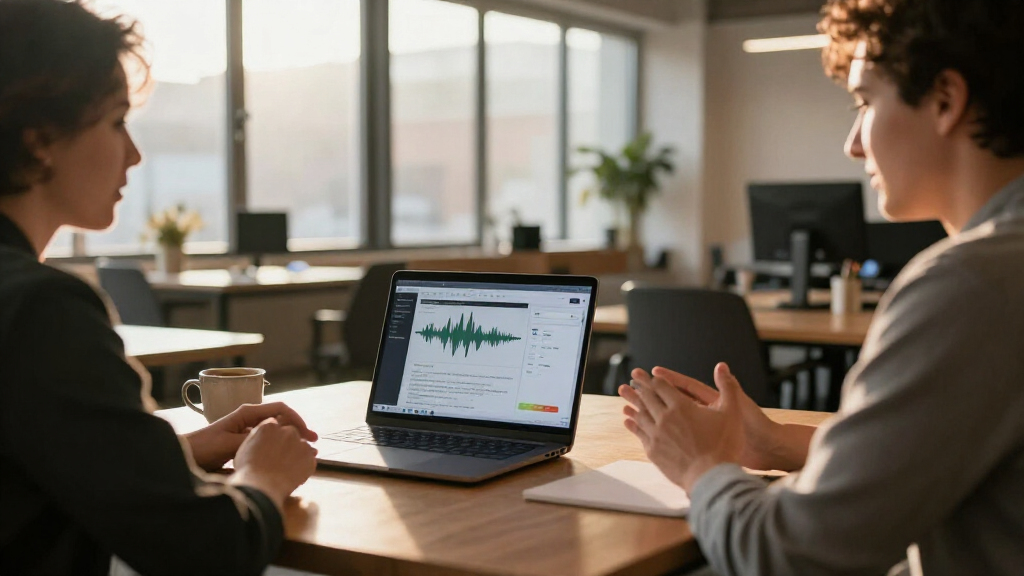

Choosing AI meeting assistant software means deciding whether you need a tool that records in the room, captures phone calls, or turns meetings into work inside an existing digital workspace. My leading pick for a flexible recorder-and-phone setup is the AI Voice Recorder with Transcription, Summaries, and Magnetic Phone Stand, which pairs broad language support with no required monthly subscription. The Plaud Note is the more focused choice for people who regularly switch between calls and in-person conversations, while the RECPOINT AI Voice Recorder brings a screen, one-touch controls, and a stated monthly allowance for AI tasks.

Get business pricing on tech for your team
- Business-only prices and quantity discounts
- Tax-exempt purchasing
- Multiple users, one account, clear invoices
These options are not interchangeable with a conventional meeting-bot app: four are dedicated recording devices whose AI features depend on a connected workflow, and one is a guide to Notion’s AI workspace features rather than meeting assistant software itself. I rank them by how directly they help capture and turn discussions into usable notes, while accounting for plan limits, device requirements, and the difference between hardware and workspace guidance. The main tradeoff is convenience versus ongoing limits: recorder hardware can capture conversations without relying on a meeting bot joining a call, but AI processing allowances, phone compatibility, and software workflows vary. I’ve kept those boundaries visible so you can match a pick to how your meetings actually happen.
Key Takeaways
Best all-around hardware fit: The magnetic-stand recorder combines 100-plus-language transcription, speaker identification, cross-device sync, and AI features without a required monthly subscription; its workflow depends on a compatible smartphone.
Best for switching between calls and room conversations: Plaud Note explicitly offers dual-mode recording, but its included Starter Plan is limited to 300 transcription minutes per month.
Best for visible, simple controls: RECPOINT adds an OLED screen, one-touch recording, and dual-microphone noise cancellation, with AI allowances stated as monthly minutes and an older Micro USB connection.
Compare the two 150-language recorders carefully: RECPOINT lists 360 monthly transcription and summary minutes, while the 64GB aluminum recorder lists 300; both include 720 translation minutes per month.
Notion AI for Work is a different kind of entry: It is a guide to workspace features, including AI meeting notes and workflows, not a standalone recorder or software subscription described with product specifications.
| AI Voice Recorder with Transcription, Summaries, and Magnetic Phone Stand |  | Best Overall for Subscription-Free Recorder Workflows | Transcription languages: 100+ | Recording and AI: Real-time transcription, speaker identification, summaries, key points, and action items | Storage: 1 TB | VIEW LATEST PRICE | See Our Full Breakdown |
| Plaud Note AI Voice Recorder, Dark Blue | 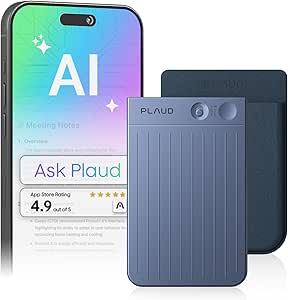 | Best for Phone Calls and In-Person Meetings | Recording modes: Phone calls and in-person conversations | Languages: 112 | Storage: 64 GB | VIEW LATEST PRICE | See Our Full Breakdown |
| RECPOINT AI Voice Recorder with Transcription and Meeting Summaries |  | Best for Screen-Led Controls and Stated AI Allowances | Storage: 64 GB | Recording capacity: Up to 600 hours | Battery life: Up to 30 hours | VIEW LATEST PRICE | See Our Full Breakdown |
| AI Voice Recorder with Transcription and Summarization, 64GB |  | Best for a Slim Aluminum Recorder with Broad Language Claims | Storage: 64 GB, approximately 600 hours | Battery life: Up to 30 hours | Language support: 150 languages for transcription and translation | VIEW LATEST PRICE | See Our Full Breakdown |
| Notion AI for Work: Build an Intelligent Workspace |  | Best as a Notion Workflow Guide, Not a Recorder | Product type: Guide to building an intelligent Notion workspace | Meeting-related topic: AI meeting notes | AI topics: Notion Agent, custom agents, research mode | VIEW LATEST PRICE | See Our Full Breakdown |
| AI meeting assistant software | Storage |
|---|---|
| AI Voice Recorder with Transcr | 1 TB |
| Plaud Note AI Voice Recorder | 64 GB |
| RECPOINT AI Voice Recorder wit | 64 GB |
| AI Voice Recorder with Transcr | 64 GB, approximately 600 hours |
| Notion AI for Work: Build an I | — |
More Details on Our Top Picks
AI Voice Recorder with Transcription, Summaries, and Magnetic Phone Stand
This is my best all-around pick when a meeting assistant needs to be a portable capture device as well as an AI note-making tool. It records and transcribes in real time, identifies speakers, and can turn the transcript into summaries, key points, and action items. That combination answers more of the typical meeting follow-up job than a recorder that stops at storing audio. Its support for more than 100 languages and sync across phone, tablet, and computer also make it a flexible fit for people who work across devices.
Its strongest differentiator is that AI features do not require a monthly subscription, based on the supplied product details. That makes its ongoing access model simpler than the listed monthly minute allowances on RECPOINT, Plaud Note, and the 64GB aluminum recorder. It also works as a 360-degree MagSafe-compatible phone stand, a practical extra for someone who wants a phone positioned during a conversation or call. Unlike Plaud Note, however, the description does not explicitly identify a dedicated phone-call recording mode, so I would not pick it over Plaud solely for that use case.
There are workflow caveats. AI transcription and summaries are activated only when needed, so it is not described as a continuous automatic meeting bot that joins scheduled online calls. The phone stand also depends on a compatible smartphone, and the connected phone workflow is central to its appeal. Buyers who want a recorder they can operate without a phone nearby should compare the OLED-screen RECPOINT instead. I would choose this device for its broad feature mix and subscription-free AI access, not for a claimed level of accuracy that the supplied details do not verify.
Pros:- Creates real-time transcripts, speaker identification, summaries, key points, and action items.
- Supports more than 100 transcription languages and syncs across phone, tablet, and computer.
- AI features do not require a monthly subscription, according to the supplied details.
- Combines recording hardware with a 360-degree MagSafe-compatible phone stand.
Cons:- AI transcription and summaries must be activated when needed rather than being described as always-on meeting capture.
- The stand and connected workflow depend on a compatible smartphone.
- The supplied specifications do not state battery life or a dedicated phone-call recording mode.
Best for: People who want a portable meeting recorder with speaker-aware transcripts, summaries, action items, cross-device sync, and no required monthly AI subscription.
Not ideal for: Buyers who need a standalone recorder workflow without a compatible smartphone, or who specifically require a clearly stated dedicated phone-call recording mode.
- Transcription languages:100+
- Recording and AI:Real-time transcription, speaker identification, summaries, key points, and action items
- Storage:1 TB
- Phone stand:360° MagSafe-compatible
- Cloud sync:Phone, tablet, and computer
- Subscription:No monthly subscription required for AI features
- Connection and compatibility:Bluetooth; smartphones
- Microphone and jack:Built-in microphone; 3.5 mm headphone jack
Our verdict“I’d choose this as the broadest subscription-free recorder workflow, provided a compatible smartphone fits your setup.”
Plaud Note AI Voice Recorder, Dark Blue
Plaud Note is the most clearly differentiated choice for someone who alternates between phone calls and face-to-face conversations. Its dual-mode recording is explicit, which makes it easier to match to a mixed meeting calendar than the other devices here, whose descriptions do not specify the same call-and-room workflow. The recorder is also notably compact at 30 grams, and it pairs with app, web, and desktop tools so recorded material can move beyond the device.
Compared with the magnetic-stand recorder, Plaud Note gives clearer evidence of a dedicated phone-call mode, but its included Starter Plan is limited to 300 transcription minutes per month. The magnetic-stand option is less explicit about phone calls yet states that AI features do not require a monthly subscription. That difference should drive the choice: Plaud makes sense when call capture is a priority, while the other device has the more straightforward stated allowance model for regular AI processing. Plaud’s 112-language support is broad, though it does not exceed the 150-language claims of RECPOINT and the aluminum recorder.
The design is aimed at carrying, not standalone operation with a large display: it has a slim profile, magnetic accessories, and no headphone jack. Its 64GB local storage and up-to-30-hour continuous recording figure provide useful capacity context, but the limited Starter Plan remains the more direct constraint for people who process long meetings often. Compared with RECPOINT’s OLED screen and one-touch controls, Plaud offers a more explicitly mixed recording mode and a lighter stated weight, but fewer on-device control details. I would skip it if monthly transcription limits are a poor fit or if you need a built-in headphone jack.
Pros:- Explicit dual-mode support for phone calls and in-person conversations.
- Compact 30-gram design with 64GB local storage.
- Works with Plaud app, web, and desktop tools and supports transcription in 112 languages.
- Includes a magnetic case, magnetic ring, and charging cable.
Cons:- Starter transcription plan is limited to 300 minutes per month.
- No headphone jack is listed.
- Language support is lower than the 150-language claims of two other recorders in this lineup.
Best for: People who want one small device for both phone-call and in-person meeting recording, and who are comfortable managing a monthly transcription allowance.
Not ideal for: Heavy transcription users who may exceed the included 300 monthly minutes, or buyers who need a headphone jack or a clearly described on-device screen.
- Recording modes:Phone calls and in-person conversations
- Languages:112
- Storage:64 GB
- Weight:30 g (1.06 oz)
- Continuous recording:Up to 30 hours
- Standby time:Up to 60 days
- Starter transcription plan:300 minutes per month
- Compatible devices and tools:Laptop, personal computer, smartphone, tablet; app, web, and desktop tools
Our verdict“I’d pick Plaud Note when dual-mode call and room recording matters more than avoiding a monthly transcription allowance.”
RECPOINT AI Voice Recorder with Transcription and Meeting Summaries
RECPOINT suits buyers who prefer physical recording controls and a screen over a small recorder that depends on an app for every interaction. One-touch recording can reduce the steps between a meeting starting and capture beginning, while its OLED screen gives the device a more self-contained feel than Plaud Note’s described hardware. Dual-microphone noise cancellation is aimed at helping capture speech in less controlled settings, though the supplied details do not establish independent results in any particular room.
Its headline language claim is 150 languages for transcription and translation, and the product lists monthly AI allowances: 360 transcription and summarization minutes plus 720 translation minutes. Compared with Plaud Note’s 300 monthly transcription minutes, that is a larger stated allowance for transcription-related tasks; compared with the 64GB aluminum recorder, RECPOINT lists the same 720 translation minutes and a larger 360-minute transcription-and-summary allowance. The tradeoff is that these are monthly limits, while the magnetic-stand recorder says it does not require a monthly subscription for AI features.
The hardware information is unusually concrete: 64GB storage, up to 30 hours of battery life, and a stated 600 hours of recording capacity. A protective case and desktop software are included. But Micro USB 2.0 is an older connection compared with the Bluetooth 5 connection specified for Plaud Note, and the description identifies smartphone compatibility without laying out the same broad cross-device sync details as the magnetic-stand pick. RECPOINT is a good match when the display, control style, and stated allowance suit your workflow. I would look elsewhere if modern connection hardware or subscription-free AI access sits higher on your list.
Pros:- One-touch recording and an OLED screen provide clear, direct device controls.
- Dual-microphone AI noise cancellation is included in the described hardware.
- Supports transcription and translation in 150 languages, with stated monthly AI allowances.
- Includes 64GB storage, desktop software, a protective case, and up to 30 hours of battery life.
Cons:- Transcription and summary access is limited to 360 minutes monthly, with translation limited to 720 minutes.
- Uses Micro USB 2.0 rather than a newer connection specified by some alternatives.
- The listed compatibility details focus on smartphones and do not spell out broad cloud syncing.
Best for: People who value a visible OLED screen, one-touch capture, a stated monthly processing allowance, and translation support for a wide range of languages.
Not ideal for: Buyers who want AI processing without monthly minute limits, prefer a newer connection standard, or need clearly documented syncing across multiple device types.
- Storage:64 GB
- Recording capacity:Up to 600 hours
- Battery life:Up to 30 hours
- Language support:150 languages
- AI monthly allowance:360 transcription and summarization minutes; 720 translation minutes
- Microphone and display:Dual-microphone AI noise cancellation; OLED screen
- Connection:Micro USB 2.0 Type A
- Dimensions and compatibility:0.1 × 2.6 × 3.3 in; smartphone
Our verdict“I’d choose RECPOINT for screen-led operation and a larger stated transcription allowance than the other minute-limited recorders.”
AI Voice Recorder with Transcription and Summarization, 64GB
This 64GB recorder is a close alternative to RECPOINT, sharing one-touch recording, dual-microphone noise cancellation, an OLED display, and 150-language transcription and translation. Its differentiator is the described aluminum-alloy body with a 3.5mm profile, which may appeal to buyers who want a particularly slim device. It also lists encrypted file storage, desktop software, and a protective case, giving the workflow more context than a basic audio recorder alone.
The biggest point of comparison is the monthly AI allowance. This model lists 300 free transcription and summarization minutes and 720 translation minutes, while RECPOINT lists 360 transcription and summary minutes alongside the same 720 translation minutes. That gives RECPOINT the edge for users likely to process longer meetings each month. Neither device removes the need to keep track of AI limits, unlike the magnetic-stand recorder’s stated no-monthly-subscription requirement. The supplied details also do not establish whether “free” minutes renew or how additional processing is handled, so buyers should confirm the current plan terms before relying on a particular volume.
Its physical controls and claimed capacity make it a plausible everyday recorder, but the product information includes a direct caveat: accuracy and time-saving claims are not independently verified. I would treat the language count and AI output types as feature descriptions, not guarantees that transcripts will be error-free. The device offers mind maps and task lists as well as summaries, which may be useful for people who like several ways to organize a discussion. Choose it over RECPOINT for the slim aluminum construction and encrypted storage as described; choose RECPOINT if the extra 60 monthly transcription-and-summary minutes and its specific recording-capacity figure matter more.
Pros:- Slim 3.5mm aluminum-alloy profile with a stated 64GB of storage.
- One-touch recording, dual-microphone noise cancellation, and an OLED screen.
- Lists transcription and translation in 150 languages, plus summaries, mind maps, and task lists.
- Includes encrypted file storage, desktop software, and protective accessories.
Cons:- Monthly transcription and summary allowance is 300 minutes, below RECPOINT’s stated 360 minutes.
- Accuracy and time-saving claims are not independently verified in the supplied information.
- Battery life is stated as up to 30 hours, but broader connectivity and syncing details are not specified.
Best for: Buyers who want a slim aluminum recorder with one-touch controls, encryption listed for file storage, desktop software, and broad language support.
Not ideal for: People who regularly process longer meetings than the listed 300 monthly transcription-and-summary minutes, or who need independently verified accuracy claims.
- Storage:64 GB, approximately 600 hours
- Battery life:Up to 30 hours
- Language support:150 languages for transcription and translation
- AI monthly allowance:300 transcription and summarization minutes; 720 translation minutes
- Microphones and display:Dual microphones with AI noise cancellation; OLED screen
- Body:High-strength aluminum alloy
- Profile thickness:3.5 mm
- Included workflow and accessories:Desktop software, encrypted file storage, protective case, finger ring, charging cable, quick start guide
Our verdict“I’d choose this for its slim aluminum form and listed encryption, but RECPOINT is the stronger fit if monthly transcription capacity comes first.”
Notion AI for Work: Build an Intelligent Workspace
This entry is different from the other four: it is described as a guide to using Notion AI features, not as standalone AI meeting assistant software or a recording device. Its topics include AI meeting notes, Notion Agent, custom agents, enterprise search, research mode, databases, and automated workflows. That range may help a Notion user think about how meeting notes could connect with the rest of a team’s information, rather than leaving transcripts isolated in a recorder app.
Compared with Plaud Note or the magnetic-stand recorder, the guide does not specify microphones, recording modes, transcription languages, storage, or a monthly AI processing allowance. It therefore cannot be ranked as a direct substitute for hardware that captures a live conversation. Its potential role is further along the workflow: a reader may use its guidance to understand how AI meeting notes and databases can fit into an existing Notion workspace. That is a different benefit from a device that records a room or phone call and generates a transcript.
I place it last because the product details do not establish that this is a software license, what access to Notion AI it provides, or whether any features are included with a separate workspace plan. Buyers should treat it as educational material unless the listing clarifies otherwise. For a Notion-centered team that already has a way to capture meetings, it may be more relevant than another recorder. For anyone searching for a tool to join calls, record audio, and produce notes on its own, the other products are a closer match. The missing product-level specifications are not a minor omission here; they make direct feature comparisons and workflow promises impossible.
Pros:- Covers Notion AI meeting notes alongside broader workspace features.
- Includes topics on databases and automated workflows that may connect notes with team processes.
- Addresses enterprise search, research mode, Notion Agent, and custom agents.
- May suit Notion users who need workflow guidance rather than another recording device.
Cons:- Described as a guide, not a standalone AI meeting assistant software product.
- No recording hardware, transcription languages, storage, or processing allowance is specified.
- The supplied information does not clarify software access, licensing, or whether a Notion plan is required.
Best for: Notion users who want guidance on connecting AI meeting notes, databases, enterprise search, and automated workflows in a workspace they already use.
Not ideal for: Buyers seeking a standalone meeting recorder, a specified software license, or a tool with clearly documented recording, transcription, and AI plan details.
- Product type:Guide to building an intelligent Notion workspace
- Meeting-related topic:AI meeting notes
- AI topics:Notion Agent, custom agents, research mode
- Workspace topics:Enterprise search, databases, automated workflows
- Recording hardware:Not specified
- Transcription languages or allowance:Not specified
Our verdict“I’d view this as a Notion workflow guide for teams with meeting capture already covered, not as a direct recorder or software substitute.”
How We Picked
I ranked these five options by how clearly each can support the meeting-assistant job: capture a conversation, produce a transcript or useful summary, and help carry decisions into follow-up. That focus matters because the lineup spans dedicated recorder hardware and one workspace guide, rather than five comparable software services. I gave the strongest placement to products with a clear recording-to-summary workflow and practical information about language support, storage, device compatibility, and ongoing AI access.
I also compared the constraints that change day-to-day fit. Those include monthly AI minute allowances, whether a recorder handles phone calls as well as in-person discussion, how it connects to a phone or computer, and whether local storage and syncing are described. I did not treat broad language counts as proof of transcription quality; the supplied details do not establish accuracy across accents, noisy rooms, or specialist vocabulary. Similarly, recording time and storage capacity tell me about capture capacity, not how well a product summarizes a meeting.
My ranking reflects the information provided, not hands-on testing or independently verified performance. The first three positions favor options with a more distinct and well-explained role: subscription-free AI access, dual-mode capture, or a combination of device controls and monthly processing allowances. The two recorders with nearly matching feature sets sit lower because the available descriptions make them harder to distinguish on workflow alone. I place the Notion guide last because it may help a Notion user build meeting workflows, but it is not itself a recorder or a clearly specified software product. I also flag each option’s meaningful drawback rather than treating more features as automatically better.
Factors to Consider When Choosing AI Meeting Assistant Software
I’d start by deciding where your meetings happen and how you want notes to move after a discussion. The products here cover distinct parts of that process: recording hardware, AI transcription and summaries, and workspace guidance. A feature list alone cannot tell you whether a product will fit your routine; the difference between an in-room recorder and a tool that can also capture calls may matter more than a higher language count.
Choose between a device and a workspace tool
Four entries are dedicated voice recorders with AI-related functions; Notion AI for Work is described as a guide to Notion features. A recorder is the more direct option if you need to capture sound in a meeting room or around a phone, then produce a transcript or summary. Notion’s guide may be relevant when your team already captures notes elsewhere and wants to connect them to databases, search, or automated workflows. I would not treat the guide as a substitute for recording software without clearer details about access and product scope.
Also check whether your real need is a meeting assistant that joins online meetings, or a recorder that captures audio through a separate device. None of the supplied recorder descriptions confirms that it automatically joins video calls. The magnetic-stand device requires AI features to be activated when needed, while Plaud Note explicitly names phone-call and in-person modes. If an automatic meeting bot is a requirement, the information here does not confirm that any option provides it.
Match recording modes to your meetings
For calls and in-person meetings in the same week, Plaud Note has the clearest stated advantage: dual-mode recording. That makes it easier to evaluate for mixed use than options where call capture is not specified. The magnetic-stand recorder has a phone-centered design, but a compatible phone stand should not be mistaken for proof of a dedicated call-recording mode. Before choosing, identify whether you need to record room audio, phone calls, or audio from an online meeting on a computer.
For a less app-dependent feel, RECPOINT and the 64GB aluminum recorder both list one-touch recording and an OLED screen. These details can make starting a recording more direct, though they do not establish how well microphones handle a particular room. A built-in microphone is not a guarantee of clear speech when people sit far away, overlap, or speak in a noisy space. If you have those conditions, look for independent audio tests or confirm the return policy rather than relying on feature labels alone.
Read language counts alongside plan limits
Language support is not a full measure of transcription quality. The two 150-language recorders, RECPOINT and the aluminum model, have broader stated language counts than Plaud Note at 112 and the magnetic-stand device at 100-plus. But the descriptions do not verify accuracy for accents, specialist terms, or noisy audio. If multilingual transcription drives your purchase, check that the specific languages you use are supported and test a short sample before relying on AI notes for records or decisions.
Monthly allowances may matter more than the advertised count. Plaud Note lists 300 transcription minutes per month; the aluminum model lists 300 minutes for transcription and summaries plus 720 translation minutes; RECPOINT lists 360 transcription and summary minutes plus 720 translation minutes. The magnetic-stand product says a monthly subscription is not required for AI features, although the supplied details do not explain every activation or usage limit. Confirm the current plan terms, especially if your meeting volume changes from month to month.
Compare storage, battery, and connections
Storage capacity and recording time answer different questions. The 64GB models list substantial local storage, while the magnetic-stand recorder specifies 1TB. RECPOINT and the aluminum recorder also describe approximately 600 hours of capacity; Plaud Note states up to 30 hours of continuous recording and up to 60 days of standby. These figures help estimate how much audio may be kept before transferring it, but they do not say how much space AI transcripts, sync copies, or other files use in practice.
Connection details affect setup and portability. RECPOINT lists Micro USB 2.0, while Plaud Note lists Bluetooth 5 and the magnetic-stand device lists Bluetooth alongside smartphone compatibility. The aluminum model’s provided details do not specify its connection standard. If your workflow depends on moving transcripts between devices, compare the actual app and sync behavior, not just the hardware connection. Only the magnetic-stand entry explicitly describes sync across phone, tablet, and computer.
Think about where notes go after the meeting
Transcripts are only useful if you can find and act on them. The magnetic-stand recorder lists summaries, key points, action items, speaker identification, and cloud sync. RECPOINT and the aluminum recorder list summaries, mind maps, and task lists, while Plaud Note describes AI summaries and access through app, web, and desktop tools. Notion’s guide focuses on a different stage: how notes and AI features may connect with databases, search, and automated workflows in a workspace.
Choose based on the handoff you need. If you mostly want a readable recap and action list, favor the tools that name those outputs. If meeting decisions must flow into an existing knowledge base, examine export and integration details before buying; those specifics are not fully supplied for these products. Do not assume a summary syncs into your project system just because the product mentions cloud access or desktop software.
Treat AI output as a draft, not a verified record
AI-generated transcripts and summaries can make meeting follow-up faster, but the provided information does not independently validate accuracy for any recorder. One product explicitly notes that its accuracy and time-saving claims are not independently verified. Speaker labels, action items, and translated text still need human review when names, numbers, commitments, or decisions matter. A higher language count does not remove that responsibility.
For sensitive meetings, review the vendor’s current privacy and retention terms before recording. Encrypted file storage is listed for the aluminum recorder, and cloud sync is listed for the magnetic-stand device, but the descriptions do not give a full account of data handling across every app or service. Check how audio and transcripts are stored, who can access them, how deletion works, and whether the people in a meeting must be notified. Those answers may determine fit more than a recorder’s physical design.
Frequently Asked Questions
What is the best AI meeting assistant in this lineup?
I’d choose the AI Voice Recorder with Transcription, Summaries, and Magnetic Phone Stand as the broadest all-around hardware option because it combines speaker identification, summaries, action items, 100-plus-language support, cross-device sync, and AI features without a required monthly subscription. It is not the right choice for everyone: it depends on a compatible smartphone, and its description does not explicitly state a dedicated phone-call recording mode. Plaud Note is a stronger fit when recording both calls and in-person conversations is the deciding factor.
Which product can record phone calls as well as in-person meetings?
Plaud Note is the only product in this lineup whose supplied details explicitly name both phone-call and in-person recording modes. The magnetic-stand recorder is designed around smartphone use, but that alone does not confirm a call-recording feature. If call capture is essential, I would verify how the recorder works with your phone model and call setup before purchase, as well as check local rules and workplace policies about recording conversations.
Which recorder has the largest stated monthly AI allowance?
RECPOINT lists 360 minutes per month for transcription and summarization, compared with 300 transcription minutes for Plaud Note and 300 transcription and summary minutes for the 64GB aluminum recorder. Both RECPOINT and the aluminum model list 720 monthly translation minutes. The magnetic-stand recorder says AI features do not require a monthly subscription, but its description does not specify a comparable monthly minute allowance, so I would confirm its usage terms rather than assuming unlimited processing.
Are these products automatic meeting bots for video calls?
The supplied product details do not confirm that any of the four recorders automatically joins a scheduled video call as a meeting bot. They are described as voice recording devices with transcription and AI outputs, and Plaud Note explicitly supports phone-call and in-person modes. Notion AI for Work is described as a guide to workspace features, not a specified meeting-bot service. If automatic call joining, calendar access, or live video-conference integration is a must, look for explicit confirmation of those capabilities before choosing.
Is Notion AI for Work a direct alternative to the voice recorders?
Not based on the details provided. The Notion entry is a guide covering AI meeting notes, agents, enterprise search, databases, research mode, and automated workflows; it does not specify a recorder, transcription languages, recording capacity, or a software access plan. It may be useful to someone who already captures meetings and wants to learn how Notion’s workspace features could organize information. Buyers who need hardware or a clearly described service to capture and transcribe conversations should compare the four recorder products instead.
Conclusion
My recommendation depends on what part of meeting follow-up is giving you trouble. For a flexible recorder with subscription-free AI access, I’d start with the magnetic-stand device, as long as a compatible smartphone is part of your setup. If you regularly alternate between calls and room meetings, Plaud Note has the clearest stated dual-mode role, with the tradeoff of a 300-minute monthly Starter Plan. Choose RECPOINT if an OLED screen, one-touch operation, and its stated 360-minute transcription-and-summary allowance suit your routine; pick the aluminum 64GB model instead if its slim body and listed encrypted storage matter more than that extra allowance.
For a Notion-centered team that already records meetings, the Notion AI guide may help connect notes to workspace features, but I would not buy it expecting a standalone recorder or a specified meeting-bot service. Across all five, verify current AI plan terms, device compatibility, privacy practices, and any required integrations before depending on transcripts for decisions. The right choice is the one that fits your capture method and follow-up process, not simply the product with the longest feature list.