
The Army is using artificial intelligence to develop unbiased promotion systems that enhance fairness, efficiency, and objectivity in advancing personnel. AI algorithms automatically screen and score candidates, verifying eligibility while preventing influence from racial, ethnic, or branch-related biases. Human reviewers retain final say, ensuring decisions remain fair. By constantly updating and monitoring these systems, the Army aims to revolutionize its personnel management. Keep exploring how this technology shapes the future of military advancement.
Key Takeaways
- AI screening algorithms are designed to exclude racial, ethnic, and branch-specific factors to promote fairness.
- Continuous monitoring and system adjustments help prevent and correct biases in promotion evaluations.
- Human oversight allows reviewers to override AI recommendations, ensuring transparent and equitable decisions.
- The AI system filters ineligible candidates early, reducing bias and favoritism in the promotion process.
- Data-driven approaches support objective, consistent, and unbiased talent management within the Army.
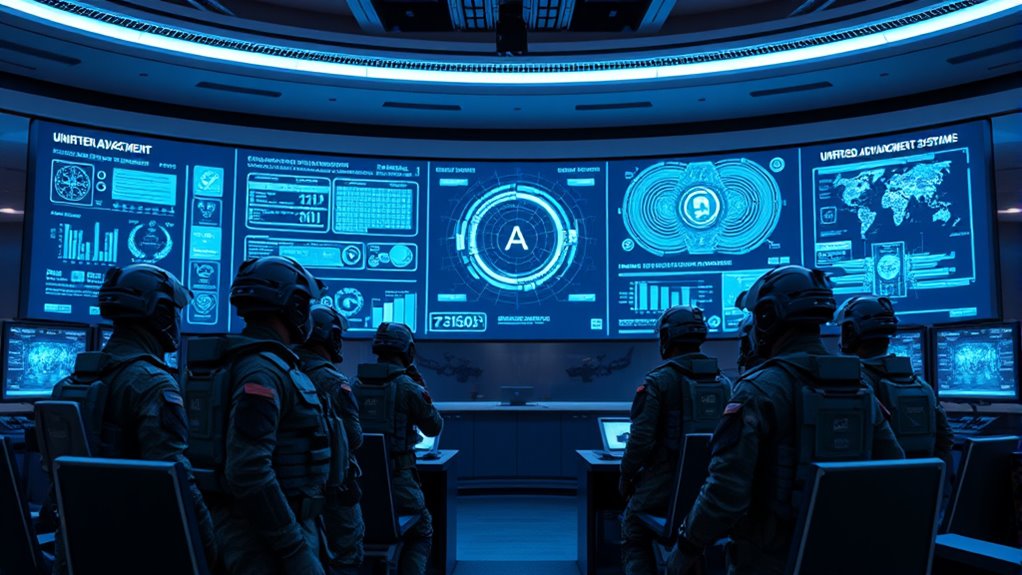
The U.S. Army is taking considerable steps to modernize its personnel management by integrating artificial intelligence into the promotion process. This move aims to support human decision-makers rather than replace them. AI now screens thousands of soldier records, focusing on eligibility, required schooling, and job history. Its primary goal is to reduce the workload on promotion boards by filtering out candidates who clearly don’t meet the criteria early on. This allows human reviewers to concentrate on the most competitive individuals, making the process more efficient and consistent. The system is part of broader efforts to create a data-driven approach to talent management and Army modernization initiatives. Although AI handles initial screening, final promotion decisions still rest with human boards, who can override any AI recommendation. This ensures that judgment, context, and fairness remain central to personnel decisions.
The U.S. Army uses AI to streamline promotions, supporting human judgment and ensuring fairness in personnel decisions.
The AI screening process uses algorithms to automatically score evaluation reports and verify that candidates meet promotion prerequisites. It identifies and removes ineligible soldiers from consideration, streamlining the workload for human reviewers. Only those who meet basic eligibility criteria proceed to deeper assessment, saving time and resources. Currently, the system is piloted for non-commissioned officer promotions, with plans to expand to officer boards once Congress approves. The Army has already employed similar algorithms for four years to generate invite lists for command boards, continuously refining these tools based on real-world outcomes. The algorithms are designed to evolve with new data, improving accuracy over time. Ethical hacking principles emphasize the importance of continuous improvement and adapting to changing environments, which aligns with the Army’s approach.
To address potential biases, the Army has implemented controls to prevent AI from considering racial, ethnic, or branch-specific factors. The systems are designed to ignore names or other indicators that could introduce bias. Continuous monitoring and adjustments are part of the effort to guarantee fairness, especially since past issues—such as the exclusion of certain military intelligence officers—were corrected through human intervention. The Army emphasizes “ground truthing,” validating AI outputs against actual outcomes to maintain accuracy and impartiality. These measures aim to foster a fairer promotion process that minimizes unintended bias.
Despite the automation, human oversight remains essential. Promotion boards retain the authority to override AI recommendations based on additional context or judgment. AI functions as a decision-support tool rather than an autonomous authority. Edge cases and special circumstances are handled by human reviewers to uphold fairness and transparency. This blend of technology and human judgment ensures that the process remains equitable and adaptable.
The integration of AI substantially boosts efficiency, allowing the Army to handle vast amounts of data that previously overwhelmed manual review efforts. By automating the screening of ineligible candidates, more time is available for assessing truly competitive soldiers. This streamlined process accelerates initial eligibility determinations and supports the Army’s goal of faster, more consistent promotions. As part of its modernization efforts within the integrated personnel and pay system (IPPS-A), the Army hopes to expand this AI-driven approach across its entire personnel management system. Ultimately, this shift signals a move toward a more objective, data-driven military talent management system, setting a precedent for other branches to follow.
Top picks for "artificial intelligence army"
Open Amazon search results for this keyword.
As an affiliate, we earn on qualifying purchases.
Frequently Asked Questions
How Does AI Ensure Fairness in Army Promotion Decisions?
AI guarantees fairness in Army promotion decisions by excluding demographic factors like race, ethnicity, and rank from its evaluations, preventing biased outcomes. It uses controls to avoid discrimination and relies on transparent algorithms monitored by humans to catch any biases. You retain full authority to override AI suggestions, ensuring nuanced judgment. Continuous data analysis and collaboration help improve fairness, fostering trust and accountability in the promotion process.
What Challenges Exist in Implementing AI Unbiased Systems?
Implementing unbiased AI systems is like trying to tame a wild horse—challenging and unpredictable. You face hurdles like inheriting biases from training data, which can skew decisions unfairly. Continuous monitoring is essential, but AI’s black box nature makes transparency tough. Additionally, rapid decision-making can lead to overtrust, risking automation bias. You must balance AI’s efficiency with rigorous oversight, bias mitigation, and legal accountability to avoid unintended harm.
How Is Data Privacy Maintained With AI in Military Use?
You maintain data privacy in military AI by adhering to strict guidelines that limit data collection, ensuring only necessary information is gathered. You implement encryption, secure authentication, and access controls to protect sensitive data. Regular audits and transparency measures help track AI records, while compliance with laws like the Privacy Act safeguards civil liberties. Additionally, you follow best practices from agencies like CISA to defend data supply chains against threats.
What Training Is Provided for Army Personnel on AI Tools?
You get trained on AI tools through specialized programs that focus on practical skills and understanding. You participate in AI-enhanced simulation exercises, learn to use AI-driven tutoring systems like PAL3, and stay updated with curriculum revisions powered by AI. The Army also offers AI literacy courses, collaborates with research centers, and provides accessible training via apps. These efforts guarantee you’re prepared to leverage AI effectively in future operations.
How Does AI Integration Affect Traditional Military Leadership Roles?
AI integration transforms traditional military leadership roles by requiring you to interpret and validate AI-generated insights actively. You now manage data quality, guarantee ethical use, and balance reliance on technology with independent judgment. Your decision-making becomes more data-driven, demanding technological fluency and adaptability. You still lead with critical thinking, but you also oversee AI systems, fostering collaboration across branches and ensuring operational standards are maintained amid rapid technological change.
Conclusion
By harnessing AI to create unbiased advancement systems, the Army aims to guarantee fair opportunities for all soldiers. Studies show that diverse teams outperform homogeneous ones by 35%, highlighting the importance of fairness and inclusivity. When you embrace AI’s potential, you help foster a more equitable military environment where merit truly matters. This approach not only boosts morale but also strengthens national security, proving that innovation can lead to a better, more just future for everyone involved.