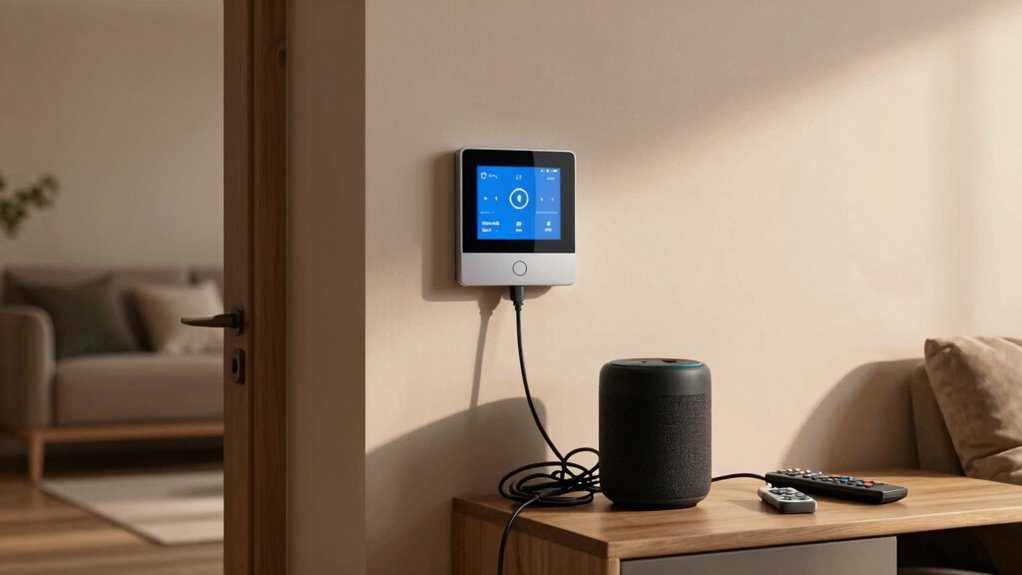

Many smart homes fall short of true convenience because they rely too much on poorly integrated voice commands and neglect proper setup or customization. If your devices aren’t configured correctly, voice control can cause frustration rather than simplify your life. Automating routines and ensuring devices understand your preferences are key, but many overlook these steps. Avoiding these common pitfalls keeps your smart home efficient and user-friendly—and there’s plenty more to discover if you continue exploring.

Get business pricing on tech for your team
- Business-only prices and quantity discounts
- Tax-exempt purchasing
- Multiple users, one account, clear invoices
Key Takeaways
- Overreliance on voice control without proper setup can lead to frustration and inefficiency.
- Assuming smart devices alone deliver energy savings ignores the need for active management and correct usage.
- Vague or poorly designed voice commands reduce system responsiveness and user convenience.
- Lack of system integration prevents seamless automation and diminishes the overall smart home experience.
- Neglecting routine optimization and device maintenance limits the energy and convenience benefits.
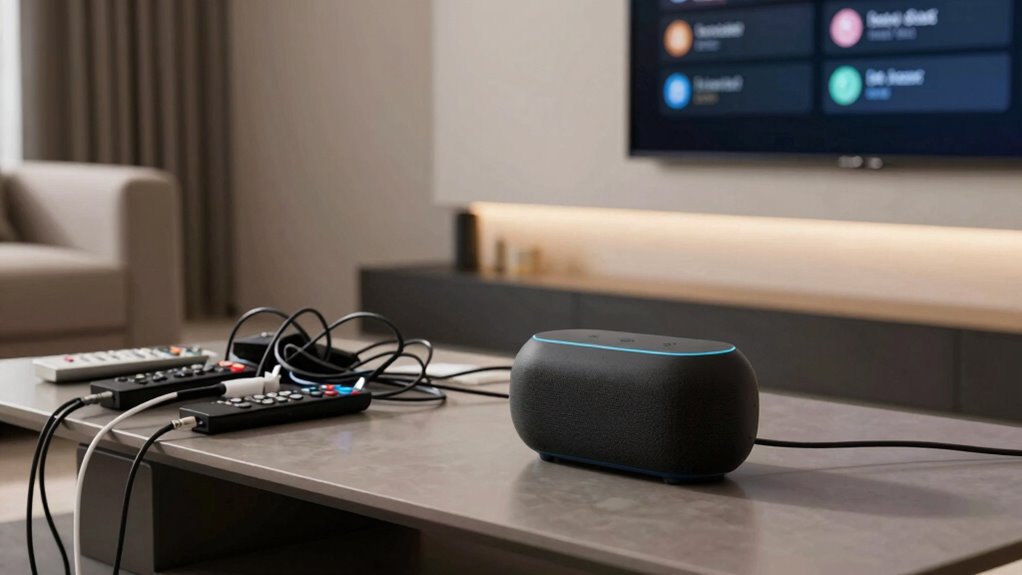
Smart homes promise unmatched convenience, but many homeowners make mistakes that can undermine their benefits. One common pitfall involves how you use voice control. While voice assistants are designed to simplify daily tasks, relying solely on voice commands can lead to frustration. If your devices aren’t properly integrated or if commands aren’t precise, you’ll find yourself repeating yourself or struggling to get the system to respond correctly. For example, saying “turn on the lights” might work fine, but if you need a specific setting or mood, you may need to be more detailed. It’s easy to assume voice control will seamlessly handle everything, but without proper setup and clear commands, it can become a hindrance rather than a help. You should spend time customizing your voice commands and ensuring your devices understand your preferences. This way, voice control becomes a true convenience, not a source of annoyance. Additionally, some smart home systems can benefit from custom routines that automate multiple actions based on your preferences, reducing the need for manual commands.
Proper setup and clear commands make voice control in smart homes more effective and hassle-free.
Another aspect where smart homes often fall short is in energy management. Many homeowners think that simply installing smart thermostats or smart lighting will automatically save energy. While these devices can help, they require active engagement and correct usage for maximum benefit. For instance, if you set your smart thermostat to a more efficient temperature but then override it frequently, you lose potential savings. Similarly, leaving smart lights on in unoccupied rooms or setting them to stay on longer than necessary defeats the purpose. To truly optimize energy management, you need to develop habits that prioritize efficiency. This might mean creating schedules, adjusting settings based on your daily routines, or even integrating your devices into an all-encompassing system that learns your habits. When you ignore these details, you’re missing out on the full benefits of your smart home investments. Regular maintenance, including firmware updates, ensures your devices operate at peak performance and continue to deliver the convenience you expect. Moreover, understanding how to maximize device efficiency and integrate multiple systems can significantly enhance your energy savings, especially when considering the integration of multiple systems for smarter automation.
As an affiliate, we earn on qualifying purchases.
Frequently Asked Questions
How Do Smart Homes Impact Energy Consumption Long-Term?
Smart homes impact your long-term energy consumption by improving energy efficiency when you optimize device settings and automate routines. However, if you don’t monitor consumption patterns, you might unknowingly increase energy use, negating the benefits. To maximize savings, you should regularly review your energy data, adjust device schedules, and guarantee your smart systems are working efficiently. This proactive approach helps you reduce overall energy consumption and save money over time.
Are Smart Home Devices Secure From Hacking Threats?
Imagine your smart home as a castle with digital walls—yes, it can be secure. You’re protected by encryption protocols that scramble your data, making it unreadable to hackers. Strong user authentication adds another layer, ensuring only you can access your devices. While no system is invulnerable, updating firmware and using complex passwords considerably boost your defenses, keeping your smart home safe from hacking threats.
What Are the Costs of Maintaining and Upgrading Smart Home Systems?
You face ongoing costs for maintaining and upgrading your smart home systems. Regular cost analysis helps you budget for software updates, hardware replacements, and potential repairs. Maintenance challenges include managing compatibility issues as devices update or become obsolete. Staying on top of these expenses guarantees your smart home runs smoothly, avoiding unexpected breakdowns or security vulnerabilities that could arise from outdated technology. Proper planning keeps your smart home convenient and secure over time.
How Do Smart Homes Handle Privacy Concerns Effectively?
Smart homes handle privacy concerns effectively by prioritizing data encryption and obtaining user consent. You should guarantee your devices use strong encryption to protect your data during transmission and storage. Additionally, always review and customize privacy settings, giving you control over what information is shared. By staying informed and actively managing permissions, you can enjoy the convenience of smart home technology while safeguarding your personal privacy.
Can Smart Homes Be Easily Integrated With Existing Technology?
Integrating smart homes with your existing tech is like fitting puzzle pieces together. You can do it easily if your devices support voice control and are compatible with popular platforms. Most smart home systems now prioritize seamless integration, so you don’t need to overhaul everything. Check your devices’ compatibility first, then connect them through a central hub or app. With a little setup, your smart home becomes a symphony of connected convenience.
As an affiliate, we earn on qualifying purchases.
Conclusion
Smart homes promise a future of effortless living, but they often stumble over the same stones—like sacrificing true convenience for flashy features. Remember, technology should be your loyal assistant, not a mischievous jester pulling the strings. Keep your systems simple, and don’t let complexity turn your home into a maze. When you strike the right balance, your smart home becomes a symphony of ease, not a cacophony of confusion—making your everyday life truly smoother and brighter.
As an affiliate, we earn on qualifying purchases.
smart lighting system customization
As an affiliate, we earn on qualifying purchases.
As an affiliate, we earn on qualifying purchases.
Halloween Picks
halloween
As an affiliate, we earn on qualifying purchases.