
Understanding and mitigating deepfake risks involves staying alert to highly realistic synthetic media that can impersonate or manipulate you. Be cautious when sharing personal content online, as criminals may use your images or videos for scams or blackmail. Use advanced detection tools, verify sources, and practice good digital hygiene to protect yourself. Being aware of how deepfakes work and their potential harms helps you stay ahead—continue exploring to learn how to better defend yourself.
Key Takeaways
- Stay informed about AI detection tools and techniques to identify deepfake media effectively.
- Verify sources and use digital fingerprint analysis to confirm the authenticity of online content.
- Practice good digital hygiene by securing accounts with multi-factor authentication and being cautious when sharing personal content.
- Recognize signs of deepfakes and understand manipulation tactics to prevent falling victim to deception.
- Continuously update your knowledge on emerging deepfake technologies and protective strategies to stay ahead of threats.
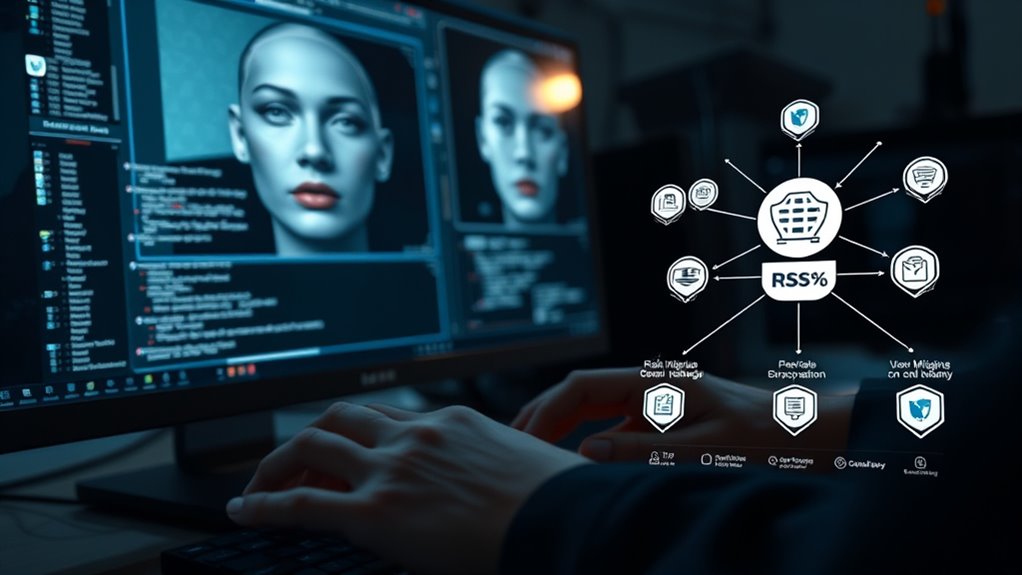
Deepfakes are rapidly transforming the way we consume information, but they also pose significant risks. As these highly realistic synthetic media tools become more accessible, you need to understand how they can be exploited for malicious purposes. One of the biggest dangers is their potential use in identity theft, where someone might create convincing fake videos or audio clips of you or others to deceive viewers. These deepfake videos can be so convincing that they undermine trust, making it challenging to discern fact from fiction. Criminals could impersonate you in videos or voice recordings, gaining access to sensitive accounts or financial information. This form of synthetic media can cause serious damage to your reputation, finances, and emotional well-being if exploited maliciously.
Because deepfakes are designed to mimic real people with startling accuracy, you should be especially cautious when sharing personal content online. Cybercriminals might use your images or videos to create deepfakes that could be used in scams or blackmail schemes. For example, a convincing video of you could be manipulated to spread false information or to solicit money under false pretenses. The rapid rise of synthetic media makes it harder to verify authenticity, which means you’ll need to be vigilant, especially when encountering videos or audio that seem suspicious or out of character. Relying solely on visual cues isn’t enough anymore, as deepfakes are increasingly difficult to detect with the naked eye.
To mitigate these risks, it’s essential to stay informed about the latest detection tools and techniques. Many organizations are developing AI-driven solutions that can flag suspicious media by analyzing inconsistencies or digital fingerprints left behind by deepfake algorithms. You should also practice good digital hygiene—be cautious about the content you share online and verify sources before trusting or sharing media. Employing multi-factor authentication on your accounts adds an extra layer of security, making it harder for thieves to misuse manipulated media in your name. Additionally, raising awareness among friends, family, and colleagues about the existence and dangers of deepfakes can help prevent the spread of misinformation and reduce the chances of falling victim to identity theft. Staying informed about Bollywood Legends and other influential figures can help you recognize fabricated content that targets well-known personalities.
Ultimately, staying vigilant and educated about synthetic media’s capabilities and risks empowers you to protect yourself. The technology behind deepfakes advances rapidly, but so do the tools to detect and combat them. Recognizing the signs of a deepfake and understanding the tactics used by bad actors are your best defenses against falling prey to this emerging form of digital deception. As you navigate the digital landscape, remember that caution, verification, and ongoing awareness are key to mitigating the risks posed by deepfake technology.

Resemble AI User Guide: Mastering AI Voice Generation and Deepfake Detection: Your Complete Handbook for Secure, Scalable Voice AI Solutions
As an affiliate, we earn on qualifying purchases.
As an affiliate, we earn on qualifying purchases.
Frequently Asked Questions
How Are Deepfakes Used in Political Campaigns?
You see, deepfakes are used in political campaigns to spread disinformation campaigns and manipulate voters. They can create realistic videos of candidates saying or doing things they never did, swaying public opinion. By doing so, malicious actors aim to undermine trust, influence election outcomes, and spread false narratives. It’s essential for you to stay vigilant, question suspicious content, and rely on trusted sources to protect yourself from voter manipulation through deepfakes.
Can Deepfakes Be Detected in Real-Time?
Yes, deepfakes can be detected in real-time using advanced AI algorithms. These algorithms analyze video and audio streams instantly, identifying subtle inconsistencies or artifacts that reveal deepfake manipulation. By continuously improving these detection tools, you can stay ahead of malicious actors. Implementing real-time detection helps you quickly flag or block fake content, safeguarding your platform and audience from deception and misinformation.
What Ethical Guidelines Exist for Creating Deepfakes?
You should follow ethical guidelines like media literacy and consent standards when creating deepfakes. Media literacy helps you understand the impact and potential misuse of deepfakes, while consent standards ensure you’re not violating someone’s privacy or likeness without permission. Always verify the purpose of your deepfake, be transparent about its artificial nature, and avoid using it to deceive or harm others. These guidelines promote responsible and ethical content creation.
How Do Deepfakes Impact Celebrity Reputation Management?
Ever wondered how a fake video could ruin a star’s reputation overnight? Deepfakes threaten celebrity privacy and reputation management by spreading false images or messages that seem real. This can lead to reputation damage, loss of trust, and emotional distress. You must stay vigilant, fact-check content, and advocate for stricter regulations to protect your favorite celebrities from these malicious manipulations. Do you want their true image to be overshadowed?
Are There Legal Consequences for Malicious Deepfake Creation?
Yes, there are legal consequences for malicious deepfake creation. You could face legal liabilities if you produce or distribute deepfakes that defame, harass, or spread false information. Criminal sanctions may also apply if your actions violate laws related to privacy, defamation, or cybercrime. Laws are evolving to address these issues, so you should be aware of potential legal risks and consequences before engaging in creating or sharing malicious deepfakes.

Digital Persona 88003-001U.are.u 4500 Reader 70" Cable
Target Applications – Desktop PC security, Mobile PCs, Custom applications
As an affiliate, we earn on qualifying purchases.
As an affiliate, we earn on qualifying purchases.
Conclusion
You can’t ignore the risks of deepfakes—they can spread false information quickly and damage reputations. For example, a deepfake video of a CEO announcing a takeover could cause stock prices to plummet, even if false. By staying informed and adopting detection tools, you protect yourself and your organization from falling victim to these manipulations. Remember, awareness and proactive measures are your best defenses against the evolving threat of deepfakes.

Yubico – YubiKey 5C NFC – Multi-Factor authentication (MFA) Security Key and passkey, Connect via USB-C or NFC, FIDO Certified – Protect Your Online Accounts
POWERFUL SECURITY KEY: The YubiKey 5C NFC is the most versatile physical passkey, protecting your digital life from…
As an affiliate, we earn on qualifying purchases.
As an affiliate, we earn on qualifying purchases.
deepfake video verification tools
As an affiliate, we earn on qualifying purchases.
As an affiliate, we earn on qualifying purchases.